Fiddle Leaf Fig Dropping Leaves: Moves, Drafts and Watering
The short answer
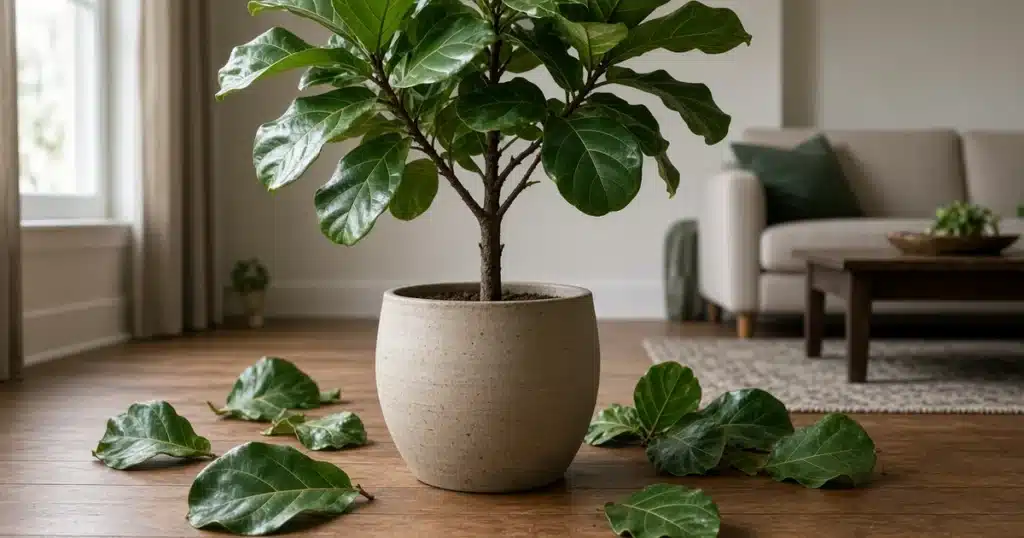
A fiddle leaf fig dropping leaves is usually reacting to change. A move to a new spot, a cold or hot draft, or uneven watering are the most common triggers. Lower leaves that drop slowly with age are normal. Sudden drop of green leaves means the plant is stressed. Find the change, fix it and hold conditions steady.
Fiddle leaf figs have a reputation for drama. Most of it comes down to one trait: they hate change.
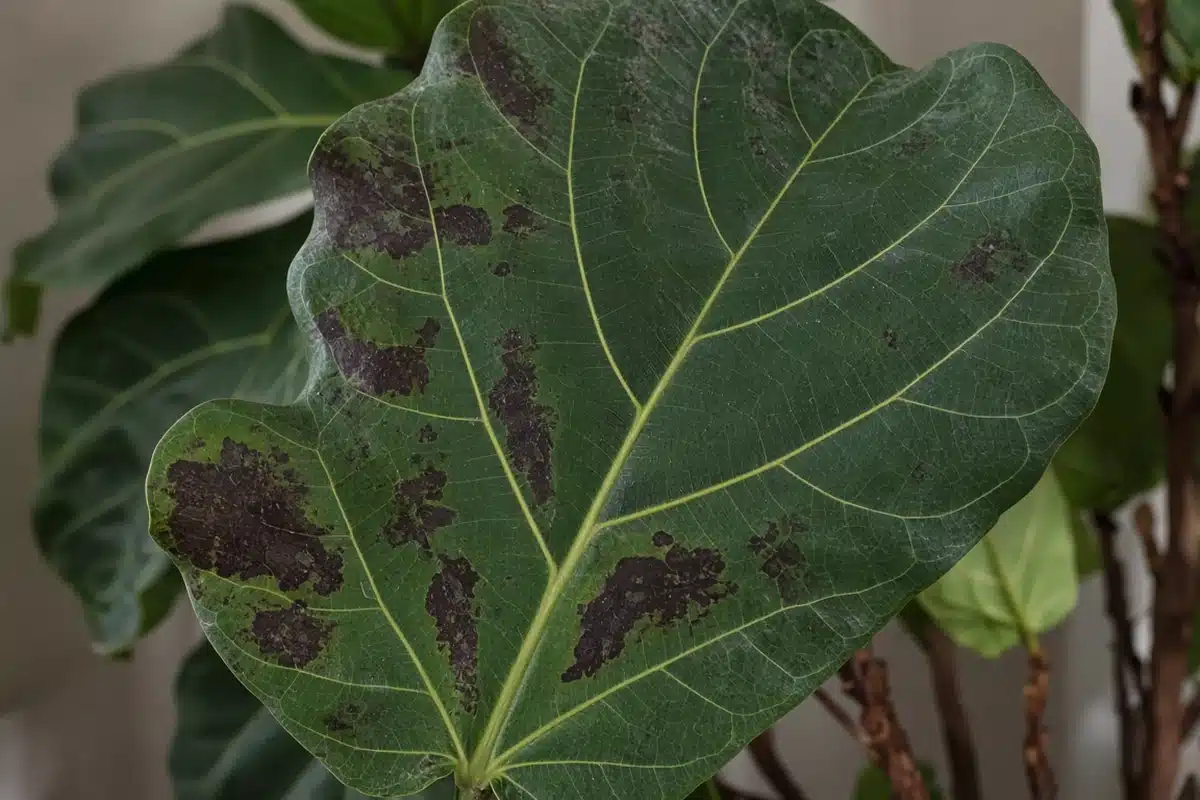
Why is my fiddle leaf fig dropping leaves?
The NC State Extension Gardener Plant Toolbox entry on Ficus lyrata describes the plant as a tropical tree that wants bright, filtered light and steady warmth. It notes that the plant can drop leaves when it’s moved or when its conditions shift.
Indoors, a ficus adjusts its leaves to the light it gets. When you move it, the old leaves may no longer suit the new light, so the plant sheds some and grows new ones. That is why leaf drop after bringing a plant home from the store is so common.
| Trigger | What you see | Fix |
|---|---|---|
| Recent move | Firm green leaves drop within weeks | Leave it in one spot |
| Cold draft | Leaves drop near doors or vents | Move away from drafts |
| Dry soil | Leaves droop, then drop | Water deeply when the top inch is dry |
| Wet soil | Lower leaves yellow or brown, then drop | Let mix dry, check drainage |
| Low light | Slow drop of lower leaves, leggy growth | Move closer to a bright window |
| Dry air | Brown leaf edges | Group plants, move away from heat vents |
Sources: NC State Extension, Iowa State University Extension, University of Wisconsin Extension Horticulture.
Do moves and drafts cause leaf drop?
Yes. A move changes light, temperature and humidity all at once. Even turning the plant to face a new direction may cause a few leaves to fall.
Drafts are another common trigger. Cold air from an exterior door in winter or hot, dry air from a heat vent can stress leaves. Pick a spot near a bright window, away from doors and vents, and leave the plant there. Rotate it only a little at a time if it leans toward the light.
Our post on the effects of environmental stresses on weed plants covers how sudden shifts in heat and light stress plants, and fiddle leaf figs respond the same way.
How does watering affect leaf drop?
Both too much and too little water lead to leaf drop. The University of Wisconsin Extension Horticulture article on reasons why plants wilt explains that dry soil and damaged roots both leave leaves short of water.
Water when the top inch or two of mix is dry. Water deeply so it runs from the drainage holes, then empty the saucer. Skip small daily sips. Without drainage holes, excess water can collect and leave roots too wet.
Wet roots show as yellowing or brown patches on lower leaves before they drop. Our post on overwatering and cannabis growth explains how waterlogged roots lose their air supply.
What do brown spots and edges mean?
The Iowa State University Extension answer on brown leaf tips and edges on houseplants lists dry air, uneven watering and salt buildup as common causes. Brown edges on a fiddle leaf fig often point to dry soil spells or dry indoor air in winter.
Dark brown spots in the middle of leaves, mainly lower ones, more often point to wet roots. Check the soil before changing your routine.
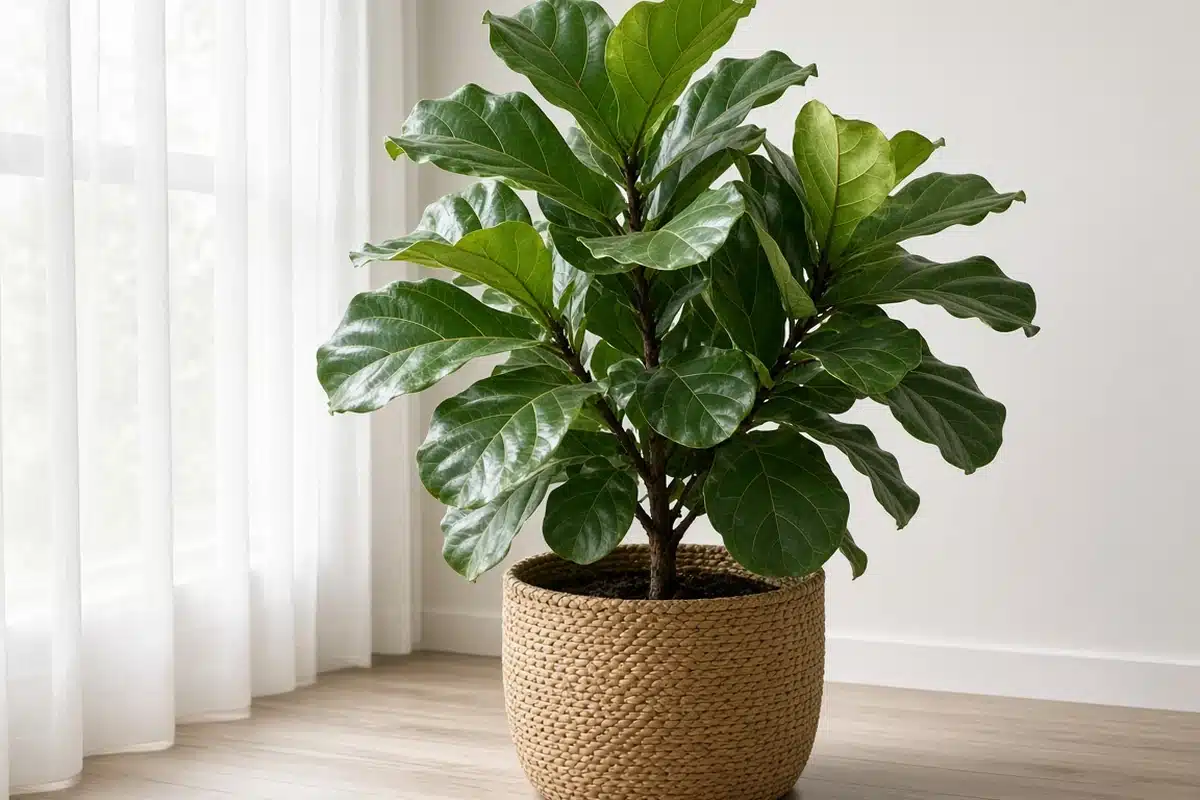
What about curling leaves?
Leaves that curl or cup can mean too much direct sun, heat or dry air. Our post on plant leaves curling upwards walks through causes of curled leaves that apply to many houseplants.
How do you help the plant settle?
Hold conditions steady. Pick one bright spot and leave the plant there. Water on a schedule set by the soil, not the calendar. Set it away from drafts. Wipe dust off the big leaves so they catch more light.
New leaves at the top are a good sign that the plant is adjusting. That can take a few weeks to a couple of months.
How to: step by step
- Note when leaf drop started and what changed.
- Place the plant in bright, filtered light away from drafts.
- Check whether the upper soil has dried before watering.
- Water deeply and empty the saucer.
- Make sure the pot has drainage holes.
- Leave the plant in place and watch for new growth.
Troubleshooting
Drop after a move. The plant is adjusting. Leave it in one spot.
Drop near a door or vent. Drafts may be contributing. Move the plant.
Lower leaves brown, then drop. Roots may be too wet. Water less often.
Leaves droop, then drop. Soil went dry. Water deeply.
Bare lower stem. Low light. Move closer to a window.
A steady spot and a steady routine stop most leaf drop. Kind Seed Co shares more plant care in outdoor growing.
Sources
- Ficus lyrata (fiddle leaf fig), NC State Extension Gardener Plant Toolbox, Ficus lyrata (fiddle leaf fig)
- Why does my houseplant have brown leaf tips and edges?, Iowa State University Extension, Yard and Garden, Why does my houseplant have brown leaf tips and edges?
- Reasons why plants wilt, University of Wisconsin Extension Horticulture, Reasons why plants wilt
FAQ
Is some leaf drop normal?
Yes. Old lower leaves fall slowly over time.
Will dropped leaves grow back?
Not in the same spot, but new leaves grow at the tips.
How often should you water?
When the top inch or two of mix is dry.
Can you move it outside in summer?
Yes, but adjust it slowly to brighter light.
How long does it take to settle?
A few weeks to a couple of months.