
Building an Herb Spiral: Stone Spiral Microclimates for Herbs
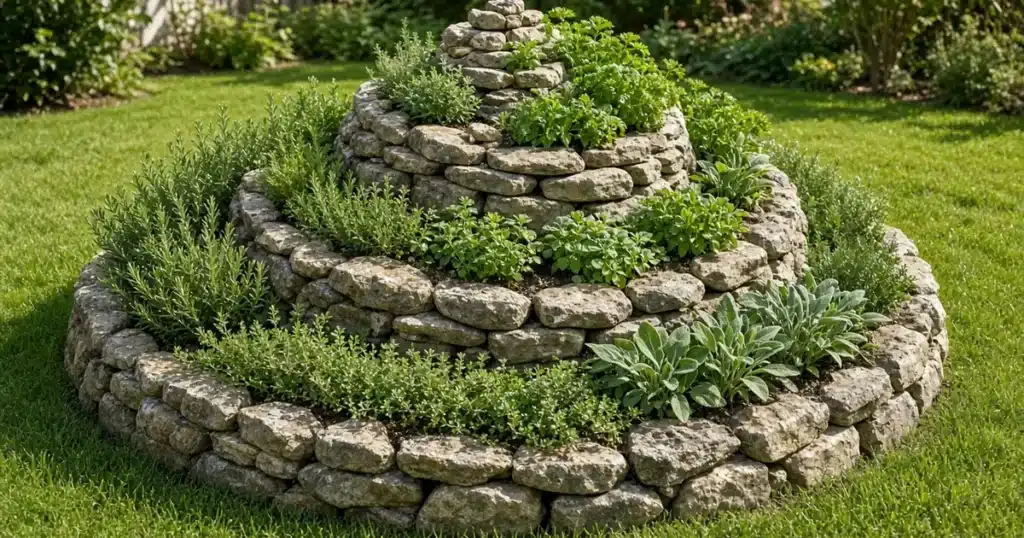
The short answer
An herb spiral is a raised bed built as a rising coil of stone or brick, with a dry, sunny top and a cooler, moister base. That range suits herbs with different needs in one small footprint. Build it on level, sunny ground, add drainage in the center, fill with soil and compost and plant dry loving herbs up high.
Herb spirals pack a lot of growing space into a circle a few feet wide. They also look great near a kitchen door.
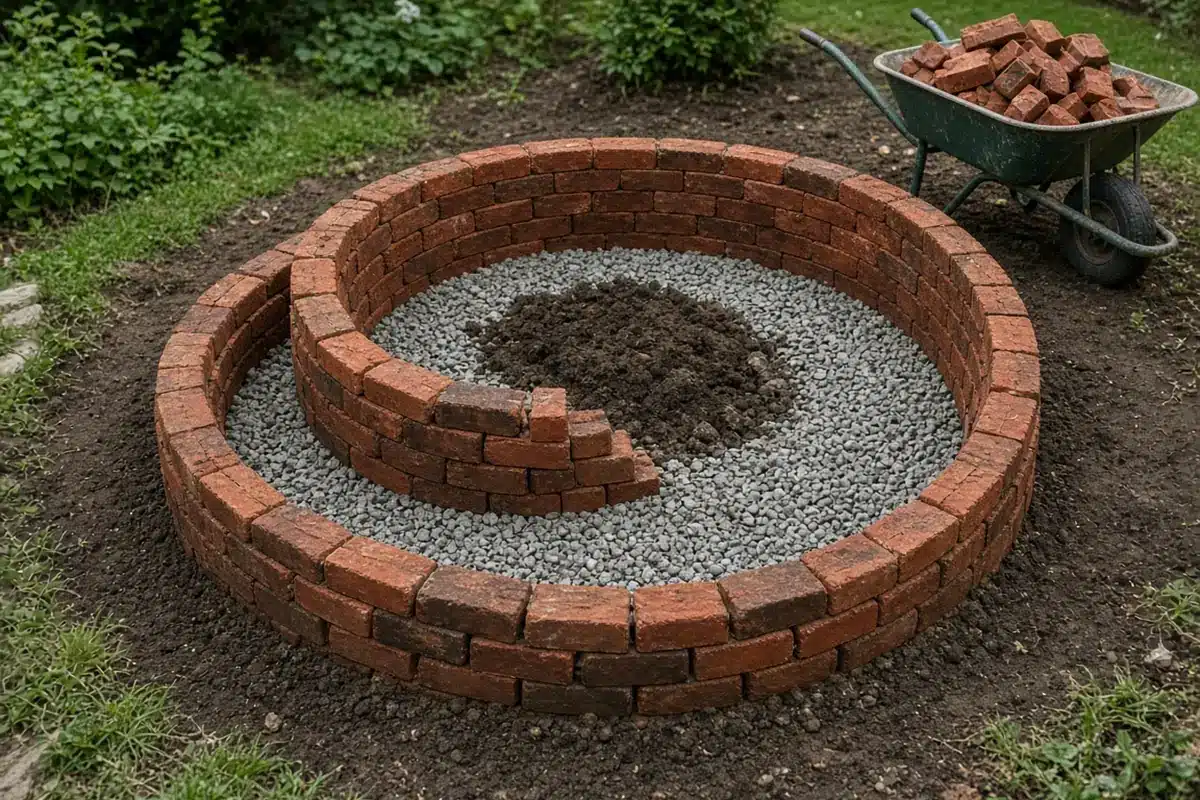
What is an herb spiral?
An herb spiral is a mound of soil held up by a wall that winds upward from the outside edge to a high center point. Think of a snail shell built of stone. The wall creates one long planting strip that climbs as it circles.
The UF IFAS Gardening Solutions spiral herb garden tutorial explains the main appeal. The shape gives you several growing conditions in one spot, and the herbs are easy to reach from all sides.
How does a spiral create microclimates?
Water drains down the mound. The top tends to stay drier, while the bottom stays moister. The side facing the sun gets more heat and light than the shaded side. Stones soak up warmth during the day and release it at night.
That means you can match each herb to the right spot. Our post on garden microclimates for cannabis explains how sun, slope and walls change growing conditions across a yard, and a spiral does the same on a tiny scale.
| Zone | Conditions | Herbs that fit |
|---|---|---|
| Top | Sunny, dry, fast draining | Rosemary, thyme, lavender, sage |
| Upper middle | Sunny, moderate moisture | Oregano, marjoram, savory |
| Lower middle | Some shade, more moisture | Cilantro, dill, chives |
| Base | Coolest and wettest | Parsley, mint in a pot, chervil |
Sources: University of Maryland Extension, UF IFAS Gardening Solutions.
How do you build an herb spiral?
The University of Maryland Extension herb spirals ten simple steps sheet breaks the build into a clear order. Here is the general approach.
Pick a sunny, level spot that gets at least six hours of sun. Mark a circle about five to six feet across. Remove grass and weeds, or smother them with cardboard.
Lay out the spiral line with string or flour. Start the wall at the outside edge, often on the north side, and wind inward. Build the wall higher as it moves toward the center, until the center stands two to three feet tall.
Fill the core with rubble, gravel or coarse material for drainage. Top it with a mix of garden soil and compost. Fill each section as you build the wall so the soil helps hold the stones in place.
The Maryland Grows post on building an herb spiral suggests using local stone, bricks or broken concrete. Dry stacked stones work fine if you set them carefully and tilt them slightly inward.
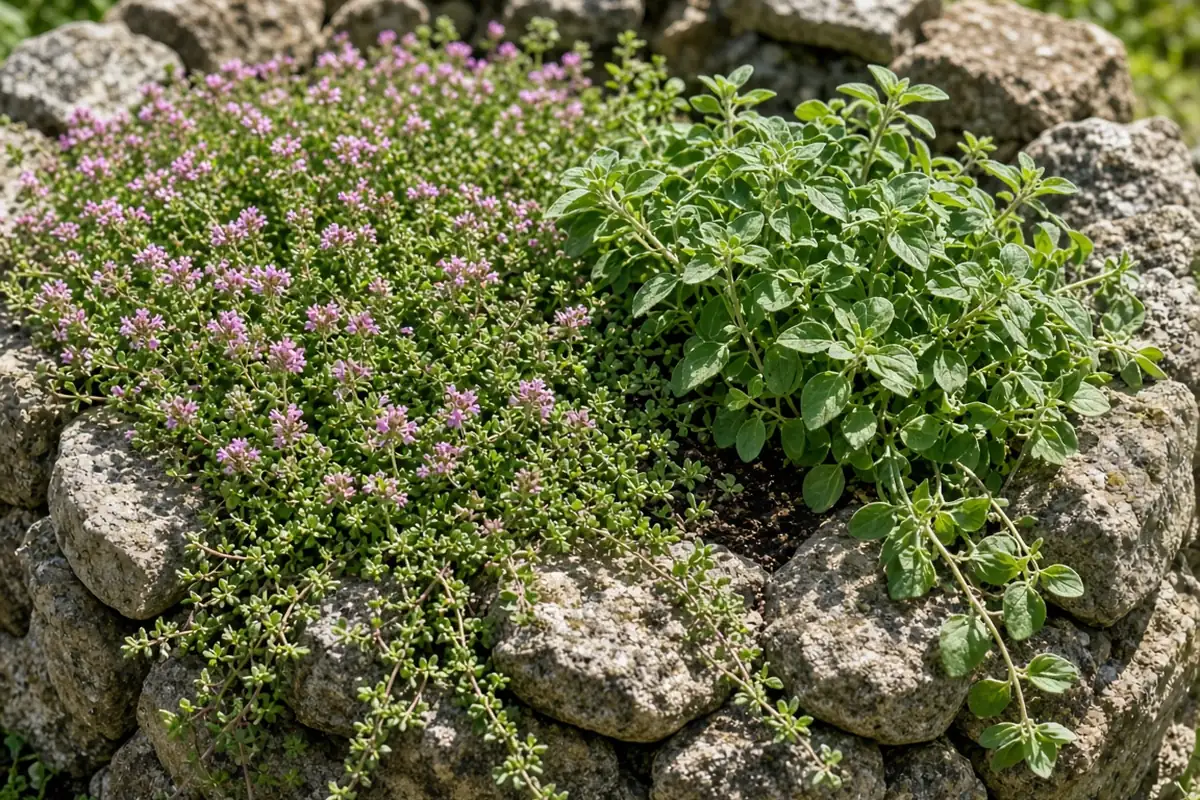
Which herbs go where?
Plant Mediterranean herbs that like dry, lean soil at the top. Rosemary, thyme, sage and lavender thrive there. Place oregano and marjoram a little lower.
Herbs that like more moisture go toward the base. Parsley, chives and cilantro do well in the lower turns. Mint spreads fast, so plant it in a sunken pot at the bottom. Our post on easy to grow herbs that will not get you high lists more herbs worth trying.
Some builders add a small pond or water dish at the base for frogs and insects. It adds humidity for moisture loving herbs.
How is it different from a keyhole garden?
Both are compact raised beds with a purpose. A keyhole garden has a central compost basket that feeds the bed. An herb spiral uses height to create zones. Our post on keyhole gardens for cannabis explains the keyhole design if you want to compare.
How to: step by step
- Pick a sunny, level spot near your kitchen.
- Mark a circle five to six feet across and clear it.
- Lay out the spiral line and build the wall, rising toward the center.
- Fill the core with rubble, then soil and compost.
- Plant dry loving herbs at the top and moisture lovers at the base.
- Water new plants in and mulch lightly.
Troubleshooting
Top herbs wilt. The top dries fastest. Water young plants until roots settle.
Base stays soggy. Add more coarse fill or move moisture lovers lower.
Soil washes out. Gaps in the wall are too large. Chink them with small stones.
Mint takes over. Dig it out and replant it in a sunken pot.
Stones move. Tilt them inward and pack soil behind them.
An herb spiral turns a small patch into a handy herb garden. Kind Seed Co shares more garden builds in outdoor growing.
Sources
- Herb spirals: ten simple steps, University of Maryland Extension, Herb spirals
- Spiral herb garden tutorial, UF IFAS Gardening Solutions, Spiral herb garden tutorial
- Build an herb spiral, University of Maryland Extension, Maryland Grows, Build an herb spiral
FAQ
How big should an herb spiral be?
Five to six feet across and two to three feet tall works well.
What can you build the wall with?
Stone, brick or broken concrete.
When should you build one?
Spring or fall, when soil is easy to work.
Can you grow vegetables in a spiral?
Small greens fit, but herbs suit the zones well.
Does the spiral need drainage?
Yes. Fill the core with coarse rubble or gravel.


