
Hydroponic Drip Emitter Clog: Clearing Crust plus Roots

A hydroponic drip emitter clog happens when debris, crust, slime or roots block the tiny opening in an emitter. The plant on that line then gets little or no solution.
The short answer
Iowa State University Extension notes the small openings of emitters can easily clog, plus clogs often go unnoticed until plants wilt. Colorado State University Extension advises flushing lines plus cleaning the filter. Check each emitter, soak clogged ones, flush the lines plus hold emitter tips out of the media.
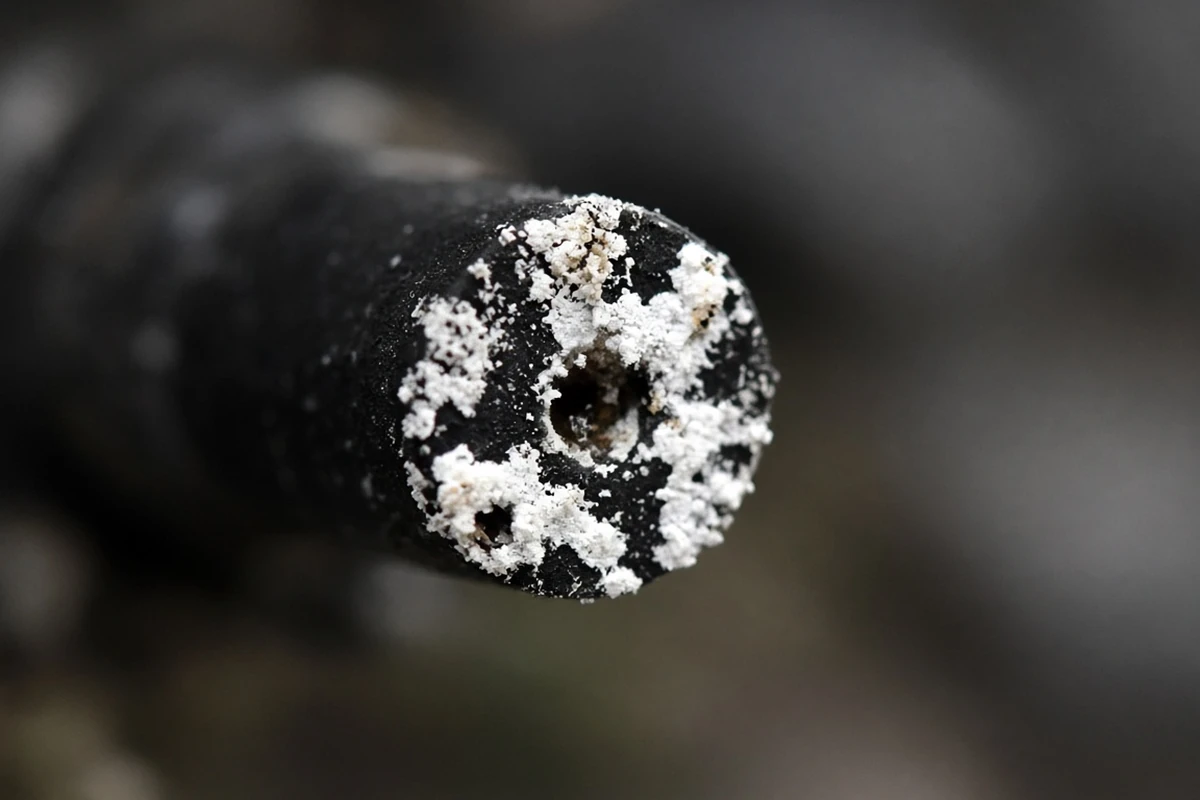
What clogs hydroponic drip emitters?
WSU Extension notes emitters contain very small channels, so sediment plus debris clog them. The University of Tennessee notes a continuous flow of solution leads to root growth that clogs drain lines. It also advises fully soluble, greenhouse grade fertilizers to prevent clogging in pumps plus irrigation systems.
How do you clean a clogged emitter?
CSU advises cleaning emitters by soaking them in water plus using forced air to clear particles. Then cap the system, pressurize it plus confirm each emitter runs.
| Sign | Cause | Fix |
|---|---|---|
| Plants wilt on one line | Blocked emitter (Iowa State) | Soak plus blow clear (CSU) |
| Weak flow everywhere | Dirty filter (CSU) | Clean the filter screen |
| Roots at the outlet | Root growth (Tennessee) | Lift the tip above the media |
| Gritty residue | Sediment (WSU) | Add a screen filter |
Source: Iowa State, Colorado State, WSU plus University of Tennessee Extension.
How do you prevent clogs?
CSU notes clogs are much less likely with filtered water plus proper pressure regulation used with self cleaning emitters. Iowa State calls a filter with a 100 mesh screen a must. With pond or rain water, clean the filter more often, per CSU.

How to: step by step
- Run the system plus observe each emitter.
- Flag emitters with weak or no flow.
- Remove plus soak clogged emitters.
- Flush the lines with clean water.
- Clean or replace the filter screen.
- Reinstall plus check flow at every plant.
Troubleshooting
Some plants dry out: blocked emitters. Clean them.
Crusty tips: buildup. Soak plus flush.
Roots in an emitter: tip rests in the media. Raise it.
Clogs return after repairs: debris in the line. CSU advises a thorough flush after repairs.
For system care read caring for your hydroponic system plus hydroponic in different mediums. Room conditions are covered in hydro setup environment. Kind Seed Co also stocks cannabis seeds.
Sources
- Drip irrigation for home gardens, Colorado State University Extension
- Using drip irrigation in the garden, Iowa State University Extension and Outreach
- Designing a drip irrigation system, WSU Extension
- Tomatoes, peppers and cucumbers in small-scale soilless and hydroponic systems (W 844-C), University of Tennessee Extension
FAQ
How often should drip lines be flushed?
Colorado State University Extension advises flushing the mainline before the first irrigation in spring to clear dirt, plus flushing the system thoroughly after a break or repairs. In a hydroponic system, flush whenever the reservoir is changed or a line is opened to avoid emitter clogging.
Do filters stop clogs?
Iowa State University Extension notes that without a filter, emitters are easily clogged plus some plants dry out. WSU Extension notes screen filters remove sediment plus debris. CSU adds that clogs are much less likely with filtered water plus proper pressure regulation.
Can emitters be replaced?
Colorado State University Extension notes emitters can be simply exchanged or removed plus emitter lines repositioned. If a soaked emitter still runs weak after forced air, swapping it is quicker than more cleaning. Check flow at every plant once new emitters are in.
Does fertilizer type affect clogs?
The University of Tennessee advises using greenhouse grade fertilizers made for hydroponics because they are completely soluble plus contain no filler. It notes this helps prevent clogging in pumps plus irrigation systems. Fertilizers meant for soil can leave material behind.
What filter mesh works for drip?
Iowa State University Extension calls a filter with a 100 mesh screen a must at the start of the main line. Colorado State University Extension notes in line emitters stay self flushing plus clog resistant with 200 mesh filtration. Follow the emitter maker's filter advice.



