
Hydroponic Reservoir Drain Valve: Easier Water Changes From the Bottom
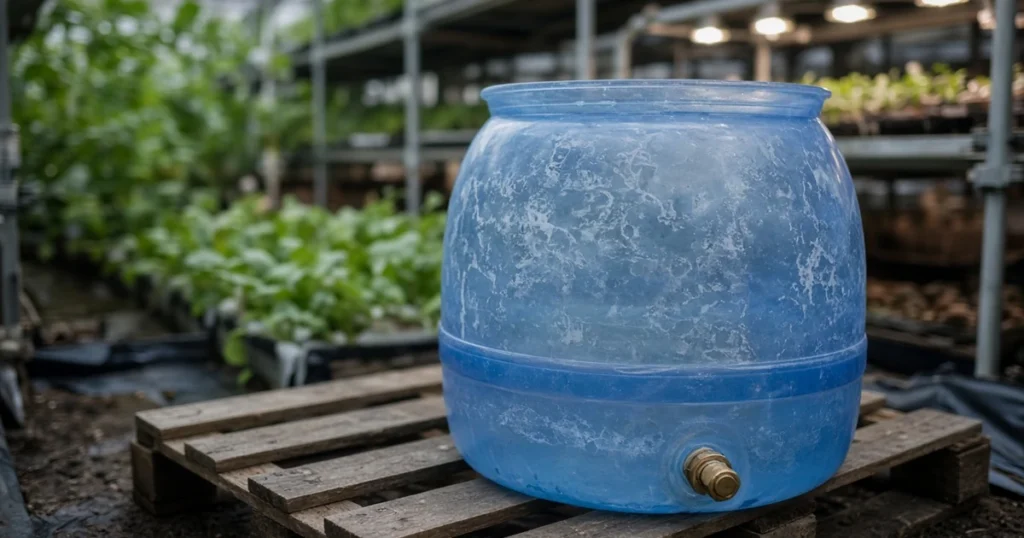
A hydroponic reservoir drain valve is a bulkhead fitting plus valve set low in the tank so old nutrient solution drains out by gravity. It turns a messy water change into a simple one.
The short answer
Oregon State University Extension advises installing a bulkhead fitting plus valve at the bottom of a deep water culture reservoir for convenient drainage. Fit the valve near the bottom on a flat side, seal it well, set the tank level plus drain into a bucket at each solution change.

Why add a drain valve to a reservoir?
The University of Tennessee advises changing tanks every one to two weeks in small recirculating systems to prevent nutrient imbalances plus reduce disease risk. Illinois Extension advises every 2 to 3 weeks. On either schedule a bottom valve speeds those changes.
Where should the valve go?
Set it as low as the fitting allows on a flat wall. Oregon State advises a level reservoir bottom, within one inch, plus support on the ground because of the weight of the water.
| Part | Purpose | Tip |
|---|---|---|
| Bulkhead fitting | Seals the hole through the wall | Set at the bottom (Oregon State) |
| Valve | Opens to drain solution | Pairs with the bulkhead (Oregon State) |
| Level base | Even water across the tank | Within one inch (Oregon State) |
| Ground support | Carries the water weight | Large volumes sit on the ground (Oregon State) |
Source: Oregon State University Extension.
How do you seal a bulkhead fitting?
Drill a hole sized to the fitting, seat the gasket on the inside wall plus snug the nut. Fill with water plus look for drips before adding plants.

How to: step by step
- Empty plus dry the reservoir.
- Mark a low spot on a flat side.
- Drill a hole sized to the bulkhead fitting.
- Fit the bulkhead with its gasket inside.
- Tighten snugly plus add the valve.
- Fill with water plus check for drips.
Troubleshooting
Slow drip at the fitting: loose nut or gasket. Tighten or reseat.
Tank drains only partly: valve too high. Tilt the tank.
Cracked plastic: hole drilled too fast. Drill slowly.
Uneven water depth: tank not level. Oregon State advises a level base.
For system care read caring for your hydroponic system plus hydroponic in different mediums. Room conditions are covered in hydro setup environment. Kind Seed Co also stocks cannabis seeds.
Sources
- Hydro hints: deep water culture (EM 9455), Oregon State University Extension
- Hydroponic production of edible crops: deep water culture (DWC) systems (SPES-464), Virginia Cooperative Extension
- Tomatoes, peppers and cucumbers in small-scale soilless and hydroponic systems (W 844-C), University of Tennessee Extension
- Home hydroponics handouts, University of Illinois Extension
FAQ
How often should reservoir solution be changed?
The University of Tennessee advises changing the tank every one to two weeks in small recirculating systems to prevent nutrient imbalances plus reduce disease risk. Illinois Extension advises replacing the solution every 2 to 3 weeks. A bottom drain valve makes either schedule quicker plus cleaner.
Why should the reservoir be level?
Oregon State University Extension advises making sure the bottom of a production reservoir is level within one inch. That spreads water evenly plus prevents uneven growth. A level tank also drains more completely through a valve set low on one side.
Where should a full reservoir sit?
Oregon State University Extension notes deep water culture uses large volumes of water that should be supported on the ground to handle the weight. A sturdy floor spot near the valve side also makes it easier to set a bucket under the outlet.
Can one large reservoir be split into several tanks?
Oregon State University Extension notes there is no strict limit on reservoir size, but dividing the volume into several tanks can help manage leaks plus localize problems in one spot. Each tank can then get its own drain valve for quicker changes.
What should be checked between solution changes?
Virginia Cooperative Extension advises checking EC plus pH two to three times each week. EC shows whether fertilizer levels have shifted, plus pH affects nutrient uptake. The University of Tennessee notes recirculating systems need close attention to both between full changes.



