
Floating Wetland Planters: Rafts of Plants on Ponds and Tanks
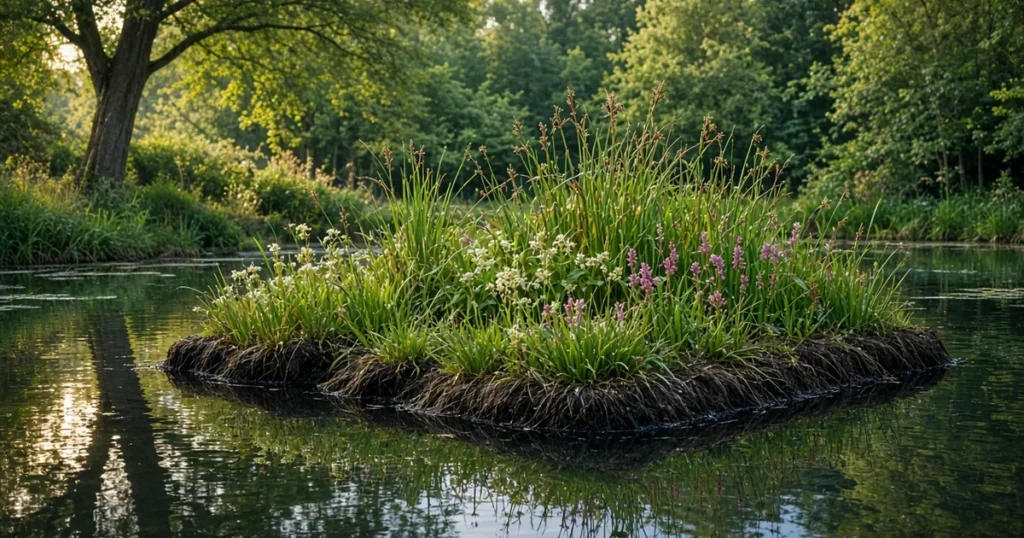
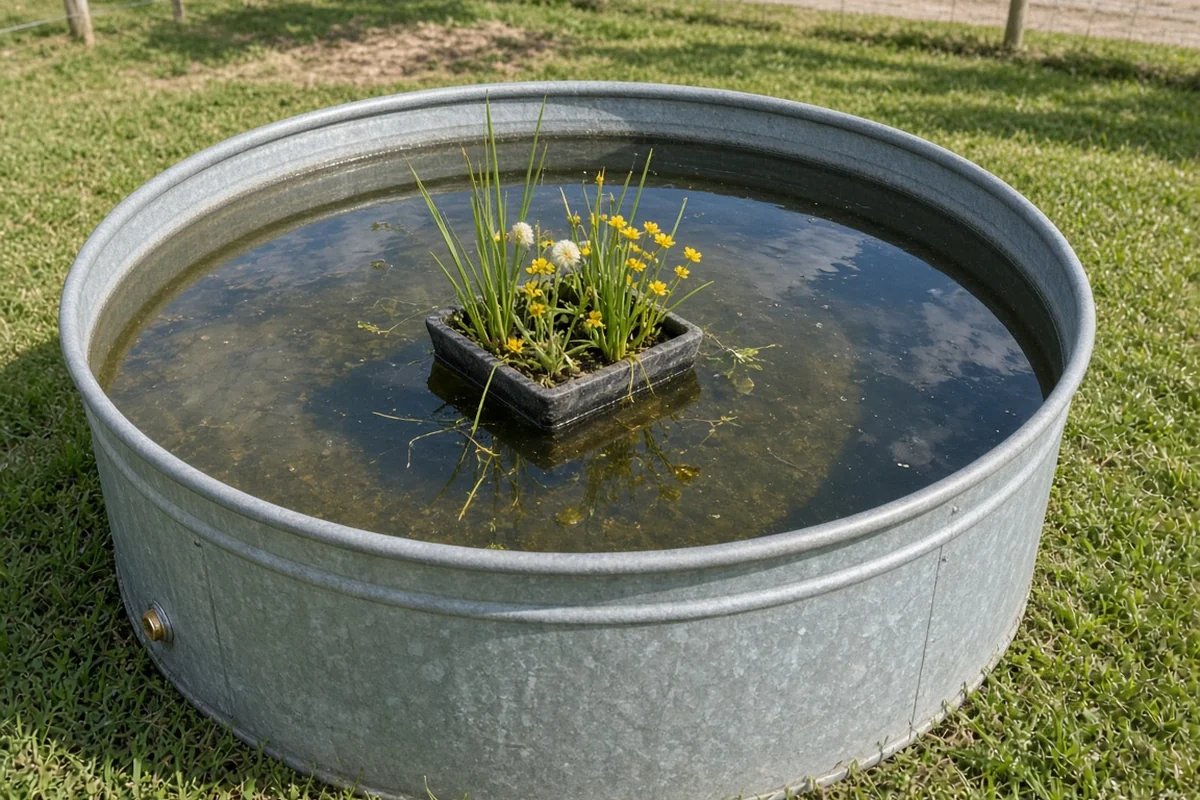
A floating wetland is a buoyant mat planted with wetland plants whose roots grow down into the water. NC State Extension describes these mats for ponds. The same idea works as a small raft planter on a large tank or garden pond.
The short answer
Plant native wetland plants with fibrous roots into a buoyant mat. NC State suggests about one plant per 2 square feet and anchoring the mat to the pond bottom or banks. Cover no more than half the pond and use ponds at least 3 feet deep.
What is a floating wetland planter?
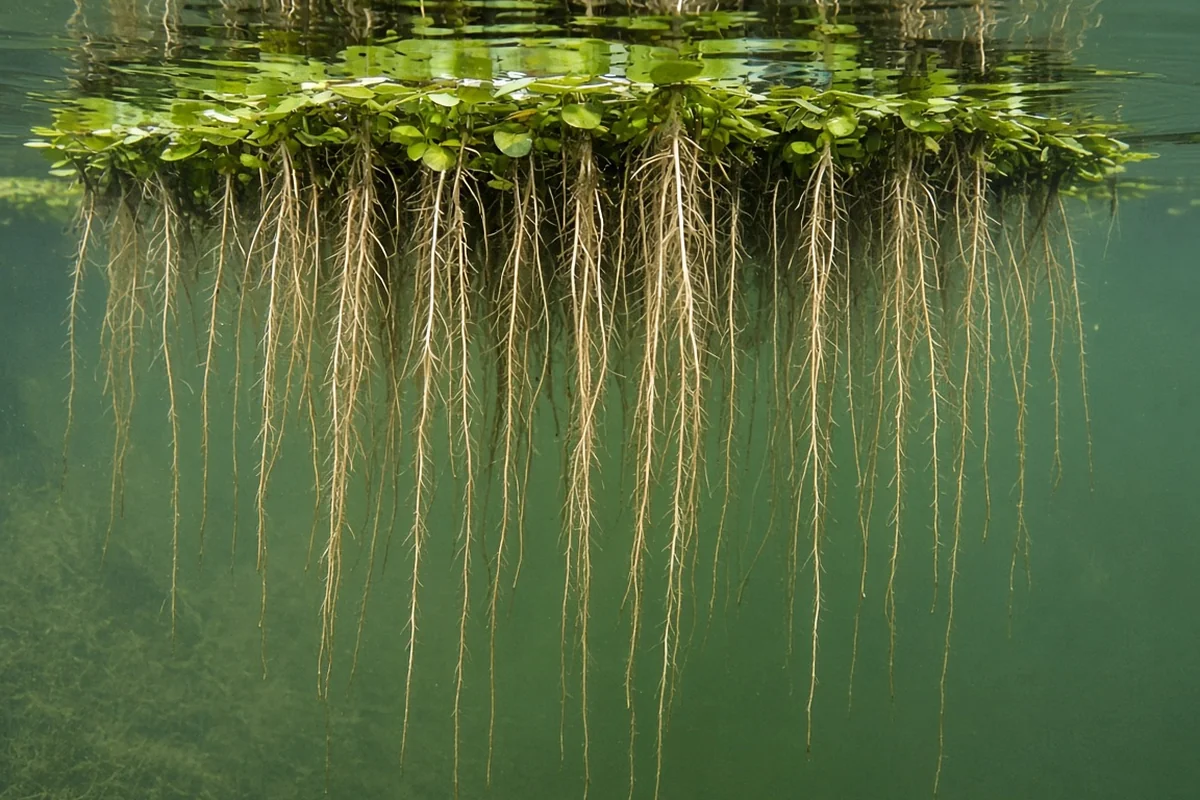
NC State says the mat rises and falls with the water and gives wildlife habitat. Mats can be made of polyethylene or polystyrene foam, PVC, bamboo or stainless steel. Plants can go in with media such as peat, coir or pumice, or as plugs with no media.
| Option | What it does | Source |
|---|---|---|
| Foam mat | Floats plants on the surface | Installation and Maintenance of Floating Treatment Wetlands: A Guide on Retrofitting Stormwater Retention Ponds in North Carolina, NC State Extension |
| Coir or pumice | Holds plugs in the mat | Installation and Maintenance of Floating Treatment Wetlands: A Guide on Retrofitting Stormwater Retention Ponds in North Carolina, NC State Extension |
| Bare plugs | Roots hang straight in water | Installation and Maintenance of Floating Treatment Wetlands: A Guide on Retrofitting Stormwater Retention Ponds in North Carolina, NC State Extension |
Which plants suit a floating raft?
NC State suggests a diverse native mix with fibrous roots 2 to 3 feet long. Its examples include soft rush, tussock sedge and golden canna. NC State also lists pickerelweed, a native marginal plant, for water gardens. Clemson lists pond plants by depth.
A native mix such as pickerelweed grows fibrous roots 2 to 3 feet long.
How do you anchor and care for one?
NC State suggests cinder blocks or helical anchors with a cable as long as the maximum water depth. Check the mat daily after setup for plant loss and replant if losses pass 15%. Inspect it every 3 months and remove young trees, since they sink mats.
A cinder block anchor on a long cable holds the mat in place and lets it rise and fall.
How to: step by step
- Choose a pond at least 3 feet deep and no deeper than 6 feet at the mat site.
- Cut a foam or coir mat to size.
- Set plants about one per 2 square feet.
- Tie the mat to cinder blocks with cable as long as the deepest water.
- Check it daily at first and replant if losses pass 15%.
- Trim growth above the mat with shears in late summer.
Troubleshooting
Mat sinking: woody growth, so remove young trees.
Plants lost after setup: predation, so replant gaps.
Roots on the bottom: shallow water, so move the mat to water at least 3 feet deep.
Kind Seed Co shares these plant notes for growers of all kinds. For more on root media see hydroponic in different mediums. See pond water for cannabis for pond water notes. Read hydro setup environment and caring for your hydroponic system for related system notes.
Sources
- Installation and Maintenance of Floating Treatment Wetlands: A Guide on Retrofitting Stormwater Retention Ponds in North Carolina, NC State Extension
- Pontederia cordata (pickerelweed), NC State Extension Gardener Plant Toolbox
- Water gardens: planting aquatic plants (PlantTalk 1026), Colorado State University Extension
- Backyard wildlife ponds, Clemson Cooperative Extension, HGIC
FAQ
Do floating wetlands clean water?
NC State notes that water quality gains have not been definitively shown for these mats. It does list wildlife habitat as a benefit.
Can a floating planter sit in a fish pond?
NC State describes mats for ponds and notes that covering more than 50% of the surface can lower dissolved oxygen.
Do floating planters need soil?
No. NC State says plugs can go into the mat without media. It notes potting media may leach nutrients.
What happens to the raft in winter?
NC State suggests trimming growth above the mat in late summer to early fall and inspecting the mat every 3 months.
How much of a pond should a floating wetland cover?
NC State advises covering no more than 50% of the pond surface.



