
Aquatic Planting Media: Heavy Media for Submerged Pots
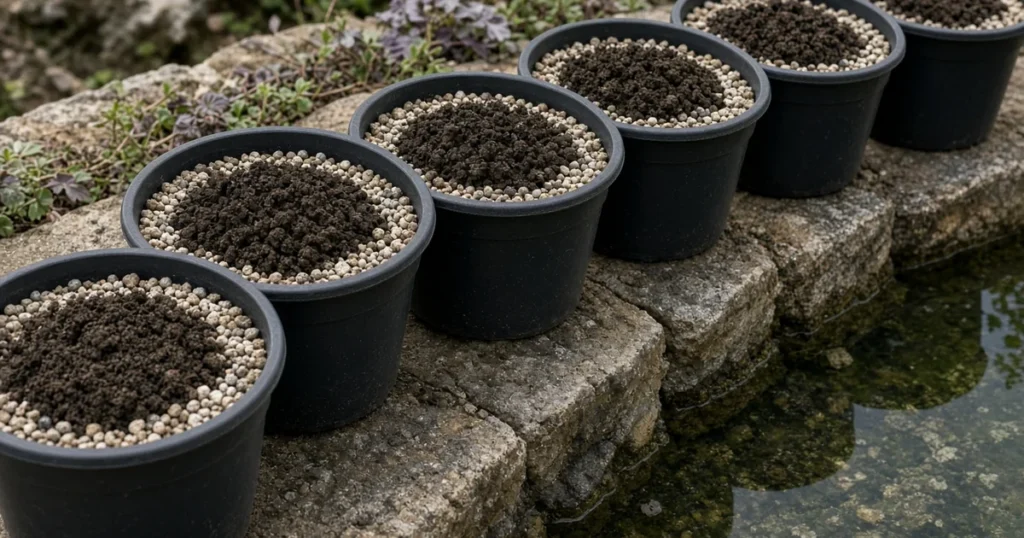
Aquatic planting media is the soil that holds a water plant in its pot under water. It needs to be heavy enough to stay put. Light mixes float away and cloud the water.
The short answer
Use heavy clay loam or silt loam for pond pots. Kansas State suggests two thirds soil and one third sand topped with pea gravel. Utah State advises against potting mix and light soil because they float. Fill to 2 or 3 inches below the rim and cap with gravel.
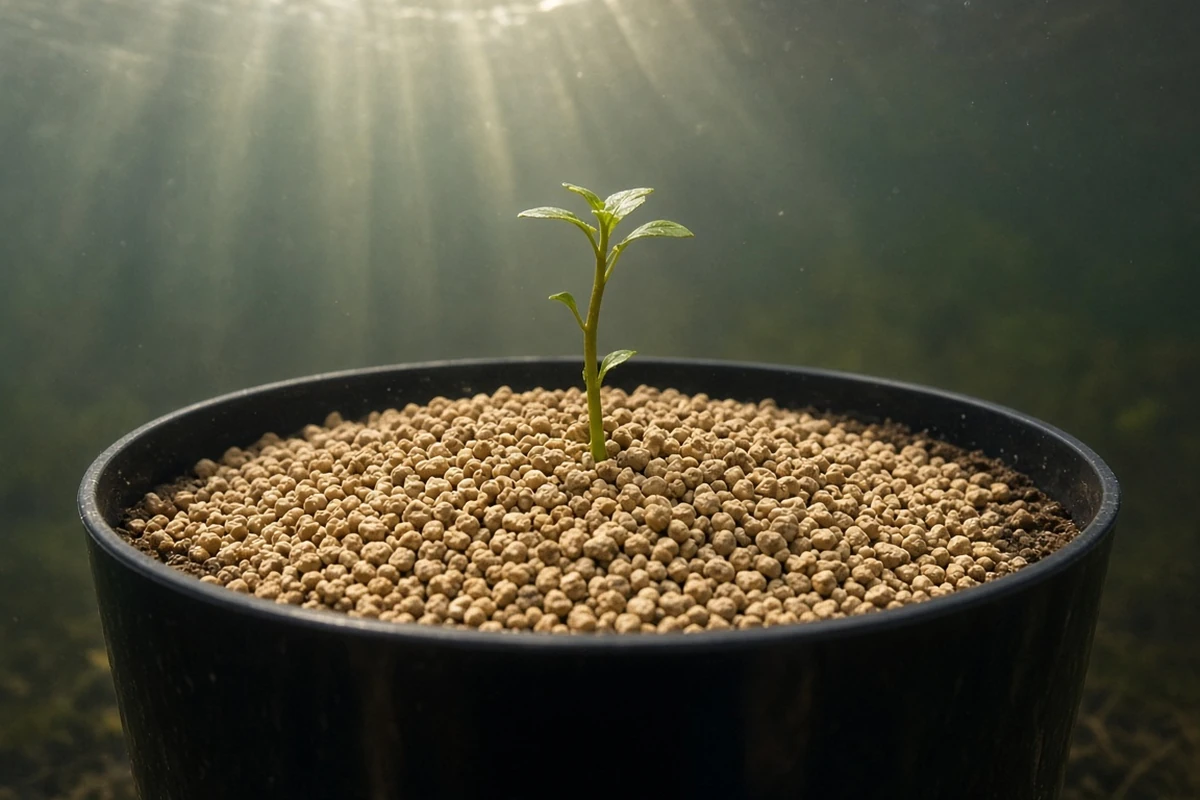
Why does aquatic media need to be heavy?
Utah State says potting mix and light soils float out of the pot. Colorado State suggests heavy clay loam for aquatic plants, and Kansas State notes chemical free lawn soil works.
| Option | What it does | Source |
|---|---|---|
| Heavy clay loam | Stays in the pot under water | Water gardens: planting aquatic plants (PlantTalk 1026), Colorado State University Extension |
| Silt loam or clay | Holds roots without floating | Tips for growing water lilies, Utah State University Extension |
| Lawn soil | Works if free of chemicals | Water Gardening: Plants for the Water Garden (MF2912), K-State Research and Extension |
Which media work in submerged pots?
Kansas State suggests a mix of two thirds soil and one third sand. Utah State names silt loam or clay soil. Illinois Extension explains how to plant container water gardens.
Kansas State suggests two thirds soil and one third sand. Utah State fills a plastic pot with holes with silt loam.
How do you cap a pond pot?
Utah State suggests a top layer of pea gravel or large rocks. Kansas State says a topping of pea gravel or small stone holds soil in place and stops fish from digging. It advises against limestone or road gravel.
Cap the soil with pea gravel or large rocks but skip limestone and road gravel.
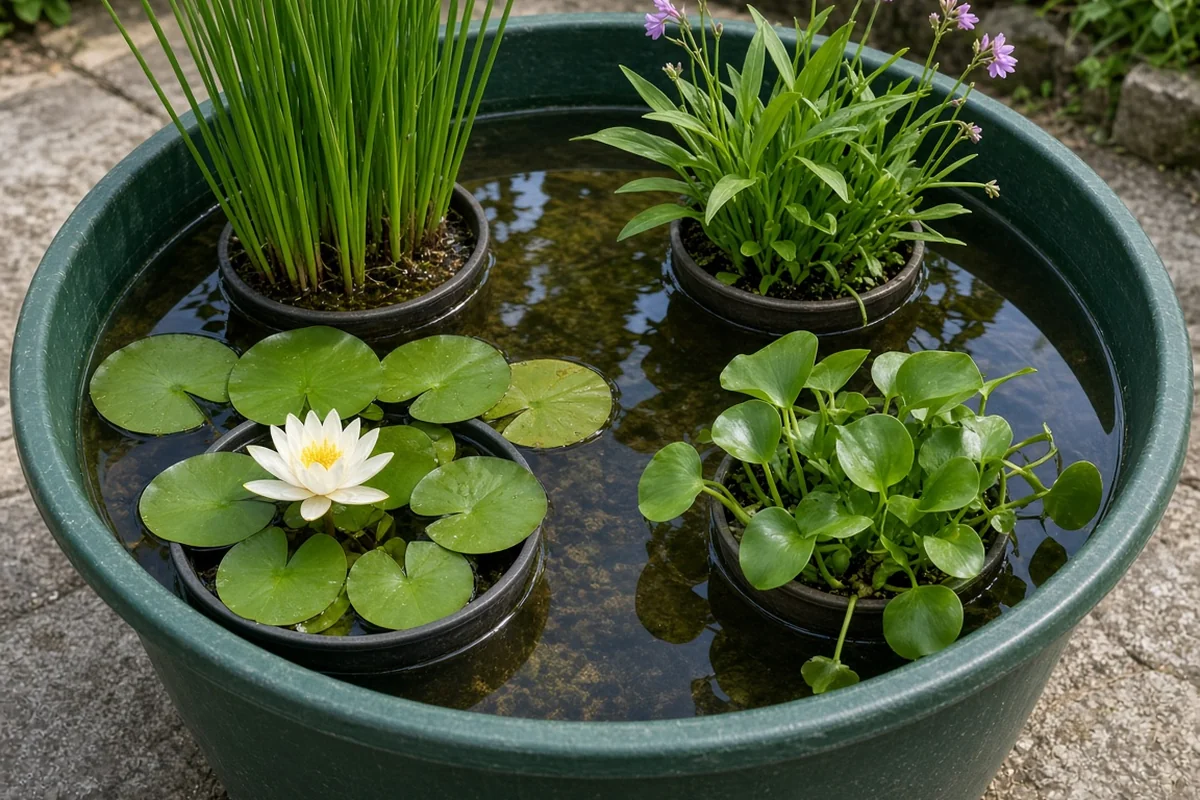
How to: step by step
- Choose a wide pot for the plant.
- Fill it with moist heavy clay loam to 2 or 3 inches below the rim.
- Set the plant at the depth its type needs.
- Firm the media around the roots.
- Cap the surface with pea gravel.
- Water the pot and lower it slowly into the pond.
Troubleshooting
Cloudy water: light mix or no cap, so use heavy media and gravel.
Soil floating up: potting mix, so switch to silt loam or clay.
Fish digging in pots: bare soil, so add a pea gravel cap.
Kind Seed Co shares these plant notes for growers of all kinds. For more on root media see hydroponic in different mediums and peat moss for cannabis. Read caring for your hydroponic system for system care. See pond water for cannabis for pond water notes.
Sources
- Water gardens: planting aquatic plants (PlantTalk 1026), Colorado State University Extension
- Planting the water garden container, University of Illinois Extension
- Tips for growing water lilies, Utah State University Extension
- Water Gardening: Plants for the Water Garden (MF2912), K-State Research and Extension
FAQ
Can I use potting soil for pond plants?
Utah State advises against potting mix and light soil because they float. Colorado State suggests heavy clay loam.
How deep should a water lily pot sit?
Utah State lists 18 to 24 inches for hardy water lilies and 6 to 10 inches for tropical ones.
Do aquatic plants need fertilizer?
Kansas State says blooming plants need fertilizer for good flowers and suggests tabs near the bottom of the pot. Utah State uses two to four pellets per lily. Most marginal plants flourish without it.
How often should pond pots be repotted?
Kansas State gives no fixed schedule. It describes dividing clumps and repotting them with roots over a mound of soil two thirds the depth of the pot.
What gravel should cap a pond pot?
Kansas State suggests pea gravel or small stone and advises against limestone or road gravel.



