Greensand for Cannabis: Potassium Source or Soil Conditioner?
Quick answer: Greensand is a natural deposit rich in glauconite, an olive green mineral mined mainly in New Jersey. Garden charts often list it as a potassium source, and an Iowa State Extension chart gives it about 7 percent total potash. Yet Rutgers soil scientists concluded that greensand has little value as a nutrient source and works better as a soil conditioner that helps sandy soil hold water and nutrients. For cannabis, greensand makes the most sense in light, sandy beds. It is a weak choice for correcting a potassium shortage quickly.
What Is Greensand?
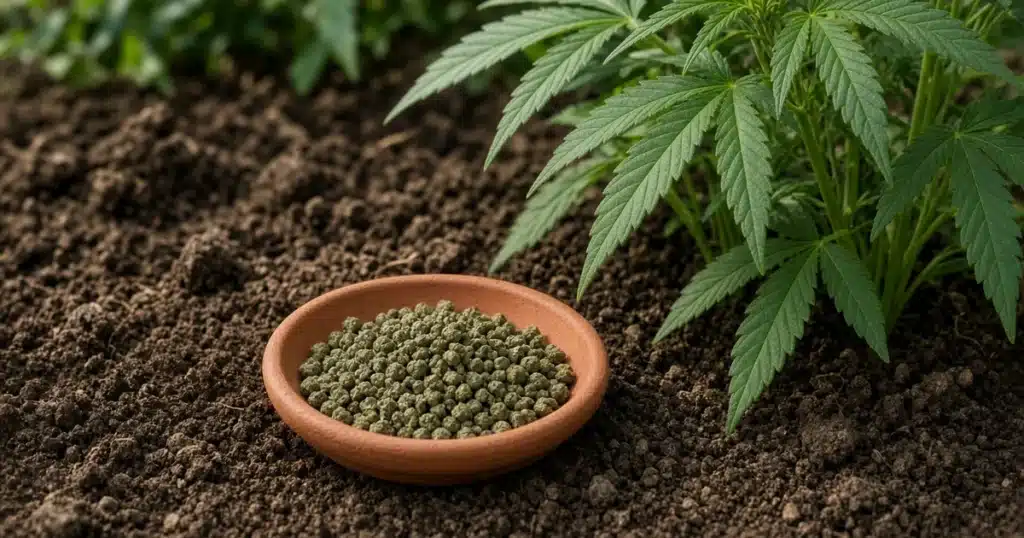
Greensand formed in shallow ancient seas and now lies in a belt across New Jersey, with smaller deposits in Delaware, Maryland and Virginia. Its main mineral, glauconite, looks like sand sized pellets but behaves differently from ordinary sand.
In their article Greensand as a Soil Amendment, two Rutgers soil scientists explain that glauconite is a micalike mineral made largely of clay minerals and full of tiny pores. Those micro pores let it hold water in a way quartz sand cannot. Greensand also has a high cation exchange capacity, which they put at 20 to 30 cmol per kilogram, so it can store calcium, magnesium, potassium and trace elements on its surfaces.
Farmers have spread millions of tons of greensand across New Jersey fields since the late 1800s. The authors note that early in the twentieth century about 80 open pit mines worked the deposits, while only a handful operate today. Greensand from those old applications may still linger in soils where it never occurred naturally, which means some East Coast gardens already contain a share of it without the owner knowing. Rutgers calls the olive green glauconite mineral in greensand unusual, and that color gives the material its common name.
How Much Potassium Does Greensand Contain?
Pure glauconite can contain up to 8 percent potash, according to the Rutgers authors. Commercial products usually fall well below that, ranging from about 0.1 to 7 percent, because bagged greensand includes other minerals along with the glauconite.
The Iowa State Yard and Garden team lists greensand in its table of organic fertilizers as a potash source with 7 percent total potash plus trace minerals. Notice the word total here. Total potash is not the same as the amount a plant can use this season. Much of the potassium in glauconite is locked inside the mineral structure and releases very slowly.
A potassium reading on a soil test reflects the exchangeable form, the share held loosely on soil particles. Greensand adds to that pool only gradually as the mineral weathers. That gap explains a long running debate. Rutgers reports that researchers have studied potassium availability from greensand since the nineteenth century. Crop responses showed up now and then, yet almost every investigator concluded it does little to supply nutrients.
For cannabis growers, potassium matters most during flowering, when the plant moves sugars and water into developing buds. Our overview of why potassium matters for cannabis plants describes those roles. If a plant needs potassium now, greensand is too slow to help in time.
For another crushed mineral with modest nutrient value, see what rock dust can and cannot do.
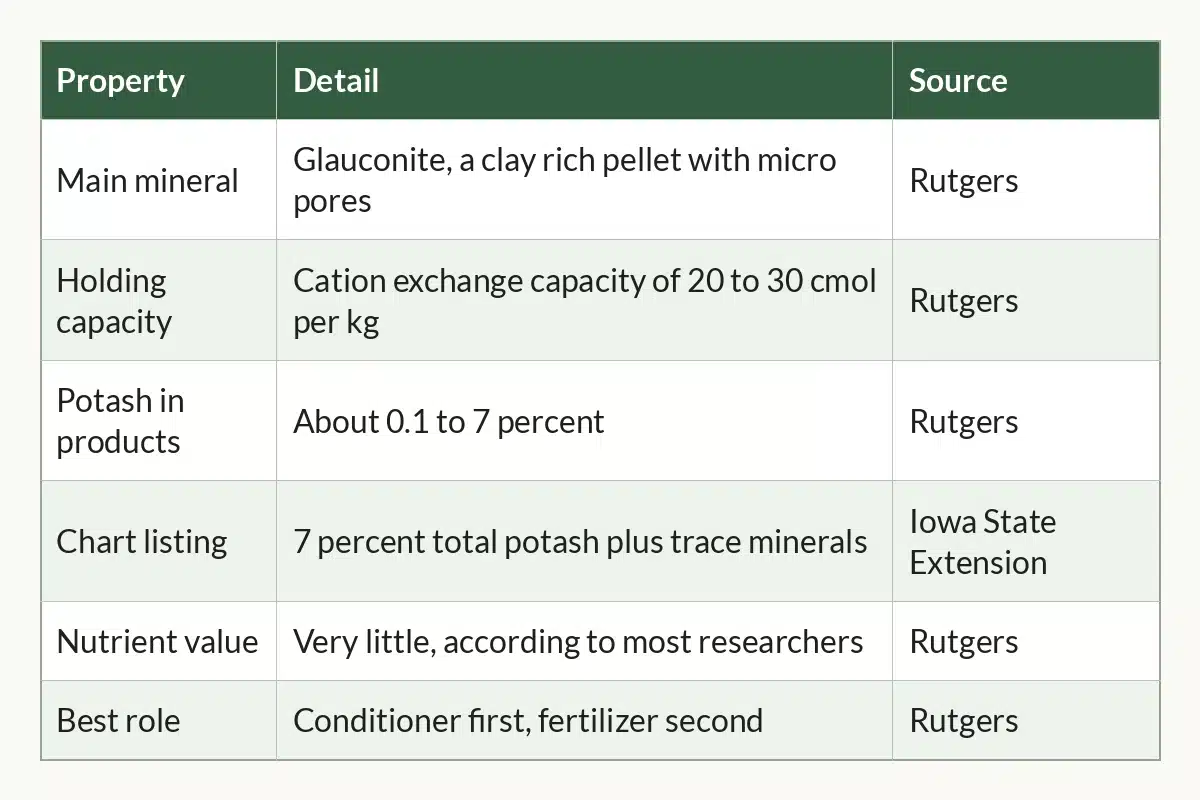
Greensand at a Glance
| Property | Detail | Source |
|---|---|---|
| Main mineral | Glauconite, a clay rich pellet with micro pores | Rutgers |
| Holding capacity | Cation exchange capacity of 20 to 30 cmol per kg | Rutgers |
| Potash in products | About 0.1 to 7 percent | Rutgers |
| Chart listing | 7 percent total potash plus trace minerals | Iowa State Extension |
| Nutrient value | Very little, according to most researchers | Rutgers |
| Best role | Conditioner first, fertilizer second | Rutgers |
Does Greensand Work as a Soil Conditioner?
Yes, and Rutgers sees it as more useful for soil structure than as a potassium source. Rutgers describes a field trial near New Brunswick on a sandy loam that had low organic matter and poor structure after years of continuous vegetable crops. Potatoes received greensand in the row at planting, and every plot was fertilized the same way.
In that potato study, tuber yields averaged 16 percent higher where greensand went in. Leaf tissue tests found nutrient levels matched across plots with and without the mineral. The authors therefore credited the yield gain to improved soil properties rather than better nutrition. That result belongs to one potato trial on one worn soil, so it is a clue, not proof of anything for cannabis.
The article’s conclusion is clear. The authors rank greensand higher as a conditioner for soil than as a feed for plants. Its micro pores can raise water holding capacity and nutrient storage in amended soil. Unlike compost, which breaks down, those mineral changes are permanent. Whether plants respond depends on the specific soil. A rich loam that already holds water and nutrients well leaves little room for improvement, while a tired, sandy field has much more to gain.
UC Master Gardeners in San Luis Obispo County make a similar point in their guide to fertilizers and amendments, noting that greensand loosens clay and increases the moisture holding ability of sandy soils.
Greensand works more as a conditioner than a feed, and the line between amendments and fertilizers has its own page on our site.
Is Greensand Worth Using for Cannabis?
It depends on the bed. In a sandy outdoor plot that dries quickly and loses nutrients to leaching, a permanent mineral that holds water and stores nutrients can be a sound long term investment. A rich loam or a good potting mix gains little from it.
Clay soils are another story. Greensand pellets are sand sized, so they open up heavy soil slightly, yet compost does that job more cheaply. Our guide to clay soil for cannabis covers better ways to loosen dense ground.
Container growers have even fewer reasons to buy it. A good potting mix already holds water well through peat, coir or bark, and container plants rely on regular feeding rather than slow mineral weathering. Then there is cost, and the sheer quantity involved. Iowa State suggests rates as high as 400 pounds per 1,000 square feet for low fertility soil, falling to 25 to 50 pounds where fertility is medium or adequate. Those are large volumes for a modest effect, so greensand fits growers building a bed for years rather than one season.
Indoor growers working in fabric pots can skip it entirely and spend the money on a reliable potassium feed for the flowering weeks. Read labels with care, too. Bags may put potash front and center, so it helps to know how the numbers work. The walkthrough on how to read a fertilizer label explains what the printed figures mean and why total content differs from what plants can take up.
How to Use Greensand in a Cannabis Bed
- Test the soil. Check texture, organic matter and potassium so you know what problem you are solving.
- Use it for sandy ground. Greensand helps most where soil drains fast and holds few nutrients.
- Add a separate potassium source if needed. Do not rely on greensand to fix a low potassium reading.
- Spread it evenly. Follow the bag rate and broadcast it over the bed surface.
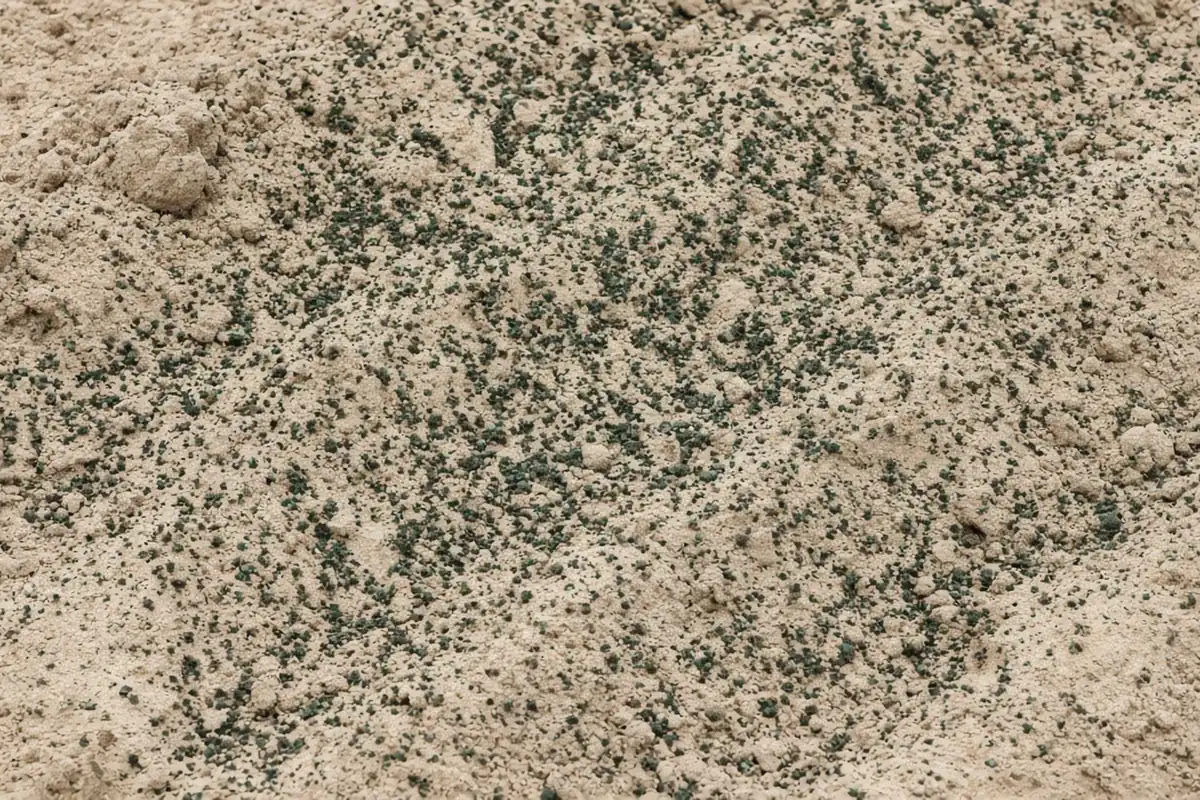
- Work it into the root zone. Dig or fork it about 6 to 8 inches deep so it sits where roots grow.
- Combine it with compost. Rutgers notes that organic matter can also improve water holding, while the changes from greensand are permanent.
- Apply once, then wait. The mineral stays in the soil. Retest before adding more in later years.
Troubleshooting Greensand Problems
No change in potassium levels. That is expected. Greensand releases potassium very slowly, and a test may show little shift.
Plants still wilt fast in sandy soil. One application may be too light. Add compost and mulch, and consider drip watering.
Potassium shortage signs appear in flower. Greensand cannot respond quickly. Use a faster potassium source and keep greensand for structure.
Clay bed stays sticky. Greensand has a minor effect on clay. Focus on compost and avoid working wet soil.
Unsure how much you added before. Since it does not break down, keep notes on rates and years to avoid overbuilding.
Sources
- Rutgers University, J.R. Heckman and J.C.F. Tedrow, Greensand as a Soil Amendment (Better Crops, hosted by UC ANR): https://my.ucanr.edu/sites/nm/files/76652.pdf
- Iowa State University Extension and Outreach, Selecting and Using Organic Fertilizers: https://yardandgarden.extension.iastate.edu/how-to/selecting-and-using-organic-fertilizers
- UC Master Gardeners of San Luis Obispo County, Fertilizers and Amendments: https://ucanr.edu/site/uc-master-gardeners-san-luis-obispo-county/fertilizers-and-amendments
FAQ
Is greensand a good potassium fertilizer for cannabis?
Not really. Most researchers have found it releases very little potassium. Its main value is improving soil structure and nutrient holding.
How long does greensand last in soil?
Rutgers notes that the soil changes from greensand are permanent, unlike compost, which breaks down.
Can I use greensand in pots?
You can, though potting mixes rarely need it. Sandy outdoor beds are a better fit.
Does greensand change soil pH?
It is not sold as a pH adjuster. Test pH separately and use lime or other materials if a change is needed.
Is greensand the same as sand?
No. It looks like sand but is a clay rich mineral with tiny pores that hold water.