
Grow Light for Dischidia: Plants on Mounts and Baskets
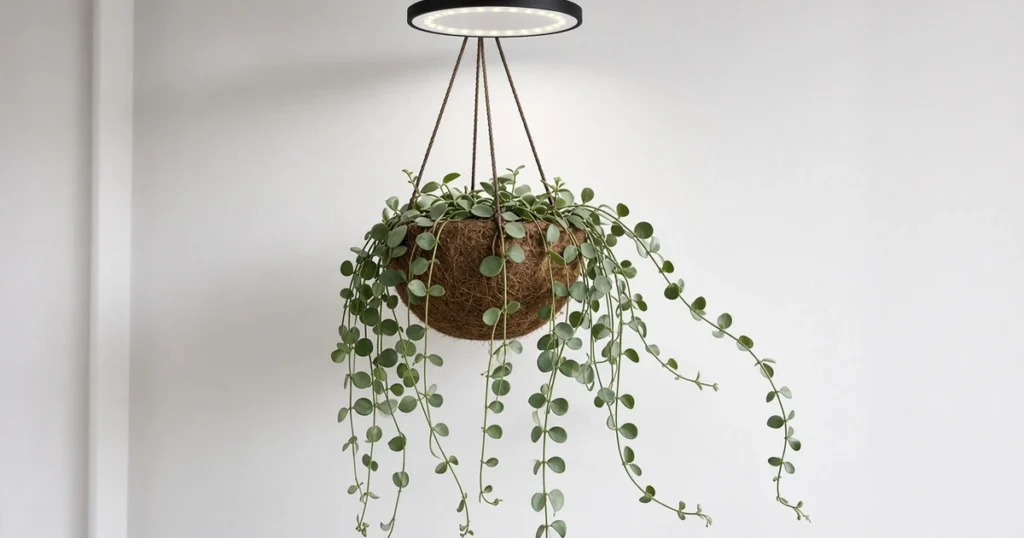
A grow light for dischidia gives this trailing epiphyte steady bright indirect light. NC State Extension describes watermelon dischidia, Dischidia ovata, as a climbing epiphytic perennial in the dogbane family that clings to surfaces as it grows.
The short answer
NC State advises bright, indirect light plus notes direct sun can scorch the leaves. A grow light set back from the plant gives that light indoors. Illinois Extension advises 14 to 16 hours of light a day in low light rooms plus no more than 16. Pair the light with 60 to 80% humidity.
What is dischidia?
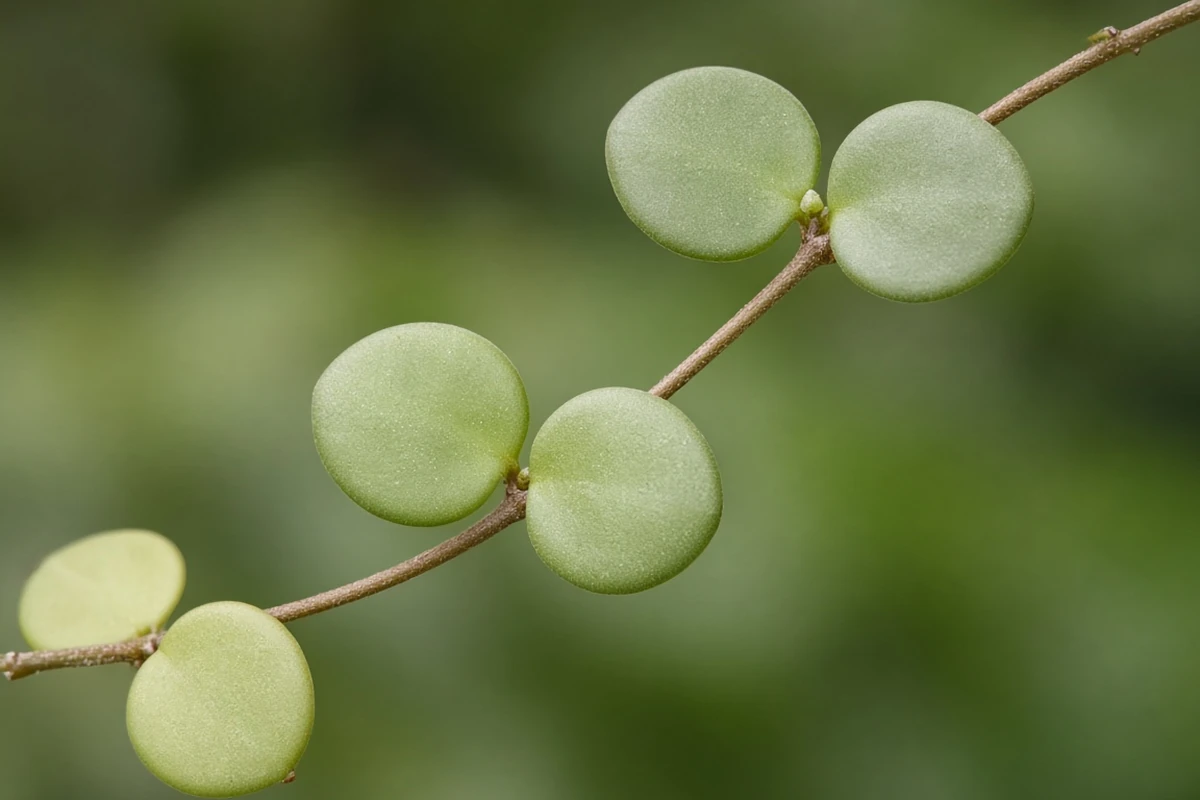
NC State notes Dischidia ovata grows 2 to 3 inches tall plus spreads 2 to 3 feet. Its small, thick, waxy leaves carry silvery stripes that resemble watermelon rind. It is closely related to Hoya.
How much light does dischidia need?
NC State advises bright, indirect light. It notes low light causes leggy growth while direct sun scorches leaves. Illinois Extension rates medium light at about 150 footcandles plus bright light at about 300 footcandles.
Maryland Extension notes light intensity falls fast with distance, so raise the light if leaves pale or brown.
| Factor | Target | Source |
|---|---|---|
| Light | Bright indirect | NC State |
| Humidity | 60 to 80% | NC State |
| Temperature | 65 to 85°F | NC State |
| Hours in low light rooms | 14 to 16 a day | Illinois |
| Upper limit | 16 hours a day | Illinois |
Source: NC State Extension plus Illinois Extension.
How do you grow dischidia in a basket or on a trellis?
NC State calls dischidia a fine plant for hanging baskets or trellises. It advises a porous mix that may include perlite, vermiculite, coconut husk or sphagnum moss. It is very sensitive to overwatering, so let the mix dry between waterings.

How to: step by step
- Fill a basket with a porous mix.
- Place it where light is bright but indirect.
- Add a grow light set back from the leaves.
- Run it 14 to 16 hours a day.
- Hold humidity near 60 to 80%.
- Water when the mix dries.
Troubleshooting
Leggy growth: too little light, per NC State.
Scorched leaves: direct sun or a close light.
Leaf drop: NC State notes sudden changes in conditions can cause it.
For more on lights see grow lights for cannabis plus led light distance cannabis. Read grow light timers to set hours. Kind Seed Co also stocks cannabis seeds.
Sources
- Dischidia ovata (watermelon dischidia), NC State Extension Gardener Plant Toolbox
- Lighting for indoor plants, University of Maryland Extension
- Lighting, houseplants, Illinois Extension
- Lighting indoor houseplants (G6515), University of Missouri Extension
FAQ
Why is it called watermelon dischidia?
NC State Extension notes the common name comes from the leaves, which resemble a watermelon rind.
Can dischidia grow in regular potting soil?
NC State Extension advises a porous mix that may include perlite, vermiculite, coconut husk or sphagnum moss to give roots air.
How often should dischidia be watered?
NC State Extension notes it is very sensitive to overwatering. Let the mix dry between waterings.
Does dischidia need high humidity?
NC State Extension advises 60 to 80% humidity in well ventilated conditions.
What temperature suits dischidia?
NC State Extension advises 65 to 85°F plus advises against drafts.



