
Grow Lights for Peas Indoors: Dwarf Peas Plus Shoots
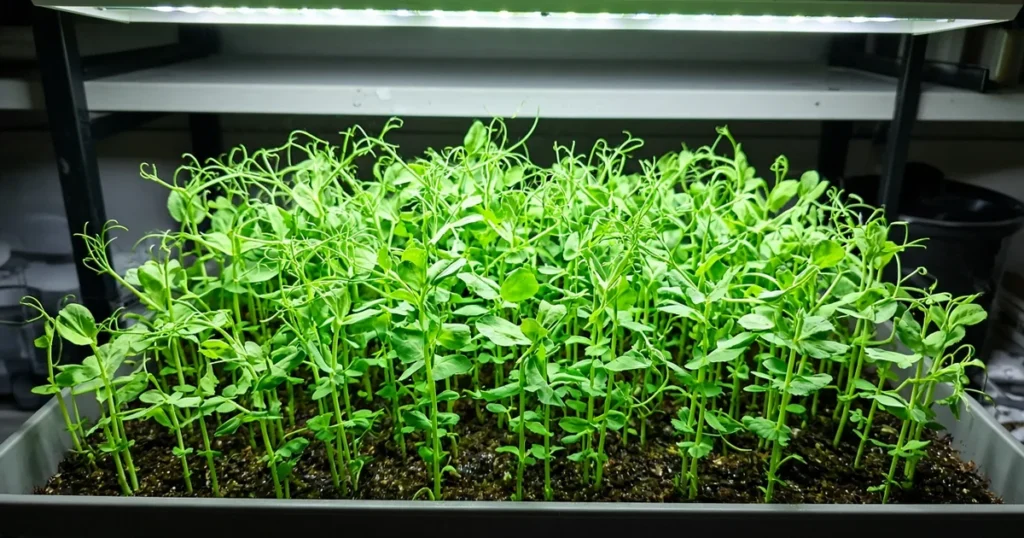
Grow lights for peas indoors suit quick pea shoots plus short varieties grown for pods. University of Maryland Extension lists peas among crops grown as microgreens under lights. Hang lamps close above the plants, run them about 16 hours a day plus give pod plants a small trellis.
The short answer
For shoots, sow soaked pea seed thickly in a shallow tray plus hang lights 6 to 12 inches above the foliage for about 16 hours a day, as University of Maryland Extension advises. For pods, grow short varieties in pots, add support plus hold the room near 55°F to 65°F.
Can peas grow to pod stage indoors?
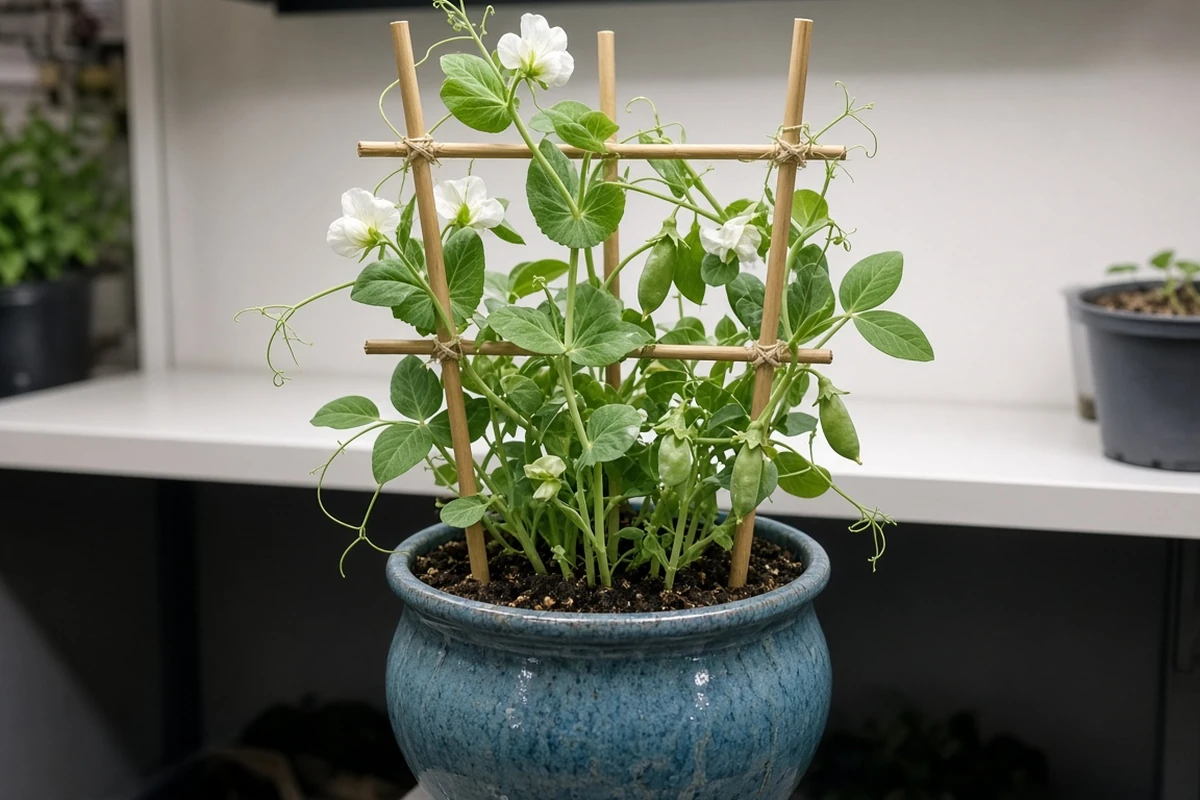
They can, but it takes time plus light. University of Minnesota Extension notes most varieties need about 60 days of growth before harvest plus full sun, plus that plants stop flowering above 85°F. Clemson Extension lists early varieties at 55 to 64 days. Indoors, that means a long run under bright lights in a cool room.
How do pea shoots differ from full pea plants?
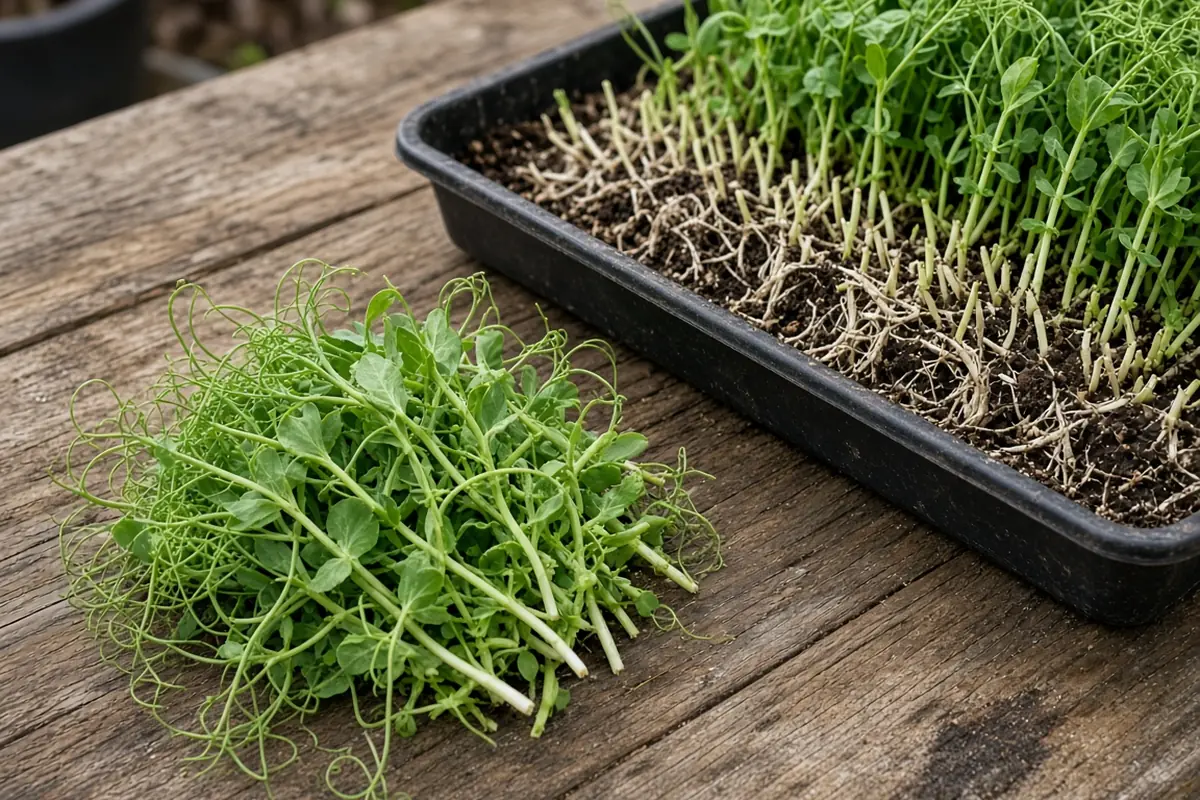
Shoots are harvested young. University of Maryland Extension describes microgreens as closely spaced seedlings harvested at the true leaf stage, 2 to 3 inches tall at 7 to 21 days.
| Crop | Container | Harvest |
|---|---|---|
| Pea shoots | Shallow tray with 1 to 1½ inches of moist mix | 2 to 3 inches tall at 7 to 21 days |
| Baby greens stage | Shallow tray or container | 4 to 6 inches tall at 21 to 40 days |
| Pod peas | Pot with a trellis | Early varieties at 55 to 64 days |
Source: University of Maryland Extension plus Clemson Extension.
What support do dwarf peas need?
Clemson Extension notes pea plants, even dwarf varieties, benefit from some type of support such as netting, trellis, wires or pea brush. It advises setting up the support before or right after planting so roots are not disturbed. University of Minnesota Extension notes bush types can also cling to each other when planted close.
How to: step by step
- Soak pea seed in water for 6 to 12 hours.
- Sow thickly in trays for shoots or spaced in pots for pods.
- Hang lights 6 to 12 inches above the plants.
- Run lights about 16 hours a day on a timer.
- Place a small trellis in pots at sowing.
- Clip shoots at 2 to 3 inches or pick plump pods.
Troubleshooting
Thin pale shoots: low light. Move the lights down.
Few pods: room too warm. Peas quit flowering above 85°F.
Vines tangle: no support. Fit a trellis at sowing.
For related reading see grow lights for cannabis, led light distance cannabis plus grow light timers. Kind Seed Co also stocks seeds for indoor growers.
Sources
- Growing microgreens and baby greens indoors, University of Maryland Extension
- Growing peas in home gardens, University of Minnesota Extension
- Garden peas, Clemson Cooperative Extension, HGIC
- How to set up supplemental lights for indoor plants, Iowa State University Extension
FAQ
How long do pea shoots take indoors?
University of Maryland Extension lists microgreens at 2 to 3 inches tall plus 7 to 21 days after sowing, with baby greens at 4 to 6 inches plus 21 to 40 days. It notes soaking pea seed in water for 6 to 12 hours speeds germination, so shoots are ready sooner.
What temperature suits indoor peas?
University of Minnesota Extension gives 55°F to 65°F as good growing temperatures plus notes young plants grow at any temperature above 40°F. It also notes peas stop producing flowers or pods once temperatures pass 85°F. A cool room under lights suits them better than a warm one.
Which peas suit pots?
Short varieties suit pots. Clemson Extension lists Dwarf Gray Sugar among its snow pea cultivars plus notes even dwarf varieties benefit from support. University of Minnesota Extension notes shorter bush types can cling to plus hold each other up when grown close together, which suits a wide container.
Can pea shoots regrow after cutting?
University of Maryland Extension notes microgreen seedlings will not regrow after harvest, so sow a new tray every week or two for a steady supply.
How long should grow lights run for peas?
University of Maryland Extension suggests about 16 hours of light each day for greens grown indoors. Iowa State University Extension suggests 14 hours a day for most setups plus no more than 16 for home gardeners, since plants need a period of darkness. Use a timer for a regular schedule.



