
Grow Lights for Rhaphidophora: Mini Monstera Style Climbers
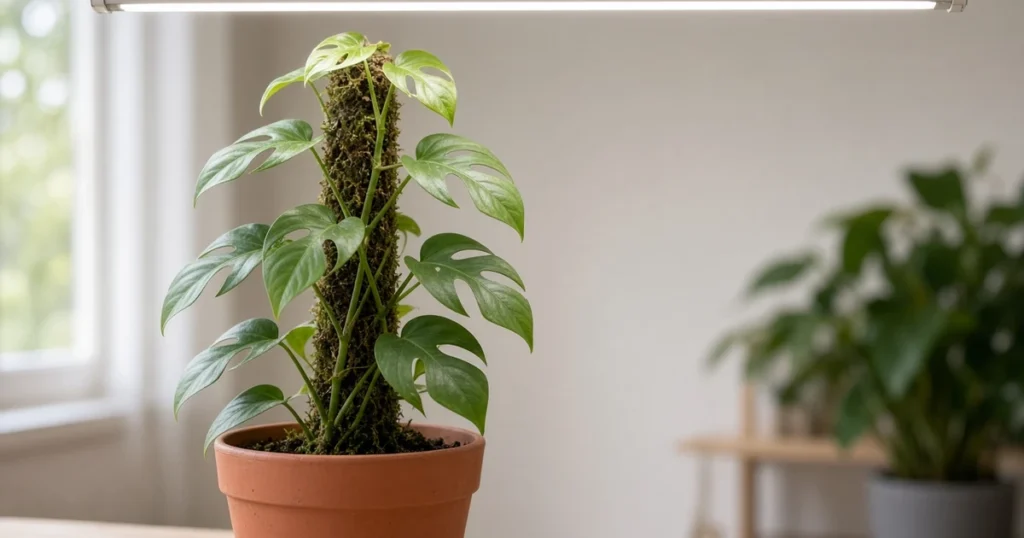
Grow lights for rhaphidophora give the mini monstera the bright, indirect light it prefers when a window falls short. NC State Extension notes that Rhaphidophora tetrasperma is often called mini monstera, yet it is neither a monstera nor a philodendron, though all three belong to the Araceae family. A modest LED on a timer can supply that light all year.
The short answer
Hang a full spectrum LED 12 to 24 inches above the leaves and run it 12 to 14 hours a day. Aim for bright indirect light, roughly the 250 to 1,000 foot candle medium range. With no window light, stretch the day to 16 to 18 hours.
How much light does rhaphidophora need?
NC State Extension says this climber prefers bright indirect light and that too much sun can burn the leaves. It grows well at 65 to 80°F with humidity near 60%. The University of Minnesota Extension places medium light plants at 250 to 1,000 foot candles, and the University of Missouri Extension suggests 500 to 1,000 foot candles under artificial light for that group. For comparison, NC State lists Monstera deliciosa as a plant for moderate brightness with no direct sun, and notes that variegated monsteras need more light.
Which grow light suits rhaphidophora?
Minnesota Extension says white or balanced lights suit most plants, and it suggests 12 to 24 inches between light and leaves for foliage plants. Missouri suggests 15 or more watts of fluorescent light per square foot for medium light plants. A full spectrum LED panel does the same with less heat. Compare fixture types in grow lights for cannabis and see how distance changes intensity in led light distance cannabis.
Minnesota advises 12 to 14 hours of light for foliage houseplants. Missouri adds that plants with no outdoor light do well with 16 to 18 hours. A timer runs the schedule, and grow light timers covers setup.
How do you tell if rhaphidophora has the right light?
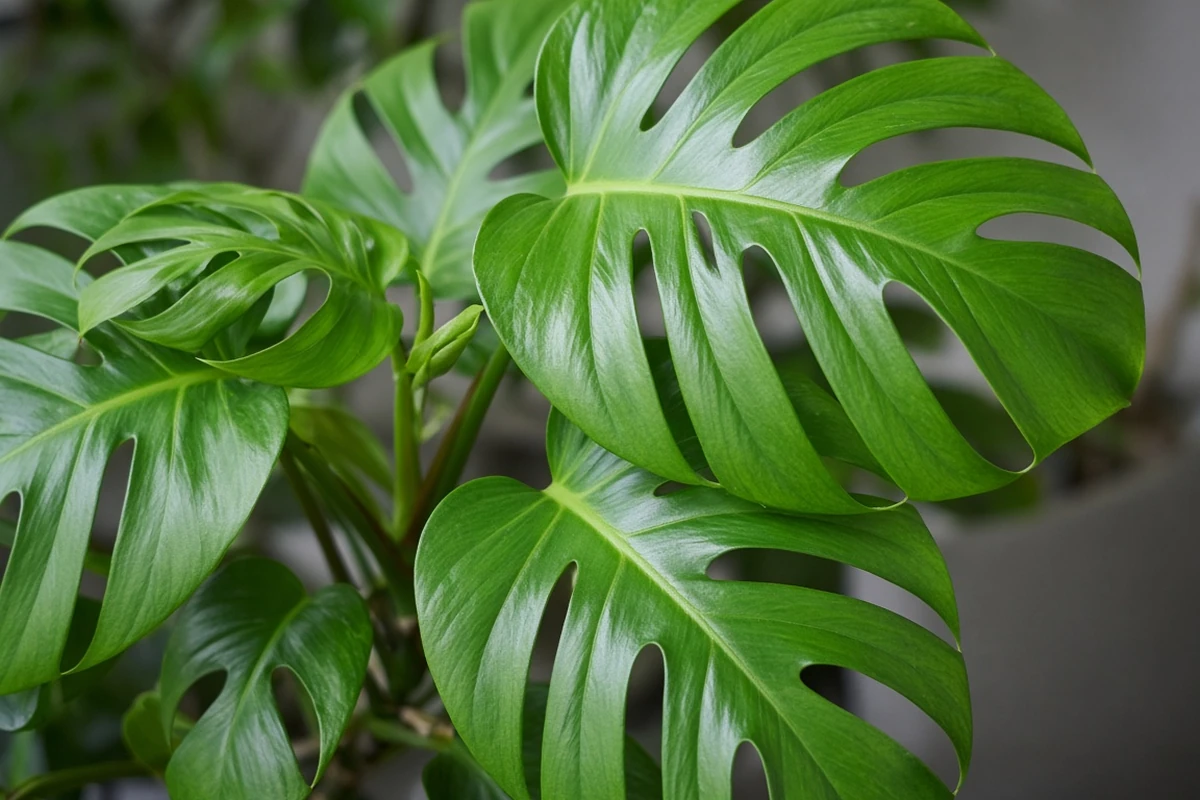
Watch new leaves and the vine. NC State notes the leaves reach 6 to 12 inches, and the splits form earlier in life than on Monstera deliciosa. It also links yellow leaves to overwatering or inadequate light, while drooping or curling points to a lack of water. Check the mix before you move the light, and water when the top inch is dry, per NC State.
Rhaphidophora light basics
| Factor | Target | Source |
|---|---|---|
| Light type | Bright indirect | NC State Extension |
| Light level | 250 to 1,000 foot candles | Minnesota and Missouri Extension |
| Distance | 12 to 24 inches | Minnesota Extension |
| Hours with window light | 12 to 14 | Minnesota Extension |
| Hours with no window light | 16 to 18 | Missouri Extension |
| Room temperature | 65 to 80°F | NC State Extension |
Sources: NC State Extension, University of Minnesota Extension, University of Missouri Extension.
How to: step by step
- Set the plant away from direct sun in a room at 65 to 80°F.
- Give it a moss pole, totem or trellis to climb.
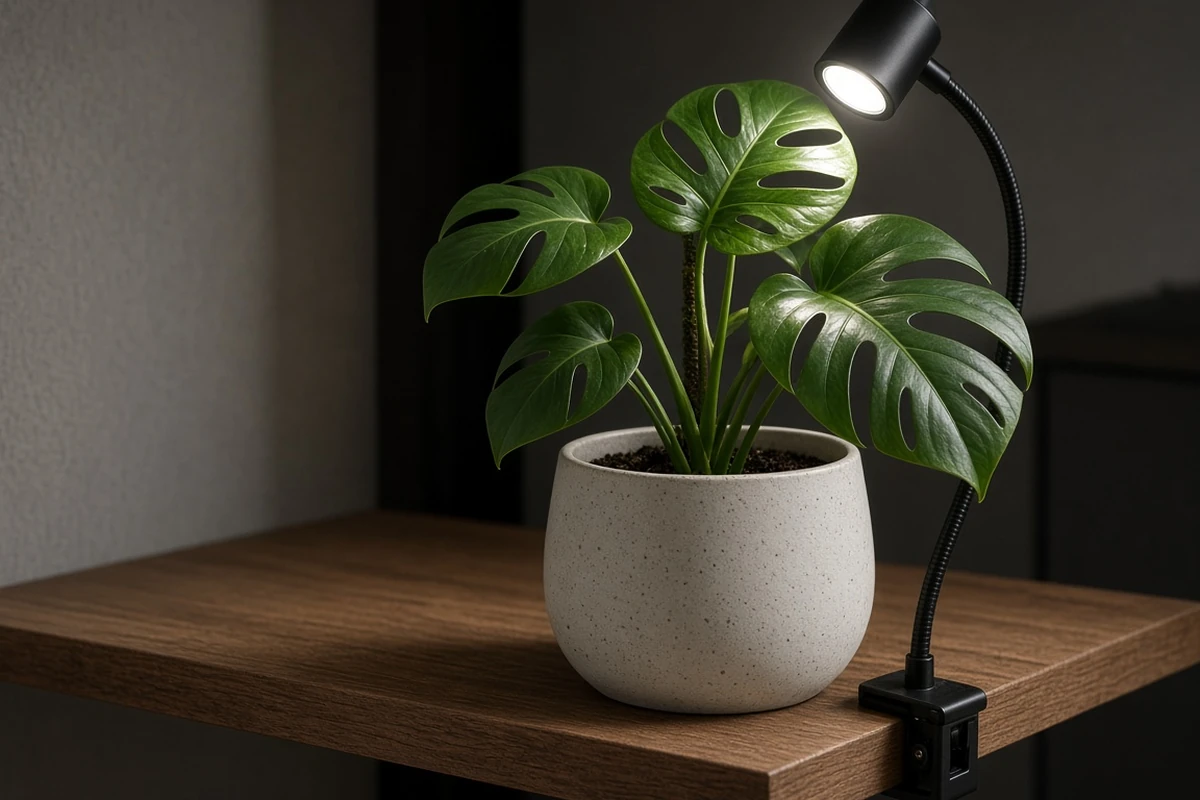
- Hang a white or full spectrum LED 12 to 24 inches above the top leaves.
- Put the light on a timer for 12 to 14 hours.
- Move to 16 to 18 hours if no window light reaches the plant.
- Water when the top inch of mix is dry.
Troubleshooting
Yellow leaves: NC State ties this to overwatering or too little light, so check the mix first.
Drooping or curling leaves: a sign of dry mix, per NC State.
Burned patches: harsh sun or a fixture too close. Raise the light or move the pot.
Give your climber a steady light
A small fixture on a timer lets a mini monstera climb through the dark months. Kind Seed Co also stocks cannabis seeds for growers who want the same lights on another crop.
Sources
- Rhaphidophora tetrasperma, NC State Extension Gardener Plant Toolbox
- Lighting for indoor plants and starting seeds, University of Minnesota Extension
- Lighting indoor houseplants (G6515), University of Missouri Extension
- Monstera deliciosa, NC State Extension Gardener Plant Toolbox
FAQ
Is rhaphidophora a real monstera?
No. NC State Extension says it is neither a monstera nor a philodendron, though all three belong to the Araceae family.
How many hours of light does it need?
Minnesota Extension suggests 12 to 14 hours for foliage houseplants. Missouri suggests 16 to 18 hours with no window light.
Why are new leaves not splitting?
NC State notes splits appear earlier than on Monstera deliciosa and that the plant prefers bright indirect light, so check that the light is bright enough.
Does it need a pole to climb?
It climbs with aerial roots. NC State suggests a trellis, totem or moss pole.
How far should the light be from the leaves?
Minnesota Extension suggests 12 to 24 inches for foliage houseplants.



