
Grow Light for Rhipsalis: Jungle Cactus Under Gentle LEDs
The short answer
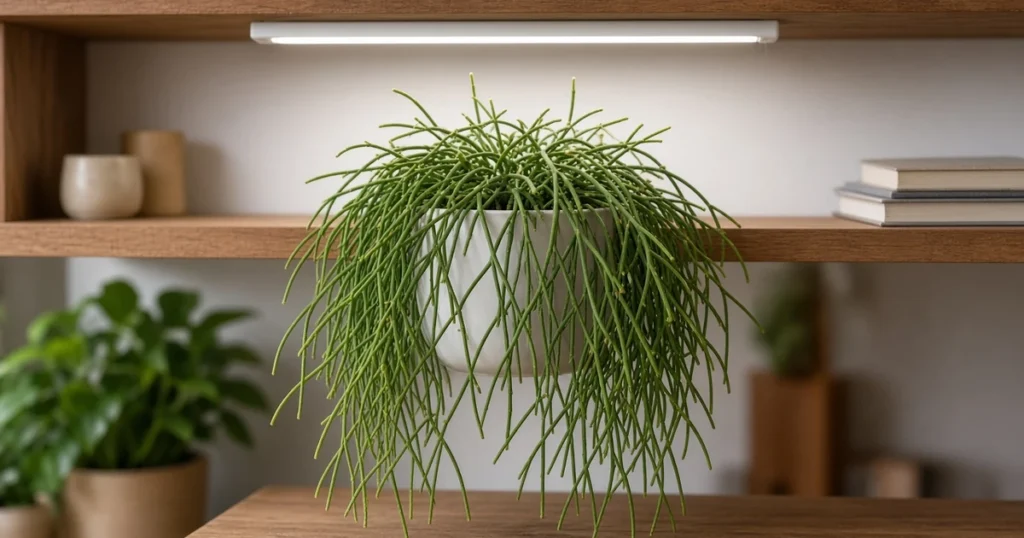
A grow light for rhipsalis should be gentle, since this jungle cactus grows on trees in the wild. NC State Extension lists mistletoe cactus for bright, indirect light. A full spectrum LED set well above the plant on a 12 to 14 hour timer can fill the gap when a window is too dim.
How much light does rhipsalis need?
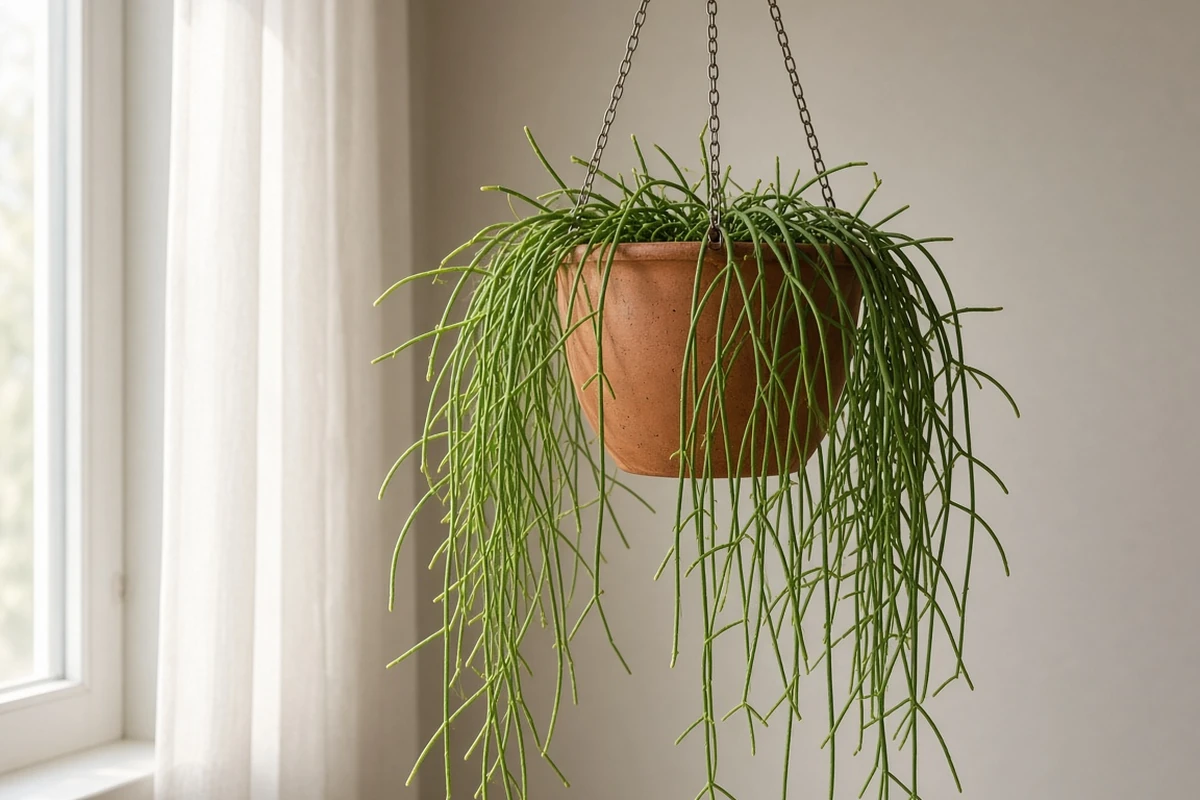
Rhipsalis is an epiphyte. University of Arkansas Extension notes that epiphytes like tropical cacti perch on trees to reach light in the forest canopy. NC State describes mistletoe cactus as a trailing epiphyte that prefers bright, indirect light, high humidity and temperatures of 60 to 80°F. University of Minnesota Extension rates medium light at 250 to 1,000 foot candles, which fits an east window or a spot near a west window out of direct sun. Read more on optimal lighting for growing indoors.
Which grow light suits rhipsalis?
A full spectrum or white LED is the easiest pick for a shelf. University of Missouri Extension notes LEDs are very efficient, long lived and give off little heat. University of Minnesota Extension suggests 12 to 24 inches for foliage houseplants. For a trailing plant, aim the light at the top of the pot so the crown gets light. You can compare fixtures in grow lights for cannabis.
How do you tell if rhipsalis has the right light?
Missouri Extension lists signs of too little light as long gaps between leaves, smaller new growth, pale stems and lower foliage that yellows and drops. On rhipsalis, look for thin, pale new stems. Puckered stems usually mean thirst, not low light. Run lights on grow light timers so the day length stays the same.
Rhipsalis light basics
| Factor | Target | Notes |
|---|---|---|
| Light | Bright, indirect | NC State |
| Level | About 250 to 1,000 foot candles | Medium light range |
| Distance | 12 to 24 inches | Foliage houseplant range |
| Hours | 12 to 14 a day | With some window light |
| Temperature | 60 to 80°F | NC State |
Sources: NC State Extension, University of Minnesota Extension, University of Missouri Extension.
How to: step by step
- Start rhipsalis in the brightest window spot you have.
- Pick a full spectrum LED for extra light.
- Hang the light at the maker’s suggested distance.
- Run a timer for a steady day length.
- Watch new growth for a few weeks.
- Adjust height or hours in small steps.
Troubleshooting
Yellow or bleached stems: light too intense. Raise the light or move the pot back from the window.
Thin, pale stems: too dim. Lower the light or add an hour.
Shriveled stems: dry mix. Water when the top dries, per NC State.
Rhipsalis rewards a light touch. Kind Seed Co growers who also start cannabis seeds indoors can share a timer and shelf setup, as long as the cactus sits well back from brighter lamps.
Sources
- Rhipsalis baccifera (mistletoe cactus), NC State Extension Gardener Plant Toolbox
- Epiphytes, bromeliads, University of Arkansas Cooperative Extension
- Lighting for indoor plants and starting seeds, University of Minnesota Extension
- Lighting indoor houseplants (G6515), University of Missouri Extension
FAQ
Is rhipsalis a real cactus?
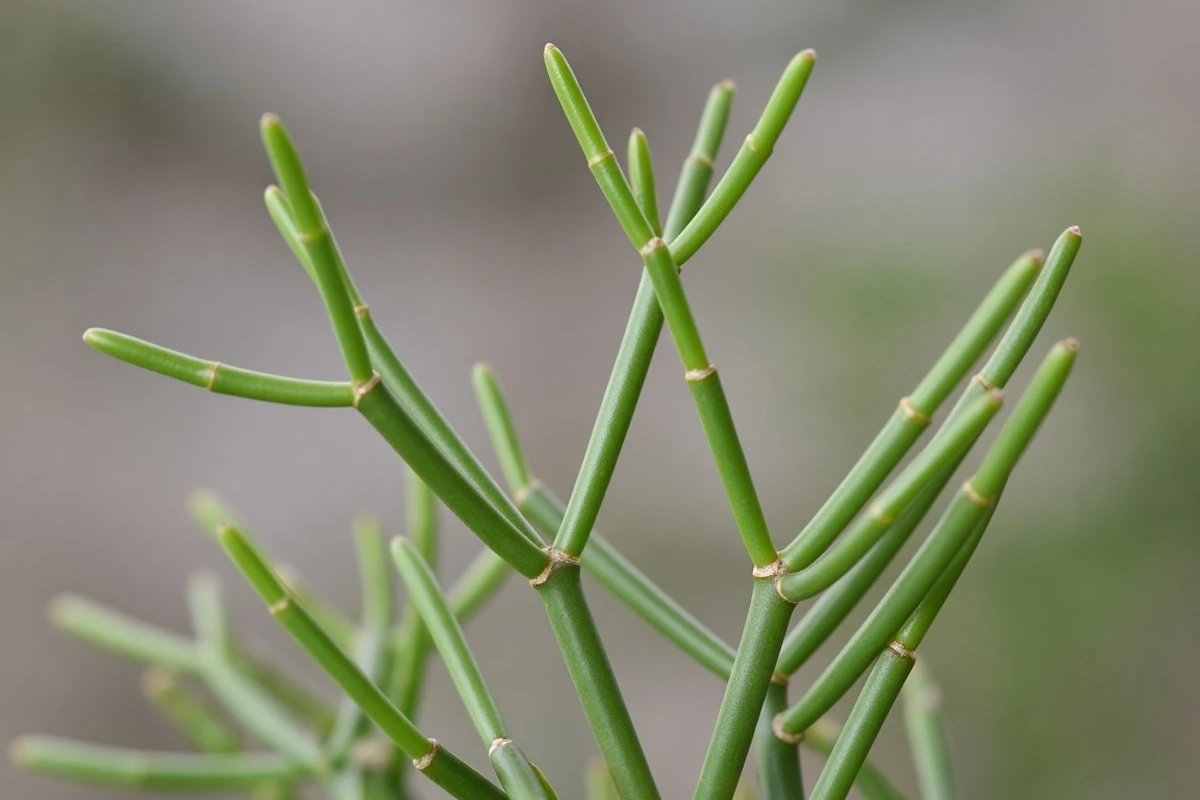
Yes. Rhipsalis is a member of the cactus family. The mistletoe cactus is a trailing epiphyte that grows in trees in its native range. It's leafless and spineless, with slender green stems like spaghetti, so it looks nothing like desert cacti.
Does rhipsalis need direct sun?
No. NC State lists bright, indirect light for mistletoe cactus. A bright window without hot direct sun suits it. If the window light is weak, a full spectrum LED placed well above the stems can add light for a steady day length.
How far should the light be?
University of Minnesota Extension suggests 12 to 24 inches for foliage houseplants and 6 to 12 inches for flowering ones. Rhipsalis likes gentle light, so start at the far end of the range or the maker's suggestion and move the light closer only if stems grow thin.
Will rhipsalis bloom under a grow light?
It can. NC State notes small white flowers appear in late winter and early spring. A summer outdoors in partial shade helps stems harden and encourages flowering. Indoors, a steady day length and bright, indirect light give the plant a fair chance.
How often should I water rhipsalis?
Water when the soil feels dry, but avoid overwatering. NC State notes rhipsalis likes more consistent moisture than other cacti and that the stems pucker and lose their firmness when thirsty. Water less in winter while it rests.



