
Grow Light for Serissa: Snow Rose Bonsai Under Lights
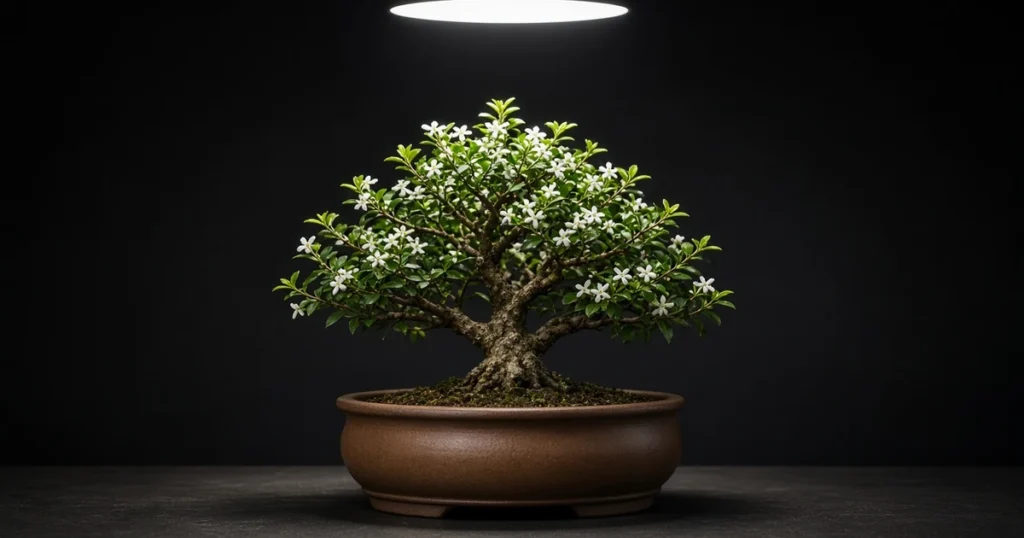
A grow light for serissa gives the snow rose even light indoors. NC State Extension notes Serissa japonica is used widely in bonsai, valued for its gnarled trunk, glossy leaves plus frequent flowering.
The short answer
NC State lists partial sun to partial shade, with morning sun plus shelter from afternoon sun. Indoors, a grow light fills the gap. University of Maine Extension calls LEDs an excellent light for growing plants. Run lights on a timer plus stay at or under the 16 hours a day Maryland Extension advises.

What is a snow rose?
NC State Extension notes serissa is native to subtropical woodlands, streambanks plus wet meadows in southeast Asia. It forms a dense dome 2 to 4 feet tall in the ground with white flowers through the growing season.
How much light does serissa need?
NC State advises partial sun to partial shade plus notes it likes morning sun with shelter from afternoon sun. Illinois Extension rates medium light at about 150 footcandles, found directly in front of a north window or a few feet from an east or west window.
Maine Extension notes grow lights make every day sunny for plants. They also cut temperature swings by letting plants sit away from cold or hot window ledges.
| Factor | Target | Source |
|---|---|---|
| Natural light | Partial sun to partial shade | NC State |
| Medium indoor light | About 150 footcandles | Illinois |
| Light type | LEDs | Maine |
| Upper limit | 16 hours a day | Maryland |
| Control | A simple timer | Maine |
Source: NC State Extension, Illinois Extension, University of Maine Cooperative Extension plus University of Maryland Extension.
Why does serissa drop leaves?
NC State notes serissa can be difficult to grow since it prefers stable temperatures with little variation. Maryland Extension notes moving indoor plants inside after summer outdoors can cause leaf drop plus yellowing while they adjust to lower light. A grow light plus a stable spot away from drafty windows helps.
How to: step by step
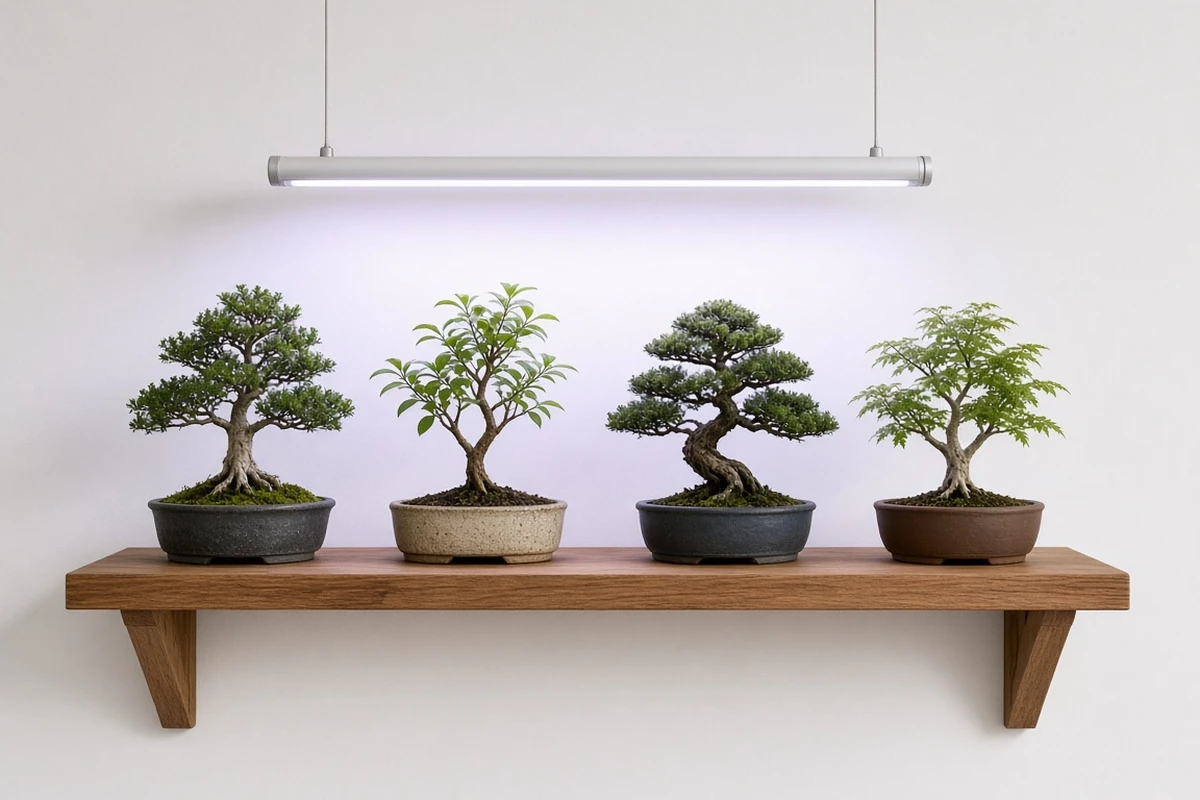
- Pick a spot away from cold windows plus heat.
- Set an LED above the bonsai.
- Put the light on a timer.
- Run it 12 to 16 hours a day.
- Water so the soil stays evenly moist.
- Avoid moving the plant.
Troubleshooting
Leaf drop: temperature swings. Move the bonsai somewhere steady.
Pale or brown leaves: too much light. Maryland notes excess light can turn leaves pale plus brown.
Leggy shoots: dim light. Lower the light or add hours.
For more on lights see grow lights for cannabis plus led light distance cannabis. Read grow light timers to set hours. Kind Seed Co also stocks cannabis seeds.
Sources
- Serissa japonica (snow rose), NC State Extension Gardener Plant Toolbox
- Lighting for indoor plants, University of Maryland Extension
- Lighting, houseplants, Illinois Extension
- Growing houseplants under artificial lights in Maine (Bulletin 2614), University of Maine Cooperative Extension
FAQ
Is serissa hard to grow indoors?
NC State Extension notes serissa can be difficult to grow since it prefers stable temperatures with little variation. A steady spot plus steady light from a timer suit it.
How often does serissa flower?
NC State notes white flowers appear throughout the growing season in leaf axils or at branch tips. It lists frequent flowering as one reason serissa is valued for bonsai.
Can serissa handle cold?
NC State Extension notes serissa will grow in colder areas but will not stay evergreen if temperatures drop below 40 degrees.
How close should a light be to a bonsai?
Maryland Extension notes light intensity falls quickly as distance from the source grows. Maine Extension adds that plants too close to a light grow short leaf stems.
What soil does serissa like?
NC State Extension advises consistent moisture in fertile, well drained soils.



