
Grow Light for Thyme Indoors: Compact Pots on a Bright Sill
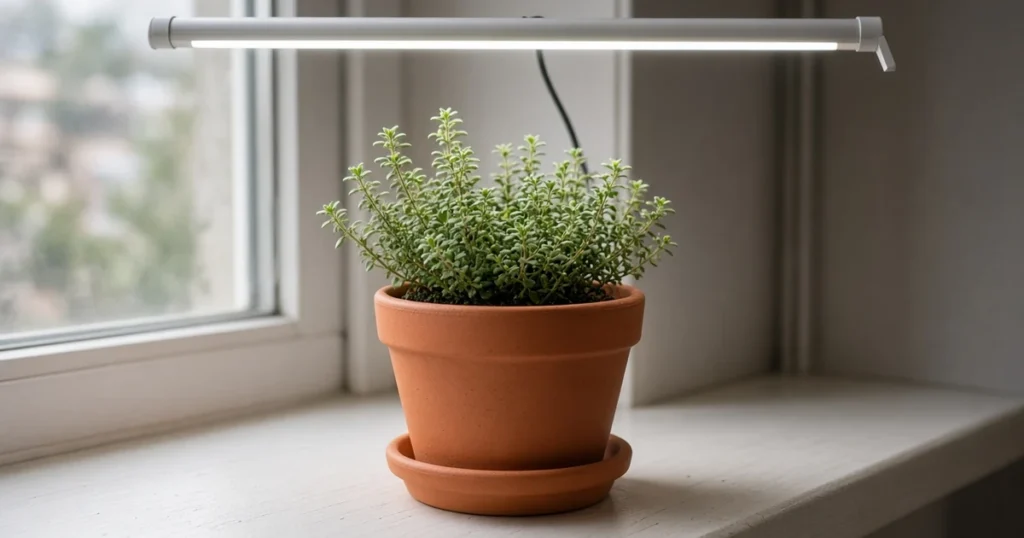
A grow light for thyme indoors fills the gap when winter sun is weak. Penn State Extension lists thyme among herbs that do well in direct sunlight plus notes most herbs need 6 hours of it. Iowa State University Extension advises lights 6 to 12 inches from the leaves for 12 to 16 hours a day.
The short answer
Thyme wants full sun, so indoors it needs a bright south window or a grow light. Iowa State University Extension advises full spectrum lights 6 to 12 inches above the leaves on a timer for 12 to 16 hours a day. Use a pot with a drainage hole plus let the mix dry slightly between waterings.
How much light does indoor thyme need?
Extension services give clear light targets for indoor herbs.
| Factor | Target | Source |
|---|---|---|
| Direct sun | About 6 hours | Penn State Extension |
| Most indoor herbs | About 8 hours | Iowa State University Extension |
| Lamp distance | 6 to 12 inches | Iowa State University Extension |
| Timer hours | 12 to 16 hours a day | Iowa State University Extension |
| Day temperature | 65 to 70F | Penn State Extension |
Sources: Penn State Extension plus Iowa State University Extension.
How should indoor thyme be watered?
Penn State Extension advises letting thyme dry out slightly between waterings, plus growing it in a container with a drainage hole. NC State Extension notes thyme needs good drainage plus is drought tolerant. UF/IFAS Gardening Solutions notes thyme tolerates drought well, so err on the dry side indoors.
How do you harvest indoor thyme?
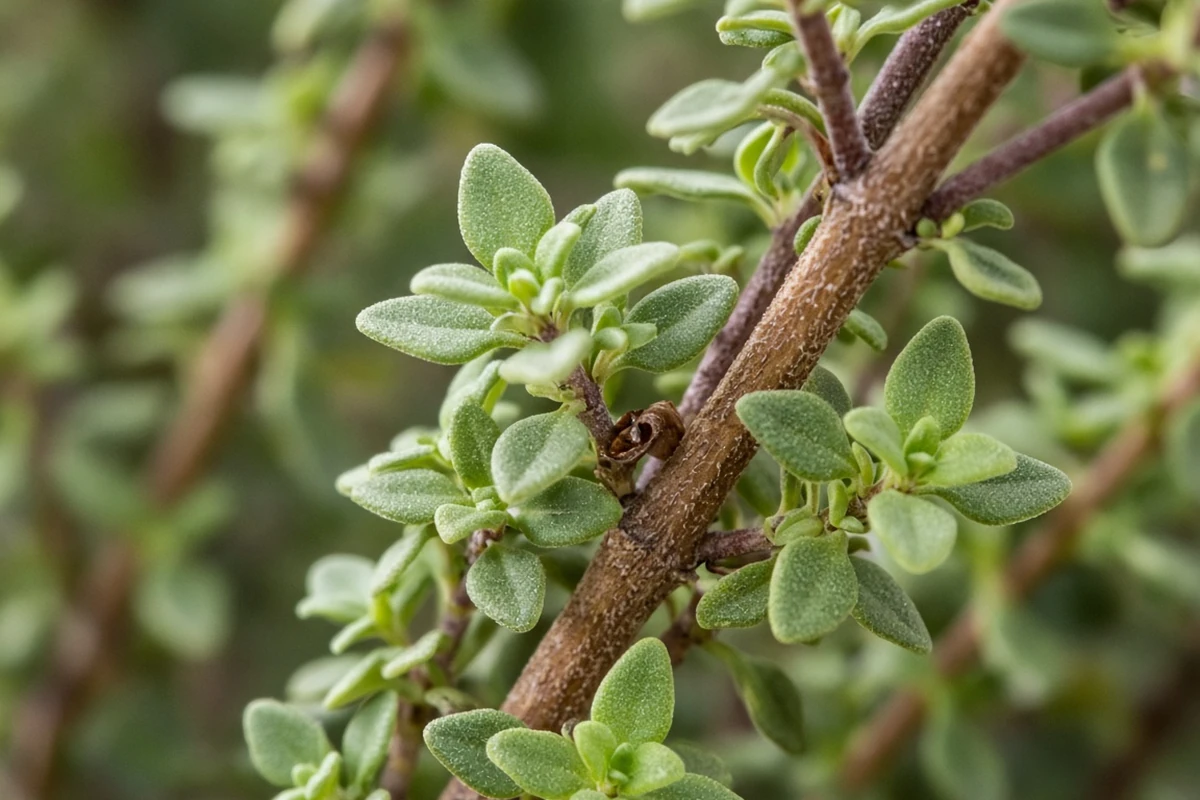
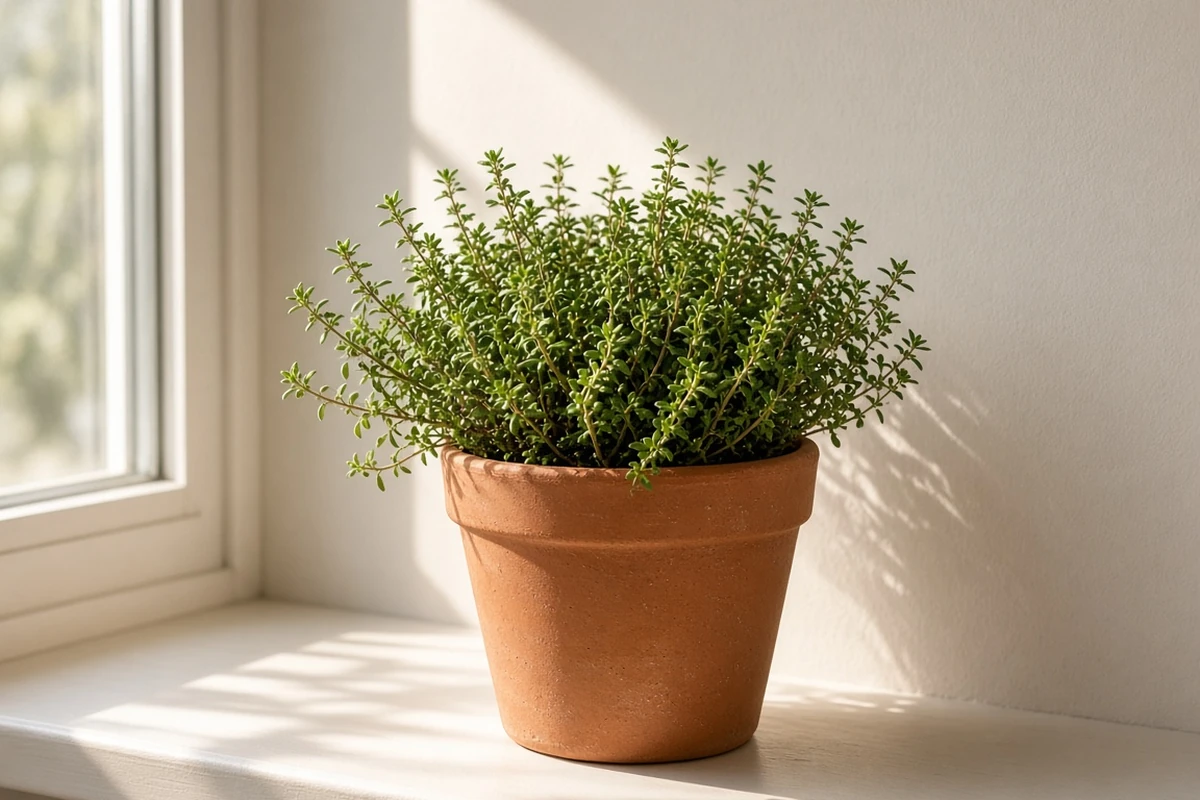
NC State Extension notes common thyme forms a mound 6 to 12 inches high plus should be trimmed when it gets leggy. It recommends leaving the woody stems plus at least five inches of growth. Iowa State University Extension advises cutting just above a leaf or pair of leaves.
How to: step by step
- Place thyme in a bright south window.
- Mount a full spectrum grow light.
- Set it 6 to 12 inches above the leaves.
- Program a timer for 12 to 16 hours.
- Water when the mix dries slightly.
- Trim leggy stems above a leaf pair.
Troubleshooting
Leggy pale stems: low light. Lower the lamp toward 6 inches.
Lower stems turn brown: wet mix. Let it dry slightly between waterings.
Uneven growth on a sill: light from one side. Spin the pot often.
For more on lighting see grow lights for cannabis, led light distance cannabis, easy herbs to grow plus cannabis seeds. Kind Seed Co also stocks seeds for indoor growers.
Sources
- Growing herbs indoors, Penn State Extension
- Thymus vulgaris (common thyme), NC State Extension Gardener Plant Toolbox
- Thyme, UF/IFAS Gardening Solutions
- Growing herbs indoors, Iowa State University Extension and Outreach
FAQ
Can thyme grow on a windowsill without a light?
Sometimes, in a bright south window. Penn State Extension lists thyme among herbs that do well in direct sunlight plus notes most herbs need about 6 hours. Iowa State University Extension notes most indoor herbs want 8 hours, which winter windows rarely give, so a grow light helps.
How often should indoor thyme be watered?
Only when the potting mix starts to dry. Penn State Extension advises letting thyme dry out slightly between waterings. NC State Extension notes thyme needs good drainage, plus UF/IFAS Gardening Solutions notes it tolerates drought well. Use a pot with a drainage hole so extra water can escape.
Does thyme need fertilizer indoors?
Only a light feeding. Iowa State University Extension notes herbs do not need as much fertilizer as other container plants. It advises periodic light feeding with an all purpose fertilizer from early spring through summer plus no feeding in winter. Skip feeding from fall through winter while growth is slow.
How warm should indoor thyme be?
Penn State Extension advises rooms of at least 65 to 70F during the day plus 55 to 60F at night for herbs. NC State Extension notes thyme is frost tolerant outdoors. Indoors, place the pot away from heaters that dry the air, plus give it good air circulation.
How much thyme can I cut at once?
NC State Extension advises cutting five to six inches off the top growth plus leaving the woody stems, with at least five inches of growth left on the plant. Harvest just before flowering for the most aroma. Iowa State University Extension advises cutting just above a leaf or pair of leaves.



