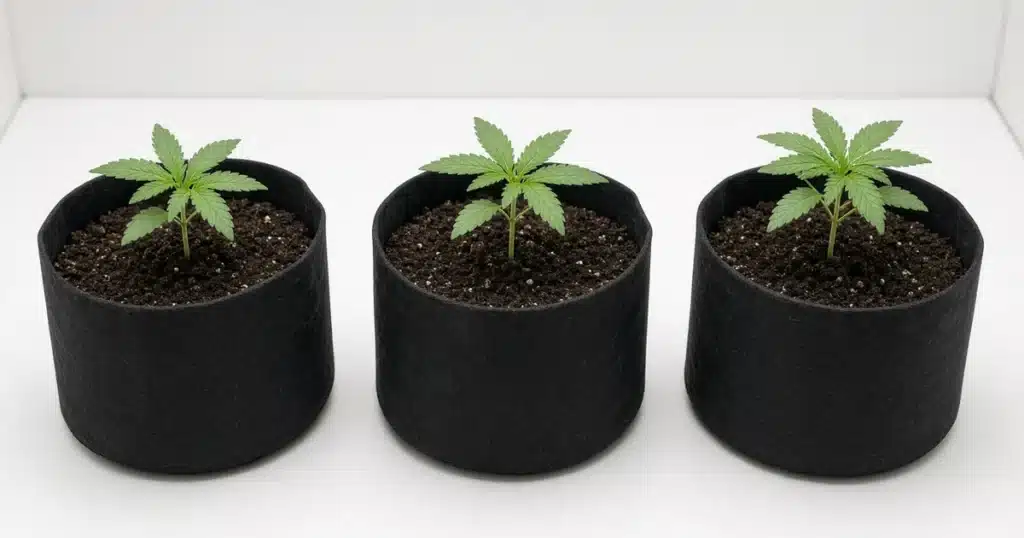
Growing Hydroponic Garlic Chives: Flat Leaf Chives in Net Cups
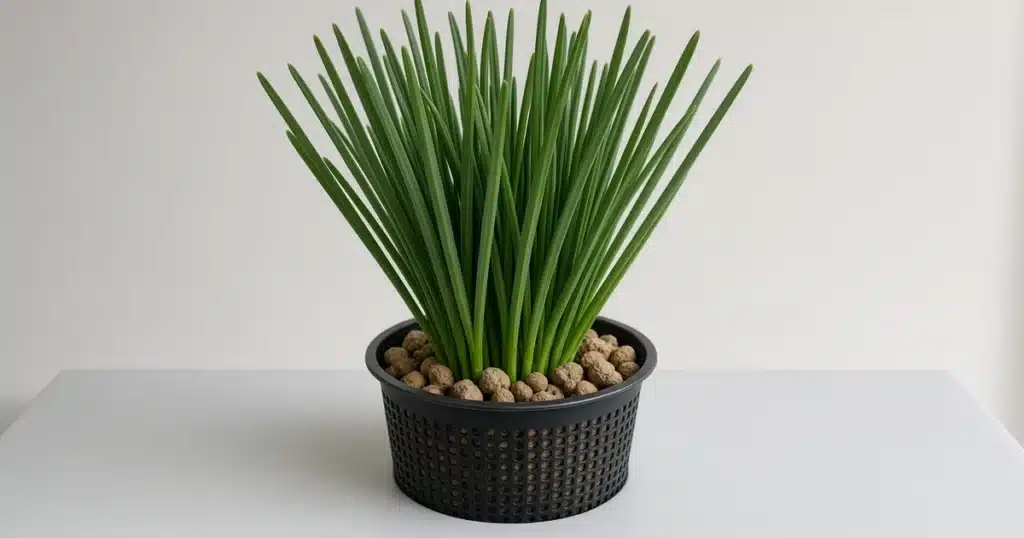
The short answer
Hydroponic garlic chives grow flat leaves with a mild garlic flavor and come back after cutting. Extension guides describe them as a clump forming perennial herb whose young leaves can be harvested anytime. Start several seeds per plug, move each clump into a net cup, give bright light and cut leaves a little above the base.
How do garlic chives differ from common chives?
Garlic chives are Allium tuberosum. University of Wisconsin Extension notes they are also called Chinese chives or Chinese leek and are native to southeastern Asia. The leaves are narrow, flattened and strap or grass like, which sets them apart from the round, hollow leaves of common chives.
Flavor and scent differ too. Wisconsin Extension says the leaves have an onion or garlic scent when bruised or crushed. NC State Extension describes garlic chives as a bulbous perennial herb with a characteristic onion or garlic odor, and notes that the scent of the flower is more violet like.
Size is modest. Wisconsin Extension lists clumps of gray green foliage 10 to 20 inches tall. The University of New Hampshire Extension says the edible leaves grow up to 12 inches long. That suits a net cup system well.
How do you start garlic chives in net cups?
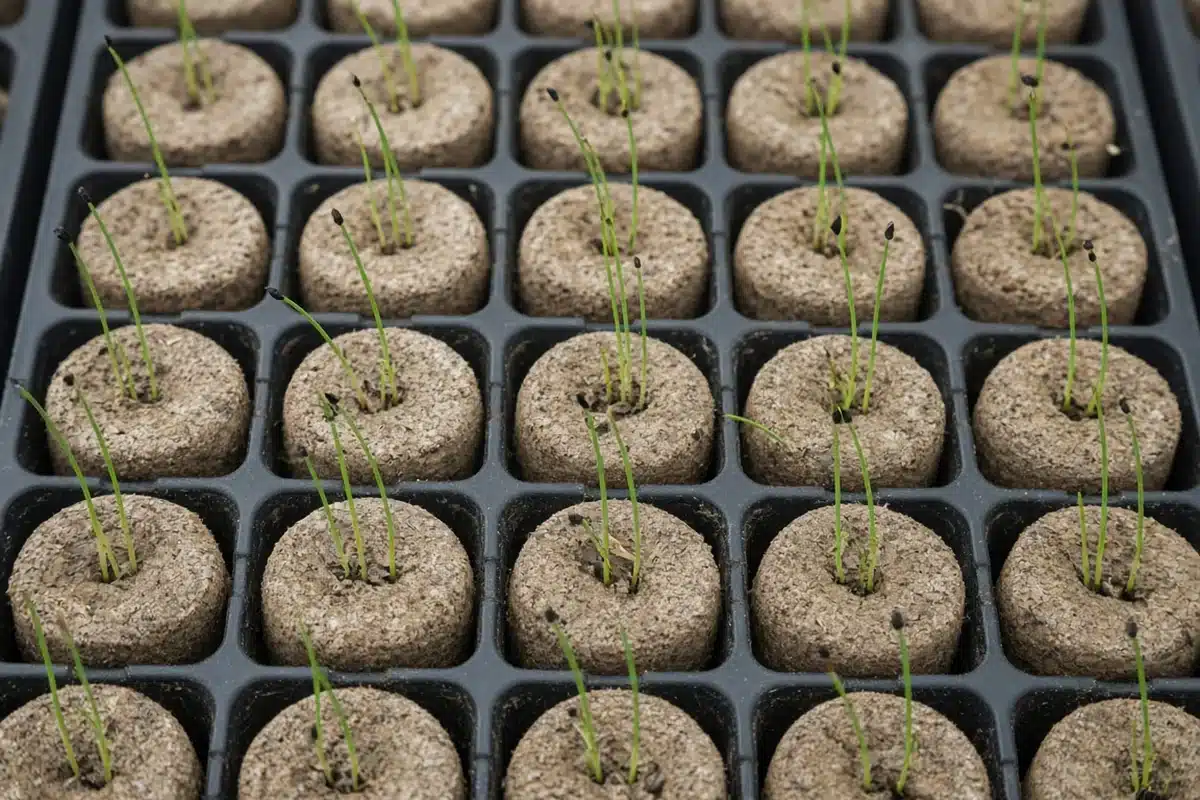
Start from seed. New Hampshire Extension lists germination at 7 to 14 days. Sow several seeds per plug so each cup grows a small clump rather than a single thin leaf.
University of Minnesota Extension suggests starting seeds separately and moving them into the hydroponic system after germination. It notes that herbs are great choices for indoor production in the winter. It also advises keeping roots only 1/3 to 1/2 submerged once they grow beyond the net pot, so they get air as well as water. For other media and holders, see hydroponic in different mediums.
| Task | How often | Notes |
|---|---|---|
| Cut leaves | Anytime they are green | Cutting back encourages new growth (University of Wisconsin) |
| Pick flowers | Shortly after opening | Flowers are edible (University of New Hampshire) |
| Deadhead | Before seeds set | Stops unwanted self seeding (NC State) |
| Divide clumps | When cups get crowded | Bulb clumps can be divided (University of New Hampshire) |
| Check root depth | As roots grow | Keep roots 1/3 to 1/2 submerged (University of Minnesota) |
Sources: University of Wisconsin Extension, University of New Hampshire Extension, NC State Extension, University of Minnesota Extension.
Light is the other key need. NC State Extension says garlic chives grow well in full sun and adapt to small spaces. Minnesota Extension notes that you will likely need artificial lights for indoor growing in winter. Our post on caring for your hydroponic system covers routine upkeep of cups, pumps and the reservoir.
How do you harvest garlic chives?
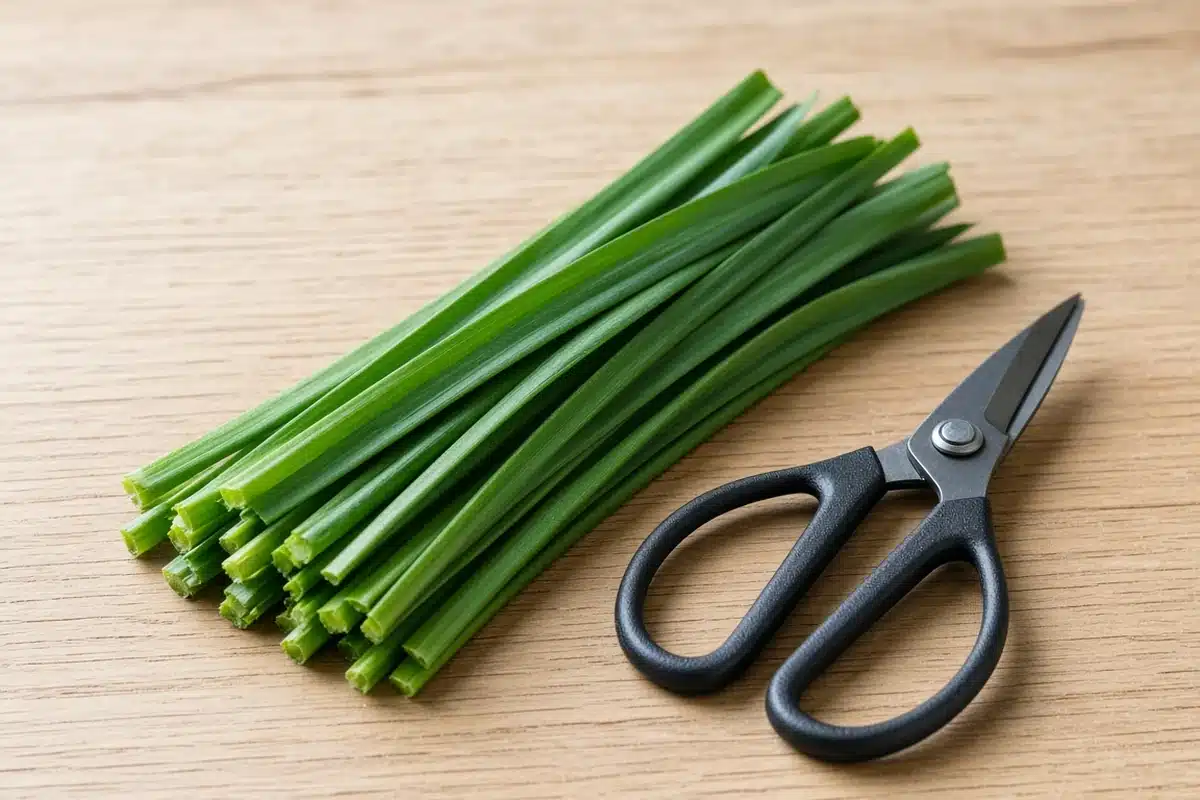
Cut the leaves. Wisconsin Extension says that just like chives, cutting the leaves back encourages new growth, and leaves can be harvested to eat anytime they are green. University of New Hampshire Extension agrees that young leaves can be harvested anytime.
Leave a little stem when you cut, since a clean cut just above the base lets the clump send up fresh leaves from its center.
Flowers are a bonus, and New Hampshire Extension says the edible white flowers can be picked shortly after opening. Wisconsin Extension describes each loose umbel as 2 to 3 inches wide with many small, white, star shaped flowers. If you don’t want seed, pick or deadhead flowers before they set seed, as NC State advises.
How to: step by step
- Sow several seeds per plug.
- Keep plugs moist until shoots appear.
- Move clumps into net cups.
- Give bright light and a steady solution.
- Cut leaves a little above the base.
- Divide crowded clumps into smaller pieces.
University of New Hampshire Extension lists maturity at 80 to 90 days from seed, so plan ahead before the first full cut. Our post on the growing schedule for your hydroponics explains how to stagger starts with faster crops.
Troubleshooting
Thin leaves: low light. NC State Extension notes garlic chives grow well in full sun, so add light.
Slow regrowth: cut too low. Leave more stem above the base.
Crowded cups: old clumps. New Hampshire Extension notes bulb clumps can be divided, so split them and replant the pieces.
Seedlings everywhere: NC State Extension says garlic chives spread readily by self seeding. Remove flowers before they set seed.
Garlic chives in an herb system
Garlic chives are a long lasting herb for a small system, since one clump can be cut many times. They fit beside other herbs and leafy greens in the same setup. The Kind Seed Co blog has more on coco and hydro mixes for growers who want to try other soilless methods.
Sources
- How to grow garlic chives (Allium tuberosum), University of New Hampshire Extension
- Garlic chives, Allium tuberosum, University of Wisconsin Madison Division of Extension
- Allium tuberosum (garlic chives), NC State Extension Gardener Plant Toolbox
- Small scale hydroponics, University of Minnesota Extension
FAQ
Can you eat garlic chive flowers?
Yes. University of New Hampshire Extension describes the white flowers as edible and says they can be picked shortly after opening. Wisconsin Extension notes each umbel holds many small, star shaped flowers. Pick them before they set seed to stop self seeding in your system.
Do garlic chives come back after cutting?
Yes. University of Wisconsin Extension says that just like chives, cutting the leaves back encourages new growth. Garlic chives are a perennial, clump forming herb, so one plant can give many harvests. Cut a little above the base so the clump can regrow from its center.
How often can you harvest?
Often. Wisconsin Extension says leaves can be harvested anytime they are green, and New Hampshire Extension says young leaves can be harvested anytime. Let the clump regrow between cuts and take only part of it at a time if you want a steady supply.
How tall do garlic chives grow?
University of Wisconsin Extension lists clumps of foliage 10 to 20 inches tall. New Hampshire Extension says leaves grow up to 12 inches long. Flower stalks can rise well above the leaves, so place cups where taller stalks will not shade other plants in your system.
How long do garlic chives take from seed?
University of New Hampshire Extension lists germination at 7 to 14 days and maturity at 80 to 90 days. You can take a few young leaves before then, but most growers wait for a full clump before regular cutting begins.