Growing Hydroponic Yu Choy: Choy Sum Shoots in Rafts
The short answer
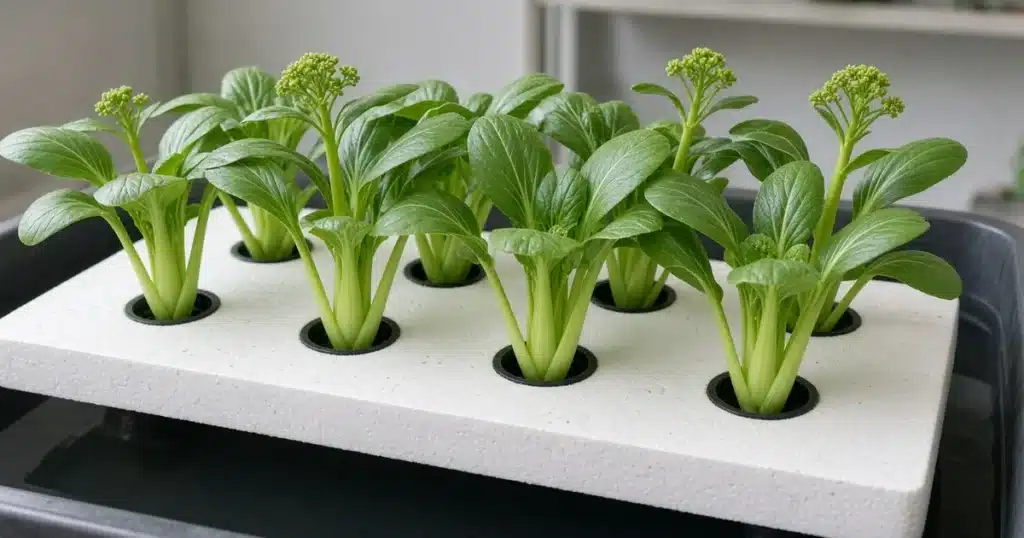
Hydroponic yu choy, a type of choy sum, is a cool season Asian green grown for its tender flowering shoots. UF/IFAS describes harvest when the flower buds are fully developed but not yet open. In a raft system, give plants room and mild temperatures, then cut leaves, buds and stems together before the yellow flowers open.
What is yu choy?
Yu choy sits in a large family of Asian greens. The UC Small Farms Network lists bok choy, choy sum and yu choy among closely related Brassica greens and describes yu choy as similar to bok choy except more delicate and sweeter. It calls them cool season greens.
UF/IFAS Extension describes choy sum as a member of the mustard family that is also known as Chinese flowering cabbage. Although all aboveground parts are edible, the crop is harvested mainly for the flowering stems that bear leaves during bolting. It’s an herbaceous annual that grows 8 to 16 inches tall, depending on genetics and conditions.
That sets yu choy apart from most leafy greens. Bolting ends a lettuce harvest, but with yu choy the young flowering shoot is the harvest.
How do you grow yu choy in rafts?
Virginia Cooperative Extension describes deep water culture as a floating or raft system. All DWC systems have a production pond, plant rafts, a pumping system for nutrient solution and oxygenation. The same source notes that the method has been adopted by commercial growers and hobbyists to grow leafy greens. For other ways to hold roots, see hydroponic in different mediums.
Temperature shapes the crop, and UF/IFAS notes that low temperatures of 59°F to 77°F promote sturdy stalks and increase sweetness in choy sum. Its bok choy guide adds that bok choy grows well at 64°F to 68°F. A mild room near those numbers suits yu choy in a raft.
The solution needs regular checks. Virginia Extension advises checking EC and pH two to three times each week. It notes that many leafy greens perform well at EC 1.2 to 2.0 mS/cm and that most plants in these systems do well at pH 5.5 to 6.2. Read caring for your hydroponic system for a routine that covers meters and reservoir upkeep.
When do you harvest yu choy shoots?
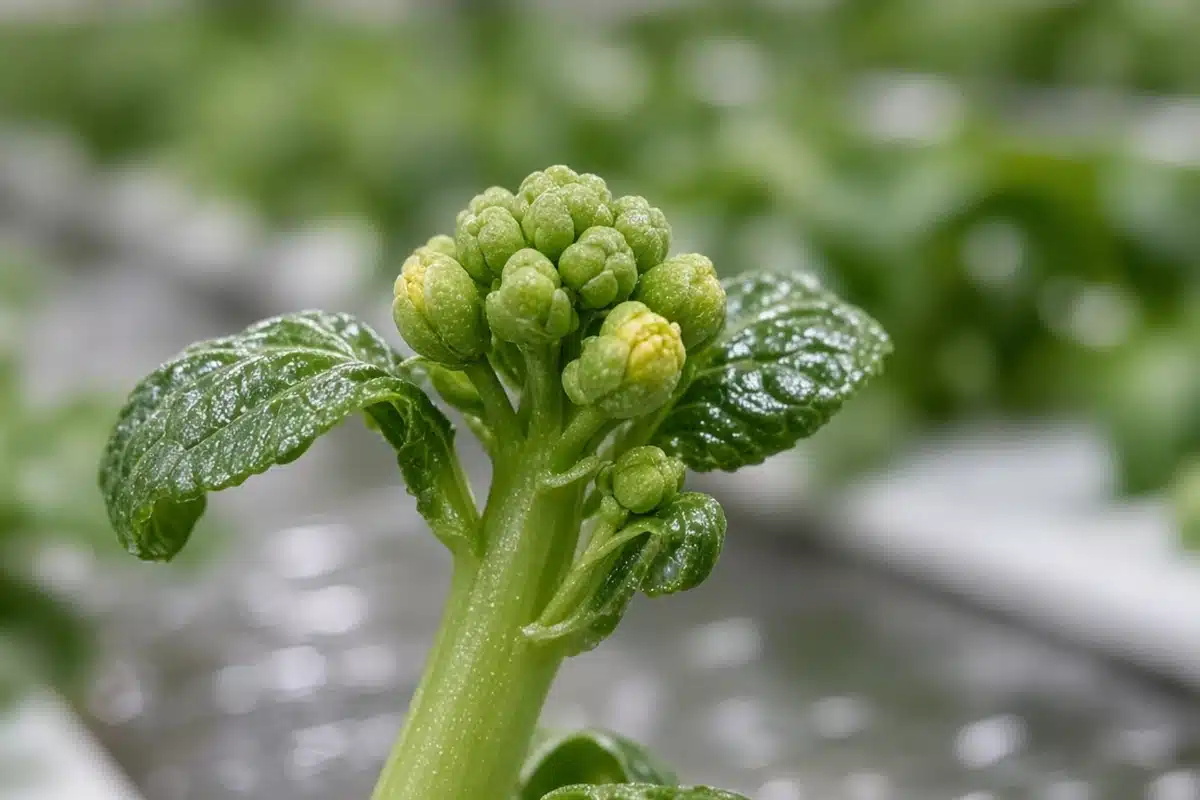
UF/IFAS gives a clear window: harvest begins 30 to 50 days after sowing when the flower buds are fully developed but not open. Leaves, flower buds and stems are harvested together. The UC Small Farms Network gives similar advice for gailon, a close relative, saying to pick just before the flowers open.
| Sign | Meaning | Action |
|---|---|---|
| Flowering stem rising | The plant has started to bolt | Check daily from here (UF/IFAS) |
| Buds fully formed and closed | Peak harvest stage | Cut leaves, buds and stems together (UF/IFAS) |
| Yellow flowers opening | Harvest window is closing | Pick at once and check plants sooner next time (UC Small Farms Network) |
| New side shoots | More harvests to come | Two to three harvests per season are common (UF/IFAS) |
Sources: UF/IFAS Extension, UC Small Farms Network.
Store harvested shoots cold. UF/IFAS notes that choy sum can keep for up to nine days at about 41°F with moderate humidity.
How to: step by step
- Sow seed in plugs.
- Move seedlings into a raft.
- Space plants for airflow.
- Hold the room mild and bright.
- Watch for flower buds on the shoots.
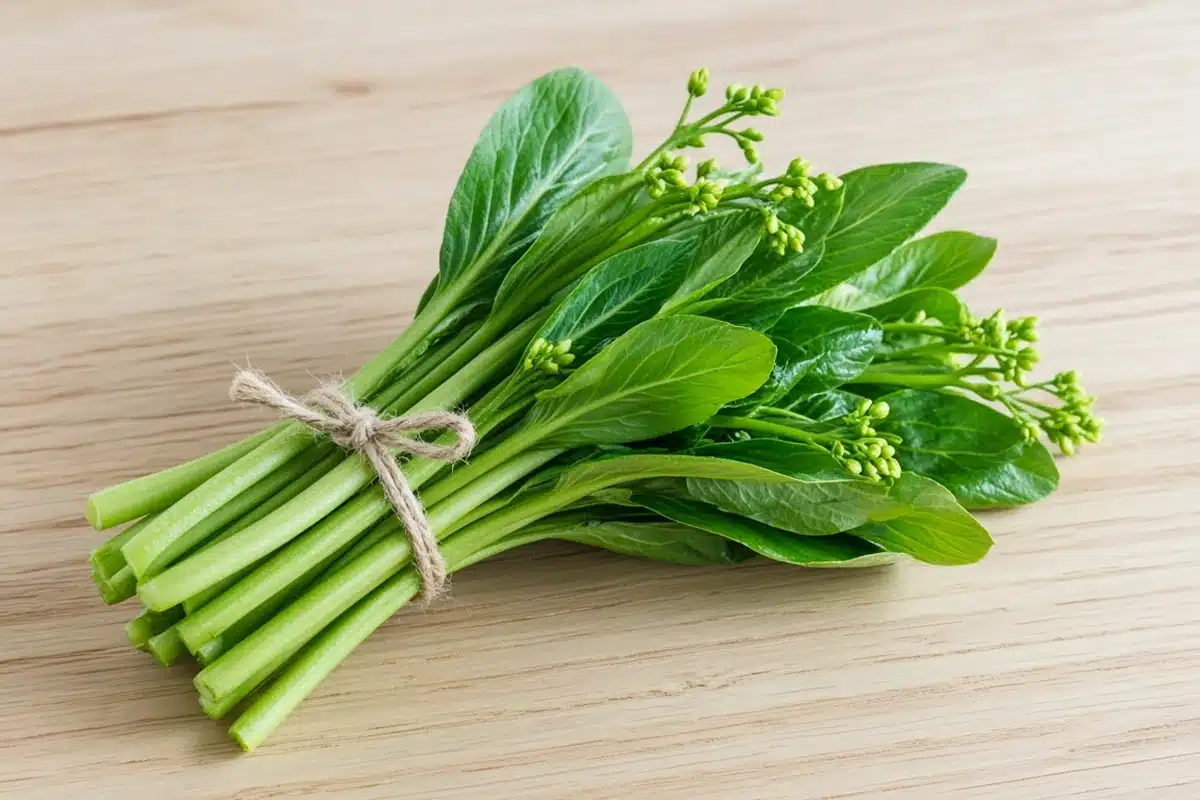
- Cut shoots while buds are closed.
Since harvest can start 30 to 50 days after sowing, stagger seed starts every couple of weeks for a steady supply. Our post on the growing schedule for your hydroponics explains how to plan rolling starts.
Troubleshooting
Open flowers: late harvest. UF/IFAS says to cut when buds are fully developed but not open, so check plants daily near harvest.
Tough stems: heat. UF/IFAS notes cooler temperatures promote sturdy stalks and sweetness, so hold the room mild.
Aphids: UF/IFAS lists aphids among the common pests of choy sum. Check leaf undersides and rinse them off.
Yu choy in a mixed raft
Yu choy pairs well with lettuce and other greens that share cool conditions. Its sweet shoots add a new texture to the harvest. The Kind Seed Co blog has more on coco and hydro mixes and other soilless setups.
Sources
- Production guide for choy sum, an emerging Asian vegetable in Florida, UF/IFAS Extension
- Crucifer family: bok choy, daikon, gailon, Chinese cabbage, UC Small Farms Network
- Bok choy, an Asian leafy green vegetable emerging in Florida, UF/IFAS Extension
- Hydroponic production of edible crops: deep water culture (DWC) systems, Virginia Cooperative Extension
FAQ
Is yu choy the same as bok choy?
No, though they are close relatives. The UC Small Farms Network describes yu choy as similar to bok choy except more delicate and sweeter. UF/IFAS notes that the flowering shoots of bok choy are sometimes grouped with choy sum, which is why the names often overlap in stores and seed catalogs.
Can you eat the yellow flowers?
Yes. UF/IFAS notes that all aboveground parts of choy sum are edible. Most growers still pick before the flowers open, since that is the stage UF/IFAS gives for harvest. A few open flowers on the shoots are fine to eat with the rest of the harvest.
How long does yu choy take?
UF/IFAS says harvest of choy sum begins 30 to 50 days after sowing, when flower buds are fully developed but not open. Timing depends on temperature and light, so check plants daily once the flowering stem appears and cut while the buds are still closed.
Does yu choy regrow after cutting?
Often yes. UF/IFAS notes that there are two to three harvests for each season of choy sum. After the main shoot is cut, side shoots can form and give a second or third, smaller harvest. Keep the area mild so the new shoots stay tender.
What temperature does yu choy like?
Mild and cool. UF/IFAS notes that 59°F to 77°F promotes sturdy stalks and increases sweetness in choy sum. Its bok choy guide lists 64°F to 68°F as ideal for that close relative. A cool room that stays near those numbers suits a raft of yu choy.