
Hydroponic Raft Boards: Thickness, Hole Patterns and Cleaning
The short answer
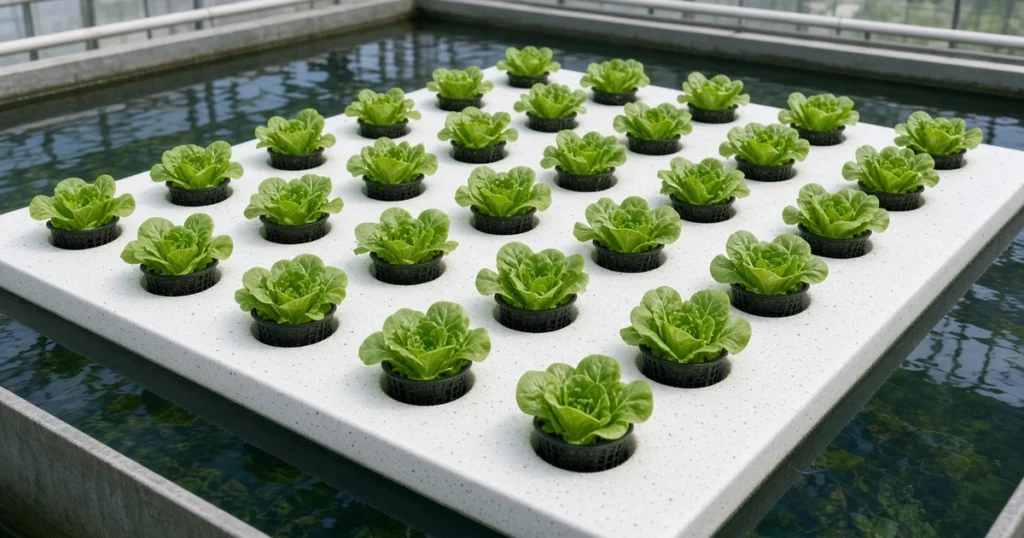
Hydroponic raft boards are polystyrene sheets that float on a deep water reservoir and hold plants in net cups. Extension guides describe boards from 1 to 2 inches thick with holes sized to the cups and spaced so leaves do not crowd. Clean boards between crops so algae and buildup don’t carry over.
What does a raft board do?
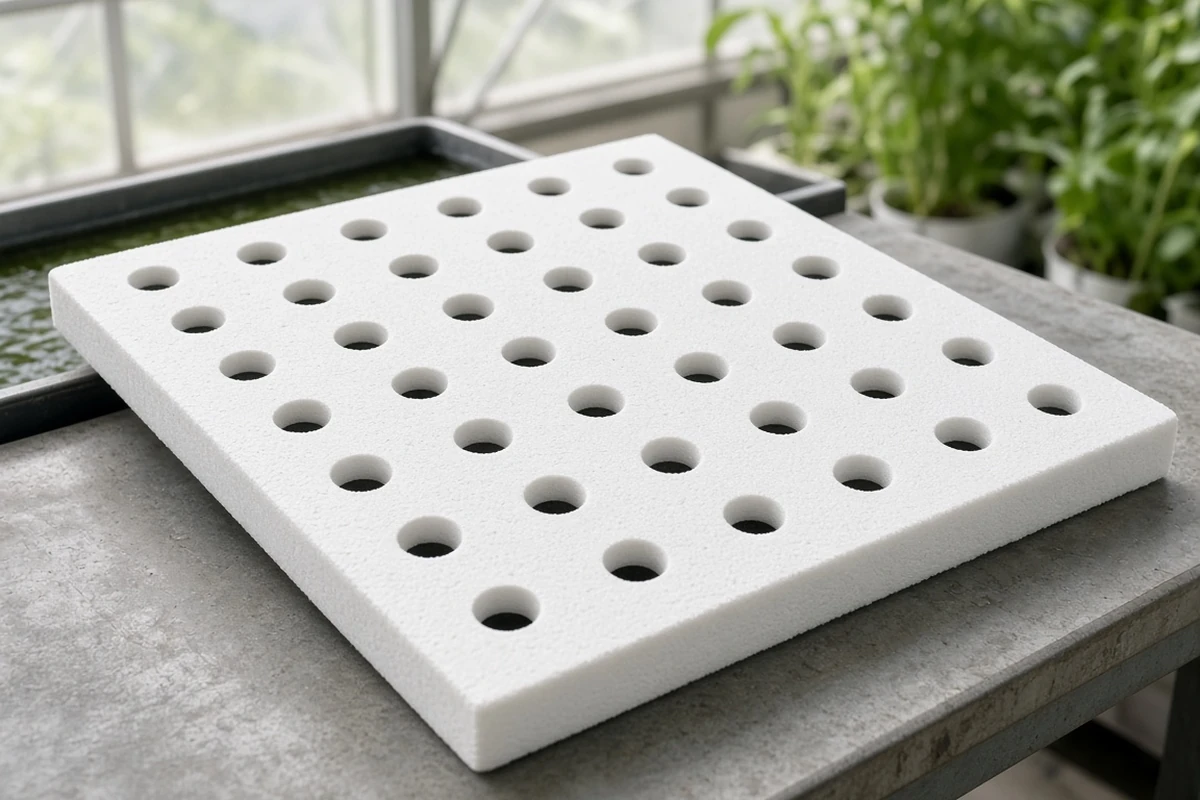
A raft board floats on the solution and holds each plant at the surface with its roots hanging into the water. Virginia Cooperative Extension notes that commercial rafts are made of heat sealed polystyrene, often 2 by 4 feet. Rafts can move along a pond from planting end to harvest end. Home growers can cut their own from insulation board, but Virginia Extension warns that some boards shed small flakes from the cut edge. Pick clean polystyrene without coatings or loose fill.
How thick should a raft board be?
Extension guides use boards from 1 to 2 inches thick. A University of Hawaii CTAHR guide hosted by Texas A&M uses 1 inch panels of 2 pound density polystyrene cut to 2 by 4 feet. UF IFAS describes a floating raft of Styrofoam 2 inches thick. Thicker boards float higher and sag less. The CTAHR guide sets 4 inch pots under each panel to stop thin panels from sagging. Board choice also ties into your hydro setup environment.
How do you plan hole spacing?
First, match hole size to the net cups. The CTAHR guide uses 2 inch net pots and a 2 inch hole saw. It lays out 12 holes per panel in staggered rows 8 inches apart on center, with holes 12 inches apart in each row and the first hole 4 inches from the edge. It also suggests drilling halfway from each side so the plug does not stick in the bit. Virginia Extension spaces lettuce 8 inches apart on rafts. Small crops can sit closer, and large ones need more room.
How do you clean raft boards?
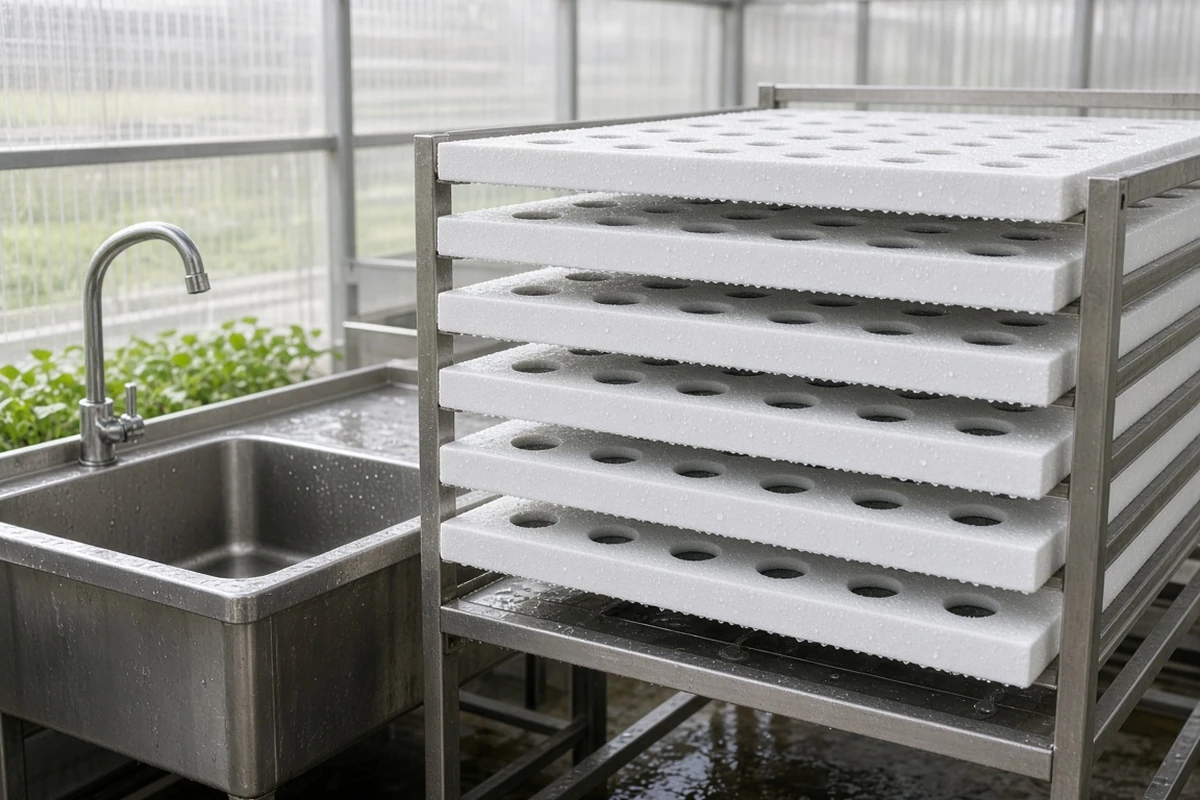
Clean the boards with the rest of the system between plantings. The University of Minnesota Extension advises draining the water, washing surfaces with dish soap, water and a scrub brush, then sanitizing all containers and parts before the next crop. Rinse well and let boards dry before refilling. See caring for your hydroponic system for the full routine.
Raft board basics
| Stage | What to do | Notes |
|---|---|---|
| Board | Polystyrene 1 to 2 inches thick | Cut edges of some boards shed flakes |
| Holes | Match the net cup size | 2 inch pots, 2 inch hole saw |
| Layout | Staggered grid | Rows 8 inches on center |
| Float | Leave an air space | Water at the net pot bottom |
| Clean | Wash and sanitize between crops | Soap, water and a scrub brush |
Sources: Virginia Cooperative Extension, University of Hawaii CTAHR, UF IFAS Extension, University of Minnesota Extension.
How to: step by step
- Choose a clean polystyrene board 1 to 2 inches thick that floats well.
- Measure the net cups you will use.
- Mark a staggered grid that gives each plant room, such as rows 8 inches apart.
- Drill holes that hold cups snugly, halfway from each side.
- Float the board and check that the water reaches the cup bottoms with an air space under the panel.
- Wash and sanitize boards between crops.
Troubleshooting
Algae on the board: light reaches the water. Fill empty holes and shade the tank.
Cups fall through: holes are too big, so use a smaller bit.
Crowded plants: the grid is tight. Space holes farther apart.
Build boards once, use them often
Good raft boards make deep water culture simple. Compare root media in hydroponic in different mediums. Kind Seed Co shares more hydroponic setup notes on the blog.
Sources
- Hydroponic production of edible crops: deep water culture (SPES 464 PDF), Virginia Cooperative Extension
- Growing lettuce in small hydroponic systems (HS1422), UF IFAS Extension
- Small scale lettuce production with hydroponics or aquaponics, University of Hawaii CTAHR (hosted by Texas A&M AgriLife Extension)
- Hydroponic production of edible crops: deep water culture (DWC) systems (SPES 464), Virginia Cooperative Extension
- Small scale hydroponics, University of Minnesota Extension
FAQ
What foam is used for raft boards?
Extension guides use polystyrene. Commercial rafts are heat sealed polystyrene, and one CTAHR guide uses 1 inch panels of 2 pound density polystyrene.
Can you paint raft boards?
Painting raft boards is not covered by standard guides. Commercial rafts are plain heat sealed polystyrene, so a plain board is the simple choice.
How long do raft boards last?
The sources give no set lifespan. Replace a board when the cut edges start to shed flakes, when it sags or when it no longer cleans up well.
Should empty holes be covered?
Yes. Light reaching the water helps algae grow, and the CTAHR guide shades the tank to stop algae. Plug or cover empty holes.
How far apart should raft holes be?
One CTAHR layout uses staggered rows 8 inches apart with holes 12 inches apart in each row. Virginia Extension spaces lettuce 8 inches apart.



