Hydroponic Auto Top Off: Float Valves and Switches That Refill Water
The short answer
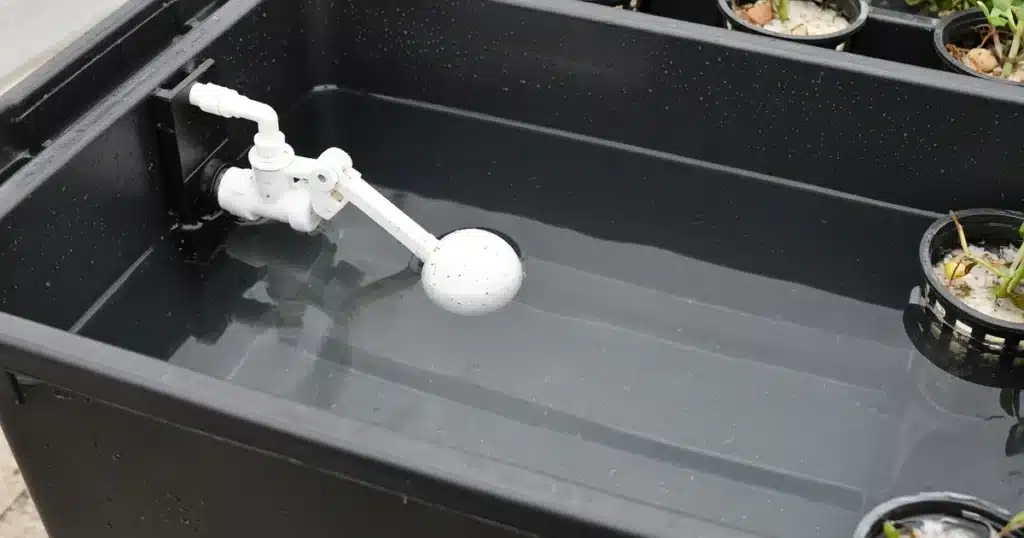
A hydroponic auto top off holds a reservoir at a set level by adding water as plants use it. A float valve opens when the level drops and closes once the level returns, with no power needed. A float switch does the job electrically with a pump. Either way, top off with plain water and still check EC.
What is an auto top off?
Water leaves every reservoir. Smart Hydro Lab explains that when water leaves through transpiration and evaporation, the dissolved salts stay behind, so EC climbs even though nothing was added. Holding the volume constant stops that drift, and an auto top off is the hardware that does it.
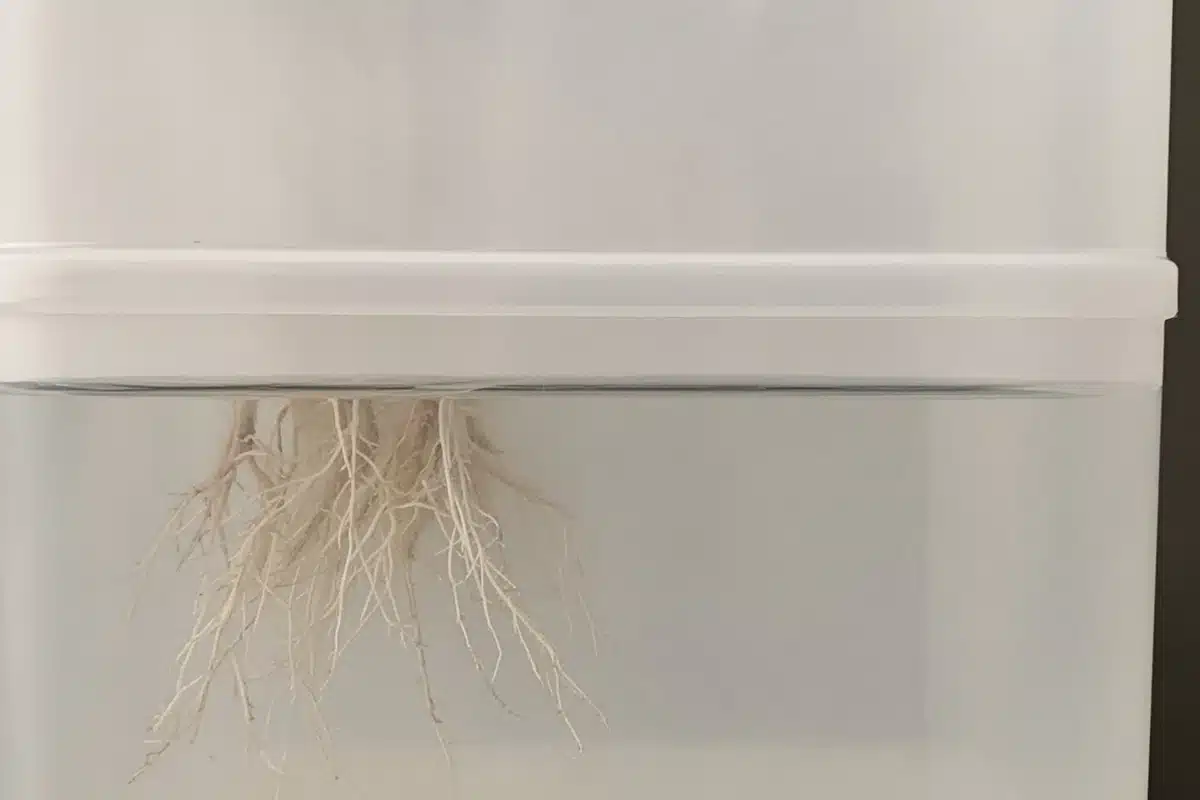
Level matters for roots as well as for EC. University of Minnesota Extension notes that in a deep water culture system the roots should be only 1/3 to 1/2 submerged once they grow beyond the net pot, which is why the water level is important as roots develop. A steady level keeps that air gap even.
UMass Extension notes that besides the plant support system, hydroponic setups need tanks, pumps and controls. It adds that controls can be as simple as a time clock and manual switches or as complex as a computer that automatically adjusts the solution. An auto top off sits at the simple end. For more on picking a setup, read indoor marijuana grow systems.
Float valve or float switch?
| Option | How it works | Notes |
|---|---|---|
| Float valve | A float on an arm opens a supply line as the level drops and closes it as the level rises | Needs no power and runs on gravity or pressure (Smart Hydro Lab) |
| Float switch | A float trips a switch that runs a fill pump or closes a solenoid | Often used as a high level cutoff (Soil Free Harvest) |
| Manual top off | You add water by hand | Level and EC rise and fall in a sawtooth pattern (Smart Hydro Lab) |
Sources: Smart Hydro Lab, Soil Free Harvest.
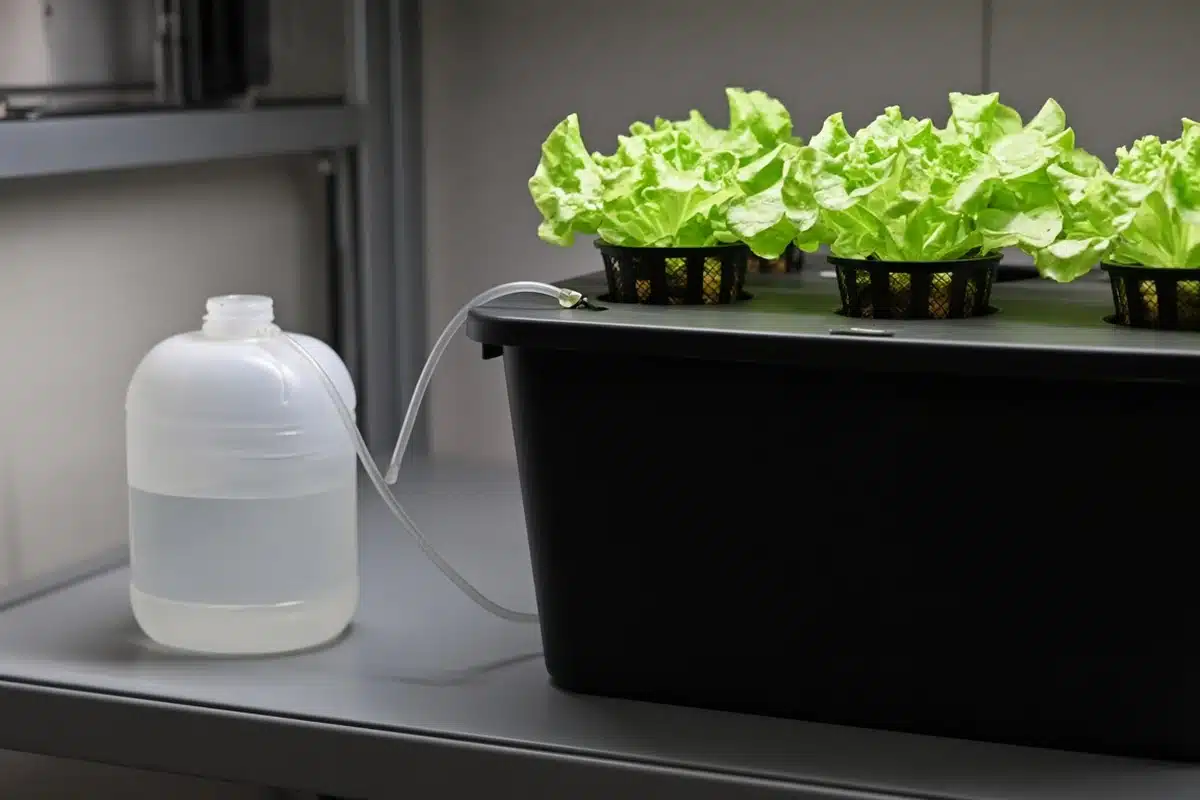
Smart Hydro Lab describes the float valve as the same mechanism as a toilet cistern, scaled down. The valve controls flow but cannot create it, so it needs a pressure or gravity source on the supply side. It recommends feeding it from a raised barrel rather than mains pressure, since a barrel that empties can only deliver what it holds.
Soil Free Harvest suggests adding a mechanical high level float switch set slightly above the normal level. Once tripped, it cuts power to the fill pump or closes a solenoid. A float valve plus a backup switch gives two chances to stop an overfill.
How do you set and check the water level?
Smart Hydro Lab advises mounting the valve so the closed level sits several centimeters below the rim. Fill the reservoir to your working level with the supply disconnected, then adjust the arm until the valve just closes. Reconnect the supply, watch one cycle and confirm it shuts fully.
Then check the solution, as University of Kentucky advises monitoring the pH and EC of the reservoir and adjusting as needed. Virginia Cooperative Extension suggests checking EC and pH two to three times each week in a DWC system. Smart Hydro Lab adds that auto top off does not fix nutrient ratio drift, so planned solution changes are still needed. Our post on caring for your hydroponic system covers that routine.
How to: step by step
- Choose a float valve or a float switch.
- Mount it at the full line.
- Connect it to a clean water supply or top off tank.
- Confirm that it shuts off at the full line.
- Check EC after big top offs.
- Clean the float during reservoir changes.
Smart Hydro Lab notes that the top off barrel is a reservoir too. Standing water can grow algae and biofilm, so use an opaque barrel with a lid and clean it on the same schedule as the main tank. For more on room conditions around the reservoir, see the right environment for a hydro setup.
Troubleshooting
Overflow: float stuck open. Soil Free Harvest lists debris that jams the float and worn parts as common causes. Clean or replace it, and add a high level switch.
Level drops: supply empty or valve stuck closed. Refill the top off tank and check that the float moves freely.
Solution weakens: Smart Hydro Lab notes that a valve that never fully closes shows up as a reservoir that is always full and an EC that continues to fall. Reset the arm and check EC.
Wrong system: Smart Hydro Lab advises against auto top off on Kratky systems, where the falling level is part of the design.
A small part that saves daily chores
An auto top off turns a daily refill into a weekly check and holds the level steady, so EC drifts less between checks. The Kind Seed Co blog has more on coco and hydro mixes and other soilless systems.
Sources
- Small scale hydroponics, University of Minnesota Extension
- Hydroponic systems, UMass Amherst Center for Agriculture, Food and the Environment
- 5 steps to successful float bed lettuce production, University of Kentucky Center for Crop Diversification
- Hydroponic production of edible crops: deep water culture (DWC) systems, Virginia Cooperative Extension
- Float valves and auto top off for hydroponics, Smart Hydro Lab
- Hydroponic automation failure: safe defaults and fixes, Soil Free Harvest
FAQ
Does auto top off add nutrients?
Not if you set it up as most growers advise. Smart Hydro Lab recommends topping off with plain water, since water leaves through transpiration and evaporation while salts stay behind. Adding nutrient solution instead drives EC up. Check EC and adjust nutrients by hand during routine checks.
Do I need a separate top off tank?
For a float valve, yes, or some other supply. Smart Hydro Lab notes the valve controls flow but cannot create it, so it needs gravity or pressure on the supply side. It suggests a raised barrel, since a barrel can only deliver what it holds if the valve sticks open.
Can a float valve stick?
Yes. Soil Free Harvest says float valves usually fail stuck open or stuck closed, often from debris or worn parts. A stuck open valve can overflow the reservoir, and a stuck closed valve lets plants drink it dry. A backup high level float switch and regular checks help catch both.
Is an auto top off worth it for small systems?
It can be. Smart Hydro Lab notes that on small reservoirs the valve holds a wider band than you might expect, though it still works. It also advises against auto top off on Kratky systems, where the falling water level is part of how the method works.
Does auto top off replace reservoir changes?
No. Smart Hydro Lab explains that auto top off holds volume and steadies EC, but plants use elements in different ratios than a nutrient mix supplies. The solution slowly goes out of balance even when the meter reads flat, so planned reservoir changes are still needed.