Grow Light for Rex Begonia Plants: Keeping Leaf Color Bright Indoors
The short answer
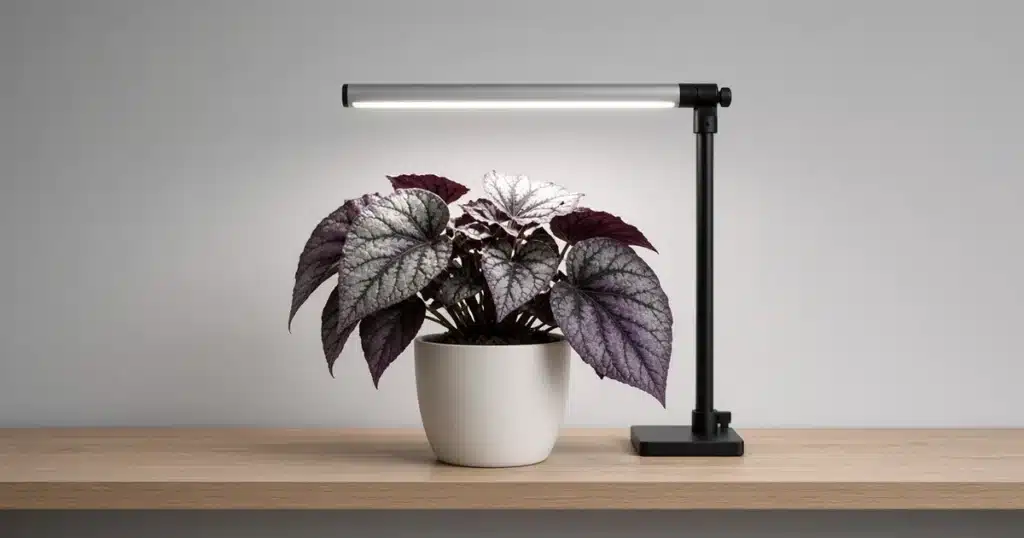
A grow light for rex begonia plants should give bright, indirect style light, not harsh direct sun. Extension guides describe rex begonias as foliage plants that hold their leaf color in bright but indirect light. A full spectrum LED set 12 to 24 inches above the plant on a 12 to 14 hour timer is a sound start.
How much light does a rex begonia need?
Rex begonias are grown for their leaves, and UConn Home and Garden Education Center notes that they do produce delicate flowers but are usually grown for their colored and textured leaves. It says the leaves hold their color and patterns in bright but indirect light. NC State Extension agrees that rex begonias prefer bright but indirect sunlight, along with moist, well drained soil and high humidity.
Window light is the baseline, and UConn says east windows are fine except perhaps in the hottest, sunniest part of summer. With south or west exposures, set plants a few feet back so the leaves are not in direct sun. Iowa State University Extension notes that rhizomatous begonias like rex types prefer bright light but are not suited to intense, direct sunlight.
Winter is when a light helps most, since UConn notes that if plants do not get enough light during the winter months, they will often go dormant. University of Minnesota Extension says supplemental lighting can make up for a lack of natural sunlight.
Which grow light suits a rex begonia?
University of Minnesota Extension notes that the most common types of grow lights are LED and fluorescent. It lists LEDs as very energy efficient, long lasting, wide in spectrum and low in heat. UConn adds that rex begonias also do well under fluorescent lights.
Minnesota Extension gives a medium light range of 250 to 1,000 foot candles, which it describes as an east window or a spot near a west window out of direct light. That matches the window advice for rex begonias. It also suggests checking the packaging before buying, since grow lights tend to be labeled as blue, red or white and balanced. For more on choosing fixtures, see grow lights for cannabis, which covers the same LED basics.
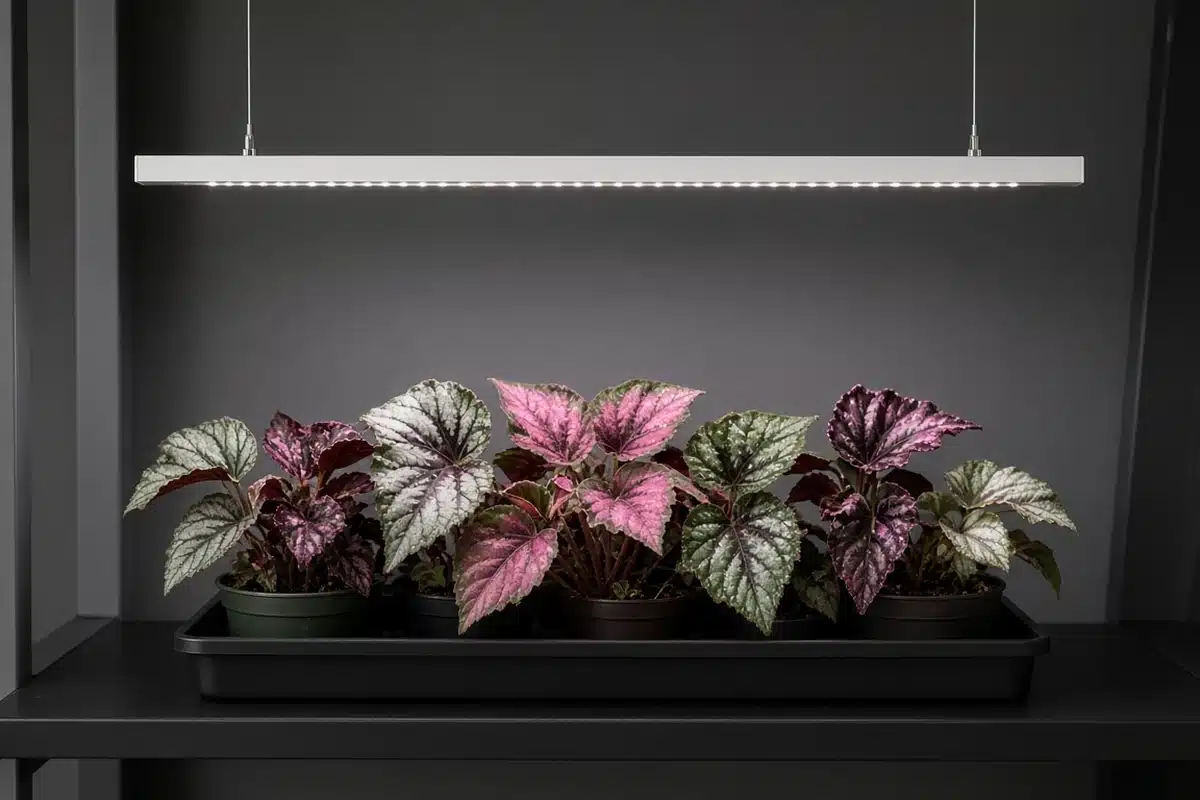
Distance and hours set the dose, and Minnesota Extension lists 12 to 24 inches between the light and foliage houseplants, and 12 to 14 hours of light per day for them. It advises a timer when natural light is low. Read grow light timers for help setting one, and led light distance cannabis for more on how distance changes intensity.
How do you tell if a rex begonia has the right light?
Watch the leaves. Minnesota Extension describes signs of too little and too much light.
| Sign | Meaning | Fix |
|---|---|---|
| Pale or faded leaves | Too little light | Lower the light or add hours |
| Long, thin stems reaching for light | Too little light | Add hours or intensity |
| Older leaves dropping | Too little light | Move the light closer |
| Scorched or bleached leaves | Too much light | Raise the light or cut hours |
| Plant goes dormant in winter | Short winter days | Add a grow light on a timer (UConn) |
Sources: University of Minnesota Extension, UConn Home and Garden Education Center.
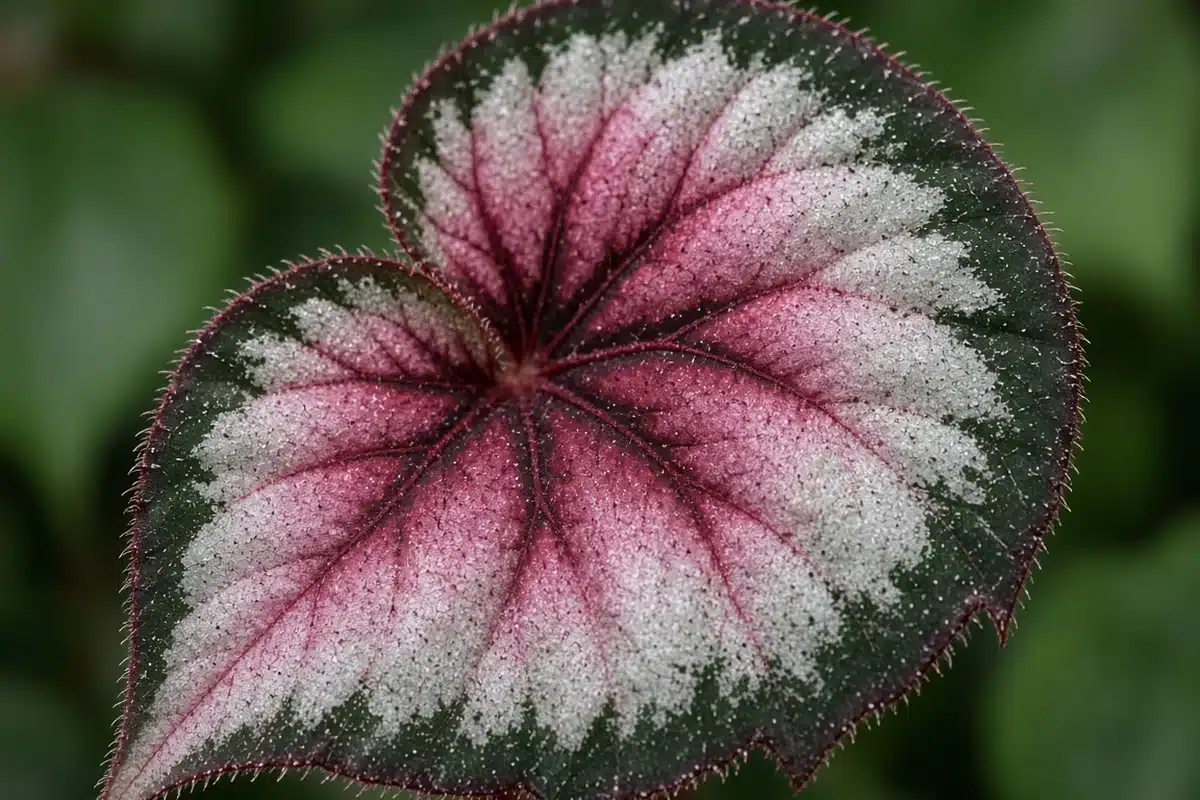
Good light shows as rich, patterned leaves. NC State notes the leaves come in green, red, pink, silver, gray, lavender and maroon with a somewhat metallic look. Bright color on new leaves means the light is about right.
How to: step by step
- Place the rex begonia in bright, indirect light first.
- Pick a full spectrum LED for extra light.
- Hang the light at the maker’s suggested distance.
- Run a timer for a steady day length.
- Watch new growth for a few weeks.
- Adjust height or hours in small steps.
If the maker gives no distance, Minnesota Extension’s range of 12 to 24 inches for foliage houseplants is a reasonable start.
Troubleshooting
Faded leaves: too little light. Minnesota Extension notes plants short on light can turn pale, so lower the light slightly.
Brown, crisp patches: too much light. Minnesota Extension says it can scorch and bleach leaves, so raise the light.
Leggy stems: weak light. Minnesota Extension describes stems that grow long and thin when light is short. Add hours or intensity.
Winter slump: UConn notes plants often go dormant with too little winter light. Add a light on a timer.
Bright leaves all year
A grow light lets a rex begonia hold its color through dark months. Soft, steady light and a fixed day length matter more than raw power. The Kind Seed Co blog covers grow lights in depth, and if you also grow from seed, browse our cannabis seeds range.
Sources
- Rex begonia, UConn Home and Garden Education Center
- Growing begonias in Iowa, Iowa State University Extension and Outreach
- Begonia, rex types (painted leaf begonia), NC State Extension Gardener Plant Toolbox
- Lighting for indoor plants and starting seeds, University of Minnesota Extension
FAQ
Do rex begonias like direct sun?
No. UConn Home and Garden Education Center says rex begonias hold their leaf color in bright but indirect light. With south or west windows, set plants a few feet back so leaves are not in direct sun. Iowa State Extension notes they are not suited to intense, direct sunlight.
How many hours should the light run?
University of Minnesota Extension suggests 12 to 14 hours of light per day for foliage houseplants. Use a timer so the day length stays steady. If the plant sits near a bright window, it may need fewer hours of extra light, so watch new leaves and adjust.
Can rex begonias grow under shop lights?
UConn notes that rex begonias do well under fluorescent lights, and many shop lights are fluorescent or LED. Minnesota Extension suggests checking the packaging for the light type, since grow lights tend to be labeled blue, red or white and balanced. Set the light 12 to 24 inches above foliage.
Why are my rex begonia leaves fading?
Fading often means too little light. University of Minnesota Extension notes that plants short on light can turn pale green to yellow. Too much light can also bleach leaves, so look for scorched patches too. Adjust light height or hours in small steps and watch the next new leaves.
Do rex begonias go dormant in winter?
They can. UConn notes that if rex begonias do not get enough light during the winter months, they will often go dormant. A grow light on a timer can make up for short days, as University of Minnesota Extension notes supplemental lighting can replace missing natural sunlight.