Hydroponic Celery Turning Yellow: Roots Calcium plus Heat
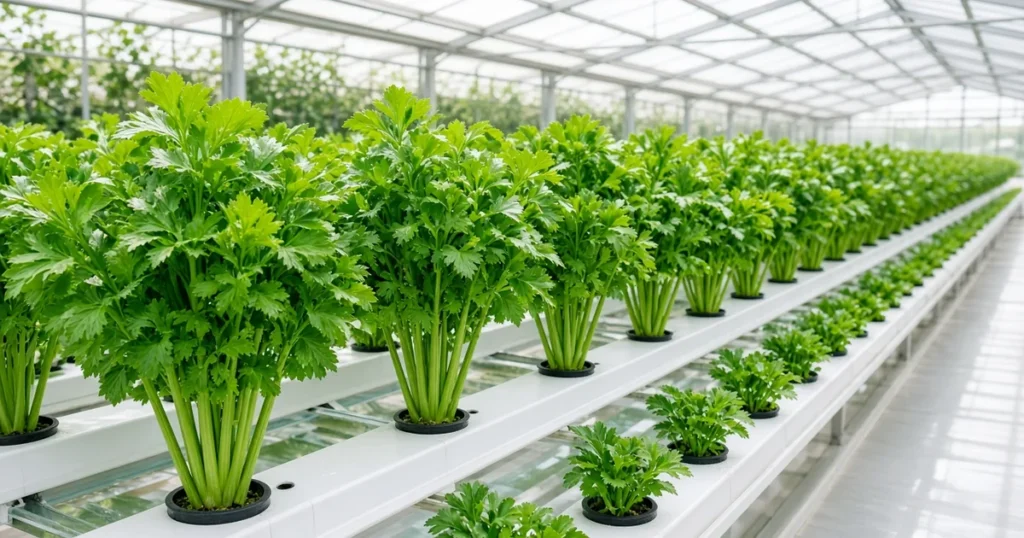
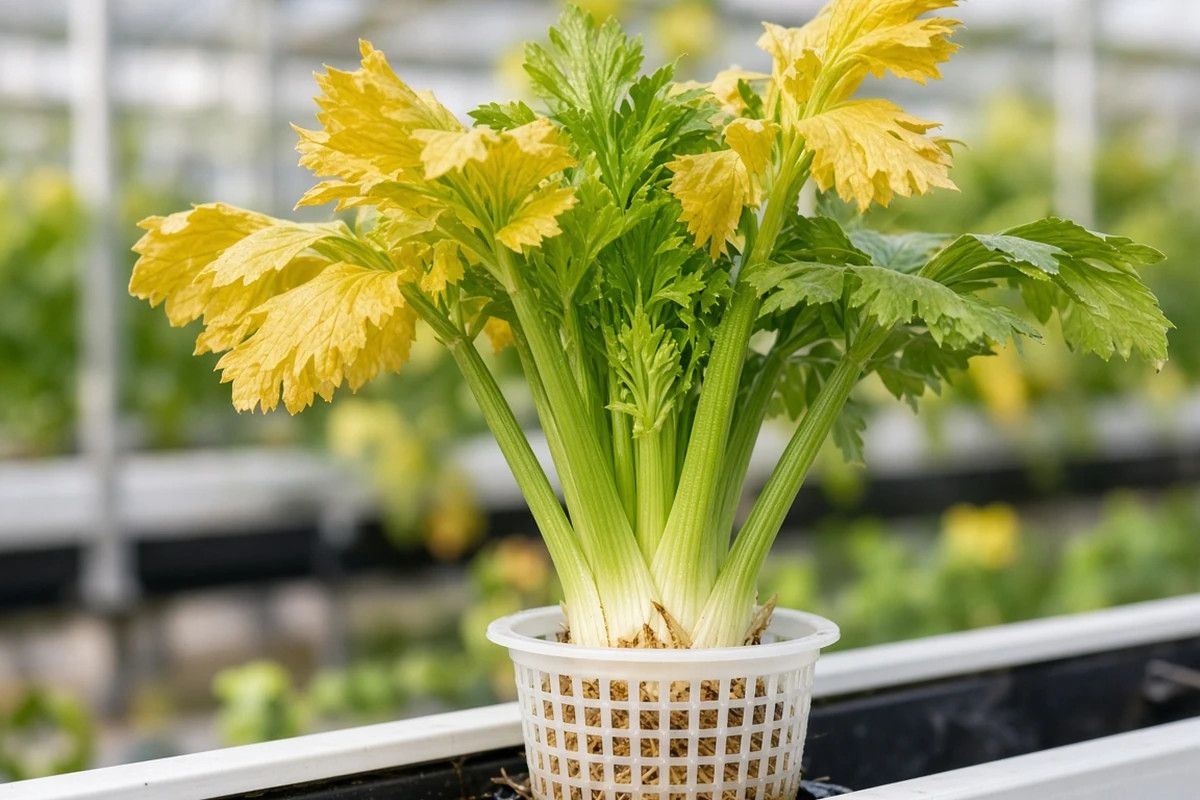
Hydroponic celery turning yellow often comes from a weak nutrient solution, poor calcium movement or heat around the roots. Steady conditions matter more for celery than for many crops.
The short answer
Pale outer stalks with slow growth suggest low nitrogen. Wilting with dark roots points to warm, low oxygen water. Brown edges on new leaves point to a calcium shortage. Check EC plus pH, cool the reservoir, add gentle airflow plus hold moisture plus nutrients steady to bring new growth back.
Why does celery need a steady solution?
Utah State University Extension stresses water. It calls good watering a key part of celery production. In a hydroponic system, that means a stable reservoir level plus a solution checked often for EC plus pH.
| Pattern | Likely cause | Fix |
|---|---|---|
| Slow growth in warm water | Low dissolved oxygen | Cool the reservoir |
| Light green leaves plus stunting | Low nitrogen | Add nitrogen if EC is low |
| Brown leaf margins on new growth | Calcium shortage | Correct pH plus improve airflow |
Source: Penn State Extension plus University of Missouri Extension.
How does calcium flow affect celery?
Calcium moves through the plant in water conducting tissue, per Penn State Extension. Shortage symptoms commonly start as brown leaf margins on new growth. Lettuce tipburn is a classic example.
Penn State Extension notes that calcium shortage also links to low pH, high temperature plus low airflow.
How does heat stress celery?
Heat affects both leaves plus roots. Penn State Extension explains that high temperatures plus low humidity can raise water loss from leaves. Calcium then moves toward fast transpiring tissue, leaving other tissue short. Uniform airflow helps growth stay even.
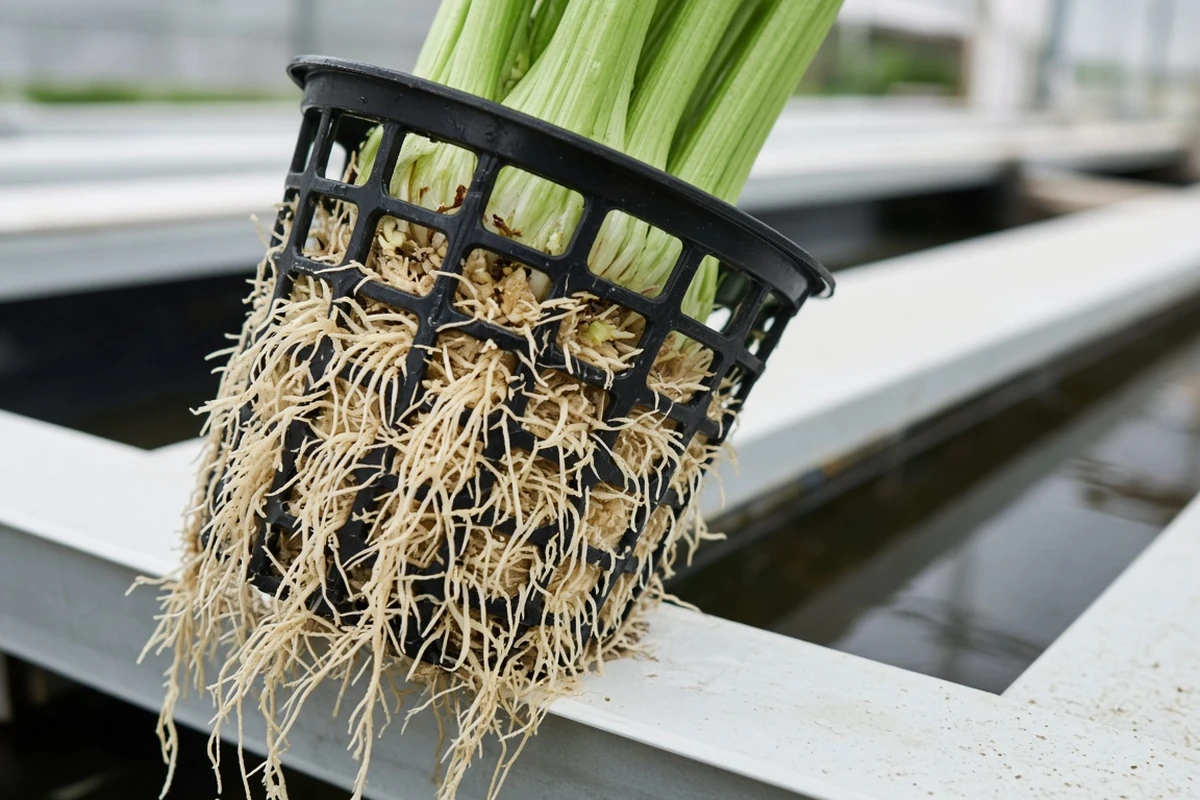
Warm water holds less oxygen. University of Missouri Extension notes that water temperature caps how much oxygen the solution can hold. A dissolved oxygen level over 6 ppm is optimum for hydroponics. Low oxygen may slow growth.
How to: step by step
- Note which stalks are yellowing, outer or inner.
- Read solution EC plus pH.
- Look at root color.
- Cool the reservoir when the water runs warm.
- Add gentle, even airflow across the leaves.
- Hold reservoir level plus nutrients even.
Troubleshooting
Pale outer stalks: low nitrogen. Penn State Extension advises finding the source plus adding nitrogen if EC runs low.
Brown margins on new leaves: calcium shortage linked to heat plus still air. Correct pH plus add uniform airflow, per Penn State Extension.
For related reading see calcium and cannabis plants, hot pots root zone heat in cannabis containers plus how to spot 8 common cannabis plant deficiencies by leaf symptoms. Kind Seed Co also stocks cannabis seeds.
Sources
- Celery in the garden, Utah State University Extension
- Hydroponic nutrient solutions (G6984), University of Missouri Extension
- Hydroponics systems and principles of plant nutrition, Penn State Extension
FAQ
How long does celery take to grow?
Utah State University Extension notes that ideal garden planting is about 10 to 12 weeks before harvest. Celery is usually started from seed indoors, then transplanted. Hydroponic timing varies with the system plus conditions. Celery needs steady water plus nutrients throughout that period.
Why does warm water slow celery?
University of Missouri Extension notes that water temperature caps how much oxygen a nutrient solution can hold. It rates a dissolved oxygen level over 6 ppm as optimum for hydroponics. Warm water holds less oxygen, so roots may run short plus growth may slow. Cooling the reservoir can help.
Can celery grow in a small system?
It can, with room. Utah State University Extension notes that celery grows to 18 to 24 inches tall. In the garden it spaces plants 12 inches apart in the row. A small system suits one or two plants given steady water, nutrients plus light.
Why is celery stringy?
Utah State University Extension links consistent watering to tender, string free stalks. It suggests 1 to 2 inches of water per week in the garden. In a hydroponic setup, a steady reservoir level plus regular solution checks support the even growth celery needs.
Why do new celery leaves turn brown at the edges?
Penn State Extension notes that calcium moves through the plant in water conducting tissue. Shortage symptoms commonly start as brown leaf margins on new growth. It links calcium shortage to low pH, high temperature plus low airflow. Correcting pH plus adding even airflow can help.