
Hydroponic Chard Turning Yellow: Nutrients plus Spacing
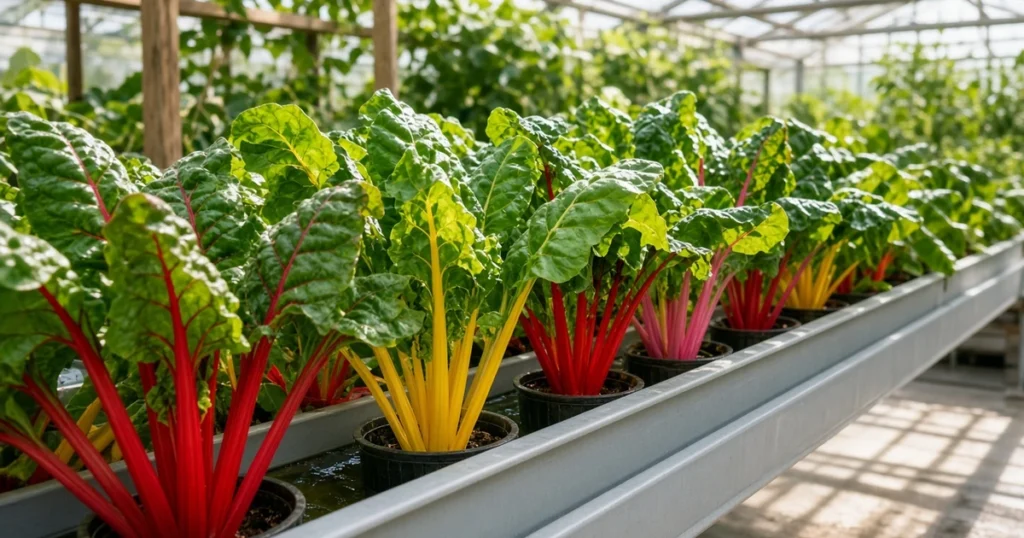
Hydroponic chard turning yellow often points to low magnesium or a solution short on nitrogen. Warm rooms plus tight spacing can add stress. Utah State University Extension notes that Swiss chard grows well when temperatures stay at or below 75°F.
The short answer
Look at the leaf pattern first. Yellow between green veins on lower leaves points to low magnesium. Pale, stunted plants point to low nitrogen. Check EC plus pH, correct pH if it has drifted and refresh a tired solution. Give each plant enough space plus light, then watch the next leaves.
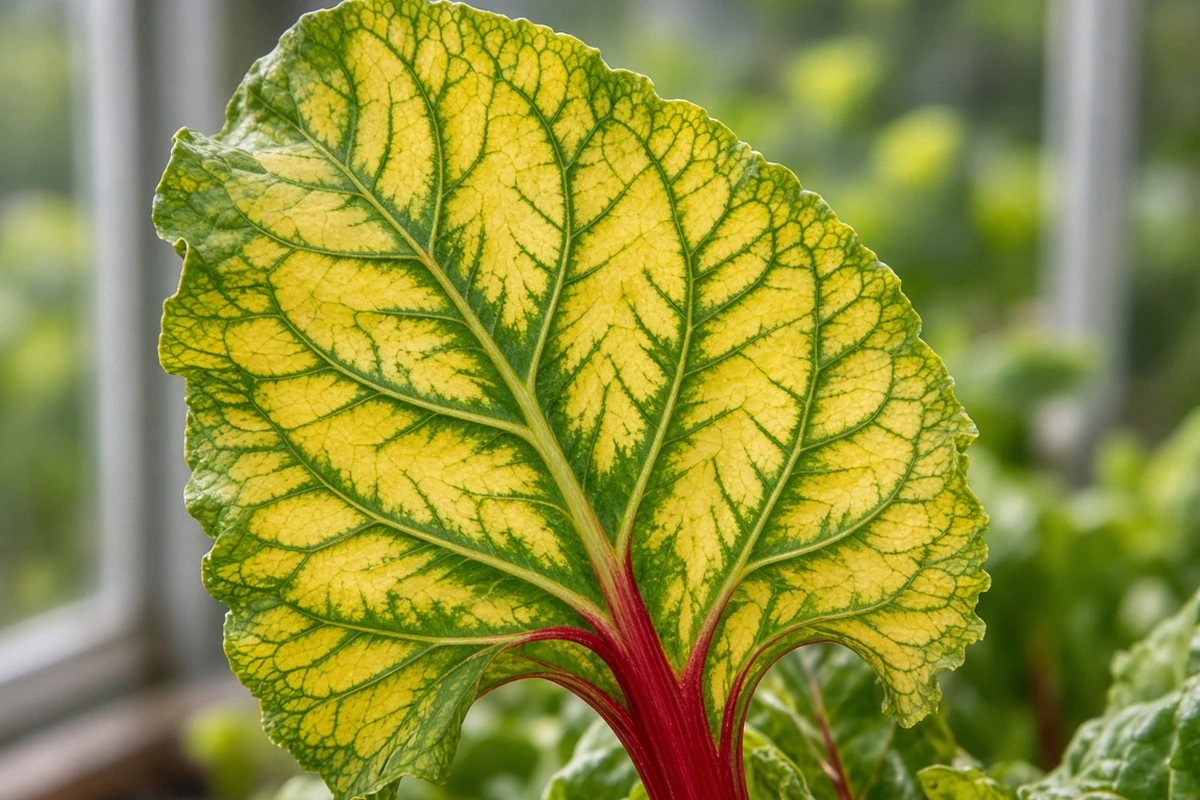
What does magnesium shortage look like on chard?
Penn State Extension describes magnesium deficiency as yellowing between leaf veins. It usually shows up first on lower to middle leaves. That helps tell it apart from iron deficiency, which starts on new growth.
Penn State Extension lists high media pH plus nutrient imbalance as causes. The fix is to correct the pH of the nutrient solution. University of Missouri Extension gives pH 5.5 to 6.5 as a rule of thumb for most hydroponic crops.
| Pattern | Likely cause | Fix |
|---|---|---|
| Yellow between veins on lower leaves | Low magnesium | Correct solution pH |
| Light green leaves plus stunting | Low nitrogen | Add nitrogen if EC is low |
| Yellow between veins on new leaves | Low iron from high pH | Correct solution pH |
Source: Penn State Extension plus University of Missouri Extension.
How does low nitrogen look?
Light green foliage plus overall stunting are the typical first signs, per Penn State Extension. Yellow or dead leaf margins can follow. Causes include under fertilizing, nutrient imbalance plus too much leaching.
EC helps here, but only to a point. University of Missouri Extension notes that EC shows total dissolved ions. It does not confirm that each nutrient sits at its target. A solution can read on target while one nutrient runs short.
How much space plus light does chard need?
UF/IFAS Gardening Solutions notes that chard, like most greens, needs at least six hours of direct sunlight. It suggests spacing plants 6 to 12 inches apart. Utah State University Extension uses 6 inches between plants in the row.
Heat matters too. Utah State University Extension notes that high summer temperatures reduce growth plus decrease quality. Indoors, place plants so each one gets full light rather than sitting in the shade of its neighbors.
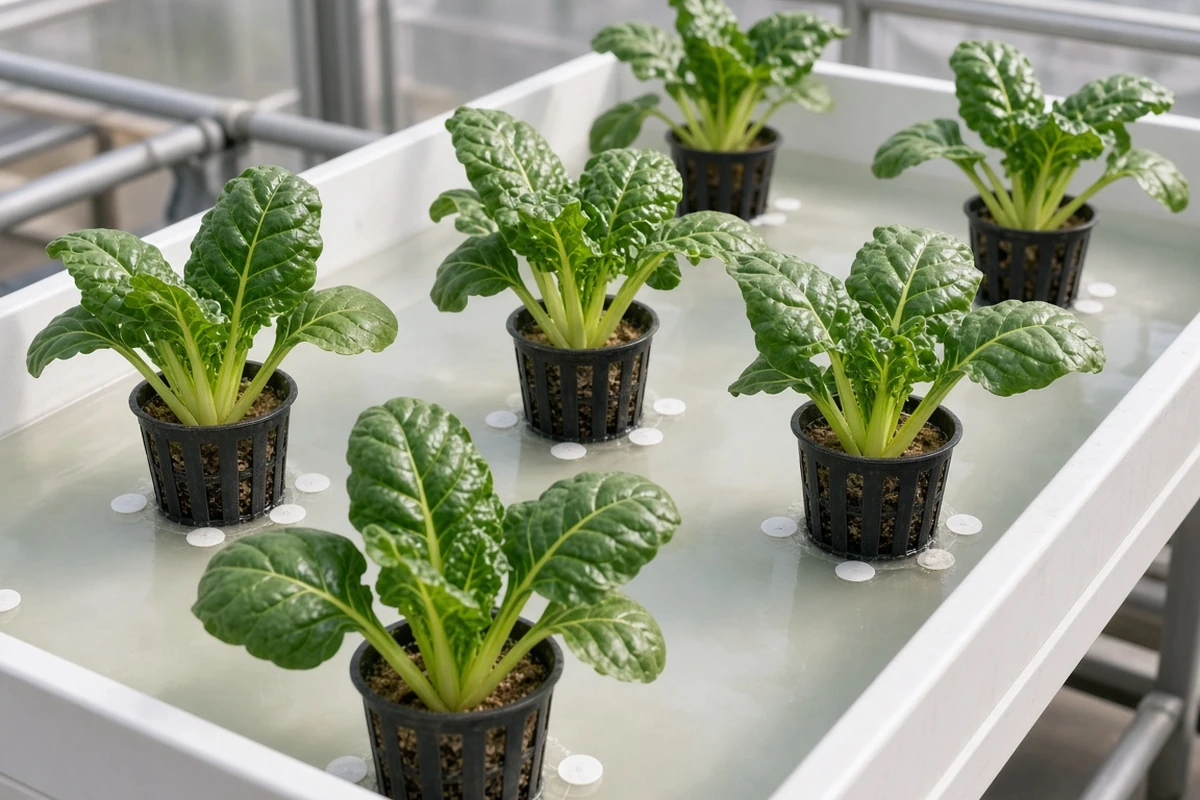
How to: step by step
- Look for yellowing between green veins.
- Note whether old or new leaves are yellow.
- Measure solution EC plus pH.
- Replace the solution once it is old.
- Space plants 6 to 12 inches apart for light.
- Pick outer leaves a few at a time.
Troubleshooting
Yellow between veins on lower leaves: low magnesium. Correct the solution pH, per Penn State Extension.
Pale leaves plus slow growth: low nitrogen. Penn State Extension advises finding the source plus adding nitrogen if the solution is weak.
Slow growth in a warm room: heat above 75°F. Utah State University Extension notes high temperatures reduce growth, so cool the room.
For related reading see how to spot 8 common cannabis plant deficiencies by leaf symptoms, understanding ph and how it affects cannabis plants plus caring for your hydroponic system. Kind Seed Co also stocks cannabis seeds.
Sources
- Hydroponic nutrient solutions (G6984), University of Missouri Extension
- Swiss chard, UF/IFAS Gardening Solutions
- Swiss chard in the garden, Utah State University Extension
- Hydroponics systems and principles of plant nutrition, Penn State Extension
FAQ
Can chard regrow after harvest?
Yes. UF/IFAS Gardening Solutions advises picking the outer leaves a few at a time for a long, continuous harvest. Chard is ready 40 to 60 days after seeding, or once leaves reach 8 to 10 inches long. Leave the center in place so new leaves can form.
How far apart should chard grow?
UF/IFAS Gardening Solutions suggests 6 to 12 inches between plants. Utah State University Extension spaces plants 6 inches apart in the row with rows 12 inches apart. In a hydroponic setup, wider spacing gives each plant more light plus room for its large leaves.
How much light does chard need?
UF/IFAS Gardening Solutions notes that chard, like most greens, requires at least six hours of direct sunlight. Indoors, grow lights can fill that need. Spacing plants so their leaves do not shade one another helps each plant get its share of light.
What temperature suits chard?
Swiss chard does well when temperatures do not exceed 75°F, per Utah State University Extension. High summer temperatures reduce growth plus decrease quality. Young plants handle temperatures down to 32°F without serious damage. Seeds germinate well at 55 to 75°F and take 7 to 14 days to emerge.
What pH suits hydroponic chard?
University of Missouri Extension gives pH 5.5 to 6.5 as a rule of thumb for most hydroponic crops. If pH drifts outside the optimum range, plants may not take up all the nutrients in the solution. Penn State Extension links high pH to magnesium plus iron shortages.



