Hydroponic Cilantro Wilting: Roots Oxygen plus Bolting
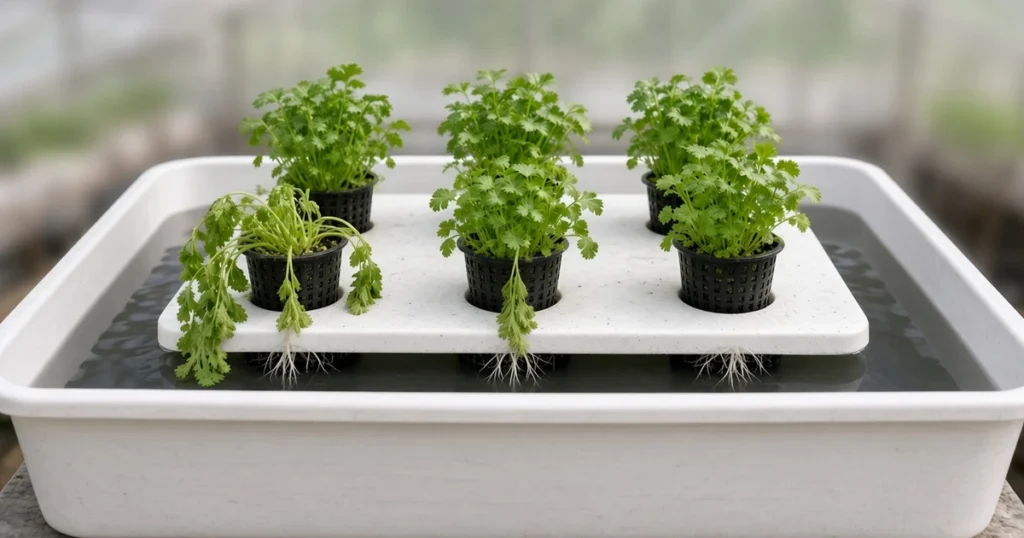
Hydroponic cilantro wilting usually points to warm reservoir water, low oxygen around the roots or salts building up in the solution. Colorado State University Extension explains that low oxygen in the nutrient solution favors root disease. Check the roots first, then cool plus aerate the water.
The short answer
Lift a plant plus look at the roots. Brown roots with few root hairs suggest root rot linked to warm, low oxygen water. Wilting with dark leaves plus burned margins can mean salt buildup. Cool the reservoir toward 68 to 72°F, add aeration, check EC plus refresh the solution.
Why do warm roots make cilantro wilt?
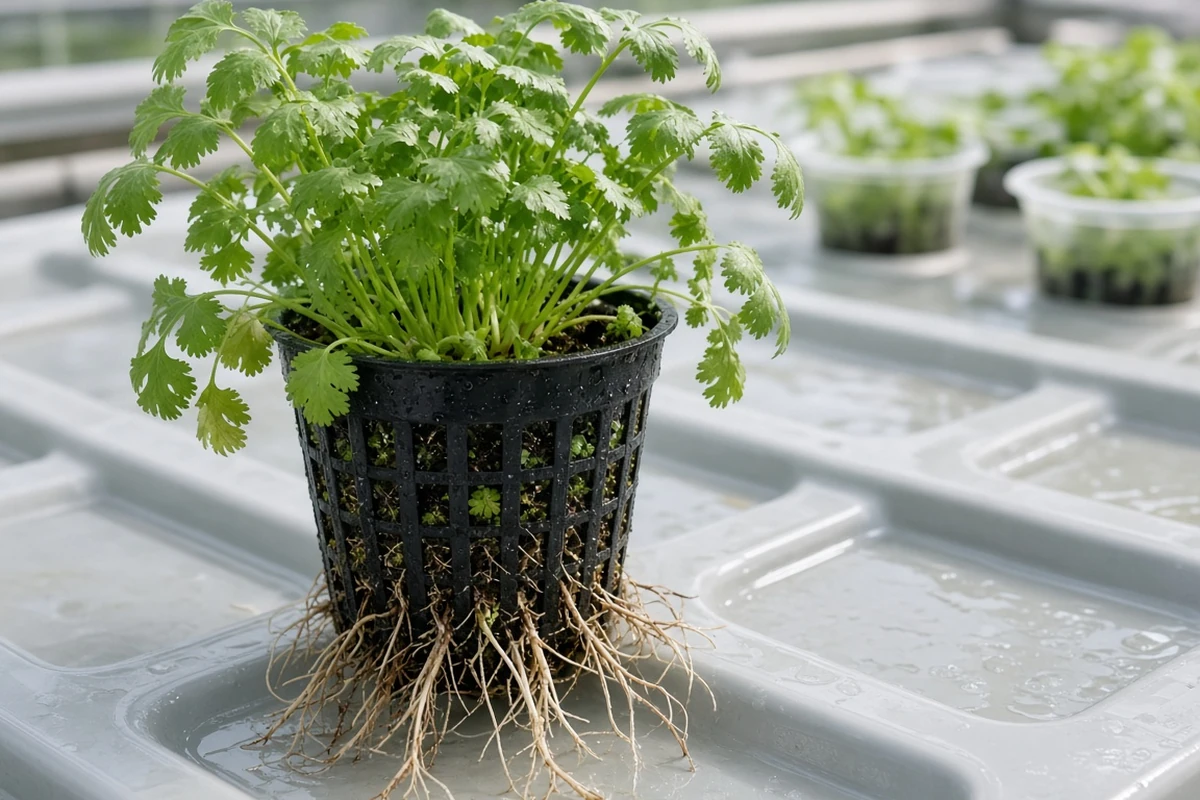
Colorado State University Extension names Pythium root rot as the most common root disease in hydroponic systems. Symptoms are usually first noticed as wilting or tip burn on leaves. Roots turn brown with sparse root hairs plus can be soft or stunted.
The same source gives 68 to 72°F as the optimum root zone temperature. UF/IFAS Extension suggests holding small home system solutions between 65°F plus 80°F.
| Sign | Likely cause | Action |
|---|---|---|
| Wilting with brown, sparse roots | Root rot in low oxygen water | Cool plus aerate the reservoir |
| Wilting with burned leaf margins | Salt buildup | Check EC plus refresh |
| Tall flower stalks plus few leaves | Bolting in long, hot days | Harvest plus resow |
Source: Colorado State University Extension plus Penn State Extension.
How does low oxygen damage roots?
Roots need oxygen to function. University of Missouri Extension explains that warmer water holds less oxygen, no matter how much air you pump in. A dissolved oxygen level over 6 ppm is optimum for hydroponics. Low oxygen may slow growth.
Salts can also cause wilting. Penn State Extension notes that excess soluble salts can cause wilting despite adequate water. Other signs include dark green foliage plus burned leaf margins. Tracking EC helps spot this early.
Does bolting end the leaf harvest?
Largely, yes. Oregon State University Extension notes that cilantro planted for summer bolts during long, hot days. It typically flowers plus sets seed within four to six weeks. In cooler, shorter days, plants grow leaves for weeks or months first.
Utah State University Extension suggests slow bolting cultivars for a leaf harvest. It also notes that cilantro does not do well in damp or humid conditions.
How to: step by step
- Lift a plant out plus inspect the roots.
- Take reservoir water temperature.
- Confirm the air pump is running.
- Cool the reservoir toward 68 to 72°F if needed.
- Check EC plus refresh the solution.
- Resow cilantro every few weeks.
Troubleshooting
Brown, soft roots with wilting: root rot linked to low oxygen. Colorado State University Extension advises better aeration plus a root zone near 68 to 72°F.
Wilting with burned leaf margins: soluble salt buildup. Penn State Extension advises reading EC plus flushing salts with clear water.
Tall stems with thin leaves: bolting in long, hot days. Oregon State University Extension suggests small sowings every few weeks in cool conditions.
For related reading see how to deal with pythium root rot in cannabis plants, hot pots root zone heat in cannabis containers plus caring for your hydroponic system. Kind Seed Co also stocks cannabis seeds.
Sources
- Root disease problems and management in hydroponic systems, Colorado State University Extension
- How to grow cilantro for leaves or coriander seeds, Oregon State University Extension
- Cilantro and coriander in the garden, Utah State University Extension
- Growing lettuce in small hydroponic systems (HS1422), UF/IFAS Extension
- Hydroponics systems and principles of plant nutrition, Penn State Extension
- Hydroponic nutrient solutions (G6984), University of Missouri Extension
FAQ
Can wilted cilantro recover?
It depends on the roots. If roots are brown, soft plus missing root hairs, Colorado State University Extension points to root rot, and badly hit plants rarely bounce back. If roots look firm, cooling plus aerating the water may let plants recover. Replace plants that stay limp.
How long does cilantro last in hydroponics?
Not long in heat. Oregon State University Extension notes that summer cilantro typically flowers plus sets seed within four to six weeks. In cooler, shorter days, plants grow leaves for several weeks or months before flowering. Small sowings every few weeks give a steady supply.
Why does cilantro bolt so fast?
Both temperature plus day length influence flowering, per Oregon State University Extension. Long, hot days push plants to bolt quickly. Utah State University Extension suggests slow bolting cultivars when leaves are the goal. A cool spot or partial shade during warm weather can also delay bolting.
Does cilantro need cool water?
Cool roots help. Colorado State University Extension gives 68 to 72°F as the optimum root zone temperature for hydroponic systems. It adds that low oxygen favors root disease. University of Missouri Extension explains that warmer water holds less oxygen, so a cool, well aerated reservoir supports firm roots.
When should cilantro leaves be harvested?
Utah State University Extension suggests harvesting cilantro leaves when they are about 6 inches long. Regular harvests make the most of the leafy stage before plants bolt. Oregon State University Extension recommends sowing small amounts every few weeks so new plants are ready as older ones flower.