
Standpipes in Hydroponics: Setting Water Height in Flood Trays
The short answer
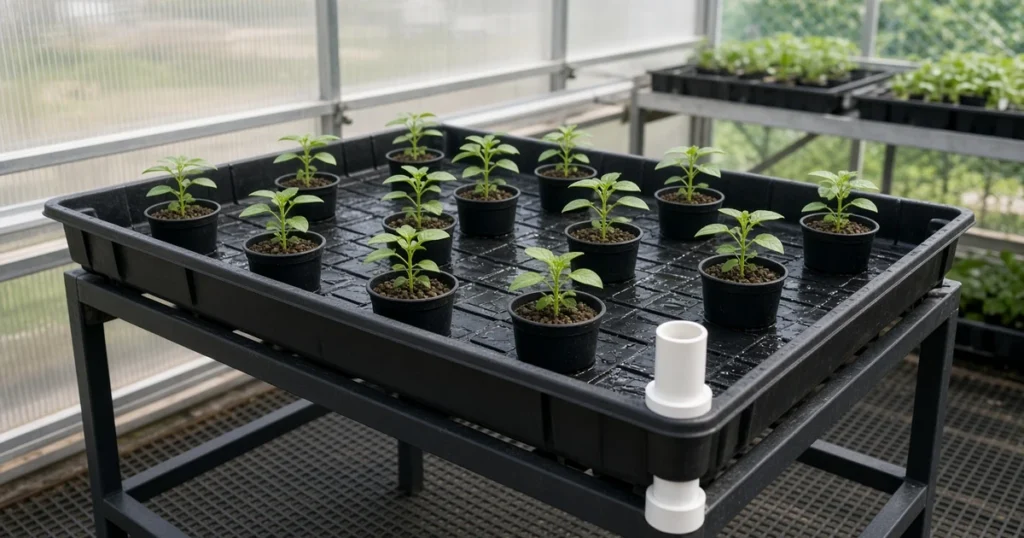
Standpipes in hydroponics set how high the water rises in a flood tray before the extra spills back to the reservoir. Oregon State University Extension advises flooding ebb and flow trays to about an inch below the top of the media. A standpipe at that level lets the tray fill evenly and drain without overflowing.
What does a standpipe do?
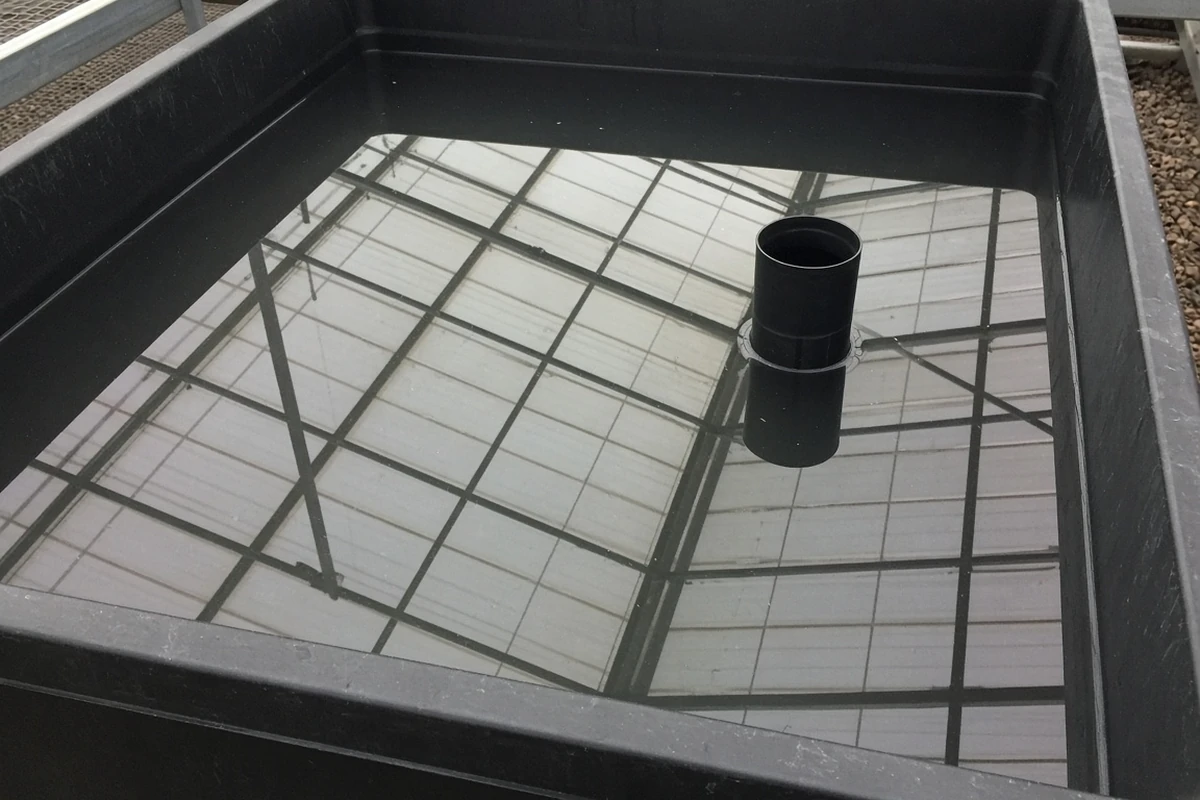
In an ebb and flow system, trays flood with nutrient solution and then drain back to a reservoir, as Oregon State describes. The University of Minnesota Extension notes that the tray either has a porous bottom or a drain that connects through tubing back to the reservoir. A standpipe is a short pipe in the drain. Water cannot leave through it until the level reaches its top, so the pipe height sets the flood height.
A University of Hawaii CTAHR guide hosted by Texas A&M describes a similar overflow method for trays. A hole near the top of the tray wall with a drain pipe lets excess water drain back, and the hole sits high enough to hold the water level the plants need. A standpipe moves that overflow point to the tray floor.
How high should the standpipe be?
Set the top of the standpipe about an inch below the top of your media, matching the flood depth Oregon State gives. That soaks the media without covering the crowns. Oregon State notes that shallower floods dry the substrate faster, so a lower pipe gives drier media between cycles. Drain once the media is fully soaked and glistening, then flood again before it dries out. Read hydro setup environment for the room side of the setup.
How do you stop it from clogging?
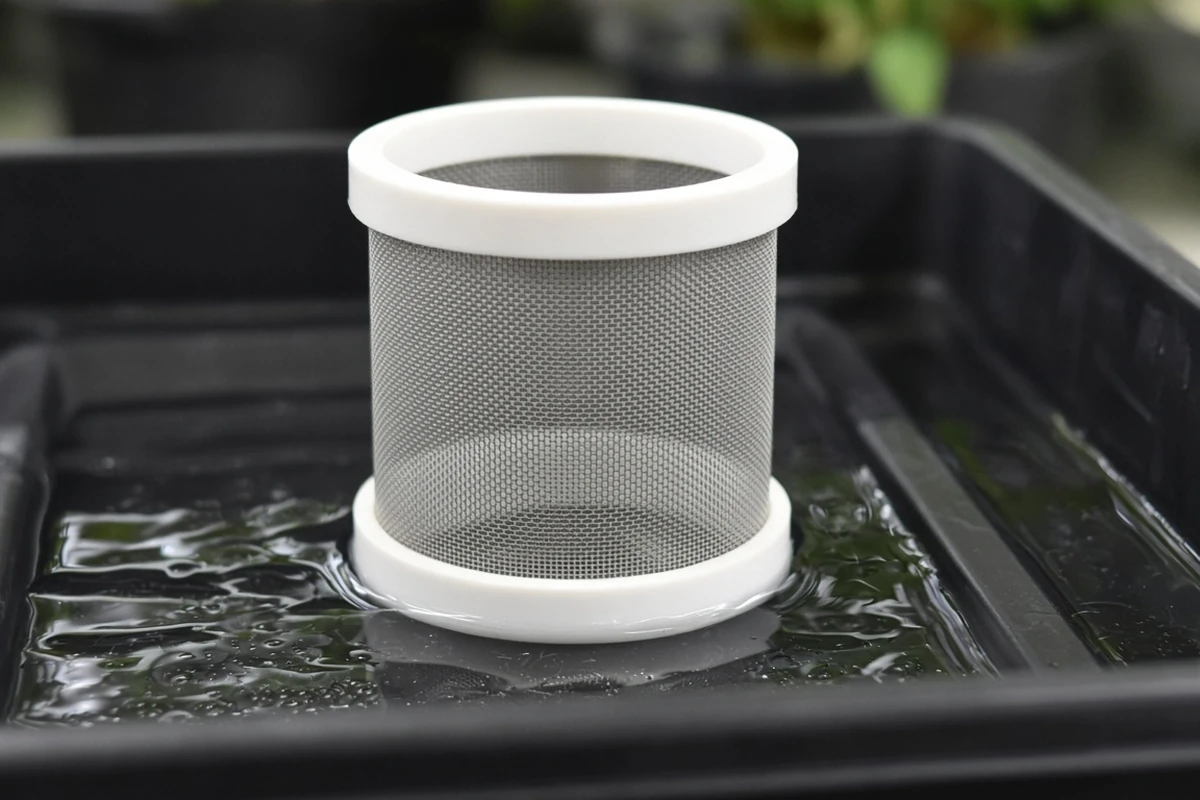
Roots and debris can clog the drain. Fit a screen or cover over the standpipe and check it with the tray. Oregon State notes that ridged or channeled tables drain better, and that an algae trap helps manage algae. Minnesota advises cleaning and sanitizing the system and all parts between plantings. See caring for your hydroponic system for the cleaning routine.
Standpipe basics
| Stage | What to do | Notes |
|---|---|---|
| Fit | Seat the pipe in the tray drain | Seal it so water only leaves over the top |
| Height | About an inch below the media top | Lower pipe gives drier media |
| Flood | Fill until the media glistens | Then let it drain |
| Drain | Water returns to the reservoir | Through the drain line |
| Clean | Clear roots and debris | Clean between plantings |
Sources: Oregon State University Extension, University of Minnesota Extension, University of Hawaii CTAHR.
How to: step by step
- Fit a standpipe in the tray drain fitting.
- Cut or adjust the pipe so its top sits about an inch below the top of the media.
- Seat a screen or cover over the pipe.
- Run the pump with plain water and watch the level rise and stop at the pipe top.
- Stop the pump and check that the tray drains fully back to the reservoir.
- Clear roots and debris from the pipe on a regular schedule.
Troubleshooting
Tray overflows the rim: the pipe is too tall or blocked. Lower it or clear it.
Media stays dry on top: the pipe is too short, so raise it.
Slow drain: roots or debris sit in the pipe. Clear it and add a screen.
Small part, big role
A well set standpipe makes flood and drain run the same every cycle. Compare root media in hydroponic in different mediums. Kind Seed Co shares more hydroponic setup notes on the blog.
Sources
- Hydro hints: ebb and flow (EM 9458), Oregon State University Extension
- Small scale lettuce production with hydroponics or aquaponics, University of Hawaii CTAHR (hosted by Texas A&M AgriLife Extension)
- Small scale hydroponics, University of Minnesota Extension
FAQ
Do all flood trays need a standpipe?
No. Minnesota notes that some trays have a porous bottom set over the reservoir. Trays with a drain fitting use a pipe or fitting to set the level.
What size standpipe should you use?
Sources do not specify a set pipe size. Match the pipe to your drain fitting and make sure the flow down the pipe can carry what the pump puts in.
Can roots block a standpipe?
Yes. Roots and debris can grow into the drain. A screen or cover helps, and cleaning between plantings clears buildup.
How fast should a flood tray drain?
Oregon State gives no fixed rate. Drain once the media is fully soaked and glistening, and flood again before it dries.
Can you change the flood height later?
Yes. Swap in a taller or shorter pipe. Oregon State notes shallower floods dry the media faster.



