
Reservoir Heater Guide for Cold Garages and Basements

The short answer
A reservoir heater stops hydroponic solution from getting too cold in an unheated garage or basement. You need one when the solution drops well below room comfort at night. Pick a submersible heater sized for your tank with a built in thermostat, set it fully under water and check the temperature daily.
Cold solution slows roots. Plants drink less, take up fewer nutrients and grow slowly. A heater evens out those cold nights.
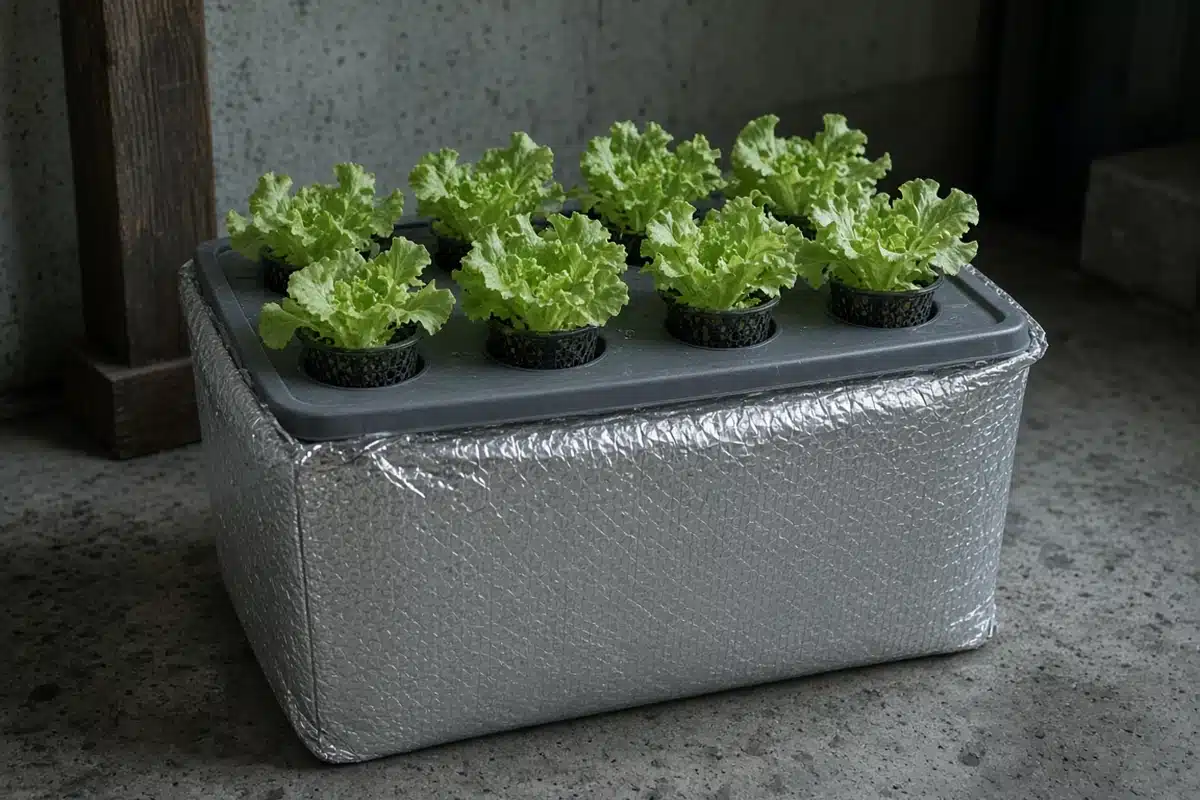
When does a reservoir need a heater?
Water temperature follows the room. In a heated house the tank often stays mild. In a garage, shed or basement it can fall far below what roots like, mainly at night.
The Virginia Cooperative Extension guide to deep water culture explains how DWC systems hold plants over a tank of aerated solution. It notes that solution temperature affects how much oxygen the water holds and how roots grow. Roots do well in a mild range, not too warm and not too cold.
The UMass Amherst fact sheet on hydroponic systems describes common setups and the conditions they need. Root zone temperature is one of the factors that growers manage in every type of system.
The surest way to know is to measure. Put a waterproof thermometer in the tank and read it in the early morning and late evening for several days. If the morning reading is well below where it was in the evening, and plants look slow, a heater can help.
How do you size and choose a heater?
Most growers use a submersible aquarium style heater, and these sit in the water and warm it directly. Bigger tanks need more heater capacity or two heaters at opposite ends.
Look for these features:
| Feature | What to look for | Why it matters |
|---|---|---|
| Rating | Matched to tank volume | An undersized heater runs constantly and falls behind |
| Thermostat | Built in dial or external controller | Holds a set point instead of heating nonstop |
| Housing | Fully submersible, sturdy shell | Survives life in a busy tank |
| Guard | Plastic cage around the element | Holds roots and tubing off the heater |
Sources: Virginia Cooperative Extension, UMass Amherst.
An external controller with a probe gives the tightest control. The probe sits in the solution and switches the heater on and off. Some controllers also log readings so you can see the night low.
Insulating the tank helps the heater work less. Foam board around the sides and a lid on top slow heat loss. Setting the tank on a foam pad stops a cold slab floor from pulling heat out.
How do you place the heater?
Mount the heater fully under water. Most heaters have a minimum water line marked on the glass or shell. If the water level drops below it, the heater can fail.
Place the heater where water moves past it. Near an air stone or pump outlet works well. Moving water spreads the heat evenly through the tank.
Mount it away from roots. Roots that touch a heater can be damaged, and the heater can sense temperature less accurately. A guard or a mesh cage holds them apart.
Our post on heating a grow tent in winter covers warming the air around the plants. Warm air and warm solution work well together.
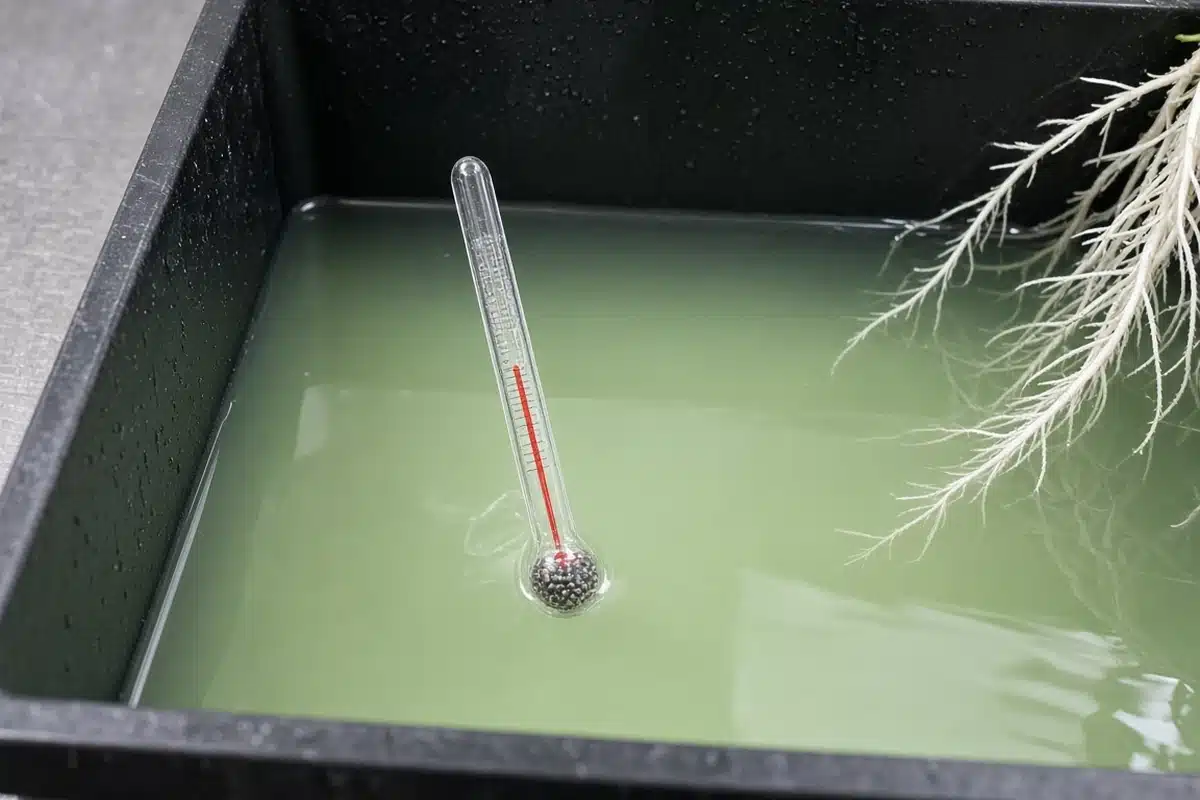
Why does cold solution slow plants?
Roots take up water and nutrients through living cells. Those cells work slowly in cold water, so uptake slows even when the solution is full of food. Leaves may pale or stall, which can look like a nutrient shortage.
Cold can slow biological activity around roots in many systems, and growth often speeds up once the root zone warms.
Warmer isn’t always better. Warm water holds less dissolved oxygen, and roots in warm, still water can brown. The goal is a steady, mild temperature, not the warmest one. A heater with a thermostat gives you that steady middle.
How to: step by step
- Check solution temperature morning and night.
- Choose a submersible heater rated for your volume.
- Pick a model with a thermostat or controller.
- Mount it fully under water away from roots.
- Place it near moving water.
- Check temperature daily after setup.
Let the heater sit in the water for a short time before you plug it in. This lets the inside reach water temperature.
Set the thermostat a little low at first. Raise it slowly over a few days while you watch readings.
Clean the heater when you change the solution. Mineral crust and algae on the shell slow heat transfer. Our post on caring for your hydroponic system covers routine cleaning.
For the whole room, see our post on creating the right environment for your hydro setup.
Troubleshooting
Solution still cold. The heater is undersized or heat escapes. Add capacity or insulate the tank and lid.
Warm spots. Water isn’t moving. Add an air stone or circulation pump near the heater.
Temperature swings. The thermostat setting is off or the sensing spot is affected. Use an external controller with a probe away from the heater.
Crust on the heater. Minerals built up. Unplug, let it cool and wipe it clean.
A heater turns a cold garage into a workable grow space for winter. Kind Seed Co carries cannabis seeds for growers planning their next indoor run.
Sources
- Hydroponic production of edible crops: deep water culture (DWC) systems (SPES-464), Virginia Cooperative Extension, Hydroponic production of edible crops
- Hydroponic systems, UMass Amherst Center for Agriculture, Food, and the Environment, Hydroponic systems
FAQ
Can an aquarium heater work?
Yes. Most reservoir heaters are aquarium style submersible units. Pick one rated for your tank volume and sturdy enough for a grow room.
Should I insulate the reservoir?
Yes. Foam on the sides, a lid and a pad under the tank cut heat loss. The heater runs less and holds a steadier temperature.
What temperature is too cold?
Roots slow when solution is well below room comfort. Measure morning lows and watch plant growth to judge whether you need heat.
Do heaters change pH?
Heat itself does not change pH much. Warmer water can speed root and microbe activity, so check pH as often as usual.
Do I need a heater in summer?
Usually not. Most growers unplug heaters in warm months and focus on stopping solution from getting too warm.



