
Venturi Hydroponics: Passive Aeration and Dosing With Venturi Injectors
The short answer
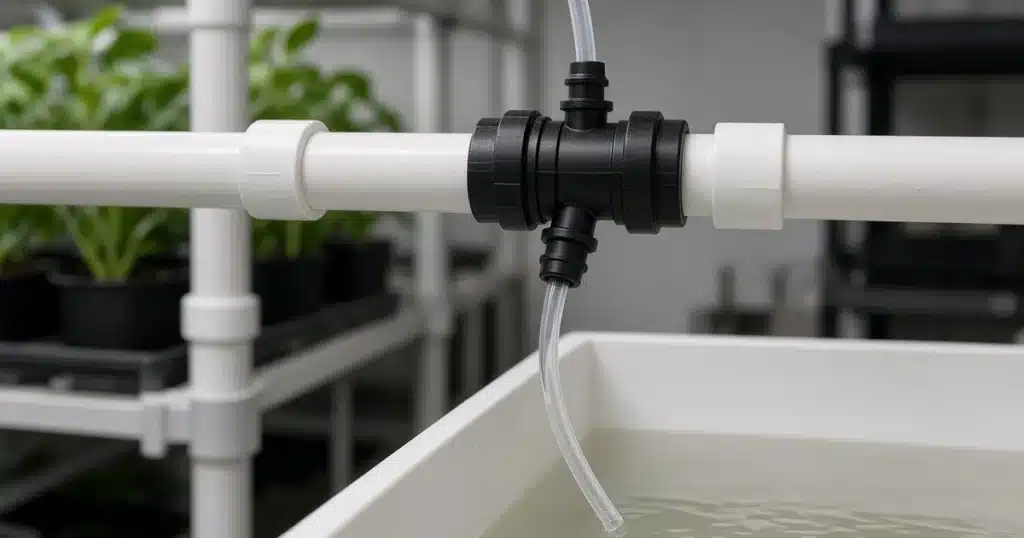
Venturi hydroponics uses a small tapered fitting that creates suction as water rushes through it. That suction can pull air into the line to aerate a reservoir or draw concentrate into the flow to dose nutrients. It needs no extra pump, but it only works with enough pressure difference across the fitting.
A venturi injector is a simple part with no moving pieces. That makes it cheap and durable, but it also means it depends entirely on the pump that pushes water through it.
How does a venturi injector work?
A venturi is a tube that narrows in the middle and widens again. Water speeds up as it squeezes through the narrow throat, which creates lower pressure. At the throat, a side port connects to a tube. The low pressure pulls air or liquid in through that port.
The UF/IFAS Extension publication on chemical injection methods for irrigation describes venturi injectors alongside pumps and other devices used to add fertilizer to water lines. It explains that a venturi needs a pressure difference between its inlet and outlet. Without that difference, it won’t draw.
The UC Cooperative Extension Ventura County page on injection devices compares venturi units with other injectors. It notes that venturis are low cost and simple, but they lose some pressure in the line and their draw changes as pressure changes.
| Feature | Venturi injector | Notes |
|---|---|---|
| Moving parts | None | Few parts to wear out |
| Power | Uses the main pump | No separate injector pump |
| Draw rate | Depends on pressure difference | Changes when pump pressure changes |
| Uses | Air intake or liquid dosing | Same fitting, different suction line |
Sources: UF/IFAS Extension, UC Cooperative Extension.
Can a venturi aerate a reservoir?
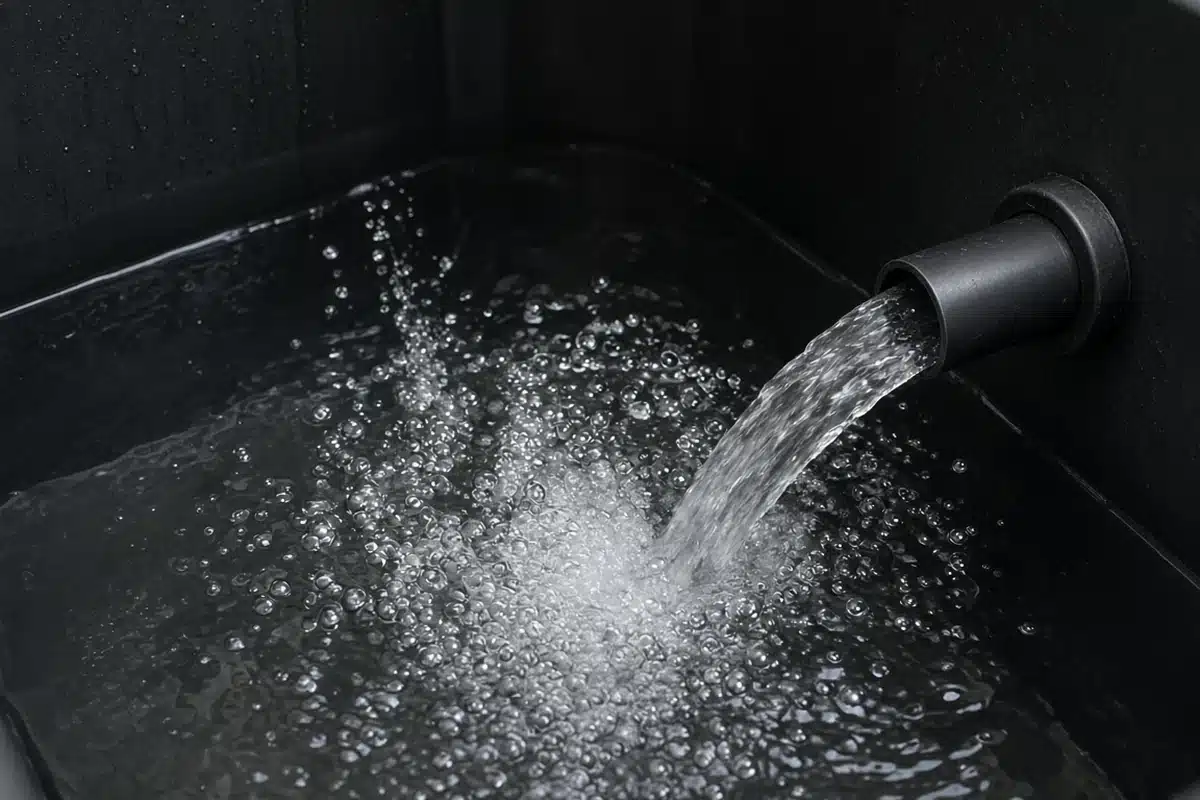
Yes. If the suction port is left open to air, the venturi pulls air into the water stream. The outlet then sprays a mix of water and fine bubbles back into the tank. This adds oxygen and stirs the solution.
The Virginia Cooperative Extension guide to deep water culture explains why oxygen matters in hydroponic tanks. Roots need dissolved oxygen, and still water runs low. Most DWC systems use an air pump and air stones. A venturi on a recirculating pump is another way to add air.
A venturi does not replace an air pump in every case, and it only works while the water pump runs. If the pump is on a timer, aeration stops between cycles. Many growers use a venturi as a boost on top of air stones rather than as the only source.
Mount the outlet below the water surface so bubbles mix in. If it sprays above the water, much of the air escapes before it dissolves.
How do you dose nutrients with a venturi?
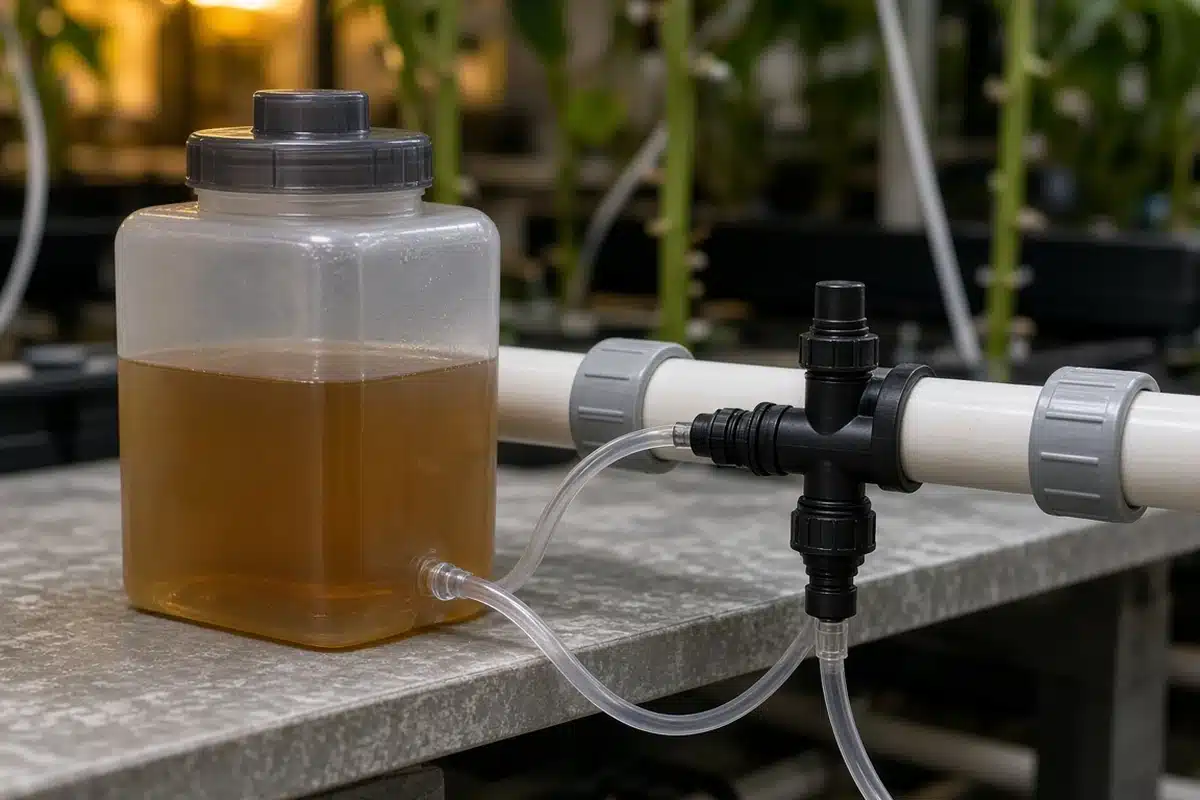
When the suction tube sits in a container of concentrate, the venturi draws it into the water line. This is how many irrigation systems add fertilizer.
The draw rate depends on pressure and flow. A small change in pump output changes how much concentrate goes in. That makes a venturi less precise than a dosing pump. For a home system, that’s fine as long as you measure after dosing.
Always check EC and pH after dosing. If the reading is high, dilute with plain water. If it’s low, run the venturi a bit longer. Our post on a DIY marijuana nutrient solution explains how to mix and read a solution.
How do you install a venturi on a bypass?
A bypass line is the most common setup. Water leaves the pump, part of it flows through the main line and part splits off through the venturi. A valve on the main line lets you adjust how much pressure difference the venturi sees.
Close the main valve slightly and draw increases. Open it and draw drops. This lets you tune the injector without changing pumps.
Add a screen filter on the suction tube. Grit or undissolved salts can block the small throat. Add a check valve so solution can’t run backward into the concentrate container when the pump stops.
Where does a venturi fit in a home system?
A venturi suits systems that already run a water pump for long periods. Recirculating NFT channels, drip lines that return to a tank and big DWC tanks with a circulation pump are good fits.
It suits short pump cycles less well. Flood and drain tables pump only a few times a day, so a venturi there adds little air.
A venturi can hiss as it draws air. A venturi drawing air can hiss or gurgle. Placing the outlet a little deeper in the tank often quiets it.
How to: step by step
- Check your pump’s flow and pressure.
- Choose a venturi sized for that flow.
- Install it on a bypass line.
- Add a filter and check valve.
- Run plain water first to confirm suction.
- Recheck pH and EC after dosing.
Check the pump’s rated flow and pressure range. Match the venturi to your pump using the maker’s flow chart.
Use plain water for the first run. Hold a finger over the suction port. You should feel a pull. If not, adjust the bypass.
Clean the system often so the throat stays open. Our post on caring for your hydroponic system covers routine cleaning. For room conditions, see creating a good environment for your hydro setup.
Troubleshooting
No suction. The pressure difference is too low. Close the main valve slightly or use a bigger pump.
Uneven dosing. The inlet screen is clogged. Clean the screen and suction tube.
Too much foam. The venturi draws too much air. Partly restrict the air inlet.
Concentrate siphons back. No check valve. Add one on the suction line.
Poor flow. The venturi is too small. Match it to the pump.
A venturi is a cheap way to add air or nutrients if you size it well and clean it often. Kind Seed Co carries cannabis seeds for growers setting up a new system.
Sources
- Chemical injection methods for irrigation (WI004), UF/IFAS Extension, Chemical injection methods for irrigation (WI004)
- Chemigation injection devices, UC Cooperative Extension Ventura County, Chemigation injection devices
- Hydroponic production of edible crops: deep water culture (DWC) systems (SPES-464), Virginia Cooperative Extension, Hydroponic production of edible crops
FAQ
Does a venturi replace an air pump?
Not always. It only aerates while the water pump runs. Many growers run air stones too and use the venturi as an extra boost.
Can venturi injectors clog?
Yes. The throat is narrow. A screen filter on the suction line and regular cleaning hold it open.
Is a check valve needed?
A check valve stops solution from running back into the concentrate container when the pump stops. It is a simple, low cost part.
What size venturi do I need?
Match the venturi to your pump flow. Maker charts list the flow range for each size.
Can a venturi run on a timer?
Yes, but it only works while the pump runs. Plan aeration and dosing around those run times.



