Hydroponic Troubleshooting Checklist: Weekly System Checks
The short answer
A hydroponic troubleshooting checklist is a short set of checks you run every week to catch problems early. Look at water level, pH and EC, then check pumps, air stones, lines and timers. Inspect roots for color and smell, and scan leaves for spots or wilting. Write down what you find so changes over time are easy to spot.
Hydroponic systems move fast. A problem that takes weeks to show in soil can show in days in water, so a routine pays off.
Why run weekly checks?
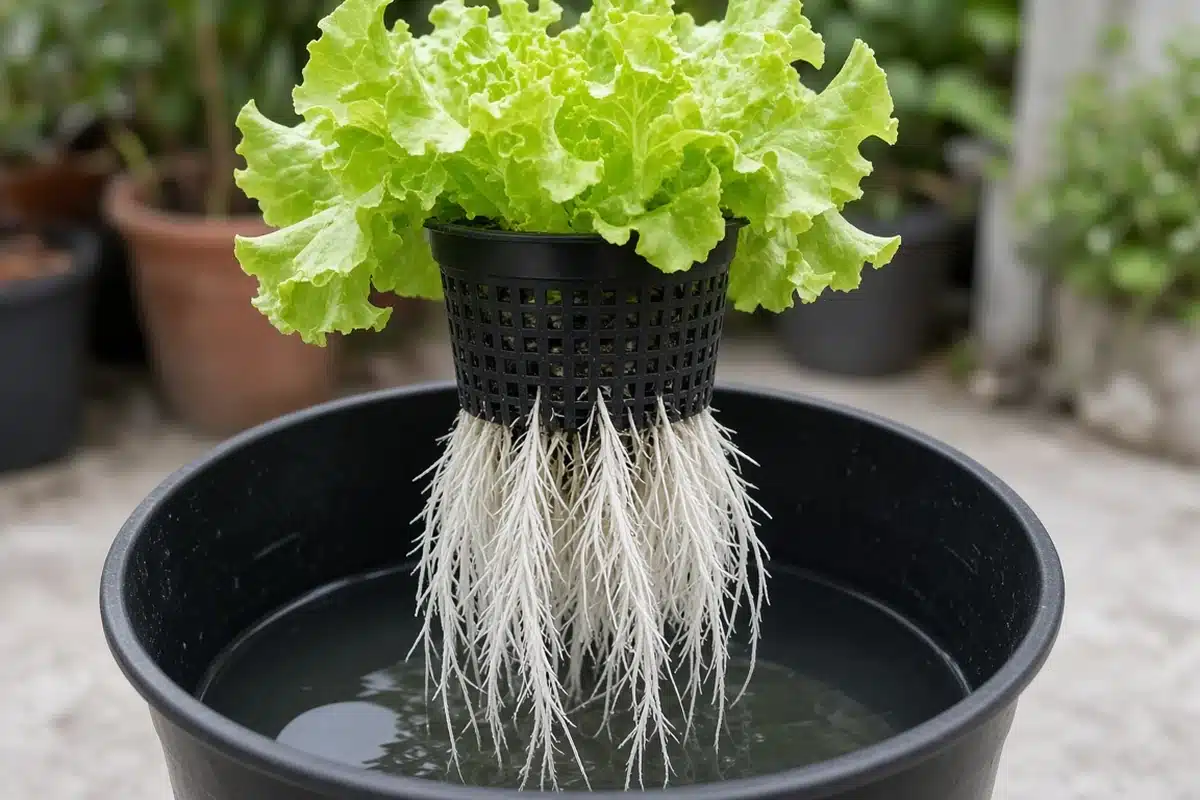
In hydroponics, roots depend on the system for water, oxygen and every nutrient. A stalled pump or drifting pH can stress plants. The University of Minnesota Extension guide to small scale hydroponics explains that home systems need regular attention to nutrient solution, aeration and cleanliness.
A checklist turns that attention into habit and gives you a record, so you can see when a reading started to slide.
| Check | Normal range or sign | What a problem looks like |
|---|---|---|
| Water level | At the marked line | Low level, exposed roots |
| pH | About 5.5 to 6.5 for most crops | Drifting high or low |
| EC | Matches crop and growth stage | Rising fast or falling |
| Water temperature | Not warm | Warm water, low oxygen |
| Pump and air stones | Steady flow and bubbles | Weak flow, no bubbles |
| Lines and emitters | Clear and dripping evenly | Clogs, dry spots |
| Timers | Running on schedule | Missed cycles |
| Roots | White or cream, fresh smell | Brown, slimy, sour smell |
| Leaves | Even color, upright | Spots, yellowing, wilting |
Sources: University of Minnesota Extension, UMass Amherst Extension, NDSU Extension.
How do you check water, pH and EC?
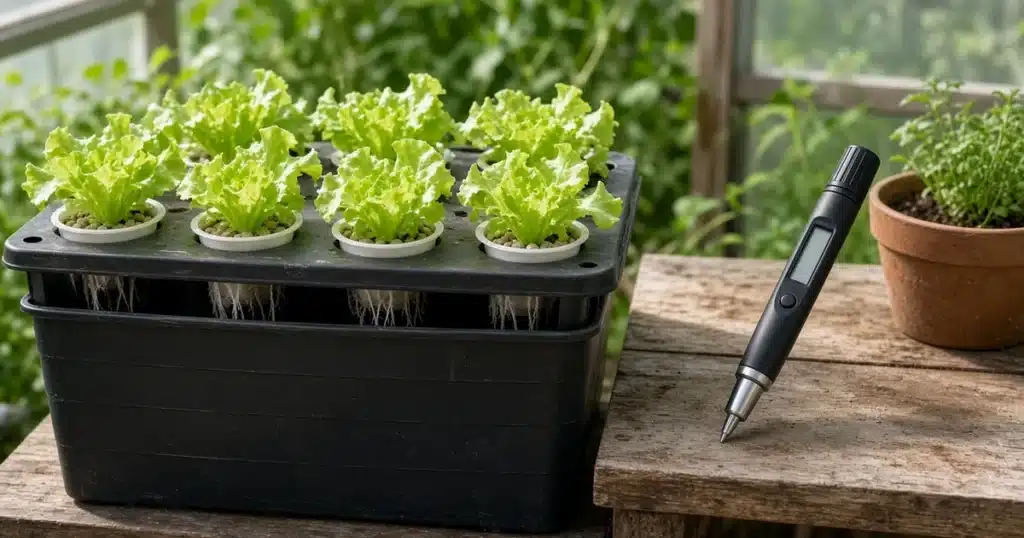
Start with the reservoir. Top off with fresh water if the level has dropped, and note how much you added. Plants drink faster in heat and as they grow.
Measure pH with a calibrated meter or pH strips. Most crops do well between about 5.5 and 6.5. Adjust slowly with pH up or down products.
Measure EC, which shows how rich the nutrient solution is. The UMass Amherst fact sheet on soluble salts and electrical conductivity for greenhouse crops explains how EC reflects dissolved salts. If EC climbs, plants are drinking more water than nutrients. If it falls, they’re using nutrients fast.
Calibrate meters often. The NDSU Extension publication on using EC and TDS meters to check water quality explains how EC and TDS readings relate and why calibration matters.
Our post on the hydroponic cannabis feeding schedule covers nutrient levels by growth stage.
What equipment should you inspect?
Listen to pumps, watch the flow and check that air stones bubble evenly. Look along lines and emitters for clogs, kinks or leaks. Confirm that timers fire on schedule.
Clean filters and intakes, since mineral and root buildup can choke flow. Our post on caring for your hydroponic system covers routine cleaning and reservoir changes.
What do roots and leaves tell you?
Vigorous roots are white or cream and smell fresh. Brown, slimy roots with a sour smell point to low oxygen, warm water or root rot. Check water temperature and aeration right away.
Scan leaves for yellowing, spots, curling or wilting. Many leaf problems trace back to pH, EC or temperature. Check those readings before adding anything.
Room conditions matter. Our post on creating a good environment for your hydro setup explains how air temperature, humidity and airflow affect the system.
How to: step by step
- Top off the reservoir and note how much water you added.
- Measure and adjust pH.
- Measure EC and compare with your target.
- Check water temperature.
- Inspect pumps, air stones, lines and timers.
- Look at roots and leaves.
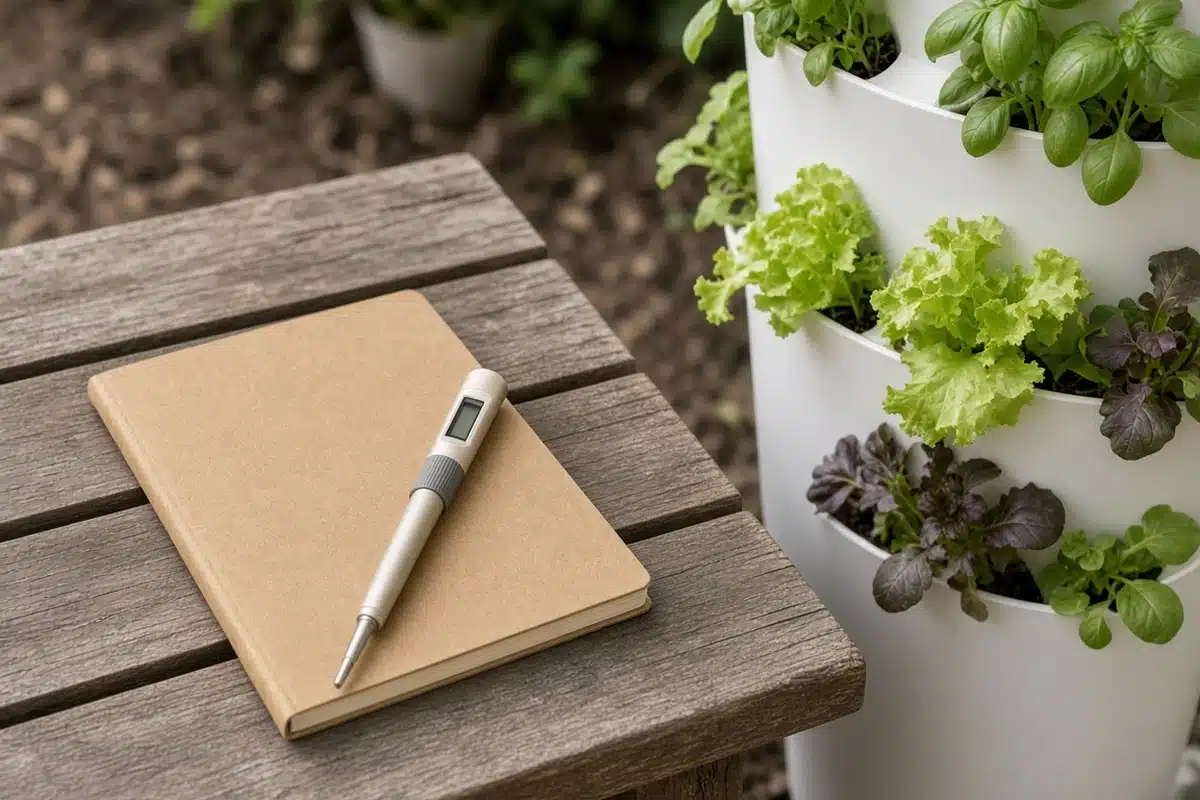
- Record every reading in a log.
Troubleshooting
pH drifts daily. Reservoir is small or nutrients are off balance. Check more often.
EC rising. Plants drink more water than nutrients. Top off with plain water.
Brown, slimy roots. Low oxygen or warm water. Boost aeration and cool the reservoir.
Dry spots in trays. Clogged emitters. Clean lines.
Wilting with a full reservoir. Pump or timer failed. Check flow.
A weekly hydroponic troubleshooting checklist stops small issues from growing. Kind Seed Co offers more for indoor growers along with quality cannabis seeds.
Sources
- Small scale hydroponics, University of Minnesota Extension, Small scale hydroponics
- Soluble salts and electrical conductivity (EC) for greenhouse crops, UMass Amherst Center for Agriculture, Food, and the Environment, Soluble salts and electrical conductivity (EC) for greenhouse crops
- Using electrical conductivity and total dissolved solids meters to check water quality, NDSU Extension, Using electrical conductivity and total dissolved solids meters to check water quality
FAQ
How often should I check a hydroponic system?
At least weekly, with quick daily looks.
What pH suits hydroponics?
About 5.5 to 6.5 for most crops.
What does rising EC mean?
Plants are taking more water than nutrients.
What do vigorous roots look like?
White or cream with a fresh smell.
Why maintain a log?
It shows when readings start to drift.