Orchid Root Rot: Mushy Roots and Repotting
The short answer
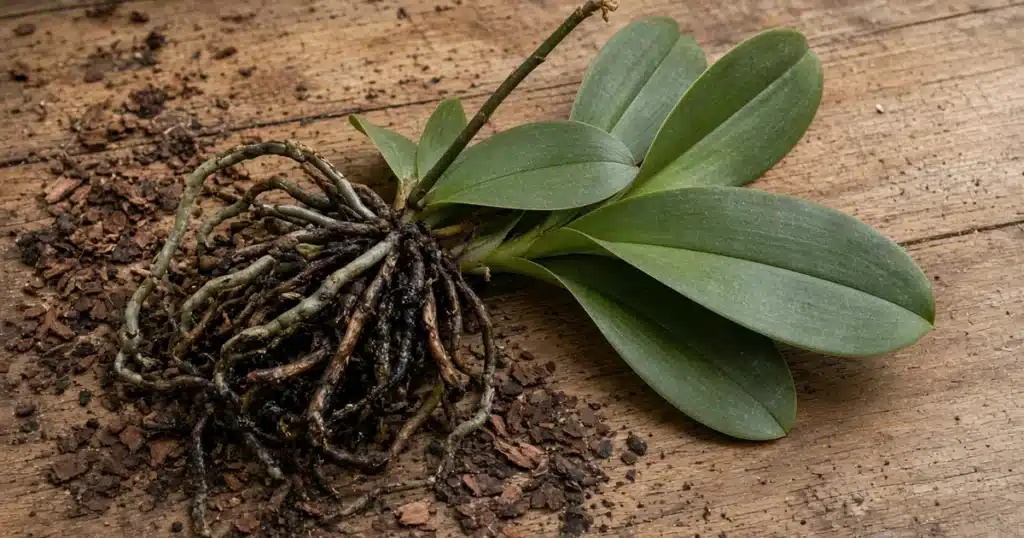
Orchid root rot happens when roots sit in wet, broken down potting mix and turn brown, soft and mushy. Sound roots are firm and often silvery or green. To manage it, unpot the orchid, trim rotten roots with clean shears and repot into fresh orchid mix in a draining pot. Then water less often.
Caught early, most orchids bounce back after a repot.
What causes orchid root rot?
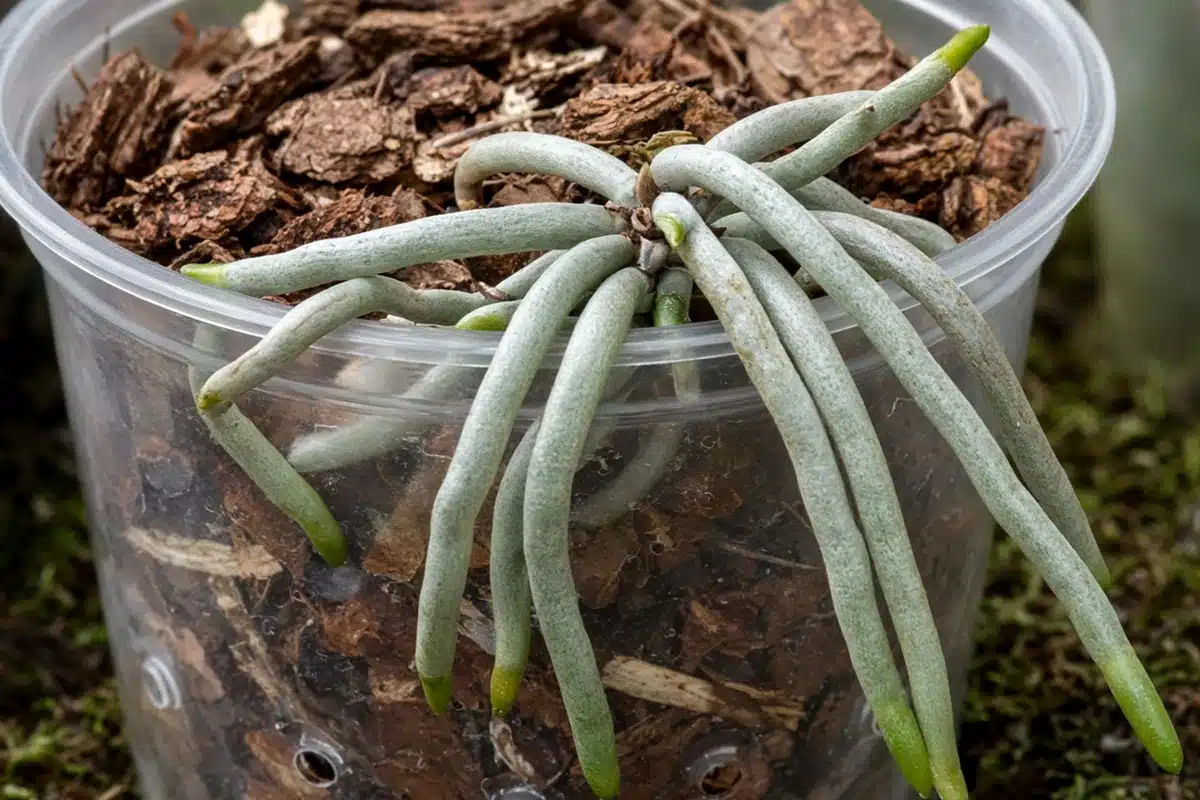
Most popular orchids, such as moth orchids, grow on trees in the wild. Their roots cling to bark, soak up rain and dry fast in moving air. In a pot, they need a loose, airy mix that drains fast.
The UF IFAS Gardening Solutions page on orchids explains that orchids rot when grown too wet or grown in mix that holds water. Bark and moss break down over time, packing tighter and staying soggy. Roots then run short of air and decay.
Overwatering, pots without drainage holes and decorative cachepots that collect water all add to the problem. Our post on overwatering and cannabis growth explains how soggy roots suffocate in any plant.
| Root sign | What it means | Action |
|---|---|---|
| Firm, silvery when dry | Sound | No action |
| Firm, green after watering | Sound | No action |
| Brown, soft, mushy | Rotted | Trim off |
| Hollow, papery | Dead | Trim off |
| Dry, shriveled but firm | Possibly underwatered | Check watering |
| Black, slimy, sour smell | Advanced rot | Trim and repot quickly |
Sources: UF IFAS Gardening Solutions, Clemson Cooperative Extension HGIC, Michigan State University Extension.
How do you check orchid roots?
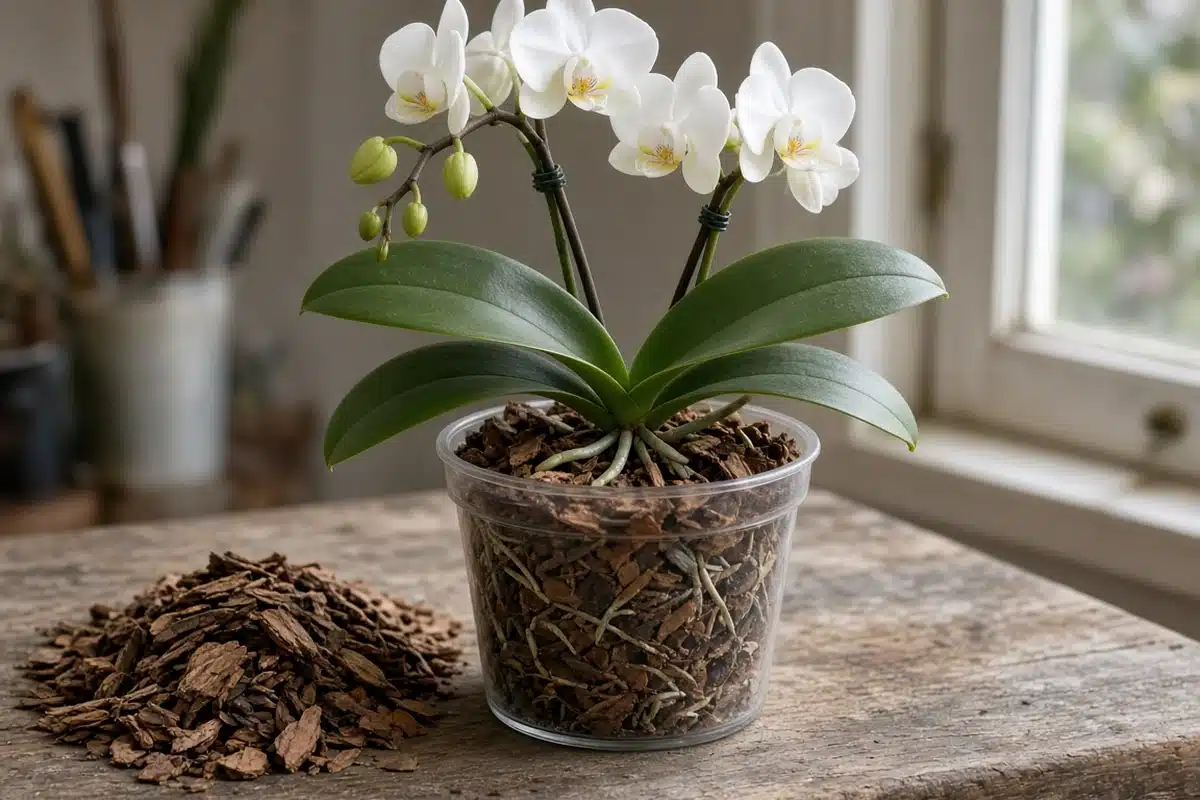
Many moth orchids come in clear pots so you can see roots. Look for firm roots that are silvery when dry and green when wet. Brown, flat or mushy roots point to rot.
Above the pot, watch for limp, wrinkled leaves even though the mix is wet. That pattern can point to stressed roots, including rot.
To be sure, slide the orchid out of its pot. Gently pull away the old mix and squeeze roots lightly. Sound ones are firm. Rotted ones collapse and the outer layer slides off, leaving a thin thread.
How do you repot an orchid with root rot?
The Clemson Cooperative Extension HGIC fact sheet on orchids explains basic orchid care, including repotting in fresh bark mix every year or two.
First clean the shears or scissors. Our post on sanitizing pruning shears for cannabis covers simple ways to clean blades.
Remove all old mix. Cut away every soft, brown or hollow root back to firm tissue. Save all sound roots, even aerial ones.
Choose a pot just big enough for the remaining roots, with good drainage holes. Fill around the roots with fresh, coarse orchid bark or a bark and perlite blend. Firm gently so the plant stands upright. Stake it if few roots remain.
Some growers hold off watering for several days after repotting.
How do you prevent it from coming back?
Water only when the mix is nearly dry. For moth orchids in bark, that is often once a week, less in cool months. Clear pots help you read the roots, and silvery means time to water.
Water in the sink and let the pot drain. Never leave it sitting in water.
Repot every one to two years, before mix breaks down. The Michigan State University Extension publication on propagating orchids covers dividing and potting orchids, which pairs well with routine repotting.
Some rot involves water molds. Our post on how to deal with pythium root rot in cannabis plants explains how this group of pathogens spreads in wet roots.
How to: step by step
- Unpot the orchid and remove old mix.
- Squeeze roots to find soft ones.
- Trim rotten roots with clean shears.
- Repot in fresh orchid bark in a draining pot.
- Consider waiting several days before watering.
- Water only when roots turn silvery.
Troubleshooting
Leaves limp in wet mix. Roots are rotting. Unpot and check.
Few roots left. Stake the plant and raise humidity.
New rot after repot. Watering too often. Let mix dry more.
Mix smells sour. It broke down. Replace it.
Water sits in cachepot. Empty it after watering.
Managing orchid root rot comes down to airy mix and careful watering. Kind Seed Co shares more plant tips in outdoor growing.
Sources
- Orchids, UF IFAS Gardening Solutions, Orchids
- Orchids, Clemson Cooperative Extension HGIC, Orchids
- Propagating orchids, Michigan State University Extension, Propagating orchids
FAQ
What does orchid root rot look like?
Brown, soft, mushy roots.
Can an orchid recover from root rot?
Often, if sound roots remain.
What causes it?
Overwatering and old mix that stays wet.
Should I water right after repotting?
Some growers wait several days.
How often should I repot?
Every one to two years.