
Hydroponic Water Changes: Full Changes vs Top Offs
The short answer
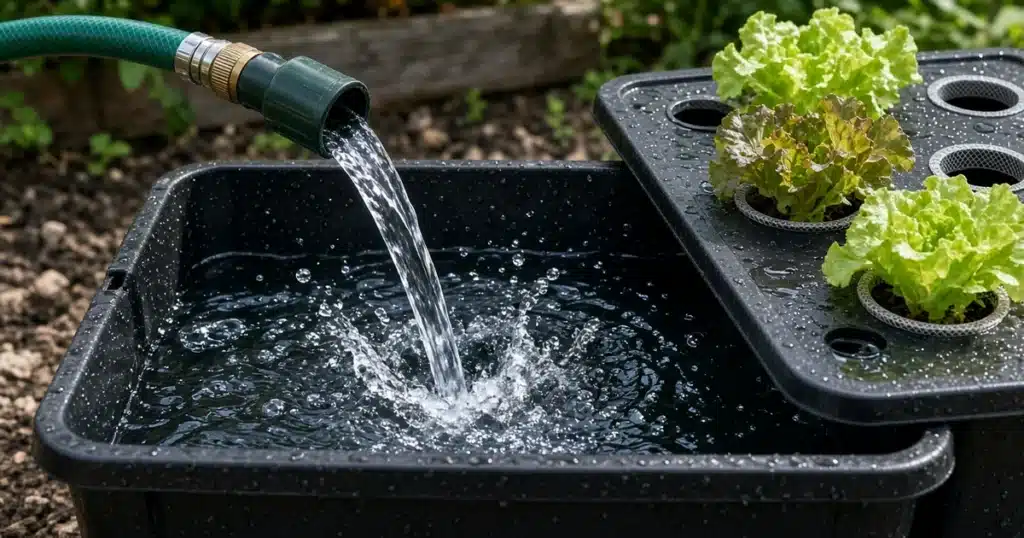
A hydroponic water change replaces the whole nutrient solution, while a top off only adds water to make up what plants drank. Top offs hold the level steady between changes. Full changes reset a balance that drifts over time. Track EC and pH after each top off and schedule full changes by system size and crop.
Top offs restore volume, and full changes replace shifted solution.
What is the difference between a top off and a full change?
Plants drink water faster than they use some nutrients. As water leaves the tank through leaves, the remaining solution gets more concentrated. Other nutrients get used up faster than others. Over time, the mix in the tank no longer matches what you mixed.
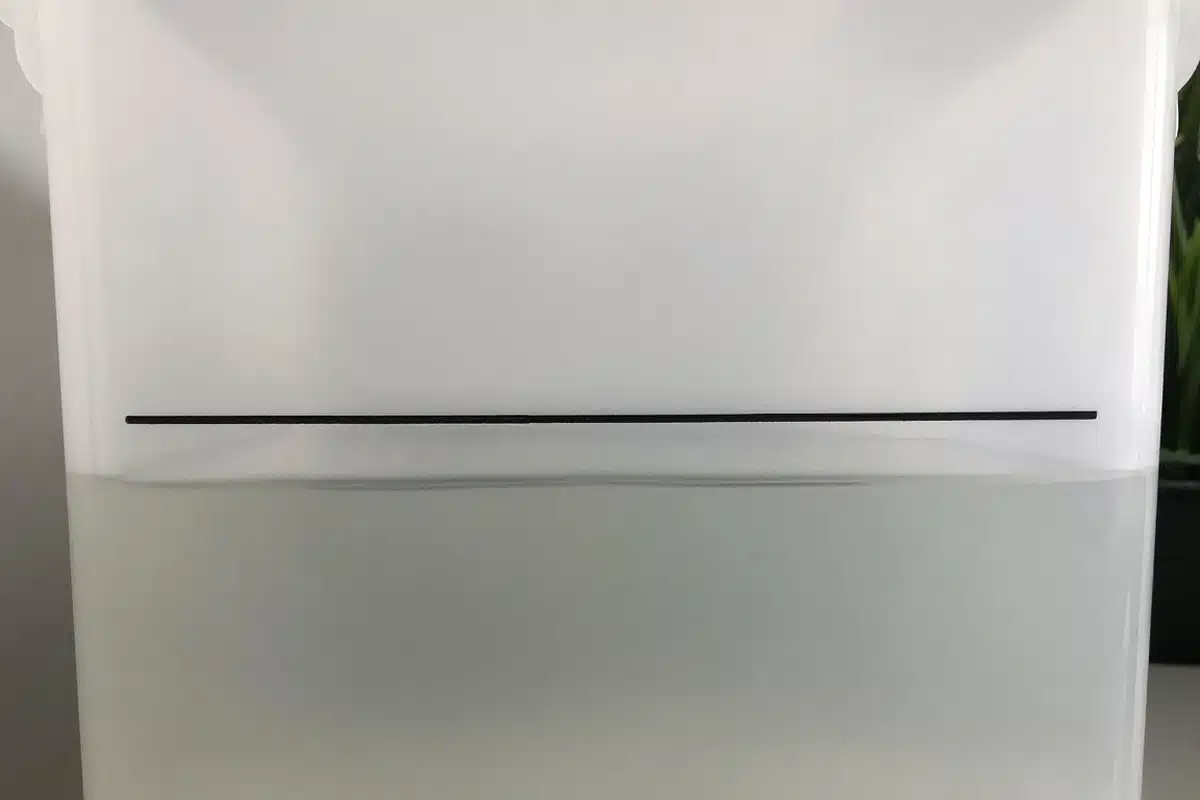
A top off adds water to bring the tank back to the fill line. It can be plain water or a weak solution, and it fixes the volume but not the balance.
A full change drains the tank and refills it with freshly mixed solution. It resets every nutrient to its starting level.
The Virginia Cooperative Extension guide to deep water culture explains how plants change the solution as they grow. It describes tracking EC and pH and adjusting the tank between full renewals.
| Task | What it does | When to use it |
|---|---|---|
| Top off with water | Restores volume, lowers EC | When EC is rising and level drops |
| Top off with weak solution | Restores volume, holds EC | When EC is falling and level drops |
| Full change | Resets volume and balance | On a schedule or when readings drift |
Sources: Virginia Cooperative Extension, University of Illinois Extension.
How often should you change the water?
There’s no single schedule. It depends on tank size, the number of plants and their stage.
The University of Illinois Extension home hydroponics handouts cover small home systems. They explain that small tanks change faster than big ones, because a few plants can shift a small volume quickly.
The UMass Amherst fact sheet on hydroponic systems describes how commercial systems monitor and adjust solution. Bigger systems rely on readings and partial adjustments. Small home systems often do better with regular full changes.
A practical approach is to pick a starting schedule, then adjust it. If readings stay steady and plants look good, stretch the time between changes. If readings drift fast or plants show odd symptoms, shorten it.
Our post on a growing schedule for your hydroponics shows how to plan feeding and changes across a crop.
What signs show a change is due?
Watch for these clues:
EC climbs even after topping off with plain water. Salts are building up.
EC drops fast and pH swings. Plants are pulling some nutrients faster than others.
Leaves show odd patterns that don’t match one clear shortage. The balance has drifted.
The solution looks cloudy, smells off or grows slime. Microbes are thriving in old solution.
Any of these is a sign to plan a drain and refill.
How should you clean the reservoir?
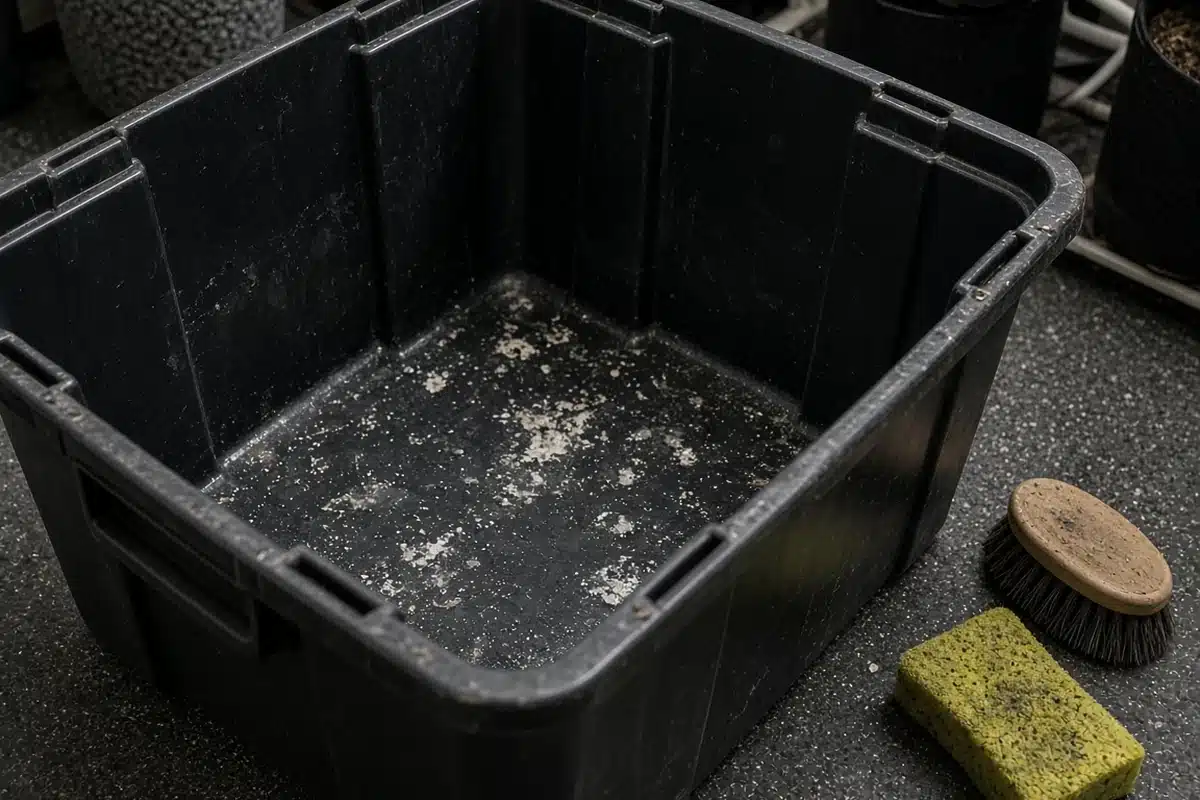
A full change is the ideal time to clean. Drain the tank and wipe the walls with a cloth to remove film. Rinse filmy pumps and air stones. Scrub any slime from lines and fittings.
Rinse with clean water before refilling. Leftover cleaner can upset the new mix.
Our post on caring for your hydroponic system covers deeper cleaning between crops.
Why does the solution drift?
Plants don’t take up every nutrient at the same rate. Nitrogen and potassium may be used faster than calcium or sulfur. Some elements can build up while others run short.
EC only tells you the total amount of dissolved salts. It cannot show which ones are high or low. A steady EC reading can hide a drifted balance.
That is why full changes matter even when readings look normal. A fresh mix restores every element at once. Growers with lab access can analyze the solution, but for most home systems a scheduled change is the simpler answer.
Water quality adds to drift. Hard tap water carries calcium and other minerals. With each top off, those minerals add up in the tank.
How to: step by step
- Mark the reservoir fill line.
- Top off with plain water or weak solution as levels drop.
- Track EC and pH after each top off.
- Schedule full changes by system size and crop.
- Clean the reservoir during full changes.
- Mix fresh solution and recheck readings.
Use a marker or tape on the tank so you can see the fill line at a glance.
Maintain a simple log. Write down the date, the amount added, EC and pH. Patterns show up within a few weeks.
Mix new solution in a clean bucket or straight into the tank. Our post on a DIY marijuana nutrient solution explains how to mix and adjust.
Use old solution on outdoor plants or a lawn rather than pouring it down a drain. It still holds nutrients.
Troubleshooting
EC continues rising. Top offs used fully mixed solution. Top off with plain water.
Odd deficiencies. The balance drifted. Do a full change.
Slime in the reservoir. The tank was not cleaned. Clean it during the next change.
pH swings daily. The tank is small or old. Change it more often.
Level drops fast. Plants are big and the room is warm. Top off more often or use a bigger tank.
A steady routine of top offs and full changes makes a system easy to run. Kind Seed Co shares more garden projects in outdoor growing.
Sources
- Hydroponic production of edible crops: deep water culture (DWC) systems (SPES-464), Virginia Cooperative Extension, Hydroponic production of edible crops
- Hydroponic systems, UMass Amherst Center for Agriculture, Food, and the Environment, Hydroponic systems
- Home hydroponics handouts, University of Illinois Extension, Home hydroponics handouts
FAQ
Can I just continue topping off?
Not forever. Top offs fix volume but not balance. Over time the mix drifts, so plan full changes too.
What do I do with old solution?
Use it to water outdoor plants or a lawn. It still holds nutrients and should not go to waste.
Does reservoir size change the schedule?
Yes. Small tanks drift faster and need changes more often. Large tanks stay steady longer.
Should I clean the system each change?
Yes. Wipe the tank and rinse pumps and stones while the tank is empty. It holds slime and film down.
Should top off water be pH adjusted?
It helps. Adjust top off water close to your target pH so the tank stays steady.



