Hydroponic Watercress Turning Yellow: pH Plus Warm Water
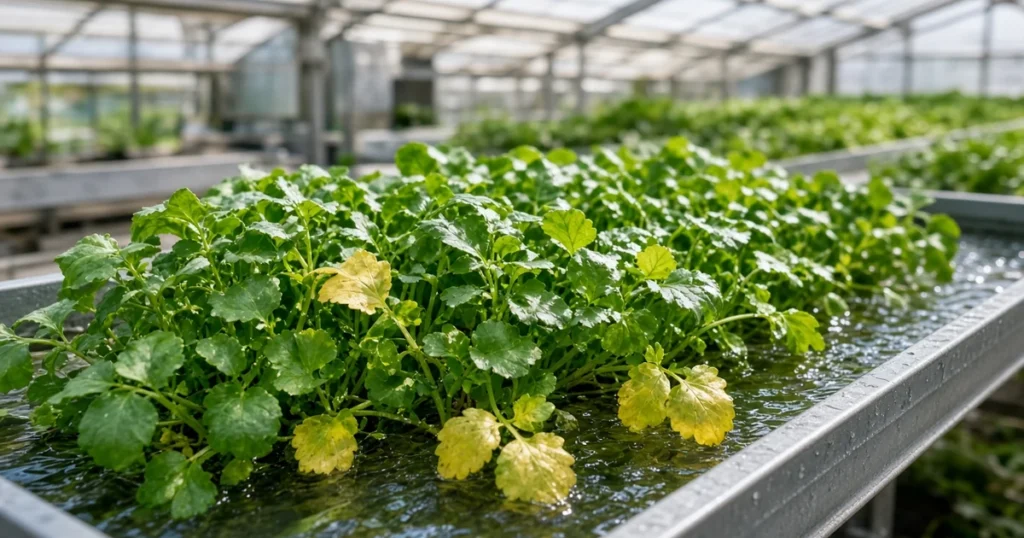
Hydroponic watercress turning yellow usually points to a nutrient solution the plant cannot use well or water that runs too warm. University of Missouri Extension explains that a pH outside the optimum range can stop plants taking up nutrients. Warm water also holds less oxygen, so check pH plus temperature first.
The short answer
Start with pH plus water temperature. University of Missouri Extension lists pH 5.5 to 7 plus dissolved oxygen over 6 ppm as optimum ranges for hydroponic water. Warmer water holds less oxygen. Kentucky State University lists 50 to 65F for watercress germination. Older plantings can be cut back plus regrown as a ratoon crop.
How does pH affect watercress leaves?
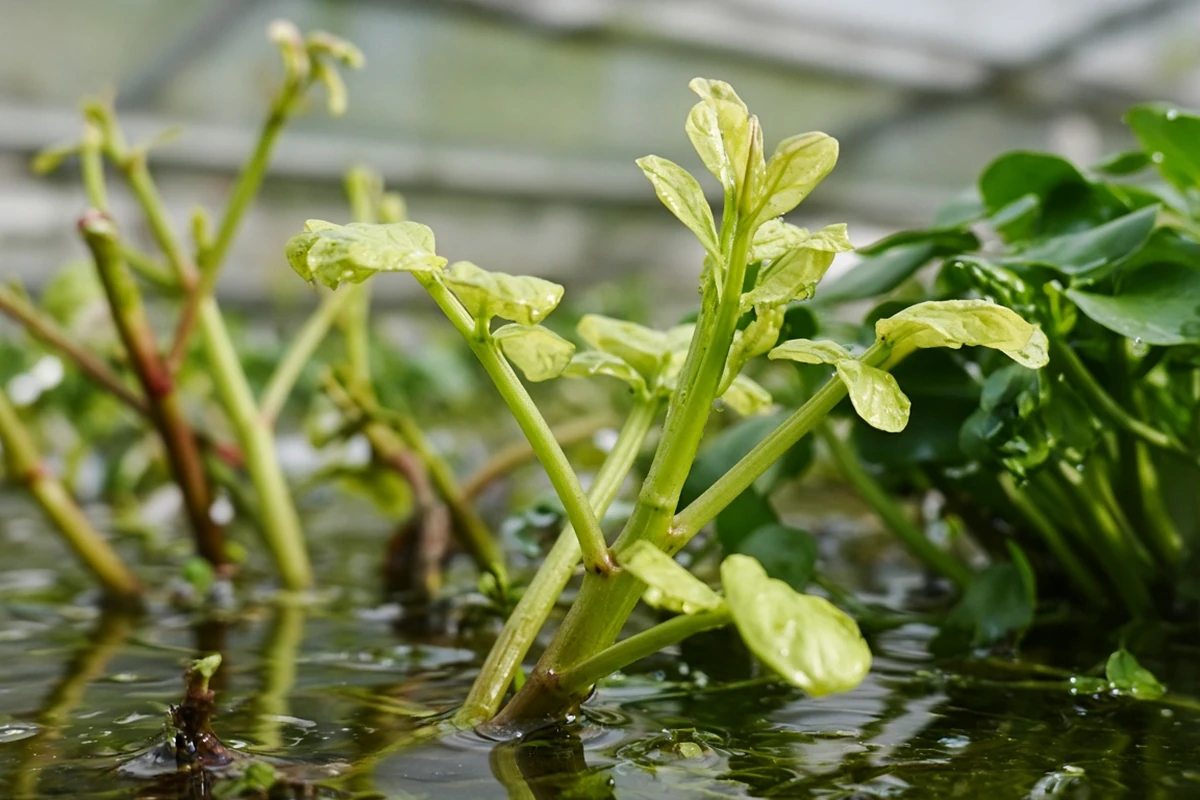
University of Missouri Extension explains that water pH affects nutrient solubility plus availability. If pH is outside the optimum range, plants may not be able to take up all the nutrients in the solution.
The same guide lists pH 5.5 to 7 as the optimum range for water used in hydroponics. It also lists EC of 0.2 to 0.8 dS/m plus iron under 1 ppm for source water.
A poorly mixed fertilizer can also push the root zone outside a plant’s comfort range. Check pH plus EC with meters before changing anything else.
Why does warm water matter?
Missouri Extension notes that water temperature caps how much oxygen the water can hold. Warmer water holds less. At 95F the oxygen solubility of the solution is 6.85 ppm, no matter how much air is pumped in.
The guide lists dissolved oxygen over 6 ppm as optimum. Water chillers can cool the water plus raise the amount of oxygen it holds.
Colorado State University Extension adds that low oxygen in the solution favors root disease. That disease shows as brown roots with sparse root hairs.
| Factor | Optimum range | Why it matters |
|---|---|---|
| pH | 5.5 to 7 | Outside this range plants may not take up all nutrients |
| Dissolved oxygen | Over 6 ppm | Warmer water holds less oxygen |
| EC of source water | 0.2 to 0.8 dS/m | Shows dissolved salts in the water |
| Iron in source water | Under 1 ppm | Part of water quality checks |
Source: University of Missouri Extension plus Colorado State University Extension.
Do older watercress plants decline?
University of Hawaii CTAHR describes watercress as a perennial crop that flowers. It may be grown as an annual or as a ratoon crop, which means cut and come again.
In its non circulating methods the crop is harvested before the nutrient solution runs out. Fresh solution then refills the tank plus the process repeats.
The same source notes that watercress prefers a moderately cool climate. Air temperatures below 60F slow growth, while optimum daytime air temperatures run from 70 to 85F.
How to: step by step
- Measure pH plus EC of the nutrient solution.
- Bring pH back into the 5.5 to 7 range.
- Read water temperature plus dissolved oxygen.
- Cool warm water with a chiller when needed.
- Look at roots for brown color plus sparse root hairs.
- Cut older stems plus refill with fresh solution for a ratoon crop.
Troubleshooting
Yellow leaves with pH out of range: poor nutrient uptake. Adjust pH.
Yellow limp plants in warm water: low oxygen. Cool the water.
Older plants fading: age of the crop. Cut back plus refresh the solution.
For related reading see how to spot 8 common cannabis plant deficiencies by leaf symptoms, understanding ph and how it affects cannabis plants plus caring for your hydroponic system. Kind Seed Co also stocks cannabis seeds.
Sources
- Watercress fact sheet, Kentucky State University Cooperative Extension
- Growing direct seeded watercress by two non circulating hydroponic methods (VC 7), University of Hawaii CTAHR
- Hydroponic nutrient solutions (G6984), University of Missouri Extension
- Root disease problems plus management in hydroponic systems (PlantTalk 2043), Colorado State University Extension
FAQ
How often can watercress be cut?
University of Hawaii CTAHR notes that watercress can be grown as a ratoon crop, which means cut and come again. Ratoon harvests may be taken from original plantings. In its non circulating method the tank is refilled with fresh nutrient solution after harvest plus the process is repeated.
Does watercress need flowing water?
Not in every system. University of Hawaii CTAHR grew watercress by two non circulating hydroponic methods that need no electricity or pumps. Roots between the net pot plus the solution become oxygen roots that take up air from the humid layer under the tank cover.
Why is watercress flowering?
University of Hawaii CTAHR describes watercress as a perennial crop which flowers. Flowering is part of its normal cycle rather than a sign of disease. Growers often cut plants back as a ratoon crop so new stems regrow from the original planting.
Can watercress grow from cuttings?
Yes. University of Hawaii CTAHR notes that field watercress in Hawaii has normally been propagated from stem or terminal shoot cuttings. It adds that propagation from seed greatly improves the chance of virus free production, which is why seed has been preferred in other locations.
What temperature suits watercress seeds?
Kentucky State University lists 50 to 65F as the germination temperature for watercress, with sprouting in 5 to 7 days. Seeds need light to germinate, so do not bury them deeply. The medium should stay moist but not waterlogged, then move seedlings into a hydroponic system.