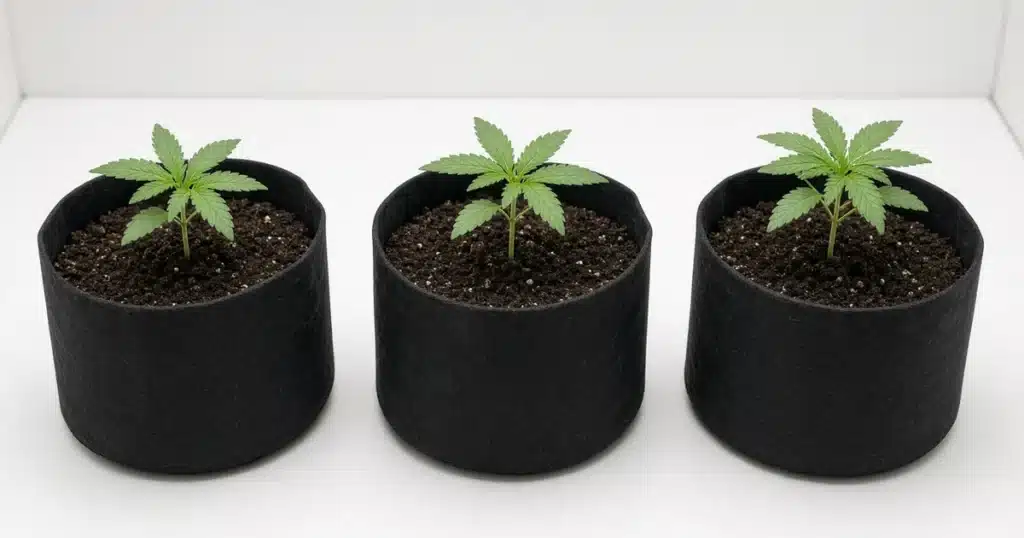
Hydroponic Pepper Plants Wilting: Warm Roots Plus Low Oxygen
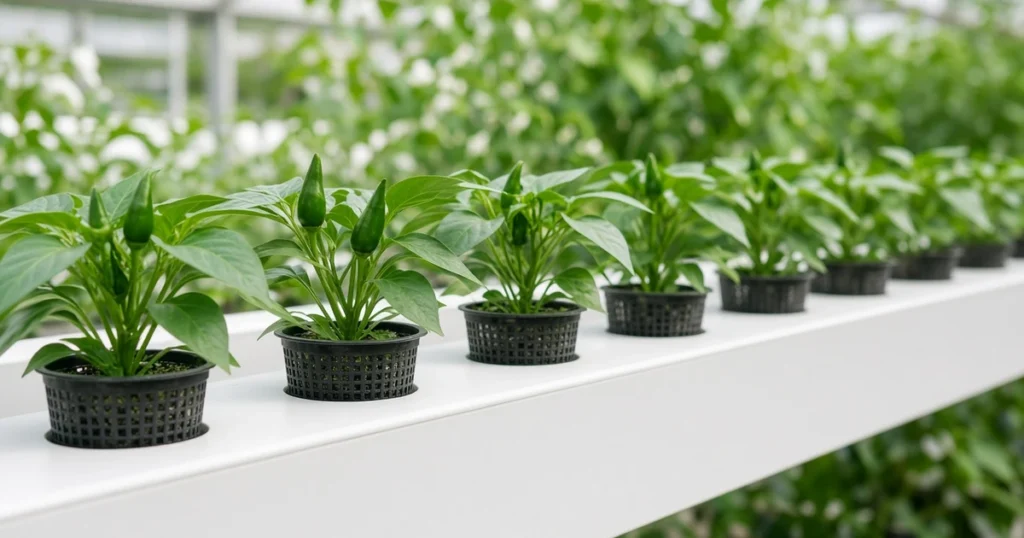
Hydroponic pepper plants wilting often point to warm reservoir water or low oxygen around the roots. Colorado State University Extension explains that low oxygen in the nutrient solution favors root disease. It lists 68 to 72F as the optimum root zone temperature. Check the roots first, then cool plus aerate the solution.
The short answer
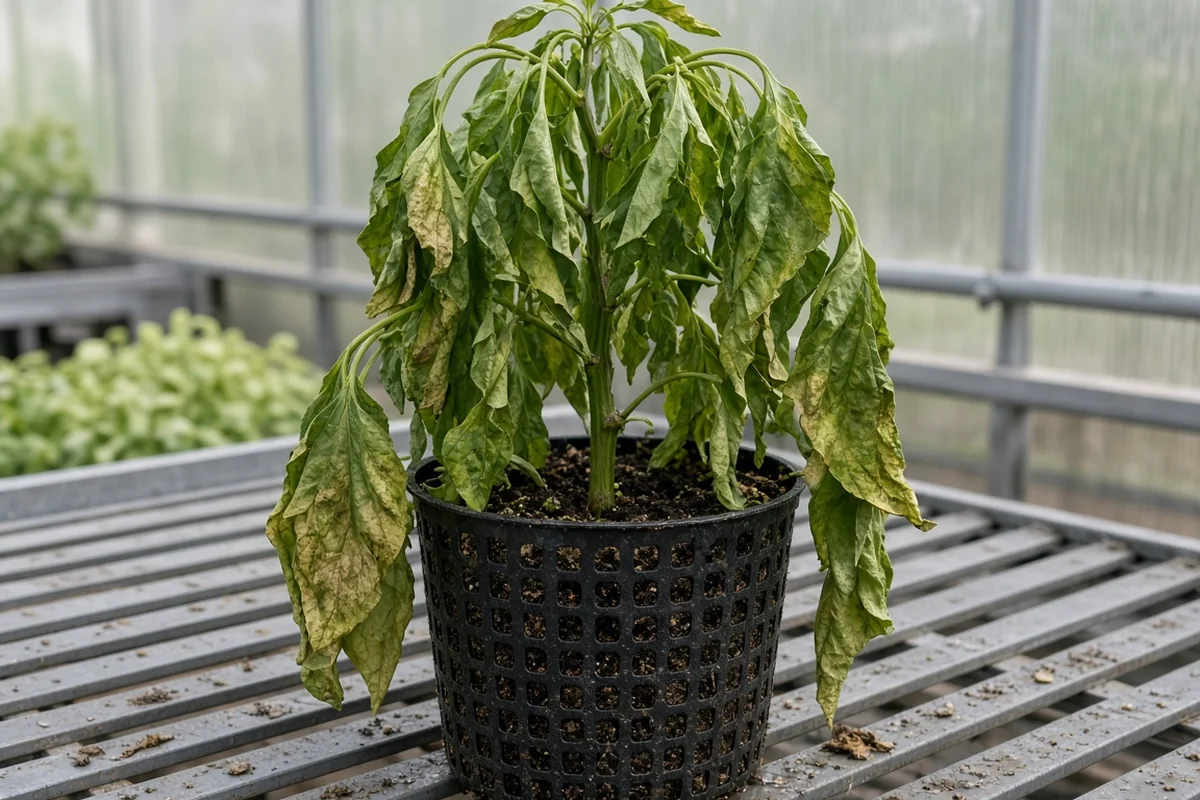
Wilting in hydroponic peppers usually starts at the roots. Colorado State University Extension notes that root rot is first seen as wilting or tip burn, with brown roots that have few root hairs. Low oxygen favors this disease, so aerate the solution, hold the root zone near 68 to 72F and start with a clean system.
How do warm roots cause wilting?
Colorado State University Extension names root rot caused by Pythium as the most common root disease in hydroponic systems. Fusarium, Phytophthora plus Rhizoctonia are occasional problems.
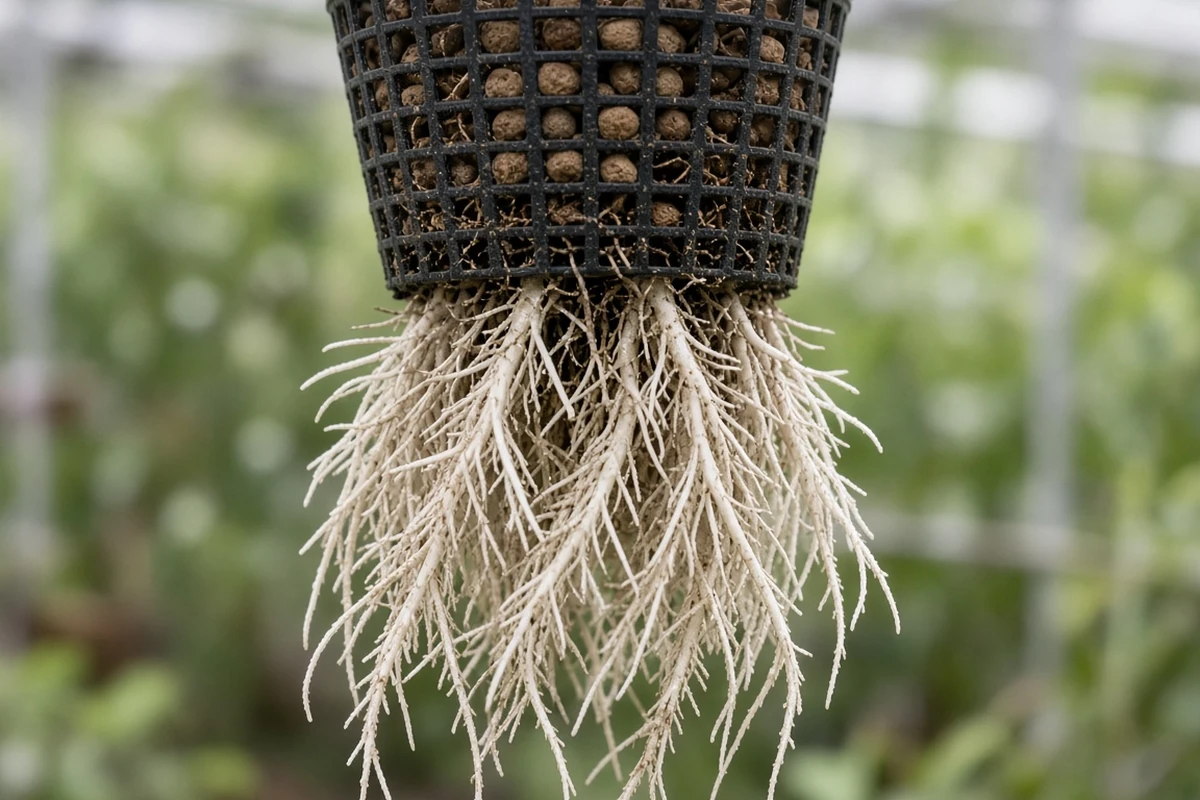
Symptoms are very similar among these diseases. They are usually first noticed as wilting or tip burn on leaves. The root system turns brown with sparse root hairs and can be soft or stunted.
The same source lists 68 to 72F as the optimum root zone temperature. Most root pathogens are opportunists that hit already stressed plants hardest.
Why does oxygen matter in the reservoir?
Low oxygen levels in the nutrient solution favor disease, Colorado State University Extension explains. Its advice is to increase dissolved oxygen through proper aeration.
Virginia Cooperative Extension notes that every deep water culture system includes oxygenation. Smaller systems can add an air pump with an air line plus diffuser. A venturi on the pump output can also inject air to help hold dissolved oxygen high.
The same guide calls meters for EC, pH plus dissolved oxygen necessary for managing the solution. A dissolved oxygen meter reveals if aeration falls short.
| Sign | Likely cause | Fix |
|---|---|---|
| Wilting or tip burn with brown roots | Root rot such as Pythium | Check roots plus raise dissolved oxygen |
| Roots soft with sparse root hairs | Root disease on stressed plants | Hold the root zone near 68 to 72F |
| Wilting in a still hot room | Heat buildup plus poor air movement | Add air movement plus avoid reflected heat |
Source: Colorado State University Extension plus University of Tennessee Extension.
Are peppers harder to grow in hydroponics?
University of Tennessee Extension notes that light plus nutrient needs are higher for fruiting crops such as peppers than for leafy plants. Fruiting crops also grow for longer seasons, so they face a higher risk of root diseases spread by recirculating solutions.
The same source says large bells are challenging because swings in light, temperature plus nutrients can reduce yield. Small bells plus many hot peppers can be easier to manage.
It also advises against sites with high reflected light plus heat buildup that could stress plants. Moving air aids photosynthesis plus lowers infection potential.
How to: step by step
- Lift a plant plus look at the roots for brown color plus sparse root hairs.
- Compare the root zone temperature with the 68 to 72F optimum.
- Add an air pump with an air line plus diffuser if the system has none.
- Check dissolved oxygen, EC plus pH with meters.
- Use a balanced nutrient solution plus check soluble salts regularly.
- Start new crops in a clean system with clean trays plus rafts.
Troubleshooting
Brown slimy roots: root rot. Aerate the solution plus cool the root zone.
Wilting in a hot still room: heat buildup. Improve air movement.
Blooms dropping: conditions not optimum. Steady light, temperature plus nutrients.
For related reading see how to deal with pythium root rot in cannabis plants, hot pots root zone heat in cannabis containers plus cannabis heat stress. Kind Seed Co also stocks cannabis seeds.
Sources
- Root disease problems plus management in hydroponic systems (PlantTalk 2043), Colorado State University Extension
- Tomatoes, peppers plus cucumbers in small scale soilless plus hydroponic systems (W 844 C), University of Tennessee Extension
- Peppers, UF/IFAS Gardening Solutions
- Hydroponic production of crops: deep water culture (DWC) systems (SPES 464), Virginia Cooperative Extension
FAQ
Can wilted pepper plants recover?
Recovery depends on the roots. Colorado State University Extension notes that root rot shows as brown roots with sparse root hairs, sometimes soft or stunted. Most root pathogens hit stressed plants hardest. Improving aeration plus root zone temperature gives new roots a better chance, but badly rotted roots may not come back.
How warm is too warm for the reservoir?
Colorado State University Extension lists 68 to 72F as the optimum root zone temperature in hydroponic systems. Warmer solutions are worth checking when peppers wilt. Pair temperature checks with aeration, since low dissolved oxygen in the nutrient solution also favors root disease in these systems.
What adds oxygen to a small system?
Virginia Cooperative Extension notes that an air pump with an attached air line plus diffuser can be added to smaller deep water culture systems. A venturi on the pump output can also inject air into the pond. A dissolved oxygen meter shows whether these methods are working.
Do peppers need support in hydroponics?
UF/IFAS Gardening Solutions notes that staking can hold pepper plants upright as fruits begin to weigh them down. University of Tennessee Extension also lists plant support plus room for root growth as concerns for fruiting crops in small closed systems, so plan support before plants set fruit.
Why do peppers drop blooms?
University of Tennessee Extension notes that when conditions are not optimum, peppers often drop blooms or small fruit instead of producing mature fruit. Large bells are most sensitive to swings in light, temperature plus nutrients. Small bells plus many hot pepper types can be less challenging to manage.