Mint Leaves Turning Yellow? Wet Roots plus Crowding
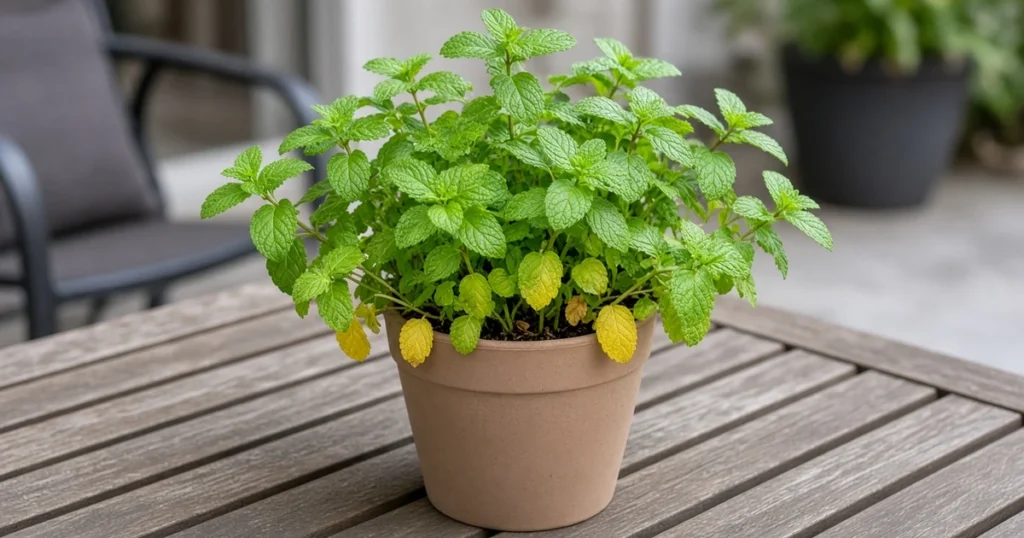
Mint leaves turning yellow often come from roots in soggy soil or from a pot so crowded the roots compete for water. NC State Extension notes spearmint thrives in well drained moist soil. Virginia Cooperative Extension lists yellowing leaves as a sign of overwatering. Check drainage first, then the roots.
The short answer
Yellow mint leaves usually trace to wet roots or crowding. Virginia Cooperative Extension lists yellowing on new plus old foliage as a sign of overwatering. University of Minnesota Extension notes overcrowded plants compete for nutrients plus water. Improve drainage, divide crowded clumps plus cut back yellow stems to push new shoots.
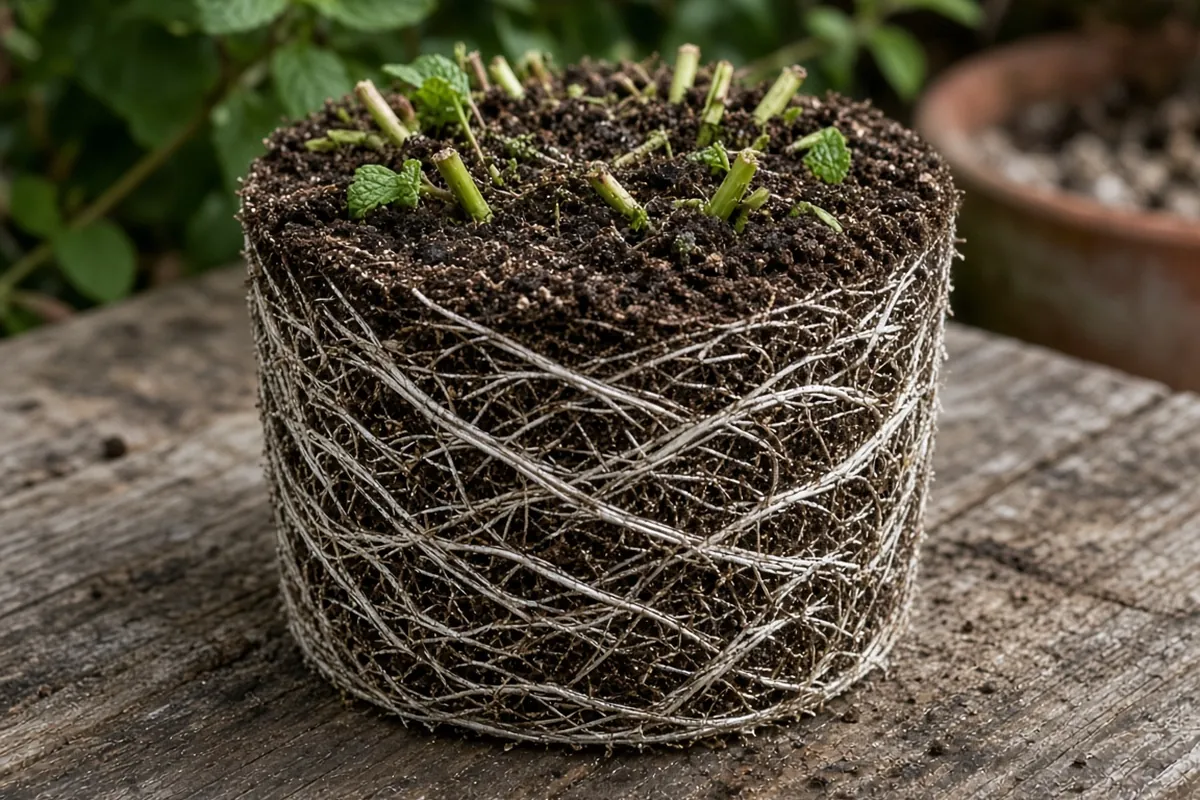
Why does mint turn yellow?
NC State Extension notes spearmint thrives in well drained moist soil but does not do well in dry soil. Virginia Cooperative Extension notes containers without drainage holes create waterlogged soil that can lead to root rot. Both extremes strain the leaves.
| Sign | Likely cause | Fix |
|---|---|---|
| Yellow leaves in soggy soil | Wet roots | Improve drainage |
| Roots fill the pot | Crowding | Divide plus repot |
| Dead center with smaller leaves | Old crowded clump | Divide in spring |
| Wilting in dry soil | Underwatering | Water evenly |
Source: Virginia Cooperative Extension plus University of Minnesota Extension.
How do you tell wet roots from crowding?
Wet roots sit in soggy soil plus the pot feels heavy. A crowded pot dries quickly plus roots fill it. University of Minnesota Extension notes plants that die out in the middle plus produce smaller leaves are ready to divide.
How often should potted mint be divided?
University of Minnesota Extension notes division helps control plants that spread rapidly plus that some perennials can be divided every year if needed. It notes spring is a fine time to divide. UF/IFAS Gardening Solutions notes mint can be propagated by cuttings or division.
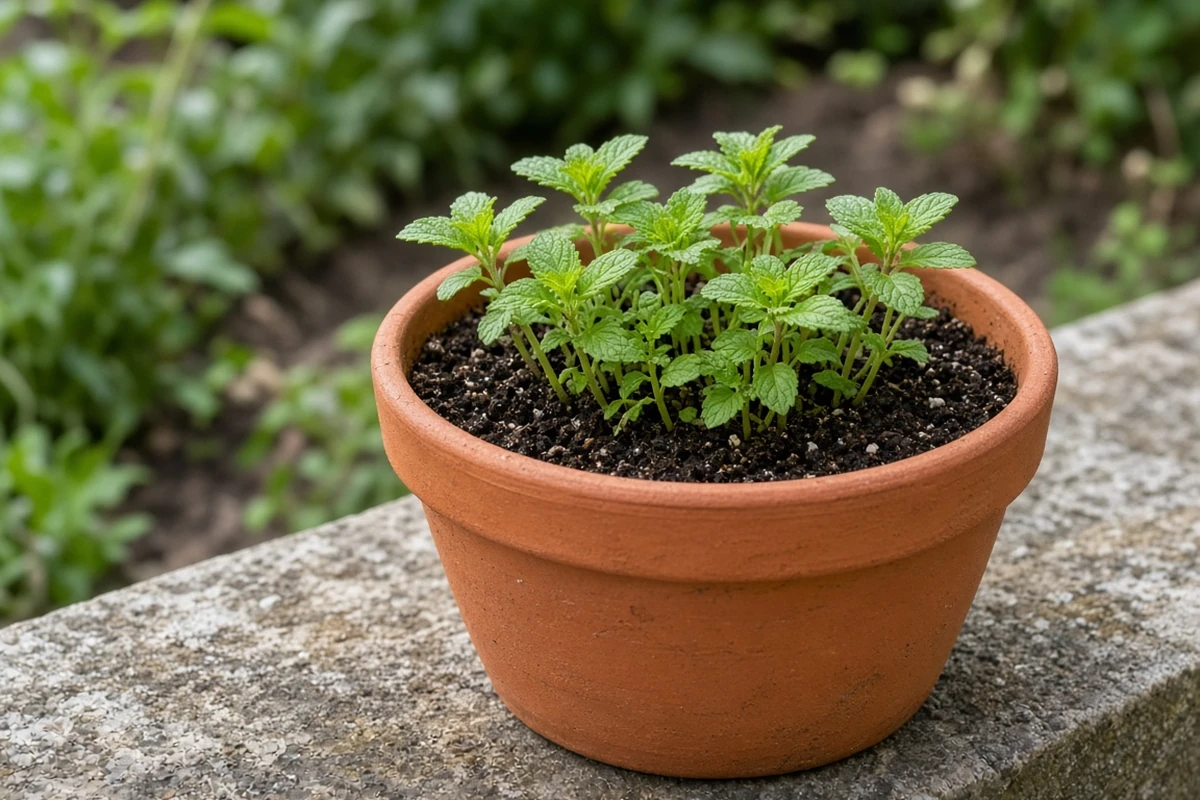
How to: step by step
- Check the soil plus the drainage holes.
- Slide the plant out plus look at the roots.
- Split crowded clumps into smaller pieces.
- Repot in fresh mix in a pot with holes.
- Water when the top of the soil begins to dry.
- Cut back yellow stems to encourage new shoots.
Troubleshooting
Yellow leaves with soggy soil: wet roots. Add drainage.
Roots circling plus soil dries fast: crowded pot. Divide plus repot.
Center of the clump dies out: old crowded growth. Split in spring.
For more on roots plus water see overwatering cannabis prevention plus diagnosis, root bound cannabis plus checking soil moisture by feel. Kind Seed Co also stocks cannabis seeds.
Sources
- Mint, UF/IFAS Gardening Solutions
- Mentha spicata (spearmint), NC State Extension Gardener Plant Toolbox
- Properly watering container houseplants (SPES-804), Virginia Cooperative Extension
- Dividing perennials, University of Minnesota Extension
FAQ
When should mint leaves be harvested?
UF/IFAS Gardening Solutions notes mint leaves can be harvested as needed as the plant grows. Regular picking plus cutting back yellow stems helps the clump go on producing fresh shoots. Use leaves fresh, or dry them somewhere dark with low humidity so they do not turn moldy.
How far apart should mint be planted?
UF/IFAS Gardening Solutions advises spacing plants about 12 inches apart to give them room to spread plus grow. NC State Extension notes spearmint grows 1 to 2 feet high plus wide. In a pot, give one division room or plan to divide often.
Does mint need full sun?
NC State Extension notes spearmint thrives in full sun but tolerates partial shade. UF/IFAS Gardening Solutions notes mint prefers light or part shade in Florida. In hot regions a little afternoon shade suits it, while cooler gardens can give it more sun.
Why plant mint in a pot?
UF/IFAS Gardening Solutions advises containers so mint does not overrun the garden with its runners. NC State Extension notes spearmint spreads by rhizomes plus stems that root where they touch the ground. A pot holds that spread, but it also crowds faster, so divide it often.
Can leaf spot turn mint leaves yellow?
NC State Extension lists rust plus leaf spot as the two main diseases of spearmint. Spots differ from the even yellowing of wet roots. University of Minnesota Extension notes dividing crowded plants increases air plus light around them, which can reduce disease.