Fiddle Leaf Fig Brown Spots: Causes plus Fixes
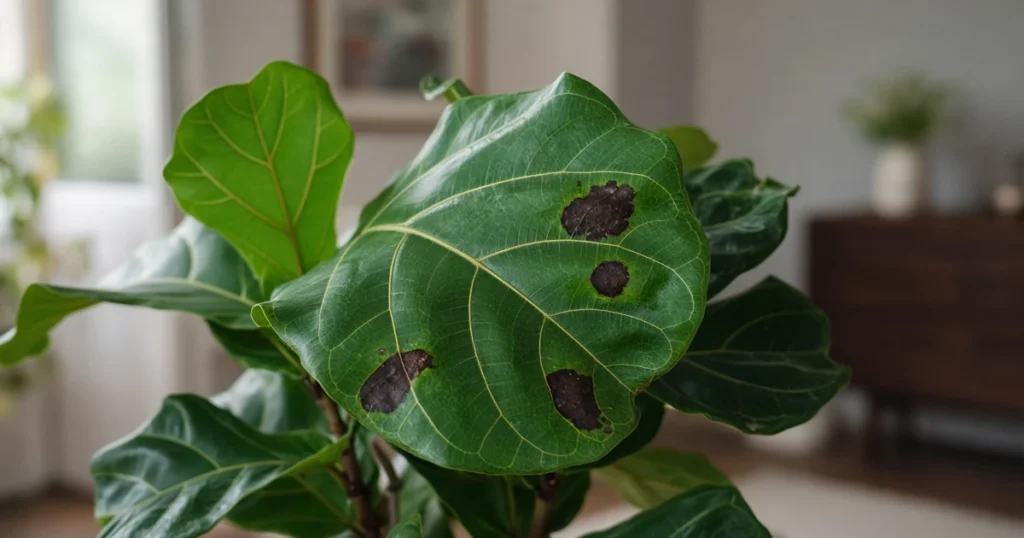
Fiddle leaf fig brown spots usually trace to watering, with soft spots from wet roots, crisp edges from dry soil or corky bumps from edema. University of Maine Extension notes edema is a symptom of excessive watering. Read the spot pattern, then correct watering plus light.
The short answer
Brown spots on a fiddle leaf fig most often point to water. NC State Extension notes the plant is sensitive to overwatering plus spots can follow temperature swings near vents. University of Wisconsin Extension notes edema forms when roots take up more water than leaves lose. Water less in low light plus avoid vents.
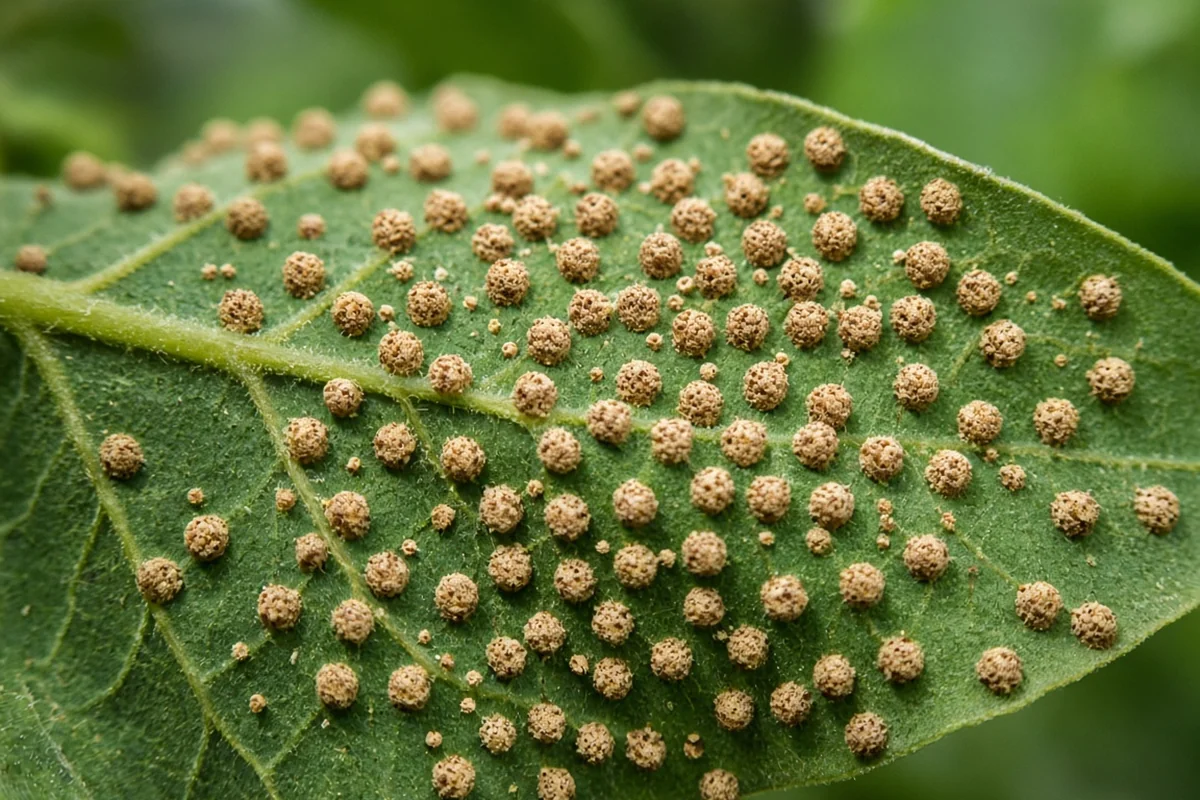
What do different brown spots mean?
Virginia Cooperative Extension lists brown tips or edges plus dry brittle leaves as signs of underwatering. NC State Extension notes brown spots may occur with temperature swings from heating or cooling vents plus leaf scorch from direct sun.
| Spot pattern | Likely cause | Fix |
|---|---|---|
| Crisp brown edges in dry soil | Underwatering | Water more steadily |
| Small corky bumps | Edema | Water less in low light |
| Spots near a vent | Temperature swings | Move the plant |
| Scorched patches | Direct sun | Give bright indirect light |
Source: NC State Extension plus University of Wisconsin Extension.
What is edema on fiddle leaf fig leaves?
University of Wisconsin Extension describes small fluid filled blisters on the undersides of leaves that later turn tan plus corky. It notes edema forms in warm moist soil when water taken up exceeds water lost, often with high humidity plus low light.
How should a fiddle leaf fig be watered?
University of Maine Extension advises watering potted plants only when the topsoil is dry plus using pots with drainage holes. University of Wisconsin Extension advises watering in the morning plus less often in cloudy periods. Virginia Cooperative Extension advises draining the tray within 60 minutes.
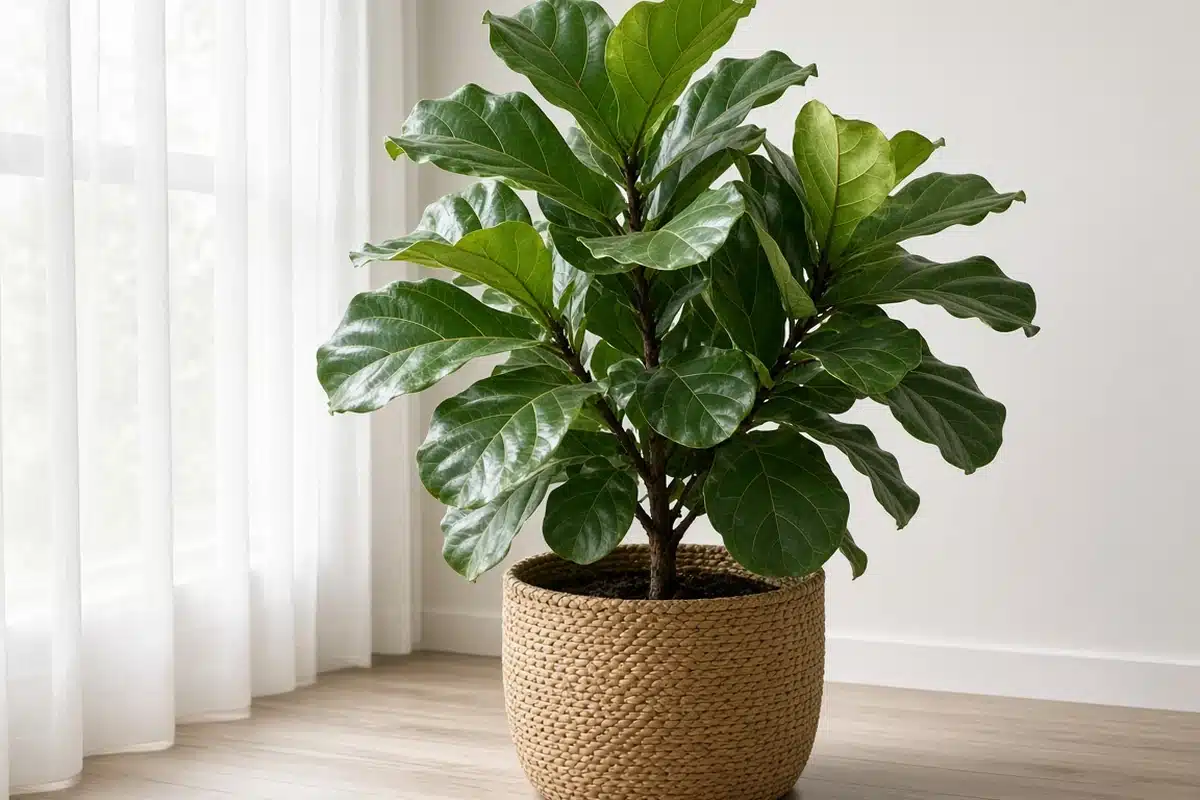
How to: step by step
- Note where spots appear plus what they look like.
- Gauge soil moisture plus drainage.
- Check the roots if soft spots spread.
- Water deeply, then let the topsoil dry.
- Provide bright indirect light.
- Shift the plant away from vents plus heaters.
Troubleshooting
Soft dark spots plus wet soil: overwatering. Inspect roots plus water less.
Crisp brown edges with dry soil: underwatering. Water more evenly.
Small corky bumps: edema. Water less in low light.
For more on watering see overwatering cannabis prevention plus diagnosis, underwatering cannabis plus checking soil moisture by feel. Kind Seed Co also stocks cannabis seeds.
Sources
- Ficus lyrata (fiddle-leaf fig), NC State Extension Gardener Plant Toolbox
- Too much water or not enough light? Irregular growth on plants grown indoors (Bulletin 5059), University of Maine Cooperative Extension
- Edema, University of Wisconsin-Madison Extension
- Properly watering container houseplants (SPES-804), Virginia Cooperative Extension
FAQ
Will brown spots go away?
No. University of Wisconsin Extension notes edema blisters burst, then scar tan plus corky. Scorched or dry patches stay brown too. Fix the cause plus judge progress by new leaves. Clean new growth shows the watering plus light are now right for the plant.
Should spotted leaves be removed?
Remove a leaf if most of it is brown or it starts to drop. University of Wisconsin Extension notes edema is often cosmetic, so a few small spots can stay. Large fiddle leaves feed the plant, so leave green leaves even with minor marks.
Does a fiddle leaf fig need humidity?
NC State Extension notes it performs well in medium relative humidity with temperatures above 55 degrees F. University of Wisconsin Extension notes high humidity plus low light raise edema risk. Aim for moderate humidity plus good air movement rather than very humid still air.
Can moving the plant cause spots?
It can. NC State Extension notes brown spots may follow temperature swings near heating or cooling vents. University of Maine Extension advises moving plants into brighter spots gradually, since too much direct sun can scald them. Choose one bright spot away from vents plus leave the plant there.
Can direct sun cause brown spots?
Yes. NC State Extension notes leaf scorch can occur if the plant gets too much direct sunlight plus it needs shelter from afternoon sun. It prefers bright indirect light or partial shade. Move a scorched plant back from the window plus remove badly burned leaves.