
NFT Gutter Systems: Channel Slope, Flow Rate and Crop Spacing
The short answer
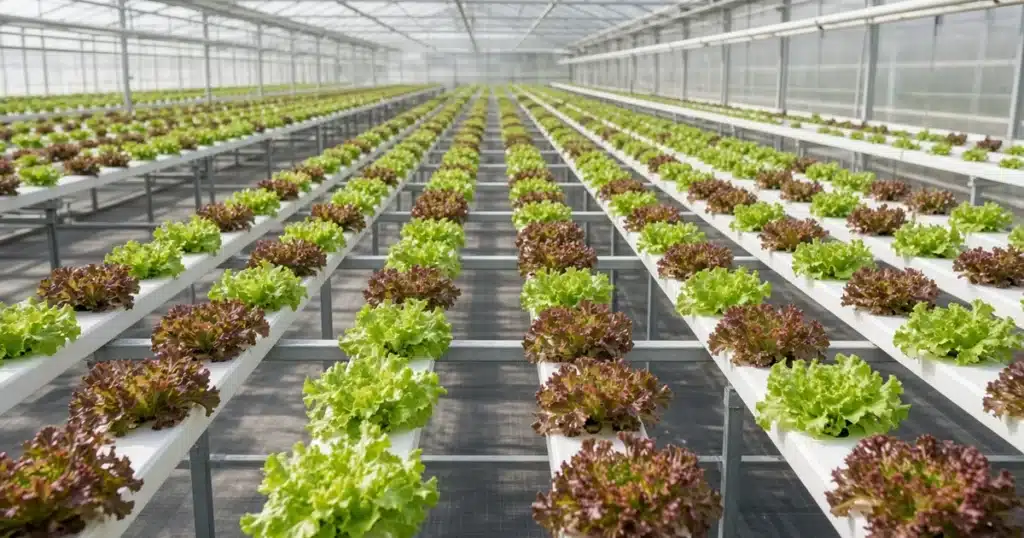
An NFT gutter system runs a thin film of nutrient solution down gently sloped channels so roots get water, nutrients and air at once. Channel slope, flow rate and channel length all shape how well plants grow. Leafy greens and herbs are the strongest fit for NFT, and spacing is set by the size of the mature plant.
NFT stands for nutrient film technique. It is one of the most common designs in commercial lettuce houses, and it scales down well for home use.
How does an NFT gutter system work?
An NFT system has a few simple parts. There’s a reservoir, a pump, a set of channels and a return line.
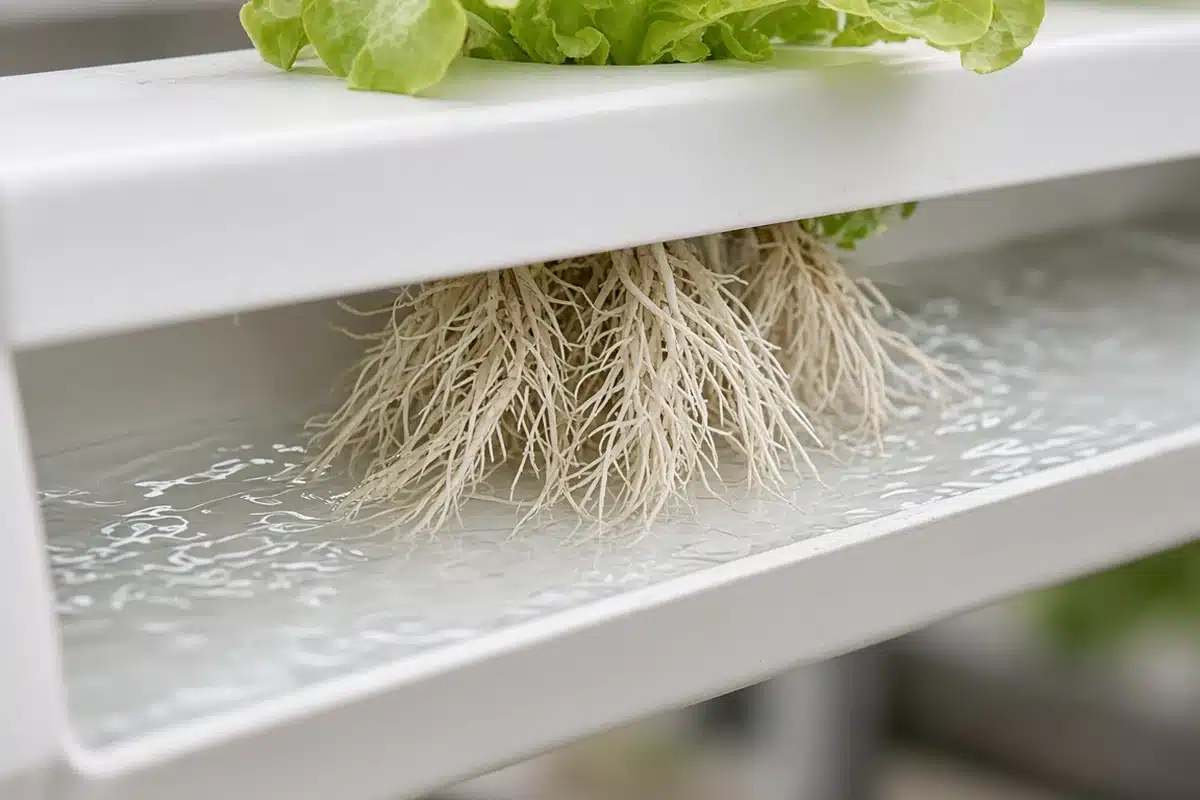
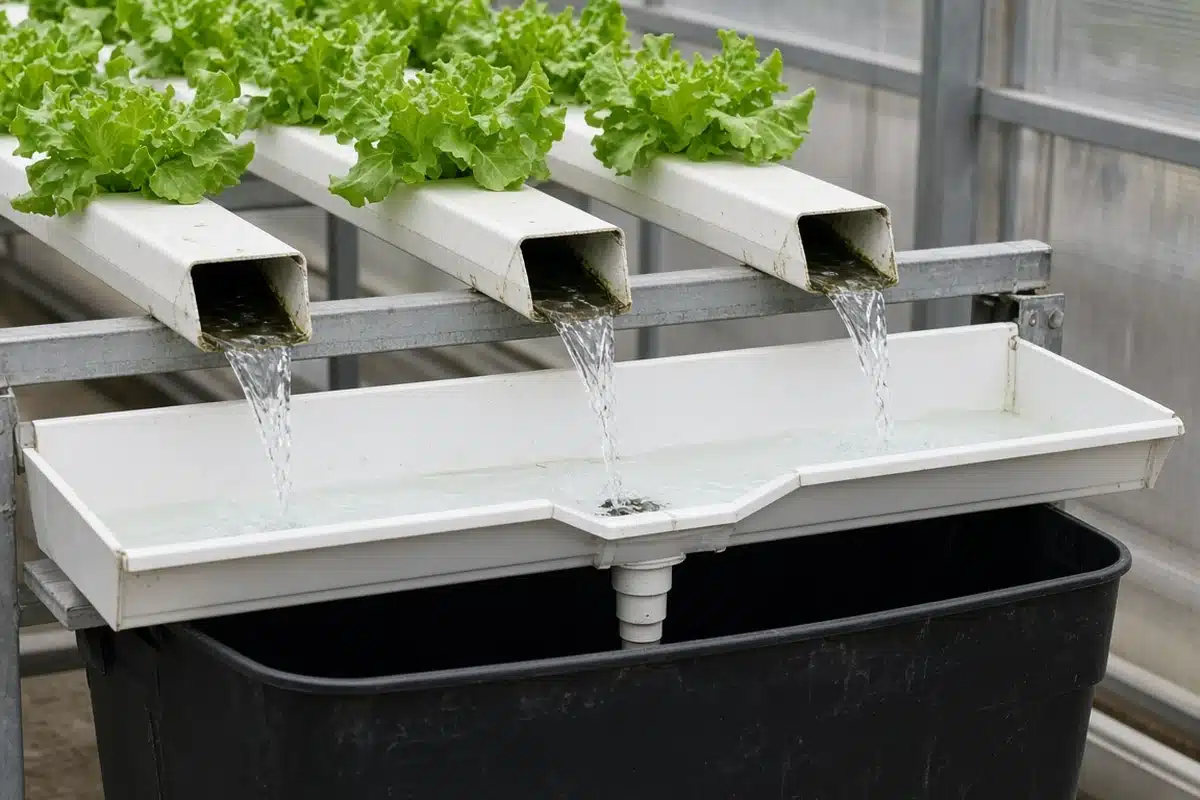
The pump lifts solution to the high end of each channel. Solution flows down the channel floor as a shallow stream, and roots sit in that stream and spread into a flat mat. The solution drains from the low end back to the reservoir.
The Virginia Cooperative Extension guide to NFT systems explains that the film should stay thin. Only the bottom of the root mat sits in liquid. The upper roots stay moist and exposed to air in the channel. That mix of water and air is what makes NFT work.
Plants sit in net pots or plugs in holes along the channel top. The cover blocks light from the solution and roots.
How do slope and flow affect plants?
Slope moves the solution. If the channel is too flat, water pools and roots sit in deep liquid with little air. If it’s too steep, the film rushes past and the roots at the top may dry.
Most guides suggest a gentle, even fall from inlet to outlet. Check it with a level along the full length. A sag in the middle of a channel makes a puddle there.
Flow rate matters as much. The Virginia guide notes that each channel needs a steady, modest flow. Too little and the far end runs short. Too much and the film turns into a stream that floods roots.
Channel length affects both. Solution temperature can rise and dissolved oxygen can drop as it travels. Plants at the far end of a long channel may grow more slowly than plants near the inlet. Shorter channels give more even growth.
| Factor | Why it matters | Source |
|---|---|---|
| Slope | Moves solution and stops pooling | Virginia Cooperative Extension |
| Flow rate | Holds a thin film to the far end | Virginia Cooperative Extension |
| Channel length | Long runs warm up and lose oxygen | Virginia Cooperative Extension |
| Crop type | Leafy greens and herbs suit NFT | UMass Amherst |
| Cover | Blocks light from roots and solution | University of Tennessee Extension |
Sources: Virginia Cooperative Extension, UMass Amherst, University of Tennessee Extension.
How should crops be spaced?
Spacing depends on the mature size of the plant. Lettuce heads need more room than baby greens. Basil needs more room as it branches.
The UMass Amherst overview of hydroponic systems describes NFT as most suited to small, quick crops. Larger fruiting plants grow heavy roots that can block channels and big tops that need support.
The University of Tennessee Extension guide to leafy crops in small hydroponic systems covers leafy crop choices for small systems. Lettuce, leafy herbs and greens are good matches.
Space channels apart as well as holes, and leaves from one channel should not shade the next too much.
Some growers start plants close together, then move them to wider spaced channels as they grow. This uses space well for quick crops.
Our post on hydroponic in different mediums covers starter plugs and media that fit NFT holes.
What size channels should you use?
Channel width follows the crop. Narrow channels suit herbs and baby greens. Wider channels give room for full lettuce heads and larger root mats.
Deeper channels hold more roots without blocking flow, but they cost more and weigh more when full.
Pick channels with a flat floor. A flat floor spreads the film evenly so all roots get a share. Round pipes can work, but the film collects in a narrow line along the bottom.
How to: step by step
- Choose channels sized for your crop.
- Set a gentle, even slope toward the return end.
- Run a pump that holds a thin, steady film.
- Space net pot holes for the crop’s mature size.
- Cover channels to block light.
- Check flow at the far end of every channel.
Our post on creating the right environment for your hydro setup covers temperature and airflow around the system.
What happens if the pump stops?
NFT has little water in the channels at any time. If the pump stops, roots can dry within a short time, especially in warm rooms.
This is the main weak point of the design. Many growers use a timer only during short breaks, or run the pump all the time. A spare pump on hand makes recovery quick.
Check the pump daily. Listen for it and look at the outlet flow.
Troubleshooting
Roots dry at the channel end. Flow is low. Raise pump output or shorten channels.
Water pools. Slope is uneven. Level the channel supports again.
Roots clog the channel. Plants are crowded or grew too long. Clean channels between crops.
Algae in channels. Light is getting in. Cover gaps and empty holes.
Slow growth at the far end. Solution is warm or low in oxygen. Shorten runs or cool the reservoir.
Our post on caring for your hydroponic system covers cleaning channels and lines.
NFT rewards careful setup with fast, even crops. Kind Seed Co carries cannabis seeds for growers planning a new hydroponic system.
Sources
- Hydroponic production of edible crops: nutrient film technique (NFT) systems (SPES-463), Virginia Cooperative Extension, Hydroponic production of edible crops
- Hydroponic systems, UMass Amherst Center for Agriculture, Food, and the Environment, Hydroponic systems
- Leafy crop production in small scale soilless and hydroponic systems (W 844-B), University of Tennessee Extension, Leafy crop production in small scale soilless and hydroponic systems (W 844-B)
FAQ
Can fruiting crops grow in NFT?
Some can, but it is harder. Large roots can block channels and heavy tops need support. Leafy crops are the strongest fit for NFT.
What happens if the pump stops?
Roots can dry out quickly because channels hold so little water. Check the pump daily and have a spare on hand.
How long can NFT channels be?
Shorter channels give more even growth. Long runs let solution warm and lose oxygen before it reaches the last plants.
Do channels need to be food grade?
Use channels made for growing food crops. Purpose built NFT channels are the simplest choice.
How thin should the film be?
Thin enough that most roots sit above the liquid. The bottom of the root mat should touch the flowing film.



