
Hydroponic Reservoir Size: Gallons per Plant by System and Crop
The short answer
Hydroponic reservoir size depends on the system and the crop. Small leafy plants need far less solution than large fruiting plants. Larger reservoirs hold pH, EC and temperature steadier between checks. Extension guides tie volume to system type, so start from their guidance and size up when you are unsure.
A reservoir that is too small causes most of the daily headaches in a home system. Getting the size right up front saves work later.
Why does reservoir size matter?
The reservoir is the store of water and nutrients for every plant in the system. Plants pull water out all day. As they drink, the solution changes.
In a small tank, those changes happen fast. pH drifts. EC rises or falls, and water level drops. Temperature follows the room more closely.
A larger volume acts as a buffer. The same amount of uptake makes a smaller change in a big tank. You get more time between checks and fewer swings.
Warm solution holds less oxygen. A small reservoir warms quickly under lights and in summer rooms. More volume helps hold it cool.
How do system and crop change the size?
System design sets the starting point. In deep water culture, roots hang in the reservoir itself. The Virginia Cooperative Extension guide to DWC systems explains that each plant sits in a large volume of aerated solution. The tank and the root zone are one.
In NFT, roots sit in a thin film and the reservoir is a separate tank. The Virginia Cooperative Extension guide to NFT systems notes that the reservoir must hold enough solution to fill the channels and still cover the pump.
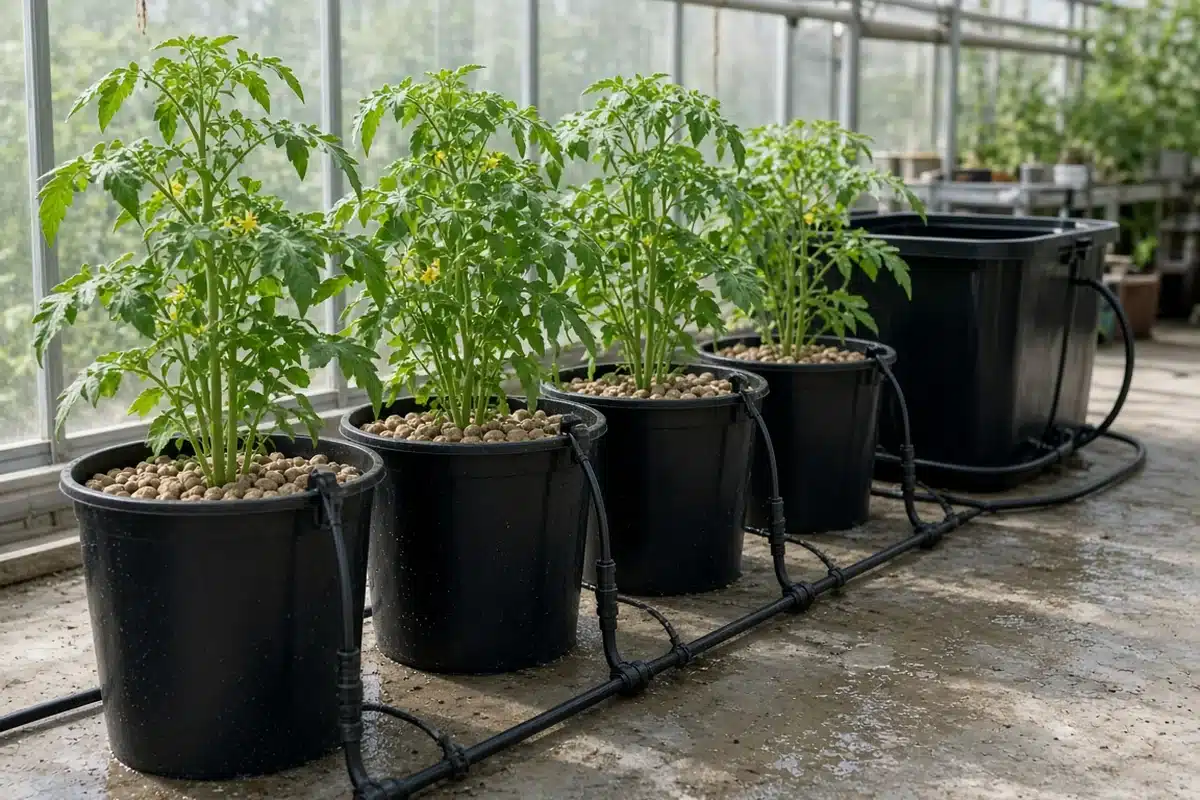
Crop size matters next. Leafy greens use modest amounts of water. Tomatoes, peppers and cucumbers use much more as they grow. The University of Tennessee Extension guide to tomatoes, peppers and cucumbers in small hydroponic systems covers these larger crops. Fruiting plants in full growth can draw down a tank fast on warm days.
| System | Crop size | Notes |
|---|---|---|
| Deep water culture | Leafy greens | Roots sit in the tank, so volume per plant matters |
| Deep water culture | Fruiting crops | Need a large volume per plant |
| NFT | Leafy greens and herbs | Tank must fill channels and cover the pump |
| Drip or container | Tomatoes, peppers, cucumbers | High water use in full growth |
Sources: Virginia Cooperative Extension, University of Tennessee Extension.
How do you calculate reservoir volume?
Start with your plant count and crop. Look up the guidance for your system and crop.
Multiply that per plant volume by the number of plants.
Add a buffer. Plants drink more as they grow and on hot days. Evaporation also takes water. Many growers add a generous margin above the base figure.
For recirculating systems, add the volume that sits in lines and channels while the pump runs. When the pump stops, that water drains back. The tank must hold it without spilling.
Then check your space. A tank must fit under or beside the system with room to reach in for cleaning.
What tank should you choose?
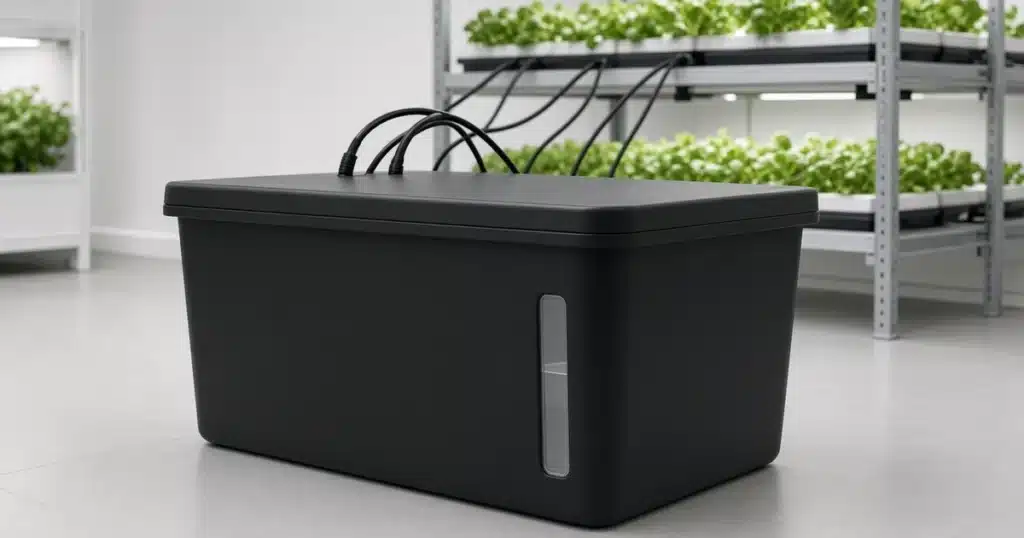
Pick an opaque tank. Light reaching the solution feeds algae. Black or dark plastic tanks block light well.
Use a lid to block light, dust and debris and cut evaporation.
Choose a food grade container if possible. Wide openings make cleaning easier.
Mark the fill line on the side. A quick look tells you how much the plants used since the last check.
Can you run one tank for many plants?
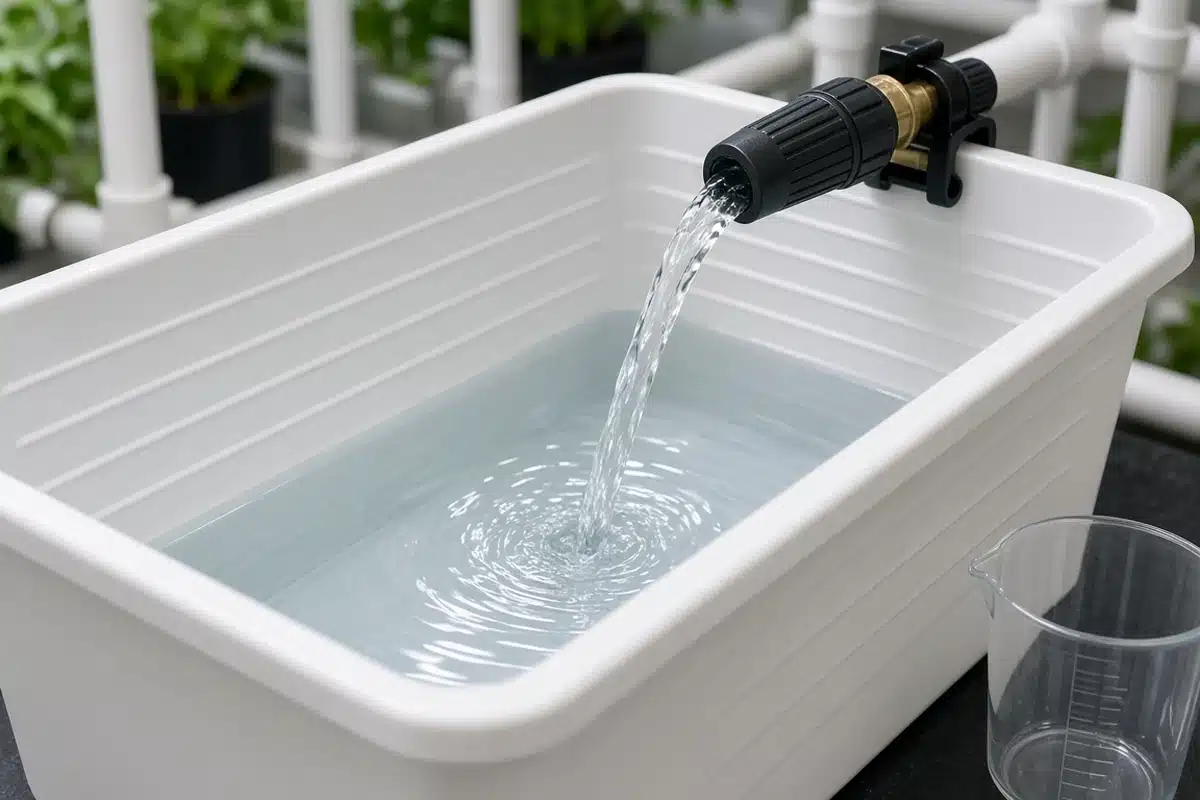
Yes, many home systems feed a full row of plants from one tank. This makes checks simple, since you check one solution instead of many.
The trade off is shared risk. A pH swing or warm spell reaches every plant at once.
Some growers split plants into two or three smaller systems. If one tank has trouble, the others carry on. Pick the layout that fits your space and how often you can check in.
How to: step by step
- List your system type and crop.
- Look up volume guidance for that system.
- Multiply by the number of plants.
- Add a buffer for evaporation and uptake.
- Choose an opaque reservoir with a lid.
- Mark the fill line and check it often.
Our post on caring for your hydroponic system covers solution changes and cleaning.
How does size change daily care?
With a larger reservoir, you top off less often. You adjust pH and EC less often.
Big tanks take longer to change. Plan a way to drain them, such as a pump with a hose to a drain.
Time your changes around growth stages. Our post on the growing schedule for your hydroponics explains how needs shift through a crop.
The room matters too. Our post on creating the right environment for your hydro setup covers temperature around the tank.
Troubleshooting
If pH swings fast, your reservoir is likely too small. Size up.
Solution warms quickly. Volume is low. Add volume or shade the tank.
Frequent top offs. Plants are large. Add a larger tank.
Pump runs dry. The level drops below the intake. Raise the fill line or size up.
Overflow when the pump stops. Lines drain back into a full tank. Leave room below the rim.
The right tank makes every other step easier. Kind Seed Co carries cannabis seeds for growers sizing a new hydroponic setup.
Sources
- Hydroponic production of edible crops: nutrient film technique (NFT) systems (SPES-463), Virginia Cooperative Extension, Hydroponic production of edible crops
- Hydroponic production of edible crops: deep water culture (DWC) systems (SPES-464), Virginia Cooperative Extension, Hydroponic production of edible crops
- Tomatoes, peppers and cucumbers in small scale soilless and hydroponic systems (W 844-C), University of Tennessee Extension, Tomatoes
FAQ
Is bigger always better?
A larger tank is steadier, but it costs more and is harder to change. Size for your crop with a sensible margin.
How often should a reservoir be changed?
Many growers change solution on a regular schedule. Follow your nutrient maker and change sooner if pH or EC drifts badly.
Can several systems share one reservoir?
Yes, if they grow similar crops with similar needs. A shared tank also shares any problem across all systems.
Does reservoir color matter?
Yes. Opaque dark tanks block light and slow algae. Clear tanks let light in.
Should the tank have a lid?
Yes. A lid blocks light, stops debris and cuts evaporation.



