
Hydroponic Air Pump Noise: Simple Fixes for a Quieter Setup
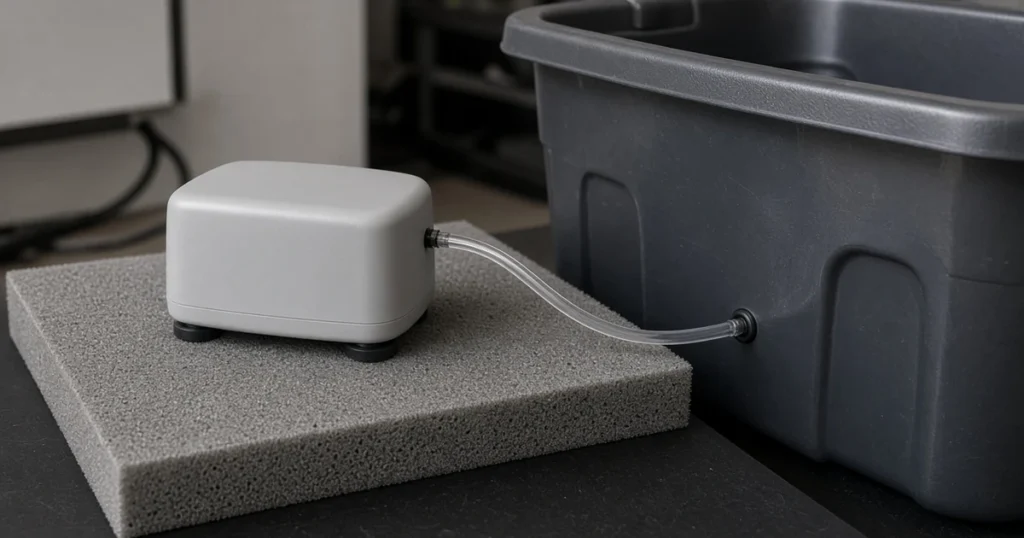
Hydroponic air pump noise is the hum or rattle a pump makes as it pushes air to the stones in a reservoir. Most of the sound comes from the pump shaking against a hard shelf or floor. You can quiet it without cutting the air roots need.
The short answer
Set the pump on a soft pad away from walls and hollow shelves. Let the tubing hang loose to stop rattles. Leave the pump running, since deep water culture needs steady aeration. Clean or swap clogged air stones so the pump is not straining against them.

Why do air pumps get loud?
An air pump vibrates as it works, and a hard or hollow surface spreads and amplifies that vibration. Tubing that touches a wall or a tank can rattle in time with it. A clogged air stone also makes the pump work harder.
The air still matters. Oregon State University Extension says deep water culture systems require effective aeration because there is little water movement and low air exchange. Air pumps and stones usually provide it. The University of Minnesota Extension describes an air stone as a porous stone joined by tubing to an outside pump that releases air as tiny bubbles. Routine checks are in caring for your hydroponic system.
What reduces vibration noise?
Place the pump on a folded towel, a foam block or a rubber mat. Hang it from a hook or set it on a solid floor instead of a hollow shelf. Leave a few inches of space between the pump and any wall or tank. Route the tubing to hang free. Compare system layouts in indoor marijuana grow systems.
When should you replace the pump parts?
When a pump gets louder over time or its bubbles weaken, check the stones first, then the pump. Oregon State lists regular checks on aeration equipment as part of routine upkeep, along with pH and nutrient levels. UMass Amherst notes that pumps and lighting add to electricity costs, so a smooth running pump also costs less.
Quieter pump setup
| Need | What to do | Why |
|---|---|---|
| Base | Soft pad or hook | Less vibration |
| Space | Gap from walls and tanks | No rattle |
| Tubing | Hang free | Less contact noise |
| Air | Leave the pump running | DWC needs aeration |
| Upkeep | Check stones and pump often | OSU routine |
Sources: Oregon State University Extension, University of Minnesota Extension, UMass Amherst.

How to: step by step
- Turn off the pump and note where it sits.
- Move it to a solid floor or a hook.
- Set it on a soft pad.
- Pull it away from walls and the reservoir.
- Let the tubing hang free.
- Turn the pump on and check that every stone still bubbles.
Troubleshooting
Loud buzz on a shelf: the shelf amplifies vibration. Move the pump to a pad on the floor.
Rattling tubing: it touches a hard surface, so reroute it.
Pump strains and bubbles are weak: a stone is clogged. Clean or swap it. Room setup notes are in hydro setup environment, and media options are in hydroponic in different mediums.
Kind Seed Co shares these notes for growers who run a reservoir in a living space.
Sources
- Hydro hints: deep water culture (EM 9455), Oregon State University Extension
- Hydroponic systems, UMass Amherst Center for Agriculture, Food and the Environment
- Small scale hydroponics, University of Minnesota Extension
FAQ
Can I turn the air pump off to stop the noise?
Not for deep water culture. Oregon State University Extension says these systems need effective aeration because there is little water movement.
What is the simplest fix for a loud pump?
Set it on a soft pad and move it off hollow shelves. Most of the noise is vibration spreading into hard surfaces.
Why does my pump get louder over time?
A clogged air stone can make the pump work harder. Check the stones first, then the pump.
Does tubing make noise?
It can. Tubing that touches a wall or tank can rattle. Let it hang free.
Does the pump add to running costs?
Yes. UMass Amherst notes that pump and lighting operation increase electricity costs in hydroponic systems.



