
Grow Light for Haworthiopsis: Zebra Succulents Under LEDs
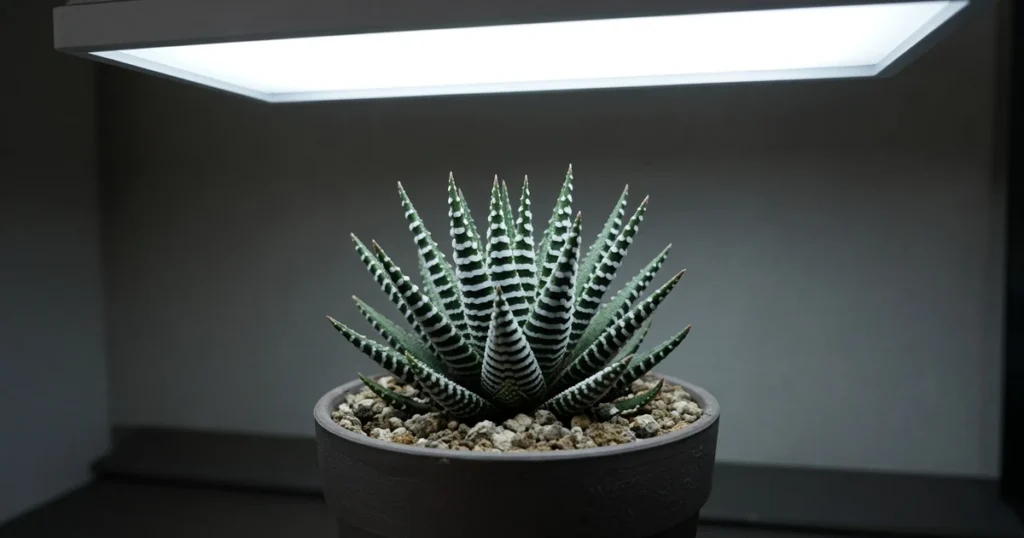
A grow light for haworthiopsis gives zebra plants bright light when a window falls short. NC State Extension says Haworthiopsis attenuata tolerates low light but prefers bright indirect sunlight, which also brings out the leaf colors. The University of Wisconsin Madison Extension adds that haworthias grow well under artificial plant lights.
The short answer
Give haworthiopsis bright, indirect light from a full spectrum LED set above the plants on an adjustable fixture. Pick a light with a CCT near 6500K and a CRI above 85. Run it on a timer with dark hours each night. Watch the leaves: stretched growth means too little light, red or white leaves mean too much.

How much light does haworthiopsis need?
NC State says zebra plants are somewhat tolerant of low light but prefer bright indirect light. UW Madison says haworthias grow well in an east or west window with a few hours of direct light and bright indirect light for the rest of the day. A south window can be too bright for some species without sheer curtains. Compare light setups in grow lights for cannabis.
Which grow light suits haworthiopsis?
The University of Vermont Extension Master Gardener notes advise a quality, energy efficient, full spectrum light spread evenly over the growing area. Natural light has a CCT of 6500K, so pick a bulb near that rating. Good full spectrum lights have a CRI above 85. UVM says LED grow lights have higher CCT and CRI ratings and are more efficient and durable than other types. Buy an adjustable fixture to change the height. Read led light distance cannabis for distance basics.
UVM also notes that plants need dark periods, so turn the lights off daily. Its seedling advice is 16 to 18 hours a day, which is for seedlings rather than succulents. A programmable timer from grow light timers makes a steady schedule easy.
How do you tell if haworthiopsis has the right light?
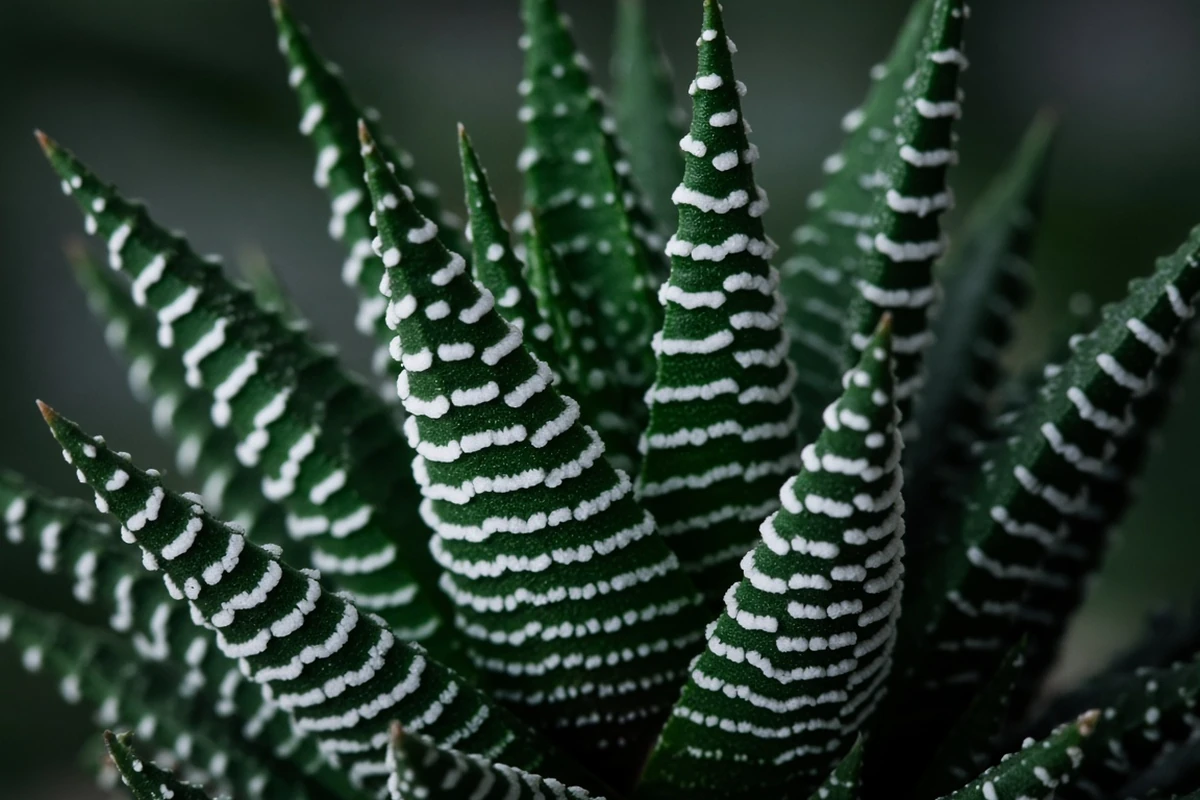
UW Madison says compact growth and darker, richer color develop under brighter light. In too little light the leaves stretch and lose color. NC State says the zebra cactus, Haworthiopsis fasciata, turns deep red or white and dries up in too much sun. Fading leaf patterns point to too little light. UVM adds that brown leaves or edges can mean a light is too close.
Haworthiopsis under grow lights
| Need | What to do | Why |
|---|---|---|
| Light type | Full spectrum LED | UVM guidance |
| Color | CCT near 6500K, CRI above 85 | Close to natural light |
| Height | Adjustable fixture | Change distance as needed |
| Dark | Timer with dark hours | Plants need darkness |
| Warmth | 60 to 80°F indoors | NC State range |
Sources: NC State Extension, University of Wisconsin Madison Extension, University of Vermont Extension.
How to: step by step
- Pot the plant in a well draining cactus or succulent mix.
- Hang a full spectrum LED on an adjustable fixture above it.
- Set a timer so the light runs by day and turns off at night.
- Water only after the mix dries out.
- Check leaf color and shape every week.
- Raise or lower the light based on what the leaves show.
Troubleshooting
Stretched leaves and faded stripes: too little light. Lower the light or add hours.
Deep red or white, dry leaves: too much light. Raise the light or move the plant back.
Brown leaf tips: the light is too close. Move the light back.
Kind Seed Co shares these notes for indoor growers, and you can browse cannabis seeds if you also grow under lights.
Sources
- Haworthiopsis attenuata (zebra plant), NC State Extension Gardener Plant Toolbox
- Haworthiopsis fasciata (zebra cactus), NC State Extension Gardener Plant Toolbox
- Haworthias: super succulents for small spaces, University of Wisconsin Madison Extension
- Tips for choosing grow lights, University of Vermont Extension Master Gardener
FAQ
Is haworthiopsis the same as haworthia?
Not quite. NC State Extension says the genus Haworthiopsis was formerly included within Haworthia. Many care notes for haworthias still apply.
Can zebra plants take direct sun?
Some. UW Madison says haworthias grow well with a few hours of direct light in an east or west window. NC State says too much sun can turn the zebra cactus red or white.
Should the grow light run all day and night?
No. The University of Vermont Extension notes that plants need periods of darkness, so use a timer.
Why is my zebra plant turning red?
NC State says the zebra cactus turns deep red when it gets too much sunlight, showing it is stressed. Give it a little less light.
What temperature suits zebra plants indoors?
NC State says the zebra plant does well between 60 and 80 degrees and should be held away from cold drafts and temperatures below 50°F.



