Rutabaga Cracking: Uneven Moisture and Fall Harvest
The short answer
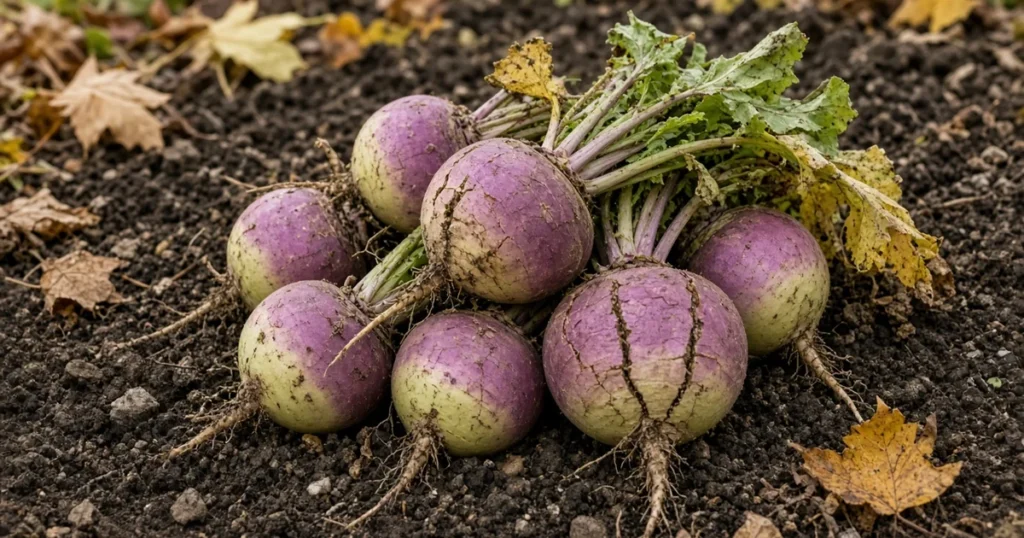
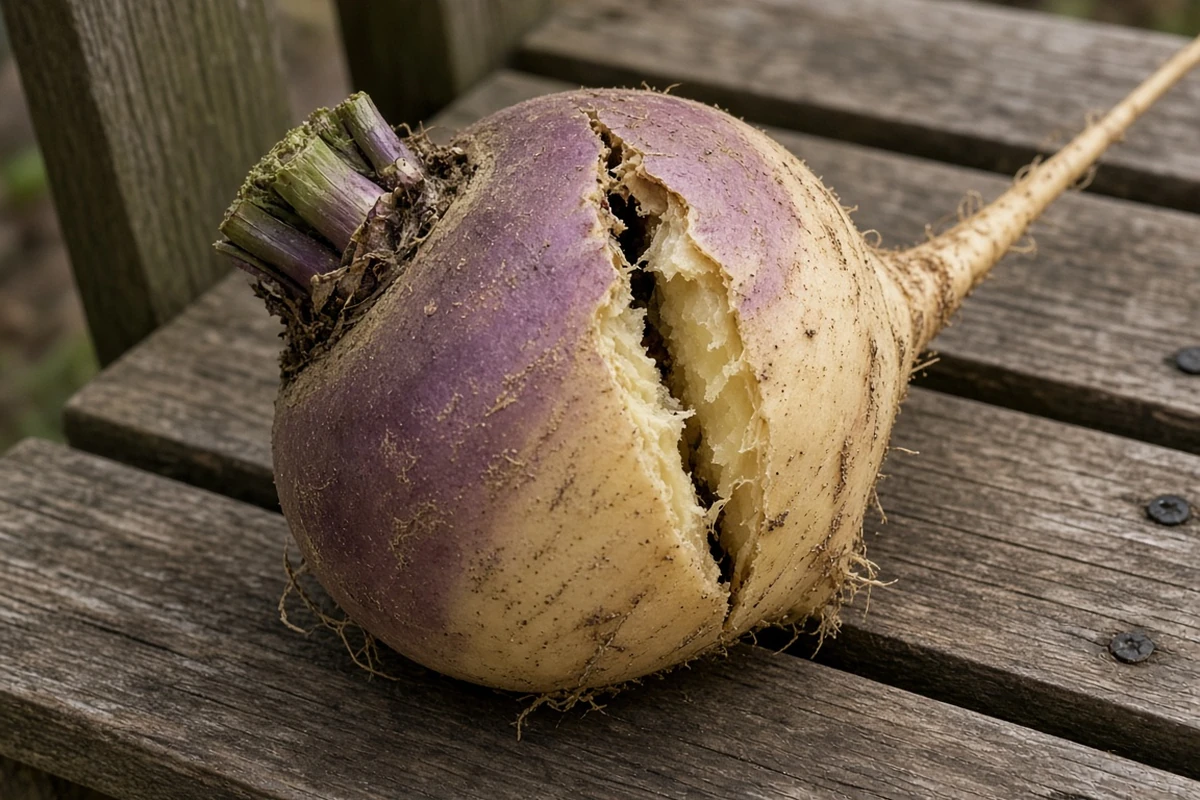
Rutabaga cracking usually traces to uneven soil moisture. Utah State Extension says moisture fluctuations cause cracking, woody roots and pithiness. University of Minnesota Extension describes rutabagas as a crop planted in summer for fall harvest. Water evenly, mulch the bed and pull roots at a good size in cool fall.
Why do rutabagas crack?
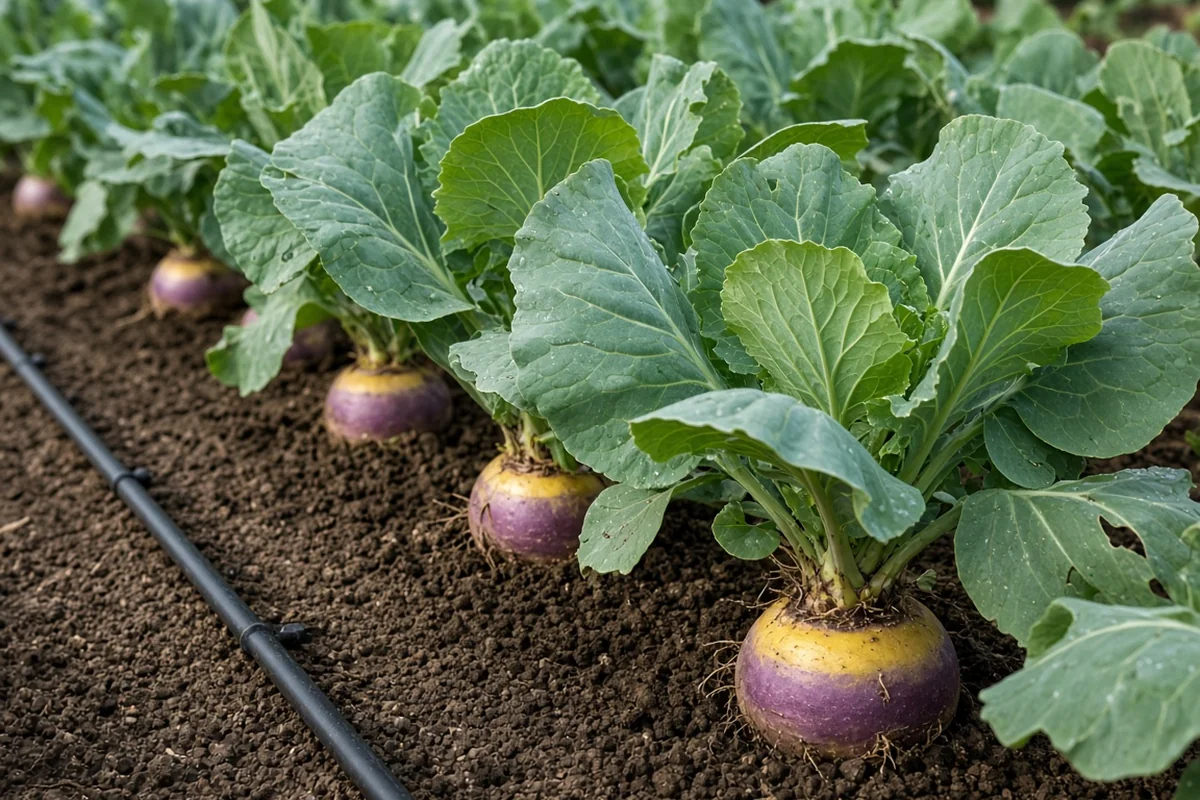
Utah State Extension ties cracking to moisture fluctuations and advises avoiding water or fertilizer stress. University of Minnesota Extension adds that drought stress makes roots bitter or woody. A dry stretch followed by heavy rain or watering is the classic pattern. Plant stress of all kinds is covered in the effects of environmental stresses on weed plants.
How does watering affect cracking?
Utah State Extension recommends 1 to 2 inches of water a week, using drip irrigation where possible, plus mulch to steady soil moisture. NC State Extension advises watering deeply to about 6 inches and avoiding light, shallow watering. Check the soil before watering, as shown in checking soil moisture by feel.
When should you harvest rutabagas?
NC State Extension suggests harvesting at 3 to 5 inches across and notes frost improves flavor. Utah State starts harvest at 4 inches and says roots handle light frost. University of Minnesota Extension says rutabagas can stay in the ground until September, October or later. Mulch 3 to 4 inches deep helps, as explained in mulch for cannabis.
Rutabaga basics
| Factor | Guide | Source |
|---|---|---|
| Season | Fall crop, planted in summer | UMN and USU |
| Water | 1 to 2 inches a week | Utah State |
| Mulch | 3 to 4 inches deep | UMN |
| Thinning | 8 inches apart | UMN |
| Harvest size | 3 to 5 inches across | NC State |
| Days to mature | About 90 to 100 | NC State |
Sources: Utah State University Extension, University of Minnesota Extension, NC State Extension.
How to: step by step
- Sow in midsummer for a fall harvest.
- Thin seedlings to about 8 inches apart.
- Water evenly through dry spells, about 1 to 2 inches a week.
- Mulch to hold soil moisture.
- Check root size from early fall.
- Harvest after light frosts, at 3 to 5 inches across.
Troubleshooting
Split roots: uneven soil moisture. Water evenly and mulch.
Small roots: crowding. Thin to 8 inches.
Woody or bitter roots: drought stress or hot weather. Grow as a fall crop and water evenly, per Utah State and Minnesota Extension.
Rutabagas reward steady care. Kind Seed Co shares more root crop notes on the blog.
Sources
- Growing turnips and rutabagas, University of Minnesota Extension
- Brassica napus Napobrassica Group (rutabaga), NC State Extension Gardener Plant Toolbox
- Extension Gardener Handbook, chapter 16: Vegetable gardening, NC State Extension
- How to grow rutabagas and turnips in your garden, Utah State University Extension
FAQ
Can you eat cracked rutabagas?
The Extension sources do not address eating cracked roots. Utah State Extension links moisture swings to cracking, woody roots and pithiness, so a cracked root may also be tougher. Trim away damaged parts and judge texture before cooking, and plan to water more evenly next season.
Does frost make rutabagas sweeter?
NC State Extension notes frost improves rutabaga flavor. Utah State Extension adds that roots tolerate light frost and that rutabagas grown in hot weather do not develop their sweetness, which is why both advise growing them as a fall crop.
How big should rutabagas get?
NC State Extension says to harvest roots at 3 to 5 inches across. Utah State Extension suggests starting harvest when roots reach 4 inches in diameter. Rutabagas take about 90 to 100 days, roughly twice as long as turnips, per NC State.
Are rutabagas and turnips the same?
No. University of Minnesota Extension lists rutabaga as Brassica napus and turnip as Brassica rapa. NC State describes rutabaga as a cross of turnip and cabbage, larger, denser and sweeter than turnip, with a longer time to maturity.
Does mulch help rutabagas?
Yes. Utah State Extension recommends mulch to even out soil moisture, and University of Minnesota Extension suggests mulch 3 to 4 inches deep. NC State Extension notes organic mulches conserve soil moisture, which helps limit the swings that lead to cracking.