
Spinach Yellow Leaves: Nitrogen, Wet Soil and Cold

The short answer
Spinach yellow leaves most often point to low nitrogen or soggy soil. NC State Extension says nitrogen deficiency shows as light green to yellow foliage that appears first on older growth. Utah State Extension advises fertile, well drained soil and a soil analysis before feeding. Check drainage, see which leaves yellow and feed lightly.
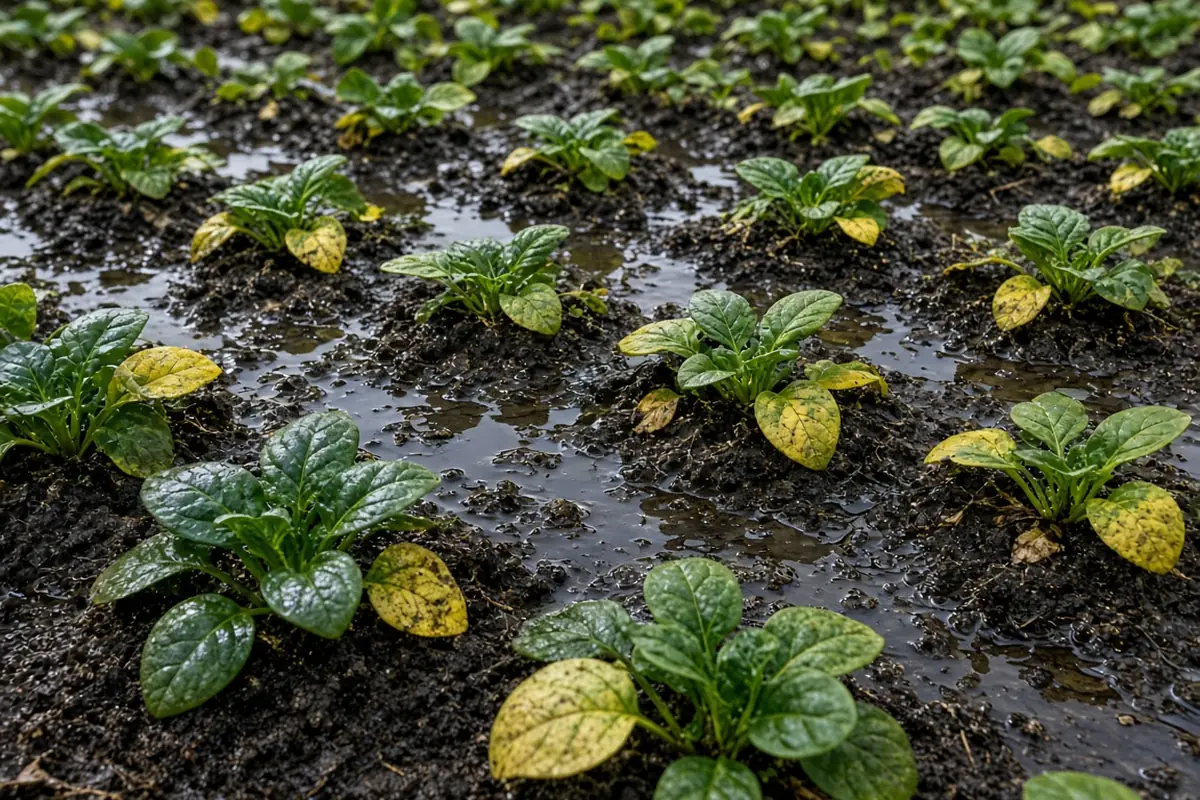
Why are my spinach leaves turning yellow?
Low nitrogen and poor drainage are the common causes in the Extension sources. NC State Extension notes poorly drained soils have less pore space and slow drainage may increase root diseases. Utah State Extension advises avoiding water or fertilizer stress. Read more on stress in the effects of environmental stresses on weed plants.
How do you tell nitrogen from cold or wet soil?
See which leaves turn first. Nitrogen shortage shows on older growth, per NC State, as covered in nitrogen deficiency in cannabis plants. Wet soil problems come with soggy ground, and NC State notes gray subsoil is a sign of poor drainage. Cold is less likely. Utah State Extension says temperatures down to 32°F do not seriously harm young plants, and NC State says spinach survives 20°F.
What should you fix first?
Fix drainage first, since no fertilizer helps roots in water. NC State Extension notes organic matter improves drainage. A simple check is shown in soil drainage checks for cannabis beds. Then get a soil analysis before adding nitrogen, as Utah State Extension advises.
Spinach basics
| Factor | Guide | Source |
|---|---|---|
| Soil | Fertile and well drained | Utah State |
| Feeding | ¼ cup 21 0 0 per 10 feet at thinning | Utah State |
| Temperature | Thrives at 75°F or below | Utah State |
| Cold | Survives 20°F | NC State |
| Nitrogen signs | Yellow on older growth first | NC State |
Sources: Utah State University Extension, NC State Extension.

How to: step by step
- Look at which leaves are yellow, old or new.
- Check soil moisture and drainage.
- Note recent weather, including heat that may cause bolting.
- Get a soil analysis before feeding.
- Side dress lightly with nitrogen if the analysis shows a need.
- Improve drainage with raised rows or compost.
Troubleshooting
Old leaves yellow: low nitrogen. Feed lightly after soil analysis.
Yellow, wilted in wet soil: poor drainage. Raise the bed and add organic matter.
Yellow after cold nights: spinach tolerates cold well, per NC State and Utah State, so check nitrogen and drainage as well.
Spinach grows easily in good soil. Kind Seed Co shares more leafy green notes on the blog.
Sources
- Spinach in the garden, Utah State University Extension
- Spinacia oleracea (spinach), NC State Extension Gardener Plant Toolbox
- Extension Gardener Handbook, chapter 1: Soils and plant nutrients, NC State Extension
FAQ
Can yellow spinach leaves turn green again?
The Extension sources do not say whether a yellowed leaf regreens. NC State Extension notes nitrogen shortage shows first on older growth, so the fix shows up mainly in new leaves. Correct the cause and judge the plant by its new growth.
Should I pick yellow leaves?
The sources do not give a rule on this. Removing yellowed outer leaves is a matter of looks and eating quality. Focus on the cause, such as low nitrogen or soggy soil, so new leaves come in green.
Does spinach need a lot of fertilizer?
No. Utah State Extension advises a soil analysis before fertilizing and suggests about ¼ cup of 21 0 0 per 10 feet of row when plants are thinned. It also advises avoiding water or fertilizer stress.
Is yellowing a disease?
Not always. NC State Extension describes nitrogen deficiency as light green to yellow foliage on older growth, and notes slow drainage may increase root diseases. Check feeding and drainage first before assuming a disease.
Why is my spinach going to seed?
Utah State Extension says spinach thrives at 75°F or below and heat causes flowering and bitterness. NC State Extension notes bolting in heat and long days. Grow it in cool spring or fall weather.



