
Growing Hydroponic Flowers: Zinnias, Marigolds and Nasturtiums

The short answer
Hydroponic flowers such as zinnias, marigolds and nasturtiums can grow in simple bucket, bag or channel systems. University of Florida work grew cut flower zinnias in perlite bags with support netting. Virginia State University studies cut flowers in controlled systems. Give flowers bright light, support for tall stems and steady feeding.
Most people think of lettuce and herbs when they picture hydroponics. Flowers fit just as well and bring color to an indoor setup.
Which flowers grow well in hydroponics?
Zinnias are a top pick. They grow fast, bloom heavily and come in many colors and heights. Cut flower types send up long stems for vases.
The UF/IFAS report on greenhouse cut flower zinnia production grew zinnias in a greenhouse in bags of perlite fed by drip lines. The plants were held up with horizontal netting so tall stems stayed straight.
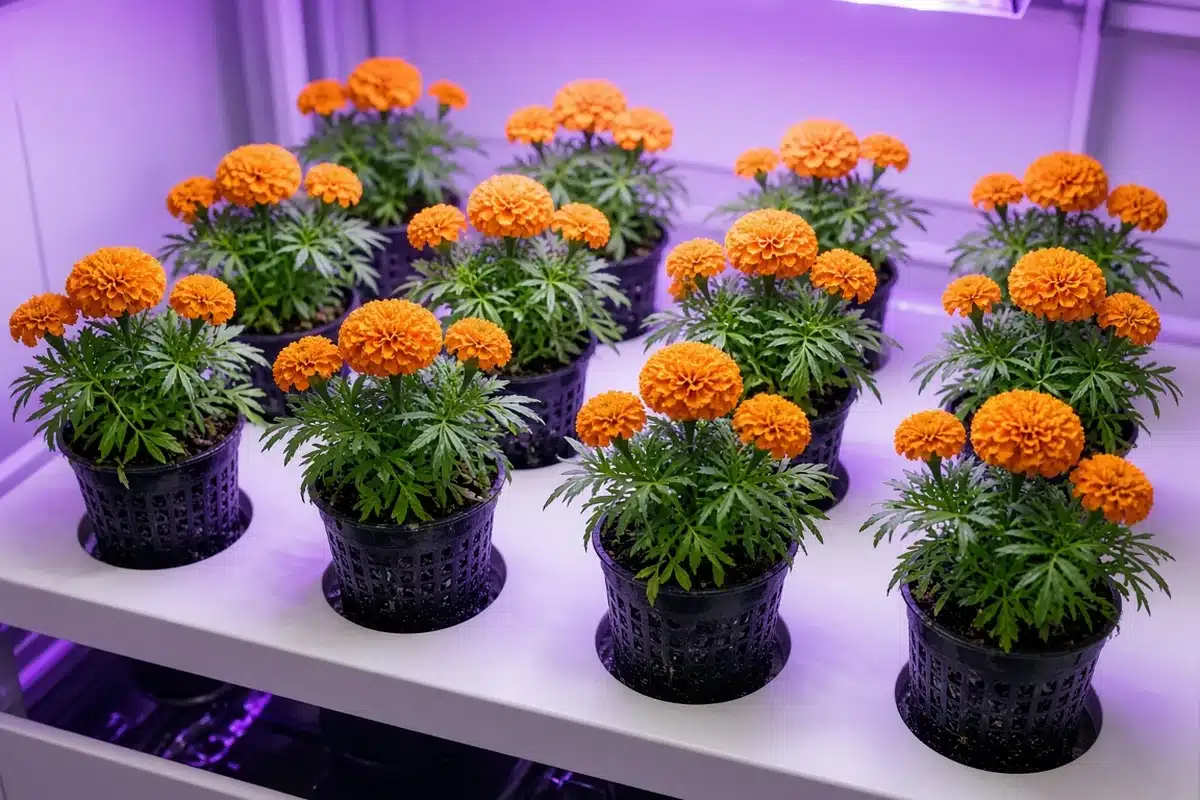
Marigolds are compact and tough. Dwarf types suit small systems and shelves, and they bloom for a long season.
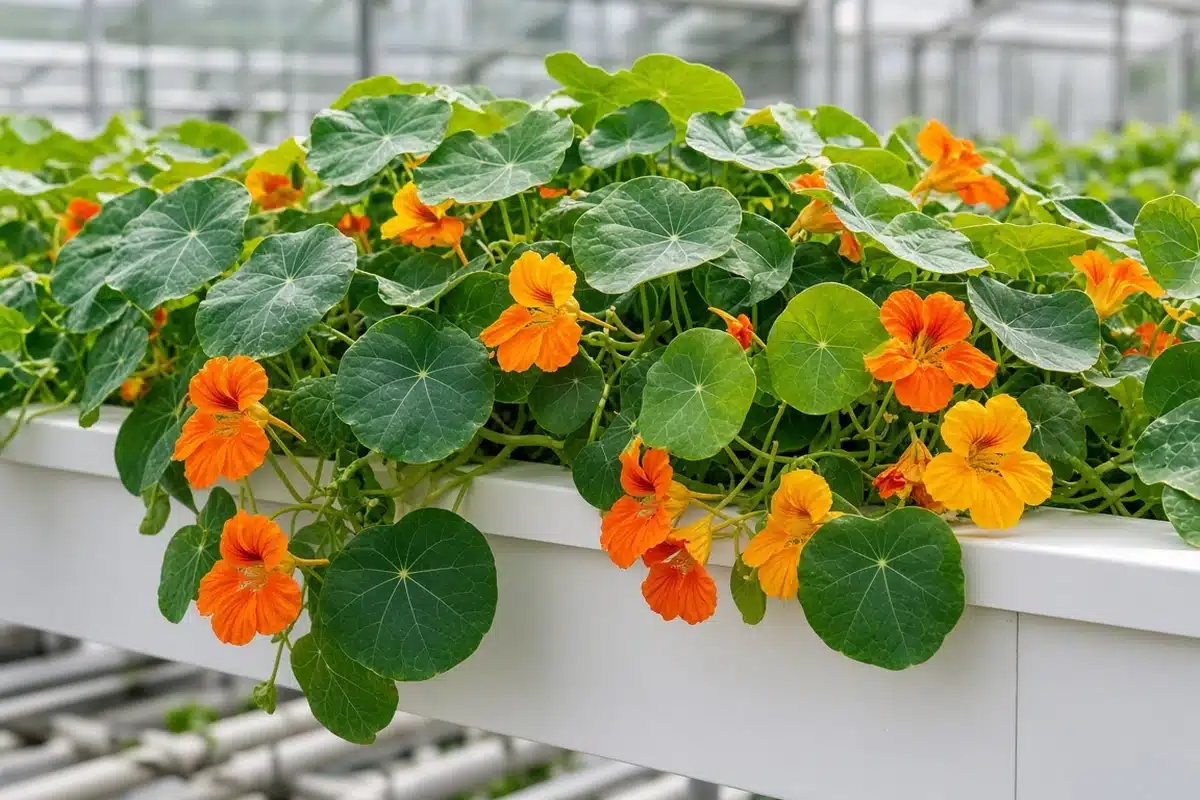
Nasturtiums trail or climb. They do well in containers with room to spill over the edge. Their leaves and flowers are both edible.
Other options include calendula, dwarf sunflowers and snapdragons. Pick compact types if your space is short.
| Flower | Height | Notes |
|---|---|---|
| Cut flower zinnias | Tall | Grown in perlite bags with netting in UF/IFAS work |
| Dwarf marigolds | Short | Compact plants that fit small systems |
| Nasturtiums | Trailing | Edible leaves and flowers, suit containers |
| Mixed cut flowers | Varies | Studied in controlled systems by Virginia State University |
Sources: UF/IFAS North Florida Research and Education Center, Virginia State University.
Which systems suit flowers?
Flowers with deep roots and tall stems do well in containers. Buckets and bags filled with perlite or coco, fed by drip, give each plant its own space.
The Virginia State University cut flowers in CEA page explains the program’s work on growing cut flowers in controlled environments. This kind of growing lets flowers bloom out of season and in tight spaces.
Shorter flowers such as dwarf marigolds can grow in channels or rafts, like leafy greens. The University of Tennessee Extension guide to leafy crops in small hydroponic systems describes small rafts, channels and container setups that home growers can adapt.
Our post on hydroponic in different mediums compares perlite, coco and clay for container systems.
How do you support and feed hydroponic flowers?
Tall flowers need support. Hydroponic media doesn’t hold stems as firmly as soil. Add netting or stakes while plants are still small. Stems grow up through the net and stay upright.
Light drives blooms, and flowers need more light than leafy greens. Give them a sunny greenhouse spot or a bright LED with long daily hours.
Feed with a complete nutrient made for flowering plants. Hold pH and EC steady. Check the reservoir often as plants grow and drink more.
Remove spent blooms, which is called deadheading. Many gardeners find it helps zinnias and marigolds bloom longer.
Our post on caring for your hydroponic system covers routine checks and cleaning.
How do you start flowers from seed?
Start seeds in rockwool cubes, peat plugs or another starter plug. Hold them warm and moist until they sprout.
Most of these flowers sprout within about a week in warm conditions. Nasturtium seeds are large. Soaking them overnight can speed things up.
Move seedlings to the main system once roots poke out of the plug. Set each one in a net pot or bag with the plug below the media surface.
Handle seedlings by the leaves, not the stem. A crushed stem rarely recovers.
When do you harvest cut flowers?
Timing depends on the flower. Zinnias are ready when the stem below the bloom feels firm. A simple check is to hold the stem a few inches below the flower and give it a gentle shake. If the head stays upright, it’s ready.
Cut marigolds when blooms are fully open. Cut nasturtiums any time for eating or small vases.
Cut early in the day when plants are full of water. Put stems straight into a clean bucket of cool water.
Each cut on a zinnia encourages side shoots. Cut deep, above a pair of leaves, and the plant will send up new stems.
How long does a flower crop last?
Zinnias and marigolds bloom for many weeks with regular cutting. Over time, stems get shorter and blooms smaller.
Many growers start a new round of seedlings every few weeks. Young plants take over as older plants slow down. This gives a steady supply of flowers.
Nasturtiums continue growing as long as they have room. Trim long vines to hold them in bounds.
How to: step by step
- Choose compact or cut flower varieties.
- Start seeds in plugs.
- Move seedlings to buckets, bags or channels.
- Add netting or stakes for tall stems.
- Give flowers bright light for long hours.
- Feed steadily and remove spent blooms.
Can flowers help other plants?
Flowers bring more than color. Outdoors and in greenhouses with open vents, blooms attract bees and other pollinators.
Our post on what roles bees play in outdoor gardens explains how pollinators move through a garden.
Indoors, flowers simply make the space nicer to work in. Many growers mix a few flower plants among their herbs.
Troubleshooting
Floppy stems. There’s no support. Add netting early.
Few blooms. Light levels are too low. Add light hours or move the plants.
Powdery leaves. Airflow is poor. Space plants and add a fan.
Yellow lower leaves. The plant likely needs more nutrients. Check EC and feed.
Leggy seedlings. Light is too far away. Lower the light or move seedlings closer.
Hydroponic flowers turn a food garden into a cutting garden too. Kind Seed Co shares more garden ideas in outdoor growing.
Sources
- Greenhouse cut flower zinnia production (99-11), UF/IFAS North Florida Research and Education Center, Greenhouse cut flower zinnia production (99-11)
- Cut flowers (CEA), Virginia Cooperative Extension, Virginia State University, Cut flowers (CEA)
- Leafy crop production in small scale soilless and hydroponic systems (W 844-B), University of Tennessee Extension, Leafy crop production in small scale soilless and hydroponic systems (W 844-B)
FAQ
Do hydroponic flowers last longer in a vase?
Vase life depends mostly on the type and how you cut and care for stems. Cut in the cool morning and use clean water.
Can nasturtiums be eaten?
Yes. Nasturtium leaves and flowers are edible and have a peppery taste.
Do flowers need different nutrients?
Flowers do well with a complete hydroponic nutrient. Many growers use a bloom formula once buds form.
Can flowers share a system with vegetables?
Yes, if they need similar pH and feeding. Many flowers grow well beside herbs and greens.
How tall do cut flower zinnias grow?
Cut flower types can grow tall. Use netting to hold stems straight.



