
Slime Mold and Artillery Fungus in Cannabis Bed Mulch
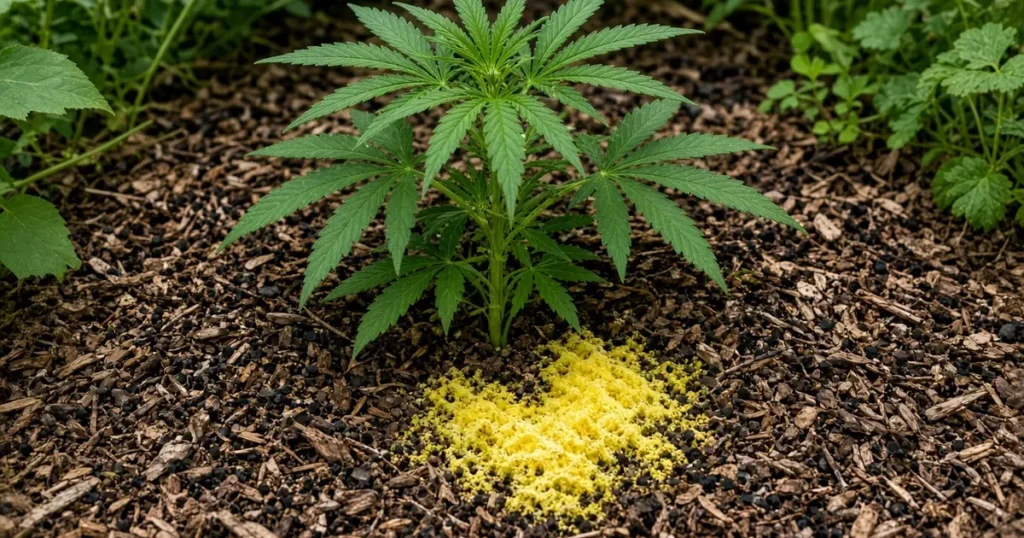
Quick answer: Bright yellow or orange blobs in mulch are almost always slime molds, and Penn State says they are not harmful to plants. They feed on bacteria in the mulch and fade on their own. Artillery fungus is the one mulch fungus that causes real trouble, because it shoots sticky black spore masses toward light surfaces, including the undersides of nearby leaves, siding and cars. University of Delaware Cooperative Extension says raking, avoiding hardwood mulch and blending in mushroom compost can help.
Why Do Fungi Grow in Garden Mulch?
Because mulch is food for decomposers. Penn State explains that wood and bark break down over time, mostly through bacteria and fungi that get energy from compounds such as cellulose, lignin and simple sugars. Delaware adds that fungi keep fallen leaves, twigs and branches from piling up in woods and yards.
Penn State says the fungi in mulch are a natural part of that environment. Some break down wood directly, while slime molds feed on the bacteria and other tiny life in the mulch. It notes that these fungi do not harm landscape plants and carry no known health hazards unless someone eats them. They show up from April through October, usually after rain.
Mulch is still worth using around cannabis. Penn State lists protecting soil, saving moisture, moderating soil temperature and limiting weeds among its benefits. See our cannabis mulch guide for types and depth.
What Does Slime Mold Look Like?
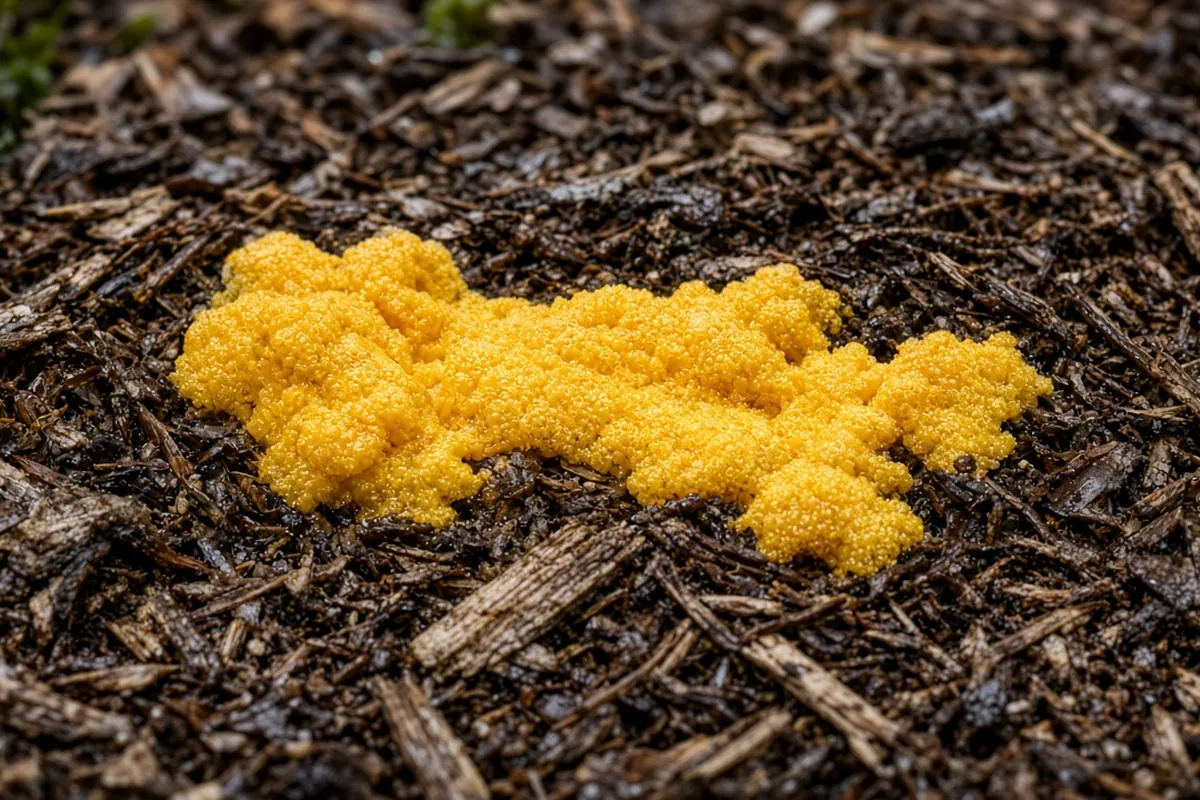
A bright, slimy patch that later turns to powder. Penn State says slime molds start as brightly colored yellow or orange patches that range from a few inches to over a foot wide, and that they are sometimes called dog vomit fungus. They then dry out, turn brown and end up as a white, dry, powdery mass full of tiny dark spores. Delaware describes a soft, gooey patch in white, orange or yellow that spreads fast across mulch.
Penn State calls slime molds a temporary nuisance confined to small areas. Delaware notes they may come back after rain.
Is Slime Mold Harmful to Cannabis?
No. Penn State answers this directly, saying slime molds are not a problem because they are feeding on bacteria in the mulch. Delaware calls them harmless.
You can leave a slime mold to break down. If its look bothers you, Penn State suggests tossing it into a compost pile or household trash, or moving it to a spot away from your mulch. Delaware says it can simply be raked away. For white fuzz on the surface of potting mix rather than in mulch, our post on algae on cannabis soil covers another common surface growth.
Common Mulch Fungi Compared
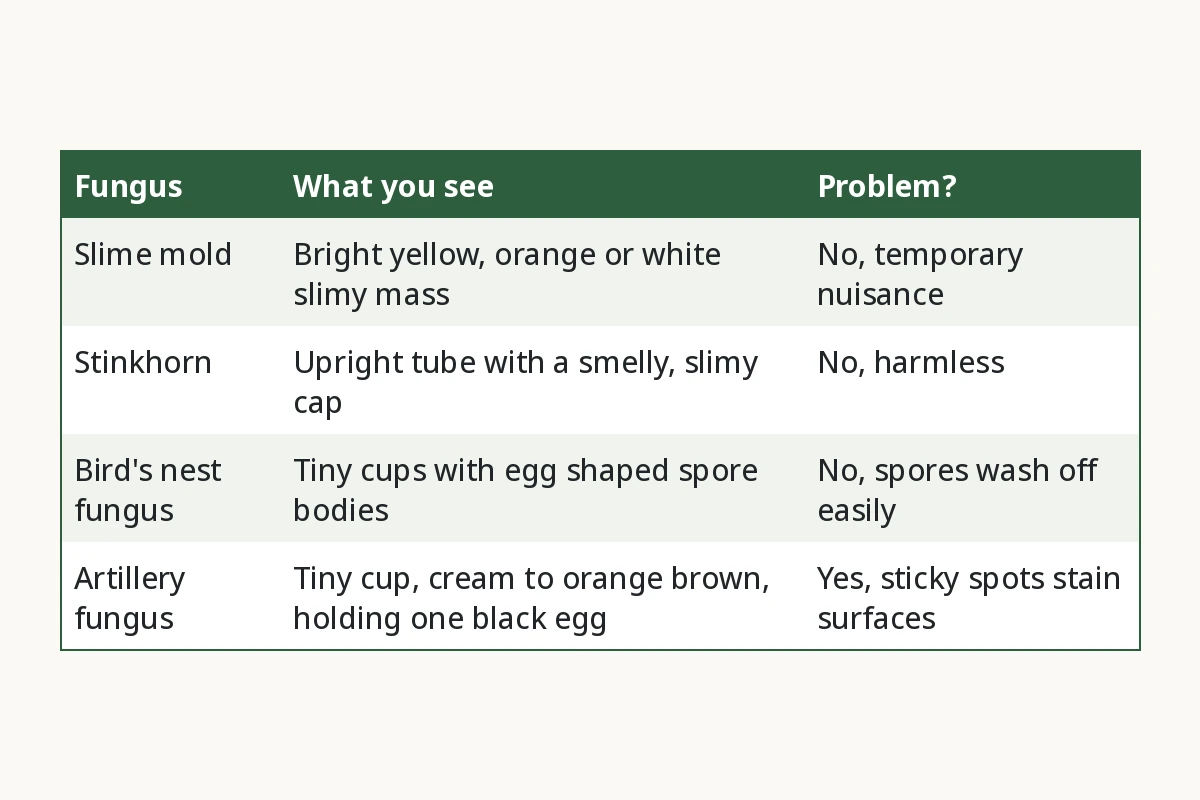
| Fungus | What you see | Problem? |
|---|---|---|
| Slime mold | Bright yellow, orange or white slimy mass | No, temporary nuisance |
| Stinkhorn | Upright tube with a smelly, slimy cap | No, harmless |
| Bird’s nest fungus | Tiny cups with egg shaped spore bodies | No, spores wash off easily |
| Artillery fungus | Tiny cup, cream to orange brown, holding one black egg | Yes, sticky spots stain surfaces |
Penn State and Delaware both describe bird’s nest cups as up to 1/4 inch across, and both put artillery fungus cups at about 1/10 inch. Delaware says stinkhorns can grow 6 to 7 inches tall overnight. If you see true mushrooms with caps growing from your containers, our post on mushrooms in cannabis pots explains them.
What Is Artillery Fungus?
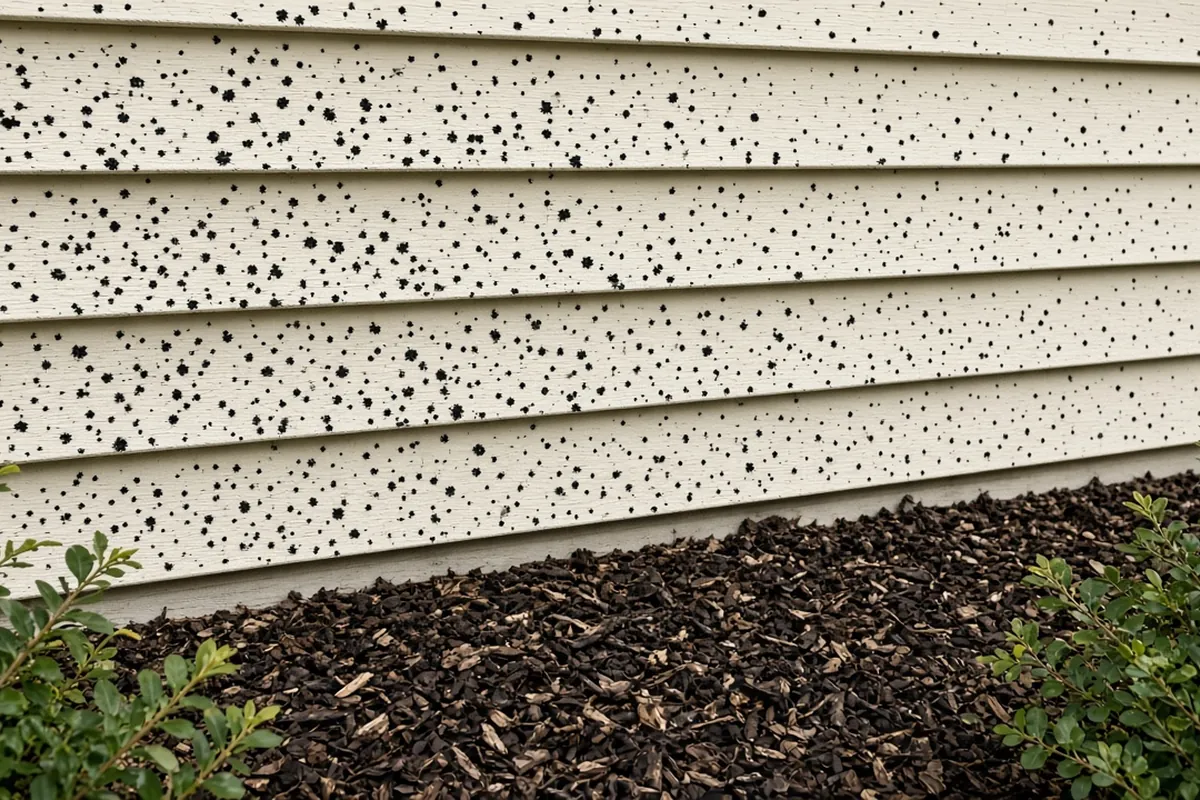
It is a tiny fungus that launches its spores. Delaware explains that water and nutrients build up inside the small cup until pressure fires the dark spore body toward the nearest light source, up to several feet away. Penn State says wind can carry the spore masses up to a second floor wall.
The trouble is cleanup. Penn State says each spore mass sticks like a small speck of tar, is very hard to remove without damaging the surface and leaves a stain. It notes the spots can also land under the leaves of plants that grow in mulched beds. Delaware says a scrub brush with soapy water can lift spots that have not yet dried.
Penn State says mulch with artillery fungus can look matted and paler than the mulch around it.
What Makes Artillery Fungus Worse?
Hardwood mulch, moisture and shade. Delaware says growth is favored by hardwood mulch, heavy rain and irrigation of foundation plantings. It adds that artillery fungus is most troublesome on the north side of buildings, where shade keeps things damp. Delaware also advises against mulch made from dead or diseased trees.
For a cannabis bed near a light colored wall, fence or parked car, those conditions are worth avoiding. Water at the base with drip lines rather than wetting the mulch from above. Our post on setting up drip lines for cannabis walks through the parts.
How to Manage Mulch Fungi Around Cannabis
- Identify the fungus. Use the table above and the descriptions from Penn State and Delaware.
- Leave harmless types alone. Penn State says slime molds, bird’s nest fungi and mushrooms in mulch are not a threat to plants.
- Rake to disturb growth. Delaware says raking can break up stinkhorns, prevent bird’s nest growth and disturb artillery fungus.
- Choose the right mulch. Delaware suggests bark mulch or pine bark nuggets instead of hardwood.
- Add fresh mulch yearly. Delaware says a yearly fresh layer can suppress fungi, but warns against mulching too deep.
- Blend in mushroom compost. Penn State and Delaware both cite Penn State research showing that mixing at least 40 percent mushroom compost into mulch can suppress artillery fungus.
- Remove infested mulch. Delaware says removing badly infested mulch may help.
- Clean spots early. Use soap, water and a scrub brush on surfaces before spores dry, as Delaware advises.
Can Artillery Fungus Spores Hurt Cannabis Plants?
Not according to either source, which report no harm to plants. Penn State does say the sticky masses can end up under the leaves of mulched plants, where they resist removal. That is a cosmetic issue on a fan leaf, but you do not want sticky specks near the flowers you will harvest.
Prevention works best. Switch away from hardwood mulch near cannabis, keep mulch from staying soggy and rake it often. Never spray fungicides or cleaners on buds to remove spots. Our post on diagnosing cannabis leaf problems helps you tell spots from true leaf diseases.
Troubleshooting Mulch Fungi
Slime mold keeps returning after rain. That is normal, according to Delaware. Rake it away or leave it to dry.
Black specks appear on the shed wall by the bed. That points to artillery fungus. Penn State says spore masses aim at bright surfaces. Rake the mulch and consider a pine bark product.
Mulch looks pale and matted. Penn State says artillery fungus areas can look this way. Rake or remove that section.
A smelly tube popped up overnight. That is a stinkhorn, which Delaware calls harmless. Break it up with a rake if the smell bothers you.
Fungi spread after you deepened the mulch. Delaware warns against mulching too deep. Pull it back to a thinner layer.
Kids or pets are near the bed. Penn State notes mushrooms in mulch may be poisonous if eaten. Remove them where children or pets play.
Sources
- Penn State Extension, What Is Growing in My Landscape Mulch? Mushrooms, Slime Molds, and Fungus: https://extension.psu.edu/what-is-growing-in-my-landscape-mulch-mushrooms-slime-molds-and-fungus
- University of Delaware Cooperative Extension, Artillery Fungus and Other Things That Grow in Mulch: https://www.udel.edu/canr/cooperative-extension/fact-sheets/artillery-fungus-mulch/
FAQ
Is dog vomit fungus dangerous?
No. Penn State uses that nickname for slime molds and says they are not a problem for plants.
Why does artillery fungus target my house?
Its fruiting bodies point toward bright surfaces, Penn State explains, so pale siding and cars get hit.
Does pine bark mulch prevent artillery fungus?
It helps. Delaware says bark or pine bark nuggets give the fungus a less favorable home than hardwood mulch.
Can mushroom compost in mulch suppress artillery fungus?
Yes, at about 40 percent of the blend. Penn State researchers found that mixing that share of used mushroom compost into landscape mulch greatly cut artillery fungus, and that the compost carries helpful microbes that compete with nuisance fungi. Delaware calls a blend of 40 percent or more a good strategy where artillery fungus has shown up before.
When do mulch fungi appear?
Spring through fall. Penn State says from April through October, usually after rainy weather.
Should I remove bird's nest fungus?
Not necessarily. Penn State says it decomposes organic matter and does not need to be removed.


