
Mushroom Compost for Cannabis Beds: Benefits, Salts and Timing
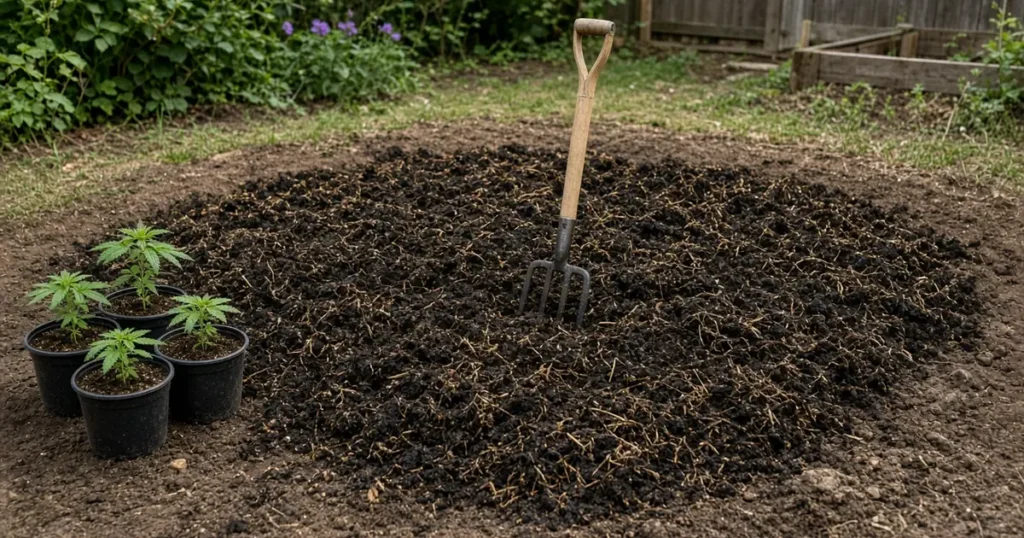
Quick answer: Mushroom compost, also called spent mushroom substrate, is the leftover, soil like growing material from a commercial mushroom crop. Penn State says it is high in organic matter and mainly improves soil structure, with a modest amount of nutrients. The University of Maryland’s extension service warns that it may hold more soluble salts than other composts. Penn State advises keeping fresh material away from salt sensitive plants and says substrate weathered for 6 months or longer can go in all gardens and around most plants.
What Is Mushroom Compost?
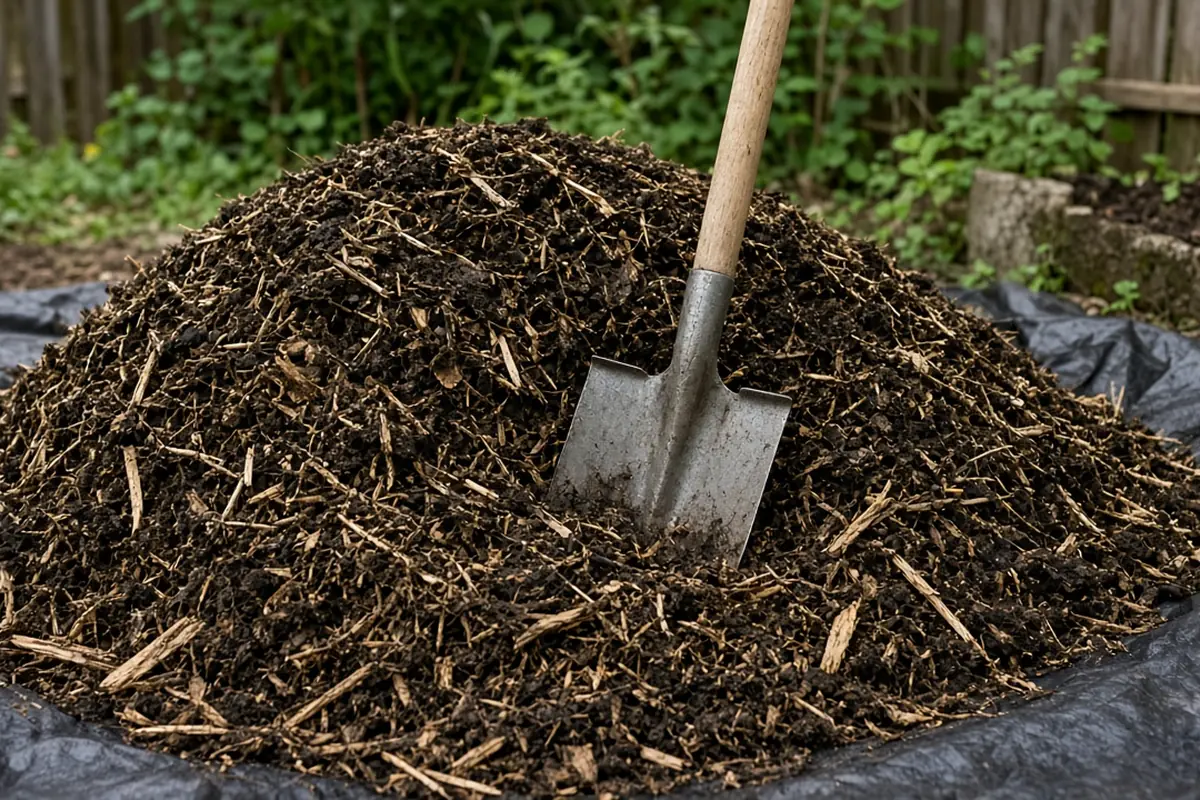
It is the growing material a mushroom farm uses once and then replaces. Penn State explains that the substrate is a blend of natural products, often built from straw bedding and horse manure plus items such as hay, gypsum, poultry manure, corn cobs, cocoa bean hulls, brewer’s grain and cottonseed hulls. On top, farmers add a casing layer of peat moss and ground limestone to support the mushrooms.
Maryland Extension gives a similar list, including manures, wheat straw, corn cobs, feather meal, peanut meal, peat moss and lime. After harvest, the material is removed, steam pasteurized and sold. Penn State says growers pasteurize it with steam before it leaves the mushroom house, which kills weed seeds, insects and organisms that cause mushroom diseases.
This is not the same as mushrooms sprouting in your own pots. If you see caps growing from cannabis mix, our post on mushrooms in cannabis pots explains what is happening.
Is Mushroom Compost Good for Cannabis Beds?
It can be, used with care. Penn State says the used substrate builds soil structure, raises organic matter and adds a small amount of nutrients. It notes that companies making bagged potting mixes often choose spent substrate when they need to improve soil structure.
The trade off is salt. Maryland Extension says mushroom compost may have higher soluble salt levels than other composts. Penn State points out that some plants and vegetables are sensitive to high salt in soil and that fresh substrate should not be used around them. Neither source tested cannabis, so assume young cannabis plants are salt sensitive and use aged material. Our post on salt buildup in cannabis soil lists the symptoms.
Fresh vs Weathered Mushroom Compost
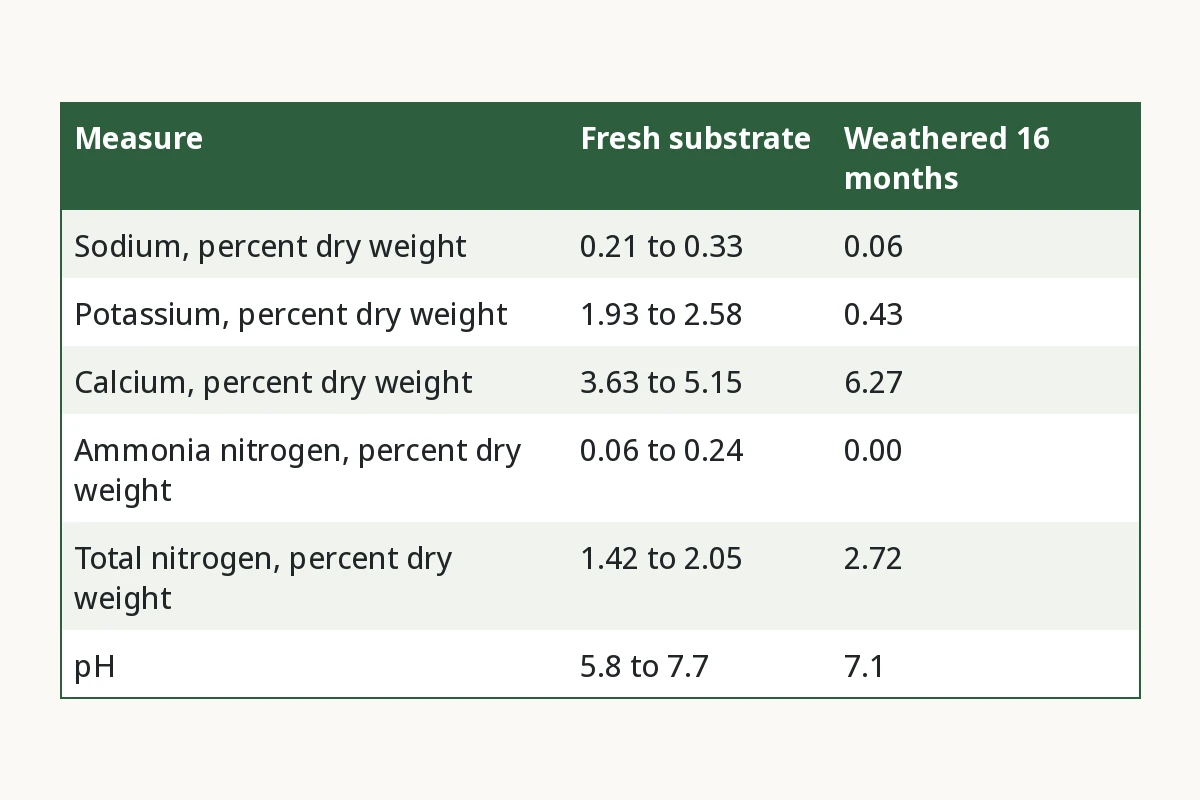
Age changes the material. Penn State says fresh substrate is sometimes left in a field through one winter or more and then sold as weathered mushroom soil, and that microbial activity during that time changes its makeup and texture.
Penn State publishes an average analysis that shows the shift:
| Measure | Fresh substrate | Weathered 16 months |
|---|---|---|
| Sodium, percent dry weight | 0.21 to 0.33 | 0.06 |
| Potassium, percent dry weight | 1.93 to 2.58 | 0.43 |
| Calcium, percent dry weight | 3.63 to 5.15 | 6.27 |
| Ammonia nitrogen, percent dry weight | 0.06 to 0.24 | 0.00 |
| Total nitrogen, percent dry weight | 1.42 to 2.05 | 2.72 |
| pH | 5.8 to 7.7 | 7.1 |
Penn State notes that every load differs a little because raw materials and practices change, so these figures are ranges rather than guarantees. It suggests getting fresh substrate in fall or winter and letting it weather so it is ready for the garden the next spring.
How Much Nutrition Does Mushroom Compost Provide?
Some, but not a full feed. Maryland Extension cites Penn State figures of 1.5 to 3.0 percent nitrogen, 0.5 to 2.0 percent phosphate and 1.0 to 3.0 percent potash, with an approximate analysis of 2.75 to 1.5 to 1.5. Penn State’s turf guide adds that most of the nitrogen is in organic form and becomes available slowly.
Penn State’s turf guide also says spent substrate typically contains 40 to 60 percent organic matter on a dry weight basis, and that its carbon to nitrogen ratio is usually well below 30 to 1, which means it is unlikely to lock up nitrogen. Keep feeding your cannabis on a normal schedule. Our guide to the best fertilizer and compost for growing outdoors covers balanced feeding.
Does Mushroom Compost Change Soil pH?
It can nudge pH upward. The casing layer includes ground limestone, and Maryland Extension lists lime among the ingredients. Penn State’s analysis shows a pH of 5.8 to 7.7 for fresh material and 7.1 after weathering. Penn State’s turf guide says most products fall between 6.0 and 8.0 and that soils are usually buffered against big pH swings.
If your bed already runs alkaline, test before adding much. Our post on garden lime for cannabis explains how lime affects pH, and soil testing for cannabis covers the test itself.
How to Use Mushroom Compost in Cannabis Beds
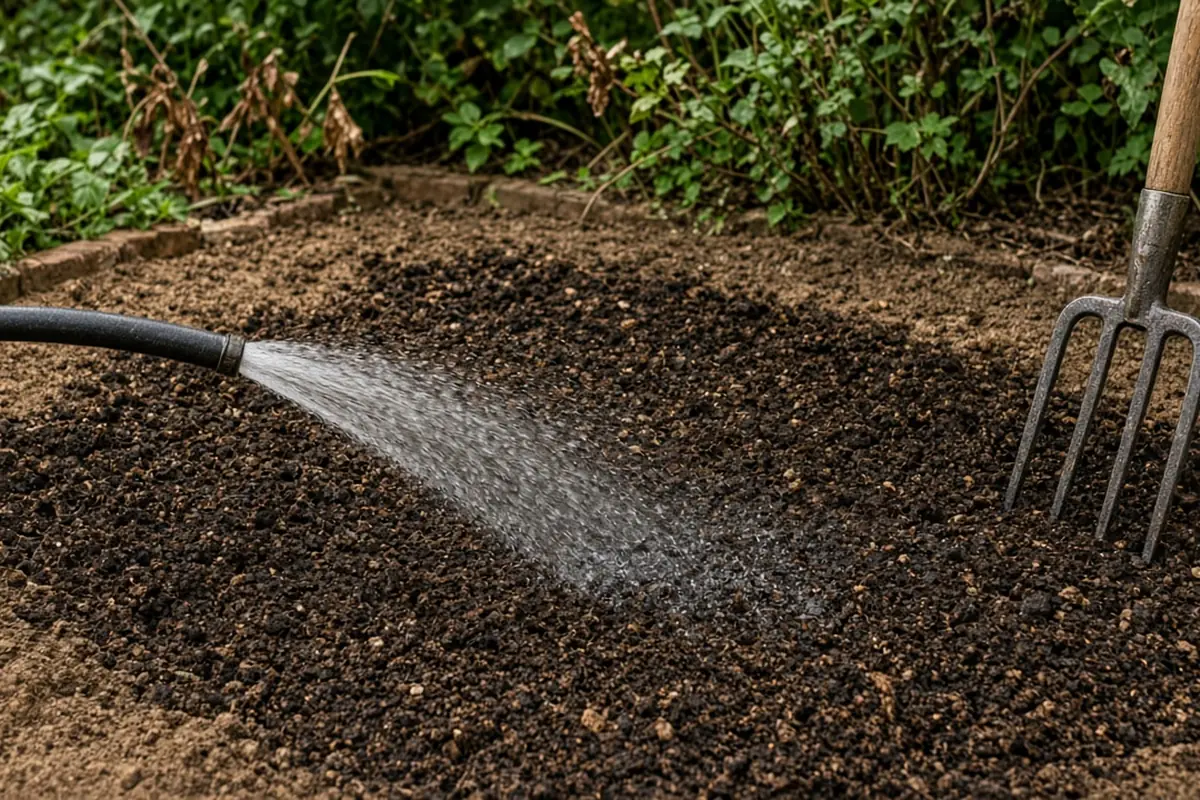
Use weathered material and mix it into the soil.
- Ask about the source. Penn State says some farms are strictly organic and that your Extension office can help identify them.
- Choose weathered material. Penn State says substrate weathered for 6 months or longer can be used in all gardens and with most plants.
- Plan ahead. Penn State suggests getting fresh material in fall or winter and letting it age until spring.
- Water it first. The Maryland guide says watering the compost before use to leach out salts lowers the risk of root injury.
- Mix it in. It also says mixing it into the soil reduces salt risk. Penn State’s turf guide notes that tilling it in greatly dilutes salts.
- Use moderate depth. Penn State’s turf guide describes a 1 or 2 inch layer tilled 4 to 6 inches into soil.
- Mulch with aged material. Penn State names spring and summer as the best seasons for using weathered substrate as mulch. Our guide to cannabis mulching basics covers placement.
- Test if unsure. Penn State’s turf guide suggests sending a sample to a lab that tests soluble salts in composts.
Is There Pesticide Residue in Mushroom Compost?
Usually very little. Penn State says mushroom farms sometimes use a registered pesticide while the crop grows, yet residues are rarely detected. The organic matter in the substrate holds onto pesticides, and the compounds break down quickly at the high temperatures used for pasteurizing. Penn State concludes it is safe to assume residue is low.
If you prefer to avoid any pesticide history, Penn State notes that some mushroom farms are strictly organic and that your local Extension office can help you find them.
Troubleshooting Mushroom Compost
Leaf tips burned after adding compost. Salts may be the cause. Maryland Extension notes higher soluble salts in mushroom compost. Water the bed deeply to leach salts and use weathered material next time.
The bed pH crept up. Lime in the casing layer can raise pH. Test the soil and cut back on mushroom compost if needed.
Seedlings struggle in a mushroom compost mix. Penn State’s turf guide notes seedlings are more sensitive to salt than mature plants. Use less, or save it for established beds.
The bag smells strongly. Penn State says a strong ammonia odor can mean the material is not mature. Penn State’s table shows ammonia nitrogen drops to zero after weathering. Let it age.
You cannot tell fresh from weathered. Ask the seller how long it aged, as Penn State suggests asking your Extension agent about specific loads.
Results vary from load to load. Penn State says each load has a slightly different analysis. Test new loads before heavy use.
Sources
- Penn State Extension, Spent Mushroom Substrate: https://extension.psu.edu/spent-mushroom-substrate
- University of Maryland Extension, Organic Matter and Soil Amendments: https://extension.umd.edu/resource/organic-matter-and-soil-amendments
- Penn State Extension, Spent Mushroom Substrate as a Soil Amendment in Turf: https://extension.psu.edu/spent-mushroom-substrate-as-a-soil-amendment-in-turf
FAQ
Is mushroom compost the same as regular compost?
Not exactly. It is the used growing material from mushroom farms, which the Maryland guide says may be saltier than other composts.
Does mushroom compost contain weed seeds?
Rarely. Penn State says steam pasteurization kills weed seeds and insects.
Can I use mushroom compost in cannabis pots?
Sparingly. Penn State notes bagged potting mixes use it for structure, but its salt content calls for small amounts in containers.
How long should mushroom compost age?
At least 6 months, according to Penn State.
Will mushroom compost make soil alkaline?
It may raise pH a little because of the lime in the casing layer, but Penn State's turf guide says soils are usually buffered.
Is mushroom compost safe around vegetables?
Weathered material is, says Penn State, but keep fresh material away from salt sensitive plants.


