
How to Use a Soaker Hose for Outdoor Cannabis Beds

A soaker hose is one of the simplest ways to water an outdoor cannabis bed. To use one, lay short, level runs at the base of your plants, add a filter and pressure regulator at the faucet, then set the run time by checking how deep the soil is moist. It looks like an ordinary garden hose, but water seeps out along its whole length instead of spraying from the end. Laid at the base of your plants, it puts water straight into the soil where roots can use it. South Dakota State University Extension describes soaker hoses as an inexpensive alternative to a sprinkler for a small garden or bed, and Colorado State University Extension treats them as one of the basic low-pressure watering options for home vegetable gardens. You will see how a soaker hose works, how to lay one out, how long to run it, how to check that the water is reaching the roots and what to do when it stops working well.
What a soaker hose is and why growers use one
SDSU Extension explains that a soaker hose is a porous hose, often made from recycled tires, that lets water ooze out of tiny pores along its length and soak into the soil. Colorado State Extension groups the soaker hose and soaker tubing with other low-pressure systems that emit water along the entire line.
SDSU and Colorado State agree on the benefits of putting water at the base of plants instead of spraying it overhead:
- Water goes where roots can reach it, so very little is lost to evaporation.
- Foliage stays dry, which SDSU Extension notes helps reduce disease development and spread.
- Less water lands between rows, so fewer weeds sprout in the paths.
- The hose is flexible, so it can follow rows and curve around plants.
For outdoor cannabis, the dry-foliage point is a big one. Leaves that stay wet for long periods give many leaf diseases a chance to start, so keeping the water low is a sound habit in any garden.
Soaker hose or drip line
A soaker hose is not the only way to water at ground level. Drip lines with emitters do a similar job with more precision. SDSU Extension notes that soaker hoses may not work as well for widely spaced plants, because water seeps out of the whole hose rather than being aimed at each plant. A soaker hose suits beds and rows where plants sit fairly close together. Growers who want an emitter at each plant will find that setup in the Kind Seed Co post drip irrigation for cannabis. Everything from here on is about soaker hose setup.
What you need before you start
The setup is simple, but a few parts make a real difference to how evenly the hose waters:
- A soaker hose long enough for the bed, but not so long that the far end runs dry.
- A pressure regulator that fits a garden hose. Colorado State Extension notes that these low-pressure lines can split or pop their connections under high pressure.
- An in-line filter, especially if your water comes from a private well. SDSU Extension warns that particles and minerals can build up and clog porous hoses.
- Landscape pins, sometimes called sod staples, to hold the hose in place.
- Optionally, a cover such as mulch to shade the hose.
Colorado State Extension adds that the small disc that comes inside some soaker hose fittings is really a flow restrictor. With that disc alone, the hose may need to run for around an hour. With a hose-end pressure regulator from the drip supply aisle, Colorado State says a run of ten to twenty minutes may be enough. Your own times will vary, which is why checking the soil matters so much.
How to lay out a soaker hose, step by step
Good layout is what makes a soaker hose water evenly. Follow these steps:
- Keep each run short. Colorado State Extension recommends keeping soaker lines to roughly twenty-five feet or less. Longer lines deliver more water at the faucet end and less at the far end.
- Lay the hose on level ground. SDSU Extension notes that soaker hoses are not pressure regulated, so they work best on level surfaces or when they follow the contour of a slope.
- On a slope, use several short runs across the hill instead of one long run down it.
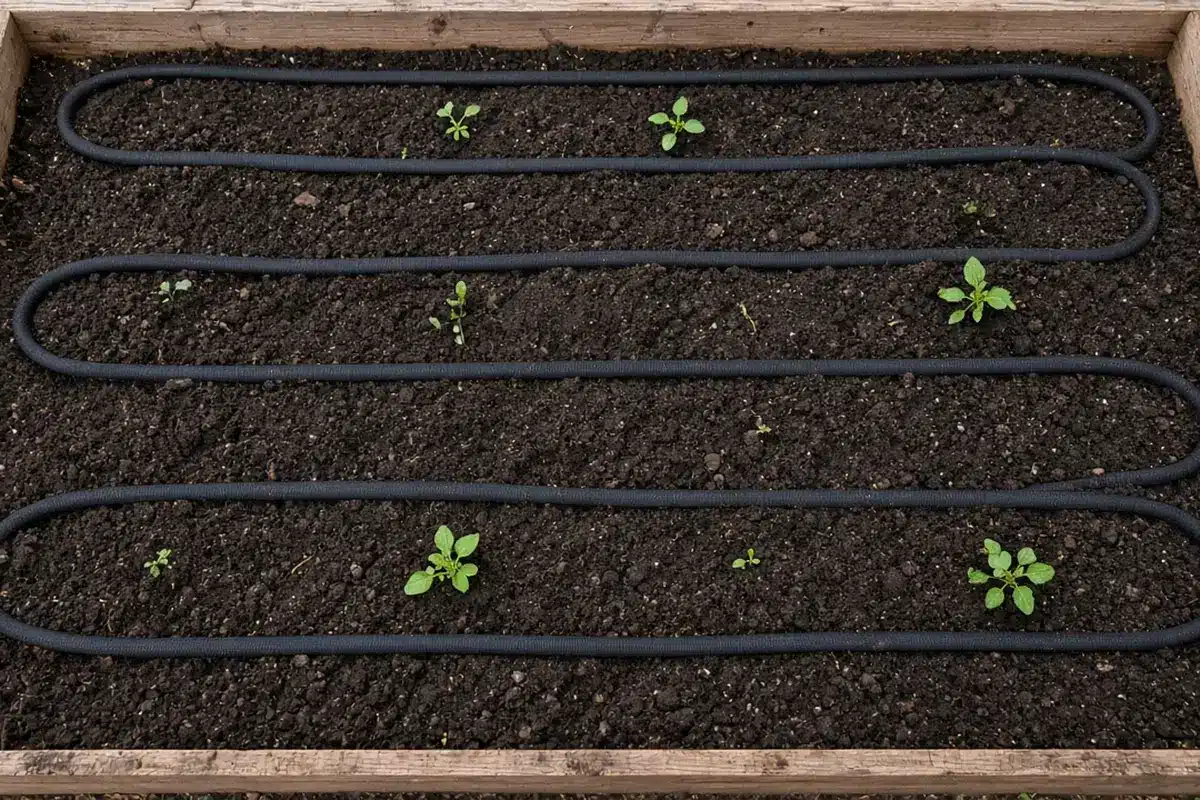
- In a raised bed, space runs about twelve inches apart. Colorado State Extension gives the example of four runs up and down a four-foot-wide bed.
- Run the hose close to the base of each plant so the wet zone reaches the root area.
- Pin the hose down with landscape pins so it stays put when you work in the bed.
- Connect the regulator and filter at the faucet end before the soaker line.
- Do not connect too many soaker hoses in a row. SDSU Extension warns that you may run out of water before the plants at the end get any. Check the package for how many hoses can be joined.
Once the hose is in place, turn the water on slowly and walk the line. You should see the soil darken evenly along the full length. Dry spots or a spray from one point are signs to adjust before you plant.
Covering the hose
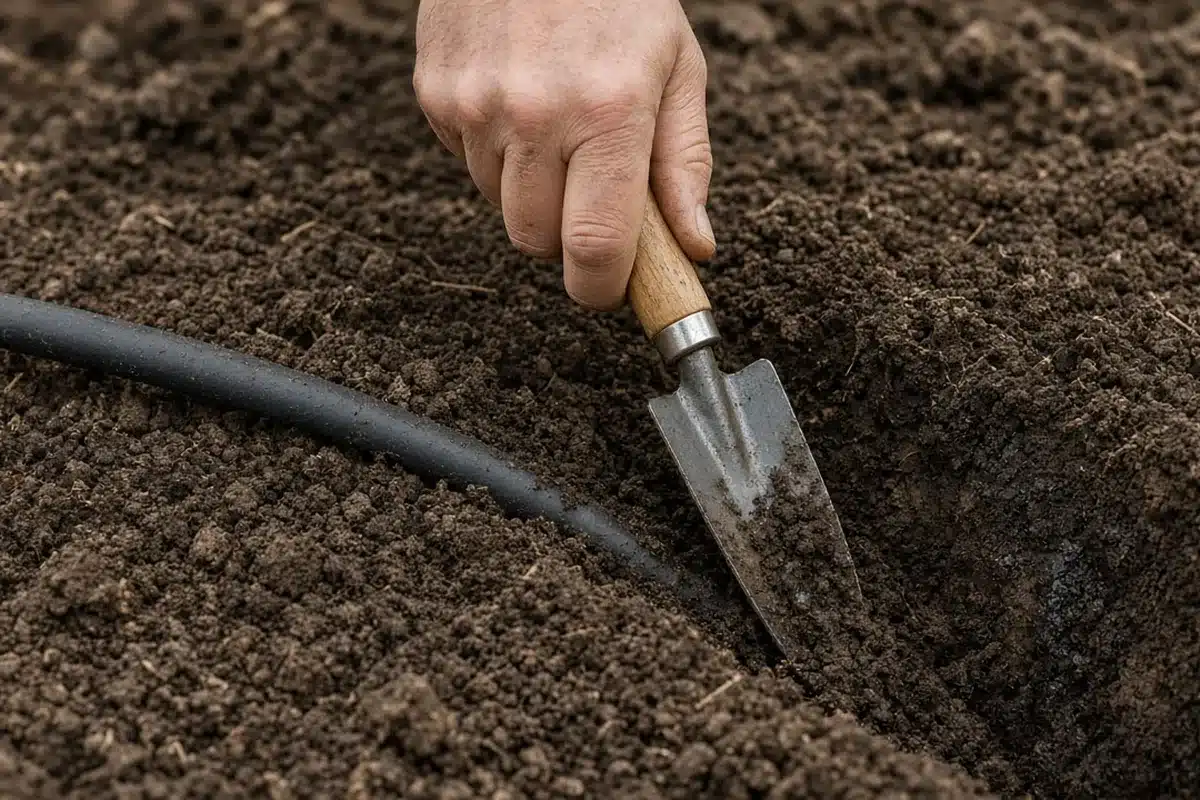
Colorado State Extension notes that the ideal place for a soaker hose is on the soil surface under a layer of mulch. It adds that the hose can also be buried about two inches into the soil to protect it from breaking down in sunlight. Covering the hose shades the material, slows evaporation from the soil surface and keeps the line out of the way. Cover options are compared in mulch for cannabis.
If you bury the hose, mark where it runs. It is easy to slice a buried line with a trowel when you transplant later in the season.
How long to run a soaker hose
No one run time fits every bed. Colorado State Extension says run time depends on the type of hose, water pressure and plant spacing, and it should be set by checking soil moisture. It also gives a useful rule of thumb. Vegetables use around a quarter inch of water per day in typical summer weather, so if the garden is watered every four days, about one inch of water per watering is the target. Hot, windy weather raises water demand.
Cannabis is not covered in that rule of thumb, so treat it as a starting point, not a fixed target. Large outdoor plants in midsummer may use more water than small ones in spring.
To find your own run time:
- Run the hose for a set time, such as thirty minutes.
- Wait an hour or so for the water to spread.
- A few inches from the hose, dig a small hole and look at how deep the soil is moist.
- Colorado State Extension suggests checking the root zone at a depth of six to eight inches with a soil probe or small spade.
- Lengthen or shorten the next run based on what you find.
- Write down the time that works so you can repeat it.
Colorado State Extension also suggests watering when the top two to four inches of soil feel dry to the touch, and it notes this check matters most under mulch, where the surface stays moist longer. A soil moisture meter can help, though Colorado State Extension notes that inexpensive meters are slightly inaccurate and take some trial and error to read.
Watering deeply and less often
SDSU Extension advises setting any timer to water deeply and infrequently to improve rooting and drought tolerance. A soaker hose suits this style well because it delivers water slowly, giving it time to soak down instead of running off. Short, frequent runs keep only the top of the soil wet and encourage shallow roots. Longer, less frequent runs push moisture deeper where roots can follow. Many growers water early in the morning, which SDSU Extension mentions as a good use for an in-line timer.
Caring for the hose through the season
A soaker hose needs very little care, but a few habits keep it working:
- Clean the in-line filter regularly, as SDSU Extension recommends.
- Use clean water. Colorado State Extension notes that low-pressure lines readily plug with dirt, algae or salts.
- Check the line now and then for new leaks or dry sections.
- When the season ends, drain the hose, coil it loosely and store it out of the sun.
Troubleshooting
The last stretch of the bed stays dry. The run is probably too long or the hose climbs a slope. Split it into shorter runs of about twenty-five feet or less and keep each run level.
Water sprays out of one spot. Pressure is too high or the hose has split. Add or check the pressure regulator and replace the damaged section.
The soil is wet on top but dry a few inches down. The runs are too short. Water for longer and less often, then dig and check again.
Puddles form near the faucet end. The hose may be delivering more water at the start of the line. Shorten the run or raise the hose slightly with a level base of soil.
Flow drops over the season. The pores may be clogging. Clean the filter and flush the line. If you use well water, a filter is worth adding.
Plants at the edge of the bed wilt. They may sit too far from the hose. Move the line closer or add another run.
Sources
- South Dakota State University Extension. Options for Watering Home Gardens and Landscape Plantings. https://extension.sdstate.edu/options-watering-home-gardens-and-landscape-plantings
- Colorado State University Extension. Irrigating the Vegetable Garden. https://extension.colostate.edu/resource/irrigating-the-vegetable-garden/
FAQ
How long should I run a soaker hose?
It depends on your hose, water pressure and soil. Colorado State Extension says run time should be set by checking soil moisture. Run the hose for a set time, wait, then dig a few inches down. Lengthen or shorten later runs until moisture reaches the root zone, then note the time.
How long can a soaker hose be?
Shorter is better for even watering. Colorado State Extension recommends keeping soaker lines to about twenty-five feet or less, because longer lines put more water at the faucet end and less at the far end. On slopes, use several short runs across the hill instead of one long line.
Should a soaker hose be buried or covered?
Colorado State Extension suggests laying it on the soil surface under mulch, or burying it about two inches deep to protect it from sunlight. Covering it shades the hose and slows evaporation from the soil. If you bury the line, mark where it runs so you do not cut it later.
Is a soaker hose better than a sprinkler for cannabis?
For beds and rows, it often is. SDSU Extension notes that soaker hoses put water at the base of plants, lose little to evaporation and keep foliage dry, which helps reduce disease spread. They work less well for widely spaced plants, where a drip system with emitters may suit better.


