Pumice for Cannabis Soil Mixes: Aeration and Drainage
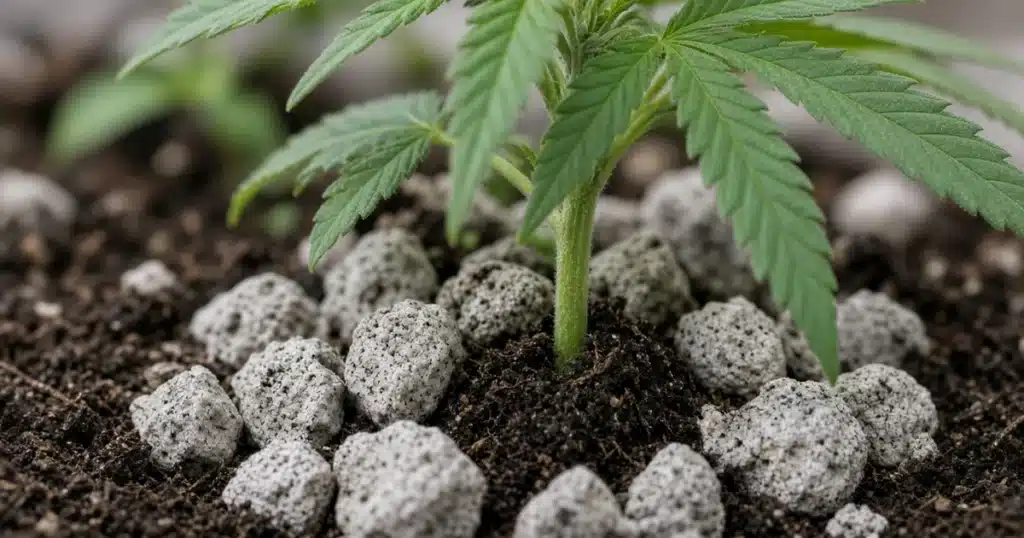
Quick answer: Pumice is a porous volcanic rock that is mined, crushed and graded for use in potting mixes. Purdue Extension describes it as lightweight, porous, normally sterile and chemically inert, with pH readings between 7.0 and 7.4. UF/IFAS Extension notes that it offers excellent aeration with good water retention and has no cation exchange capacity. For cannabis, pumice works as a mineral alternative to perlite. It raises air space and helps a mix drain, and Purdue adds that pasteurization does not affect it.
What Is Pumice?
Pumice forms when frothy, gas filled magma cools quickly at the surface. The gas bubbles leave behind a rock full of tiny holes, so light that some pieces float on water. In the United States, most horticultural pumice comes from western deposits in states such as Oregon, Idaho and California.
Purdue University Extension covers pumice in its publication Evaluating Container Substrates and Their Components. It explains that the rock is white to light gray, made of aluminosilicate minerals with potassium and sodium oxides, and that the horticulture industry mines, crushes and grades it by size. Purdue calls it ideal for substrates because it is lightweight, porous, normally free of pathogens and weed seeds, chemically inert and unaffected by pasteurization.
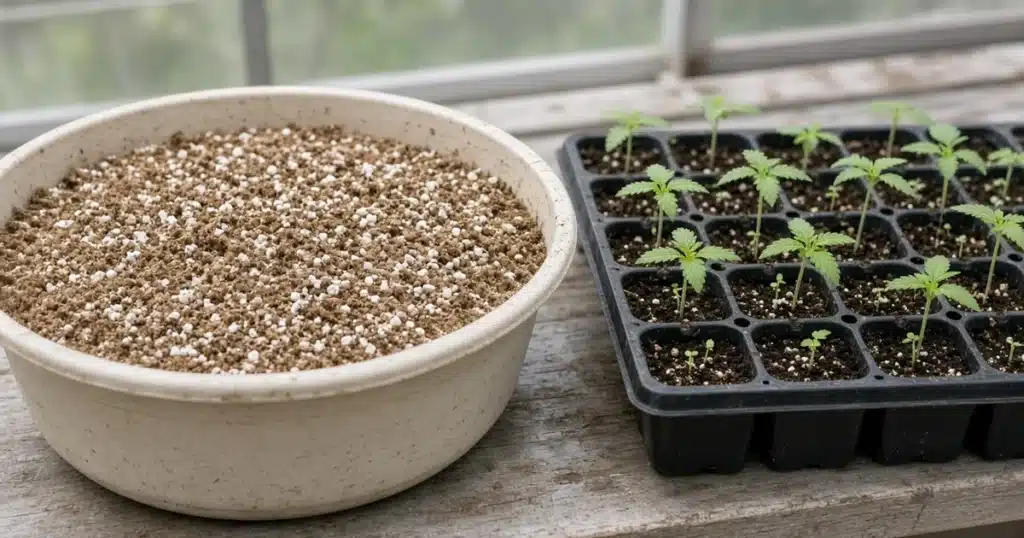
Horticultural pumice is sold in grades by particle size, often from fine sand up to marble sized chunks. The Florida hydroponics guide adds that a pumice medium needs a blend of large and small pieces, roughly 0.3 to 5 centimeters across, for good drainage. Heat stability matters for growers who sterilize or steam their mixes. Pumice keeps its structure through heat, unlike some organic components that can shift in texture.
Pumice changes structure rather than feeding, the amendment role set out in our soil amendment and fertilizer comparison.
How Does Pumice Compare With Perlite?
Perlite and pumice both start as volcanic rock, but they are processed differently. Purdue explains that perlite ore is ground and then heated to 1,800 to 3,200°F, which makes it expand four to 20 times its original volume. The result is a very light, white, sterile aggregate with a pH of 6.5 to 7.5. Pumice is simply mined, crushed and screened. It is not expanded.
The University of Florida publication Common Media Used in Hydroponics compares the two directly. In its words, pumice stones resemble perlite more than the name suggests. Both have excellent aeration and no cation exchange capacity. Florida places the water holding capacity of pumice above sand but below rockwool, perlite and coco coir.
Florida and Oklahoma State both point to its stability in a mix. Florida groups pumice stones with sand, gravel and expanded clay as media that can be reused, while most organic media lose structure or degrade over time. Oklahoma State lists slow breakdown among the advantages of pumice. Florida also warns that perlite can produce dust that irritates breathing when handled in bulk, so rinsing any aggregate before use is a sensible habit.
Perlite has points in its favor too. It is lighter, cheaper in most garden centers and sold almost everywhere. For a single season in a small pot, perlite does the job well, and many growers mix the two to balance cost and longevity. Our comparison of perlite vs vermiculite for cannabis covers both of those common additives.
Lava rock is a heavier volcanic option, covered in our guide to lava rock in cannabis containers.
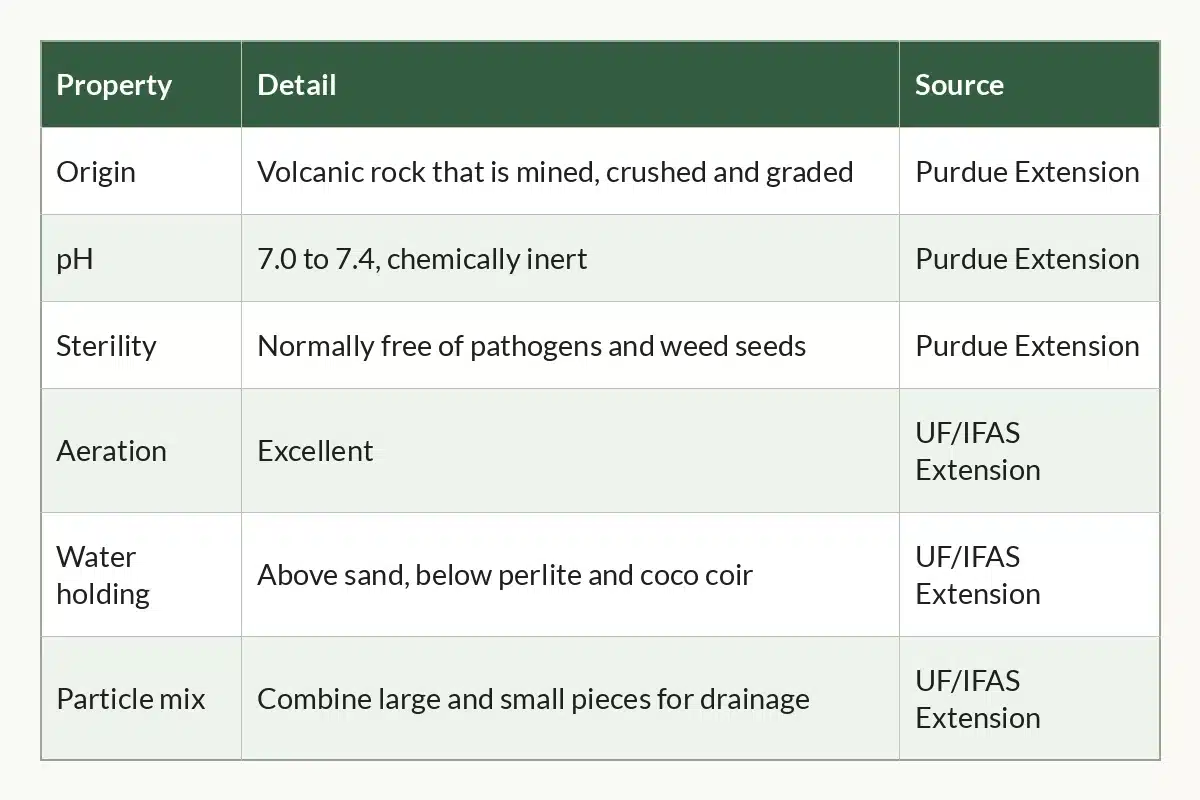
Pumice at a Glance
| Property | Detail | Source |
|---|---|---|
| Origin | Volcanic rock that is mined, crushed and graded | Purdue Extension |
| pH | 7.0 to 7.4, chemically inert | Purdue Extension |
| Sterility | Normally free of pathogens and weed seeds | Purdue Extension |
| Aeration | Excellent | UF/IFAS Extension |
| Water holding | Above sand, below perlite and coco coir | UF/IFAS Extension |
| Particle mix | Combine large and small pieces for drainage | UF/IFAS Extension |
Why Use Pumice in Cannabis Potting Mix?
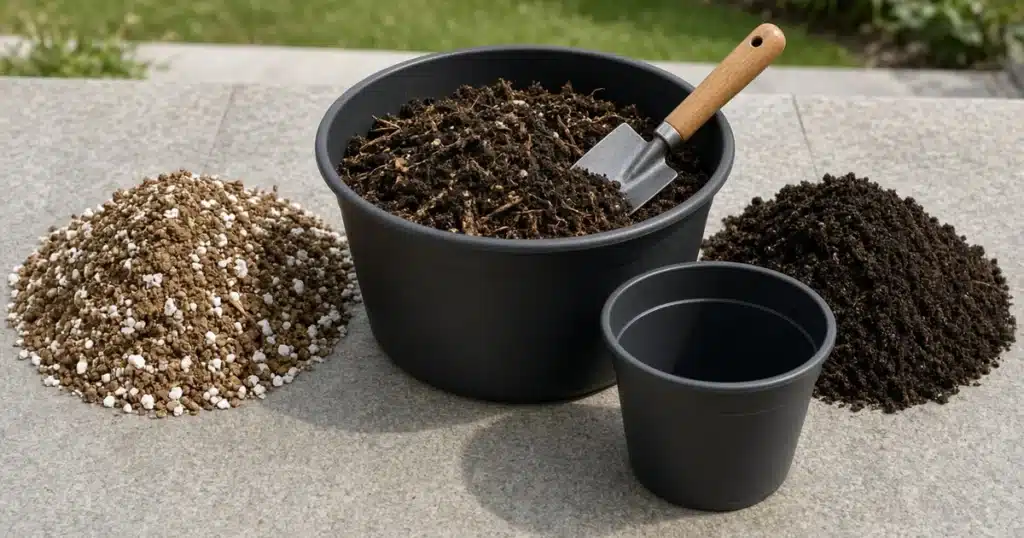
Cannabis roots need both water and air. A mix that stays soggy starves roots of oxygen, while one that drains too fast leaves them thirsty. Purdue defines the key physical properties as total porosity, container capacity and air space. Air space is the share of the mix that fills with air after watering and draining.
Peat and coir hold a lot of water on their own, which is why they need a coarse partner. Aggregates like pumice raise air space in peat or coir based mixes. Larger particles create bigger pores that drain freely, which keeps the root zone breathing even right after a heavy watering. That helps prevent the slow, waterlogged conditions that encourage root problems.
The Oklahoma State Extension overview of soilless growing media notes that pumice is graded and dried so it is sterile and ready to use. It recommends blending pumice with softer media, coir or vermiculite for example, so the mix drains better and holds more air.
Florida also lists pumice among reusable media. It can be cleaned and used again, though it should be sterilized between crops so it does not carry problems from one planting to the next.
If you are building a mix from scratch, our article on garden soil vs potting mix for cannabis explains why containers need a lighter, airier blend than ground soil.
How Much Pumice Should You Add?
There is no single rule, but common practice puts aggregates at about a quarter to a third of a container mix by volume. Purdue’s sample recipes use perlite in ratios such as two parts peat to one part perlite for seed starting and young plants. Purdue does not list pumice as a substitute in those recipes, though it groups pumice with perlite as a substrate aggregate.
Cannabis grown in large fabric pots outdoors often does well with a slightly lower share, since fabric already lets the root zone breathe through the sides. Plastic pots, which hold water longer, usually benefit from the higher end of the range. Particle size changes the result as well. For soil mixes, a grade roughly the size of a pea or smaller blends well. Very fine pumice dust fills pores instead of opening them.
Purdue explains that as microbes decompose organic components, larger particles shrink into finer ones, which changes how a mix holds air and water. Pumice is a mineral, so it keeps its structure better than bark or coir when a mix is reused. Pot height affects drainage too. Purdue notes that taller containers drain more and hold more air, while shallow trays stay wetter. A mix that works in a deep fabric pot may need extra pumice in a shallow container.
Before and after you adjust a mix, check how water moves through it. Our guide to running a soil drainage test for cannabis beds explains a simple way to measure drainage outdoors, and the same idea applies to pots.
How to Mix Pumice Into Cannabis Soil
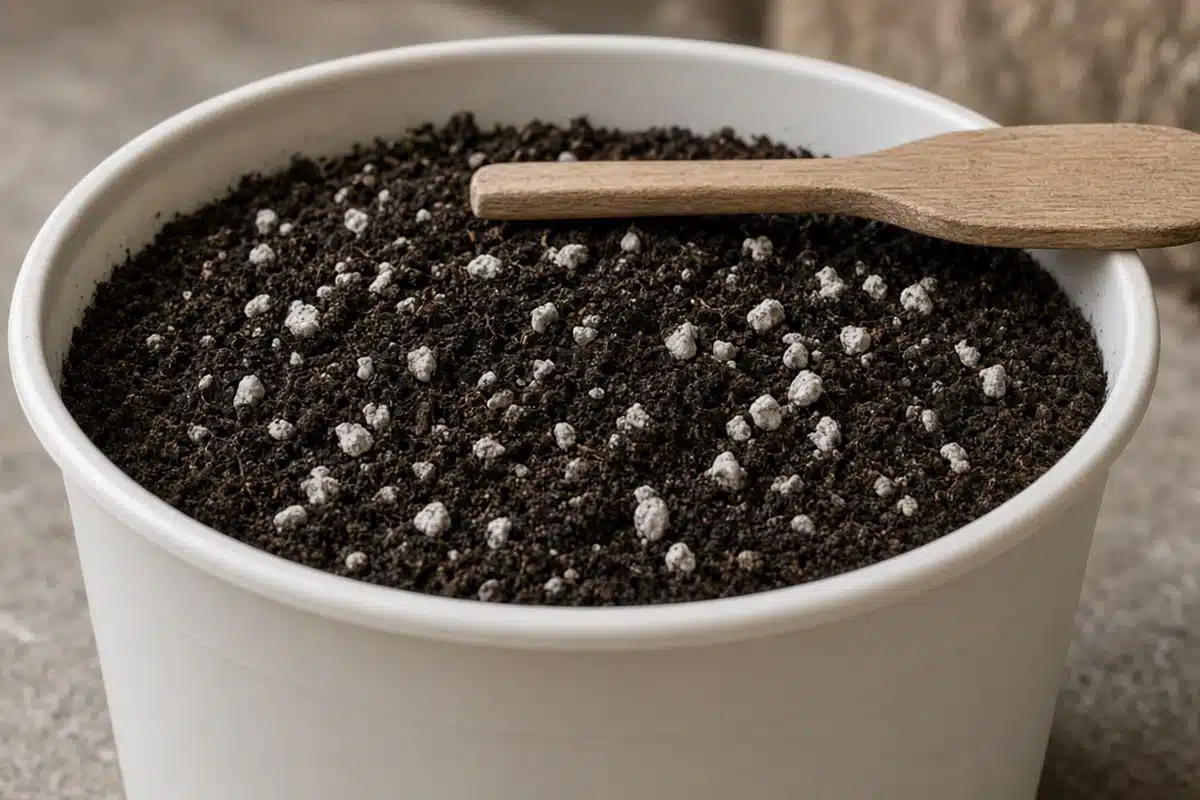
- Choose a screened grade. Look for pumice sized roughly 3 to 10 millimeters for container mixes.
- Rinse off fines. Wash the pumice in a bucket or screen to remove dust that could clog pores.
- Moisten the base mix. Dampen peat or coir first so it blends evenly and does not repel water.
- Add pumice in stages. Start near one quarter of the total volume and adjust by feel.
- Mix thoroughly. Stir until the pumice is evenly spread and no pockets of pure stone remain.
- Test drainage. Water a filled pot and watch how fast it drains and how heavy it feels a day later.
- Adjust watering. Mixes with more pumice dry faster, so check moisture more often.
Troubleshooting Pumice Problems
Mix dries out too quickly. There is too much pumice or the grade is too coarse. Blend in more peat or coir.
Water pools on top. Fine dust may be clogging pores. Rinse pumice before mixing next time.
Pots feel heavier than expected. Pumice weighs more than perlite, so that is normal. Use a lighter base or slightly less aggregate.
pH drifts upward over time. Pumice itself is near neutral. Check irrigation water and fertilizer instead.
Roots circle in pockets of stone. The mix was uneven. Stir more thoroughly before potting.
Sources
- Purdue University Extension, Evaluating Container Substrates and Their Components (HO 255 W): https://www.extension.purdue.edu/extmedia/ho/ho-255-w.pdf
- University of Florida IFAS Extension, Common Media Used in Hydroponics (EP623): https://ask.ifas.ufl.edu/publication/EP623
- Oklahoma State University Extension, Soilless Growing Mediums: https://extension.okstate.edu/fact-sheets/soilless-growing-mediums
FAQ
Is pumice better than perlite for cannabis?
Neither is strictly better. Pumice is porous, chemically inert and reusable, while perlite is lighter and easy to find.
Does pumice change soil pH?
Purdue lists it as inert and close to neutral, so it has little effect.
Can I reuse pumice?
Yes. Clean and sterilize it between crops as Florida suggests for reusable media.
How much pumice goes in a potting mix?
A quarter to a third of the volume is a common starting point.
Does pumice hold nutrients?
No. It has no cation exchange capacity, so nutrients come from the other ingredients and from feeding.