
Spider Plant Leaves Turning Brown? Water Plus Dry Air
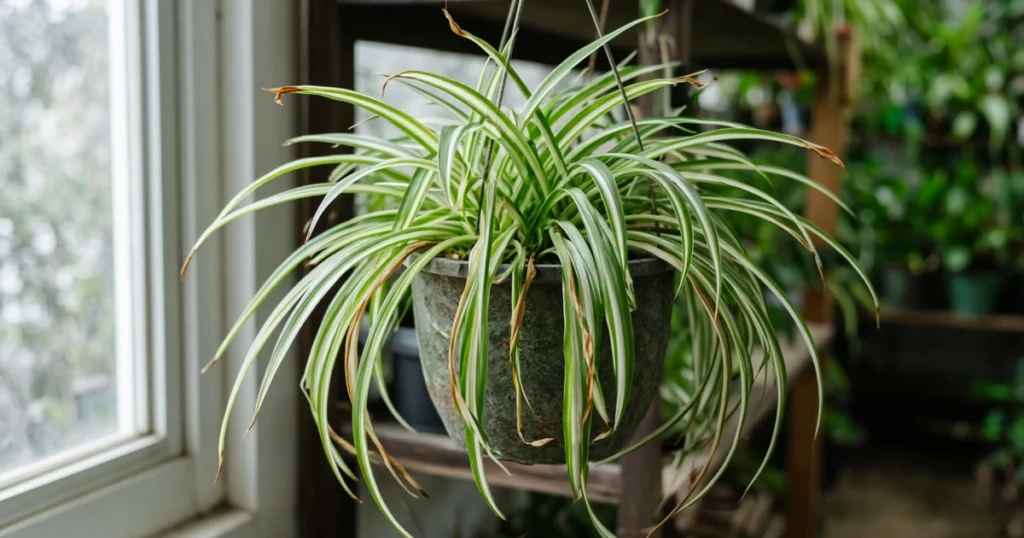
Spider plant leaves turning brown at the tips usually come from dry indoor air, uneven watering, excess fertilizer or chemicals in tap water. Iowa State University Extension names low humidity as the most likely cause. Raise humidity, water evenly plus switch water sources if the tips continue to brown.
The short answer
Raise humidity by grouping plants or using a pebble tray, let the top inch of soil dry briefly between waterings plus fertilize lightly. UF/IFAS notes spider plants are particularly sensitive to fluoridated water plus suggests rainwater or distilled water. Trim brown tips with scissors for looks.
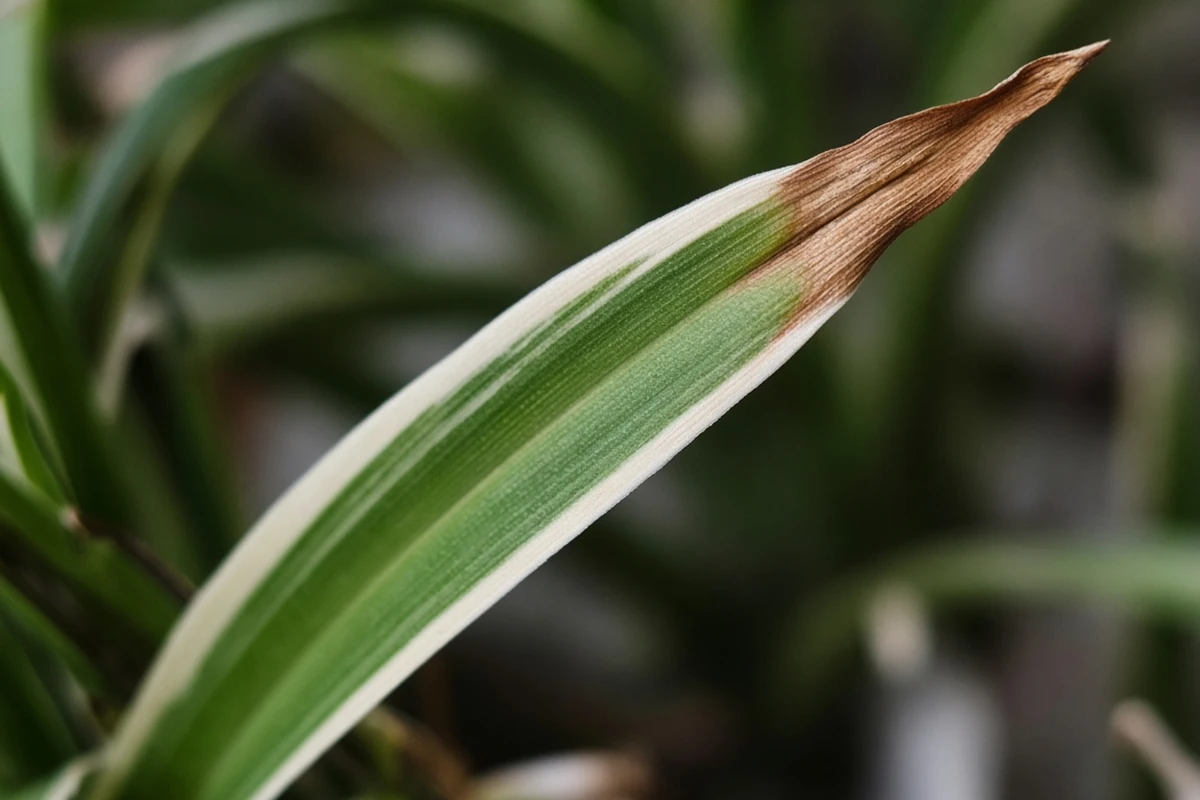
Why do spider plants get brown tips?
Iowa State University Extension lists low humidity, inconsistent watering, excess fertilizer salts plus water quality as causes, naming spider plant among the species where tips brown most often.
| Cause | Sign | Fix |
|---|---|---|
| Low humidity | Tips brown in winter | Group plants or use a pebble tray |
| Inconsistent watering | Tips plus edges brown after drying out | Water before the soil dries too long |
| Excess fertilizer | Salt buildup in the soil | Fertilize appropriately |
| Chlorine or fluoride | Tip burn over time | Use rainwater or distilled water |
| Direct sun | Scorched leaves | Move to bright indirect light |
Source: Iowa State University Extension, UF/IFAS plus NC State Extension.
How does water quality affect the leaves?
Iowa State University Extension notes chlorine plus other chemicals such as fluoride can cause brown tips, mainly over long periods on sensitive species such as spider plant. NC State Extension advises avoiding tap water for this plant. UF/IFAS suggests rainwater or distilled water when the water has added fluoride.
When does a spider plant need repotting?
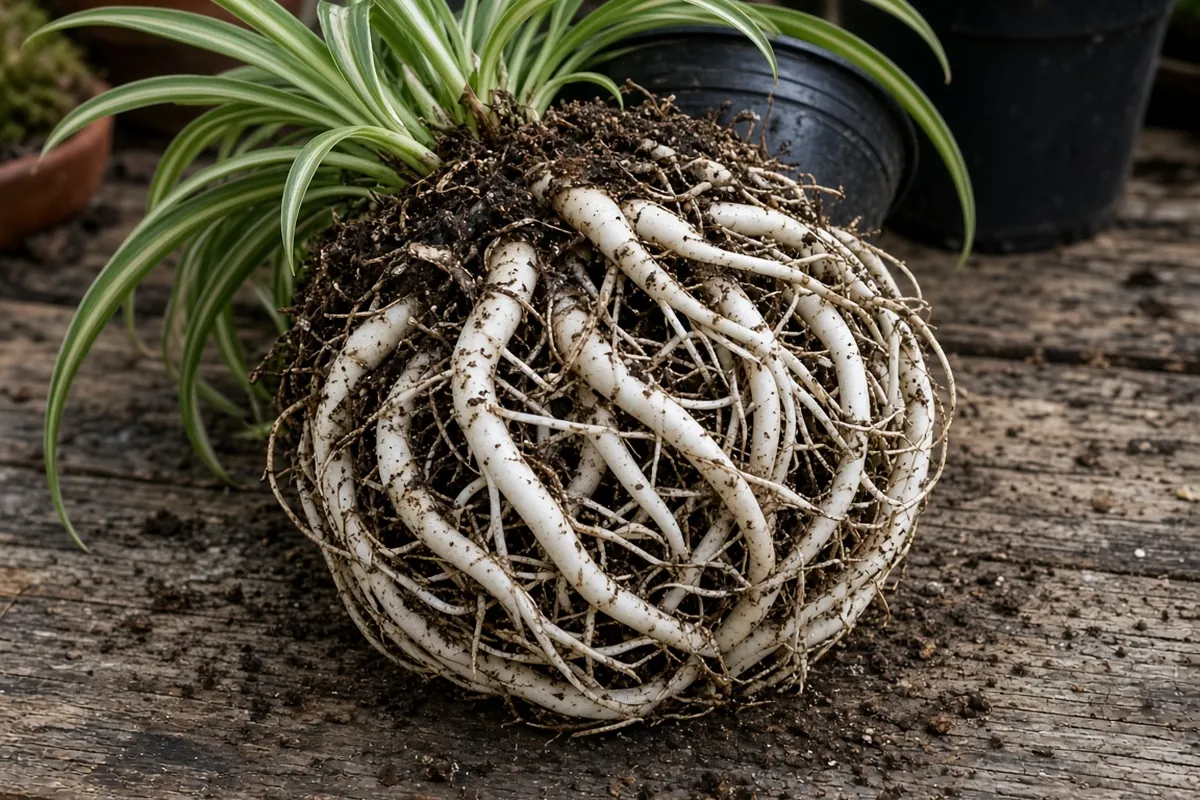
UF/IFAS notes a potted spider plant does well with repotting once a year while young plus every other year once mature. University of Illinois Extension notes spider plants produce plantlets when potbound. The sources do not tie crowded roots directly to brown tips, so repot on that schedule rather than as a fix.
How to: step by step
- Note where browning starts, tips or whole edges.
- Switch to rainwater or distilled water if tap water has fluoride.
- Let the top inch of soil dry briefly between waterings.
- Raise humidity by grouping plants or using a pebble tray.
- Repot yearly while young plus every other year once mature.
- Snip brown tips with clean scissors.
Troubleshooting
Brown tips in winter: dry indoor air. Cluster plants or run a humidifier.
Brown tips plus edges after dry spells: inconsistent watering. Water more steadily.
Scorched pale leaves: direct sun. Shift into bright indirect light.
For related reading see fluoride in water for cannabis, salt buildup in cannabis soil plus root bound cannabis. Kind Seed Co also stocks cannabis seeds.
Sources
- Why does my houseplant have brown leaf tips plus edges?, Iowa State University Extension
- Spider plant, University of Illinois Extension
- Spider plant, UF/IFAS Gardening Solutions
- Chlorophytum comosum (spider plant), NC State Extension Gardener Plant Toolbox
FAQ
Should I cut off brown tips?
You can. Iowa State University Extension notes that trimming the brown portions with scissors improves appearance, but new browning will occur if the root cause is not addressed. Check humidity, watering, fertilizer plus water source first so freshly trimmed leaves stay green afterward.
Does rainwater help spider plants?
It can. UF/IFAS notes spider plant is particularly sensitive to fluoridated water plus suggests rainwater or distilled water if your supply contains fluoride. NC State Extension advises avoiding tap water because chlorine plus fluorides can cause leaf tip burn on this plant over time.
How often should spider plants be watered?
UF/IFAS advises letting the upper inch of soil dry out briefly between waterings. University of Illinois Extension says to allow soil to dry between waterings, while NC State Extension advises reducing watering in winter. Avoid letting plants dry out too long, which Iowa State University Extension links to brown tips.
Do spider plants like humidity?
NC State Extension notes spider plant grows well in medium air humidity plus suggests a humidifier or a tray of pebbles with water. Iowa State University Extension names low humidity as the most likely cause of brown tips plus notes home humidity is often low in winter.
How much light does a spider plant need?
UF/IFAS notes spider plant prefers bright to moderate indirect light year round plus temperatures from 55°F to 80°F. NC State Extension notes it prefers medium light, tolerates deep shade plus is intolerant of direct sunlight. University of Illinois Extension notes it adapts well to medium light.



