
Grow Lights for Elephant Ears Indoors Over Winter
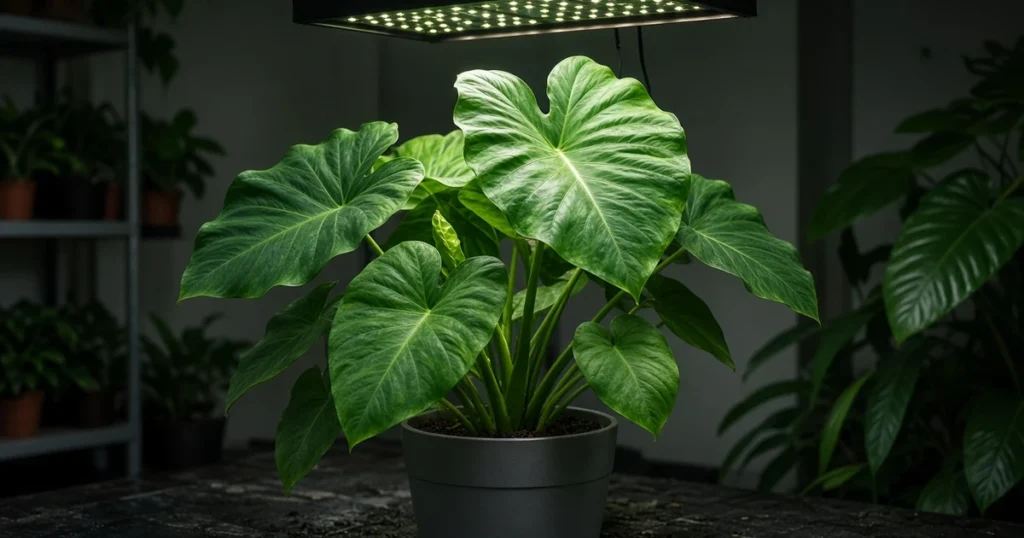
Grow lights for elephant ears indoors help potted plants continue growing through winter instead of being stored. UW Madison Extension notes that elephant ears can be grown on as houseplants in a warm, bright spot or dug plus stored after frost. Give bright light on a timer plus a warm room.
The short answer
Bring plants in before nights reach the 30s °F, cut back all but the top two leaves plus set them in bright light at room temperature, as UW Madison Extension advises. Iowa State University Extension suggests 12 to 14 hours of light a day for most species under supplemental lights.

Can elephant ears grow indoors all winter?
Yes, as semi dormant houseplants. UW Madison Extension notes plants without bulbs may be grown on as houseplants in a warm, bright location. It advises watering on the drier side while plants are semi dormant, then resuming regular watering plus feeding when growth resumes in spring. NC State Extension notes taro can be grown in pots outdoors plus brought in for cooler months.
How much light do elephant ears need?
NC State Extension notes Colocasia esculenta grows well in part shade or filtered sun. UW Madison Extension notes darker leaved types color up in full sun outdoors. Indoors, Iowa State University Extension places LED shop fixtures 18 inches from the foliage plus fluorescent fixtures 6 to 12 inches away.
| Setup | Distance from foliage | Hours per day |
|---|---|---|
| Grow light | Per package directions | 14 |
| LED shop fixture | 18 inches | 14 |
| Fluorescent fixture | 6 to 12 inches | 12 to 14 |
| Large plants | Add side light | 12 to 14 |
Source: Iowa State University Extension.
When should corms be stored instead?
UW Madison Extension notes plants that have formed bulbs can be dug, dried plus stored like cannas or dahlias after frost kills the foliage. Storage suits gardeners without bright indoor space. It notes plants falter when temperatures stay below 50°F for long periods, so a cold room is a poor choice for active plants.
How to: step by step
- Bring potted plants in before nights reach the 30s °F.
- Cut back all but the top two leaves.
- Place plants under a light in a warm room.
- Run lights 12 to 14 hours a day on a timer.
- Water on the drier side until new growth starts.
- Return plants outside once the weather warms.
Troubleshooting
Older leaves fade: normal die back. Clip them to tidy the plant.
Wet soil plus no growth: too much water while semi dormant. Water sparingly.
Few new leaves: room below 50°F. Shift the pot somewhere warmer.
For related reading see grow lights for cannabis, led light distance cannabis plus grow light timers. Kind Seed Co also stocks seeds for indoor growers.
Sources
- Elephant ears (Colocasia, Alocasia plus Xanthosoma), UW Madison Extension
- Colocasia esculenta (elephant ears), NC State Extension Gardener Plant Toolbox
- How to set up supplemental lights for indoor plants, Iowa State University Extension
FAQ
Do elephant ears need humidity indoors?
UW Madison Extension notes these tropical plants do well with warmth plus high humidity, faltering when temperatures stay below 50°F for long periods. Indoors, place them in a warm, bright room away from cold drafts. NC State Extension notes the plant likes moist, rich soil outdoors.
Should I cut back leaves before winter?
Yes. UW Madison Extension advises cutting back all but the top two leaves when bringing plants indoors, then holding them at room temperature in bright light. It notes older leaves die off over time plus can be removed so the plant looks tidy through the winter.
Can I store the corms instead?
Yes. UW Madison Extension notes plants that have formed bulbs can be dug, dried plus stored like cannas or dahlias after frost has killed the foliage. In spring, it advises potting the bulb in March with its top near the soil surface plus moving it outside in late May or early June.
How big can indoor elephant ears get?
UW Madison Extension notes cultivars range from 8 inches to over 9 feet, with most at 3 to 5 feet. In their native habitat leaves can reach 3 feet long, but they tend to be much smaller when grown as a seasonal plant in cold climates.
How should I water plus feed elephant ears over winter?
UW Madison Extension advises holding plants on the drier side while they are semi dormant over winter, then resuming regular watering plus fertilizing when growth picks up in spring. It notes elephant ears are heavy feeders that need plenty of water plus fertilizer while actively growing, especially in containers.



