
Tradescantia Leaves Turning Brown: Tipburn Plus Old Stems
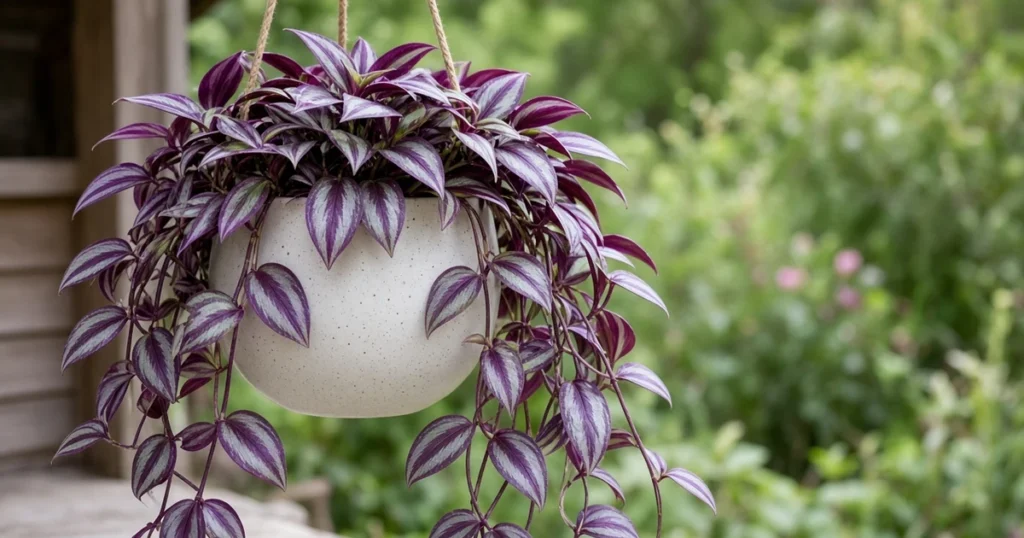
Tradescantia leaves turning brown usually trace to watering, salt buildup or older stems that have lost their lower leaves. NC State Extension notes that the zebra plant does well in filtered sun plus moist but well drained soil. University of Missouri IPM explains how tipburn browns leaf tips.
The short answer
Check watering first. University of Missouri IPM notes that tipburn most often comes from excess fertilizer, improper watering or fluoride. NC State Extension advises letting tradescantia soil dry out between waterings plus watering less in winter. Old leggy stems that lose lower leaves can be pruned back hard every spring plus used as cuttings.
What causes brown leaf tips?
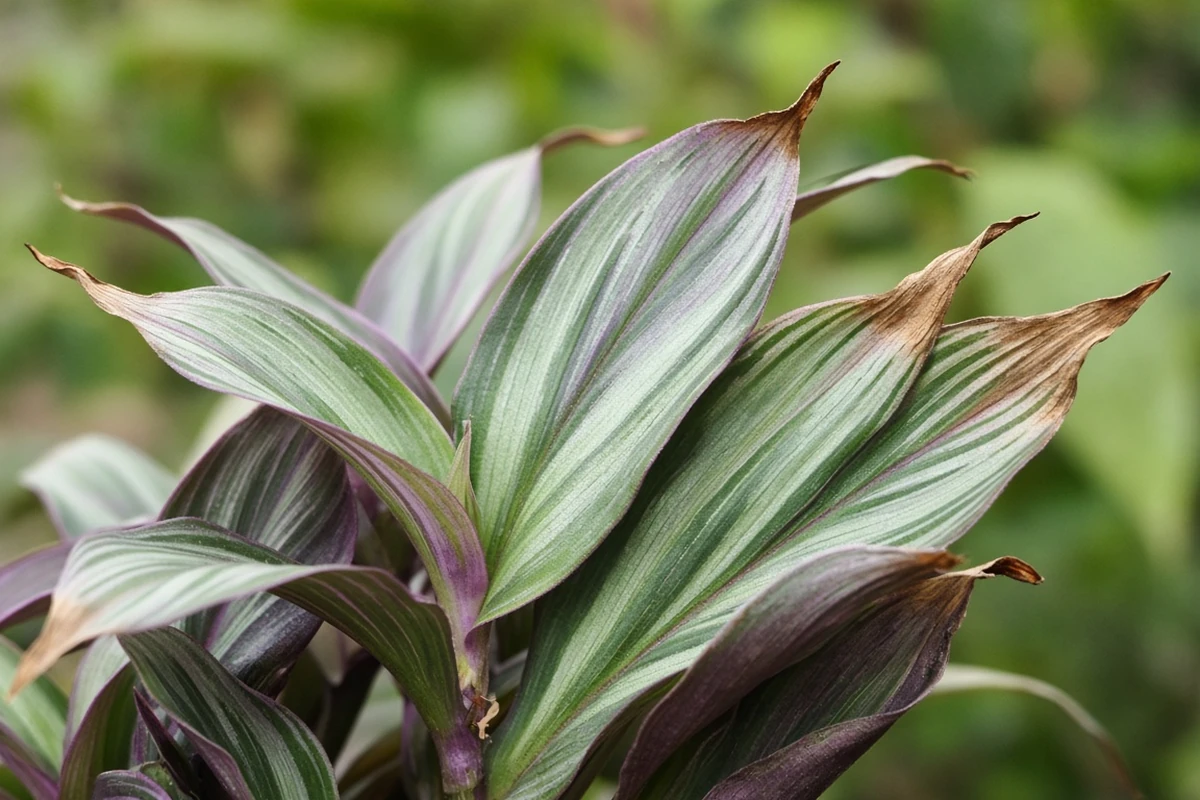
University of Missouri IPM describes tipburn as browning of the tips plus margins of leaves while the rest of the leaf looks normal. It is not a disease.
Tipburn most often results from excessive fertilizer, improper watering or fluoride, the same source notes. New leaves may look normal at first, then develop the same symptoms as they mature.
University of Missouri IPM advises never watering houseplants with water that has passed through a water softener. A whitish residue on the medium means it should be flushed with clear water.
How should tradescantia be watered?
NC State Extension advises watering the zebra plant regularly but allowing the soil to dry out between waterings. During the winter months, reduce watering.
University of Missouri IPM notes that more houseplants are killed from overwatering than from any other cause. Do not let houseplants become too dry either.
As a potting mix dries, it loses water but not the salts in the soil solution, the same source explains. That raises salinity in the root zone plus mimics overfeeding.
| Sign | Likely cause | Next step |
|---|---|---|
| Brown tips plus margins | Tipburn | Review watering plus salts |
| White crust on the mix | Salt buildup | Flush with clear water |
| Bare lower stems | Low light or age | Prune hard in spring |
| Faded color | Low light | Move to filtered sun |
Source: University of Missouri IPM plus NC State Extension.
Why do old stems brown plus thin?
NC State Extension notes that in low light the stems can lose their lower leaves. The leaves that remain can also lose some color.
The zebra plant can be pruned back hard every spring, the same source notes. Removing leggy growth also gives stem cuttings for propagation.
NC State Extension advises pinching purple heart back to encourage bushiness. That species is propagated most readily by stem cuttings, according to the same source.
How to: step by step
- Check whether brown is limited to tips plus margins.
- Between waterings, let the soil dry.
- Skip water from a water softener.
- Flush the mix with clear water if a white crust forms.
- Shift the plant into filtered sun.
- In spring, cut back leggy stems plus root the cuttings.
Troubleshooting
Brown tips on new leaves: tipburn. Review watering plus salts.
Bare leggy stems: low light or age. Prune plus restart from cuttings.
Washed out color: harsh southern sun. Use filtered sun.
For related reading see what factors affect relative humidity control for cannabis, cannabis heat stress plus underwatering cannabis. Kind Seed Co also stocks cannabis seeds.
Sources
- Tradescantia zebrina (inch plant), NC State Extension Gardener Plant Toolbox
- Tradescantia pallida (purple heart), NC State Extension Gardener Plant Toolbox
- Lighting, houseplants, Illinois Extension
- Leaf tipburn on houseplants, University of Missouri IPM
FAQ
Does tradescantia need high humidity?
Not necessarily. NC State Extension notes that the zebra plant tolerates average home humidity levels as well as high humidity. Purple heart is tolerant of salt, drought, humidity plus dry soil, according to the same source. Watering plus salts are more likely causes of brown tips.
How much light does tradescantia need?
NC State Extension notes that the zebra plant does well in filtered sun. Full sun gives the greatest color, but sun in southern locations can wash out the color. In low light, stems can lose their lower leaves plus remaining leaves can fade.
What temperature suits tradescantia?
NC State Extension notes that the zebra plant thrives in temperatures between 65 and 75°F. It does well at average room temperatures. In summer it can go outside onto a sheltered patio, according to the same source. Purple heart is tender, so it is grown as a houseplant or an annual in cooler areas.
How are tradescantia cuttings started?
NC State Extension notes that removing leggy growth gives stem cuttings for propagation. Purple heart is propagated most readily by stem cuttings, the same source adds. Pruning hard every spring plus rooting the cuttings is a simple way to restart a tired plant.
Does tradescantia flower?
Yes. NC State Extension notes that the zebra plant blooms intermittently throughout the year when grown outdoors. Purple heart has pink to pale purple flowers about 1 inch across with three petals. They appear in clusters at the ends of the stems in summer, according to the same source.



