
What Are Softwood Cuttings? Spring Stem Cuttings Explained

The short answer
Softwood cuttings are stem cuttings taken from fresh, flexible new growth, usually in spring or early summer. Iowa State and Washington State Extension say they root faster than older wood. Take them in the morning, strip the lower leaves, stick them in moist medium and hold humidity high until roots form.
Softwood cuttings are one of the easiest ways to make new shrubs and perennials for free. A single parent plant can give dozens of new plants in one season.
What is a softwood cutting?
Softwood is the soft, green growth a plant makes in spring. It bends easily and isn’t woody yet.
Cuttings from this growth root quickly because the tissue is young and active. Many shrubs root in just a few weeks.
The Iowa State University guide to propagating trees and shrubs from softwood cuttings describes the ideal stage. Stems should snap when bent sharply but not crush or wilt.
Most softwood cuttings are taken in late spring or early summer. Timing depends on the plant and climate.
How does it differ from other cuttings?
Stem cuttings are grouped by how mature the wood is.
| Cutting type | Wood stage | Timing | Rooting speed |
|---|---|---|---|
| Softwood | New, soft and flexible | Late spring to early summer | Fast |
| Semi hardwood | Partly mature, firm at the base | Mid to late summer | Medium |
| Hardwood | Fully mature and dormant | Late fall to winter | Slow |
Sources: Iowa State University, Washington State University, Colorado State University.
The Washington State University Extension guide to propagating with stem cuttings explains that softwood cuttings root fastest but wilt quickly. They need more care with humidity.
Hardwood cuttings are tougher and slower but need little care.
Why do cuttings form roots?
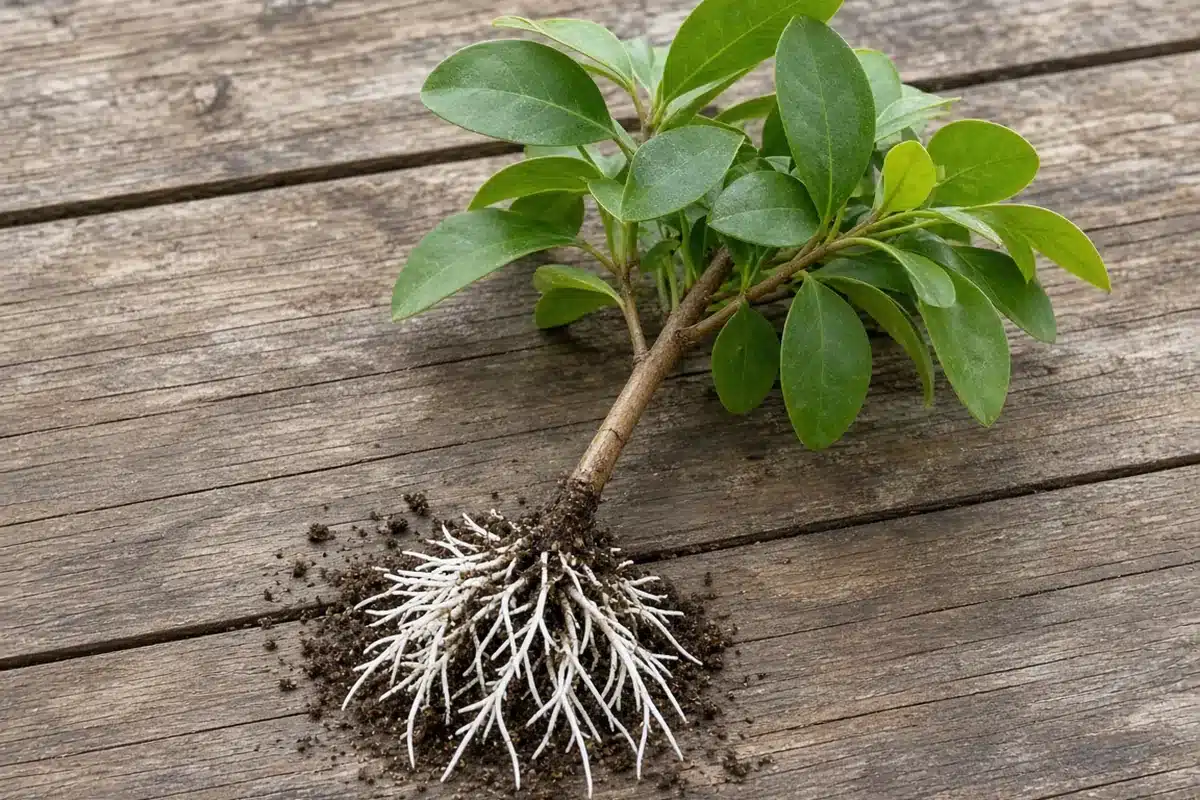
Plant stems hold cells that can turn into new roots. When you cut a stem, these cells respond by forming a callus and then roots.
The Colorado State University Extension botany notes explain how nodes, the points where leaves join the stem, hold buds and active tissue. Roots usually form near nodes.
That is why cuts are made just below a node.
How do you root one?
Take cuttings early. Cut in the morning when stems are full of water.
Choose healthy shoots. Pick vigorous, pest free stems without flowers.
Cut four to six inches long. Make the cut just below a node. Use clean, sharp pruners. Our post on sanitizing pruning shears covers how to clean tools between plants.
Remove lower leaves. Strip leaves from the bottom half. Leave two to four leaves at the top.
Use rooting hormone if desired. A light dip of powder or gel can speed rooting. Our post on rooting hormone compares the common types.
Stick in moist medium. Perlite, coarse sand, or a peat and perlite mix work well. Firm it around the stem.
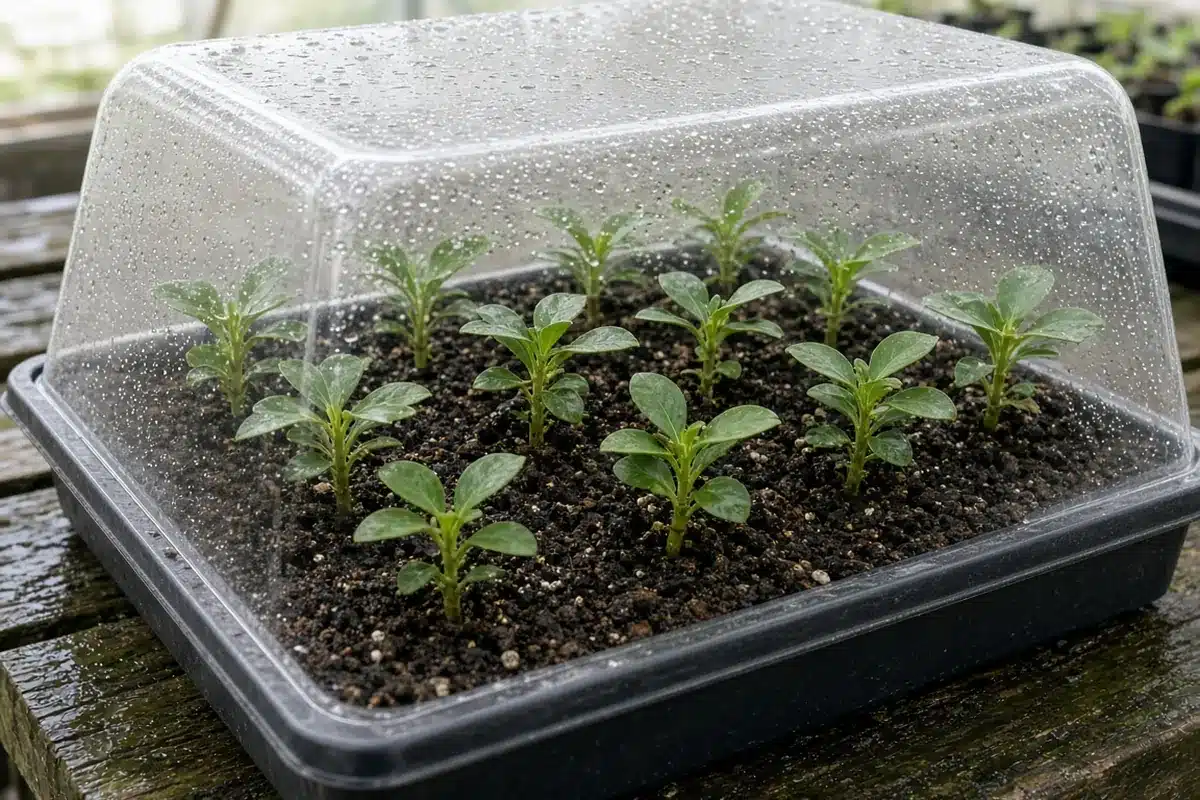
Hold humidity high. Cover with a clear dome or plastic bag. Set cuttings in bright, indirect light.
How to: step by step
- Take cuttings from new, flexible growth.
- Cut in the morning when stems are full of water.
- Remove lower leaves.
- Dip in rooting hormone if desired.
- Stick in clean, moist rooting medium.
- Hold humidity high until roots form.
How do you raise humidity?
Softwood cuttings lose water fast through their leaves and have no roots to replace it.
A simple cover traps moisture around the leaves. Clear plastic bags, domes or a homemade box all work. Our post on making a clone box shows how to build one from a storage bin.
Mist cuttings daily if the cover dries out. Open the cover briefly each day for fresh air.
Water so the medium stays moist, not soggy, since wet medium rots stems.
When are cuttings rooted?
Most softwood cuttings root in three to eight weeks. Tug gently. Resistance means roots have formed.
Once rooted, move cuttings to small pots of potting mix. Harden them off slowly before planting outdoors.
Which plants work well?
Many shrubs root easily from softwood cuttings. Good choices include forsythia, weigela, hydrangea, spirea, lilac, butterfly bush and viburnum.
Perennials and herbs work too. Try salvia, lavender, rosemary and mint.
Troubleshooting
Cuttings wilt right away. Humidity is too low. Add a cover and mist more often.
Stems turn black and soft. The medium is too wet. Use a lighter mix and water less.
No roots after two months. The wood may have been too old. Try earlier in the season.
Leaves drop but stem stays green. Roots may still form. Give it more time.
Mold on the leaves. Air flow is too low. Open the cover daily.
A handful of spring cuttings can fill a whole new border. Kind Seed Co shares more garden ideas in outdoor growing.
Sources
- Propagating shrubs and trees from softwood cuttings, Iowa State University Extension, Yard and Garden, Propagating shrubs and trees from softwood cuttings
- Propagating shrubs, vines and trees from stem cuttings, Washington State University Extension, Propagating shrubs
- Botany (CMG GardenNotes 120), Colorado State University Extension, Botany (CMG GardenNotes 120)
FAQ
What is semi hardwood?
It is partly mature wood cut in mid to late summer. It roots a bit slower.
Which plants root from softwood cuttings?
Many shrubs, such as hydrangea and forsythia, root well this way.
Is rooting hormone needed?
No. It can speed rooting, but many easy plants root without it.
How long do softwood cuttings take to root?
Most root in three to eight weeks.
Can you root cuttings in water?
Some plants can, though roots grown in water adjust slowly to soil.



