Arborvitae Browning: Winter Burn, Drought and Shedding
The short answer
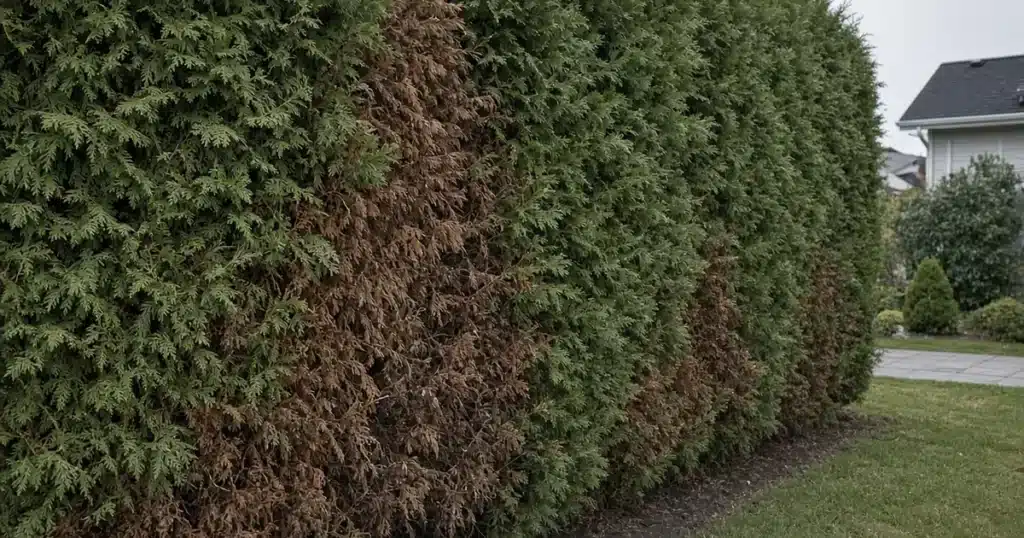
Arborvitae browning has a few common causes. Inner foliage that yellows and drops in fall is normal seasonal shedding. Browning from the tips in late winter, often on the sunny or windy side, points to winter burn. Drought shows as overall thinning. Deep watering through fall and a wind screen on exposed plants help most.
The pattern of brown on the plant tells you which cause you are looking at. Start there before you prune or replace anything.
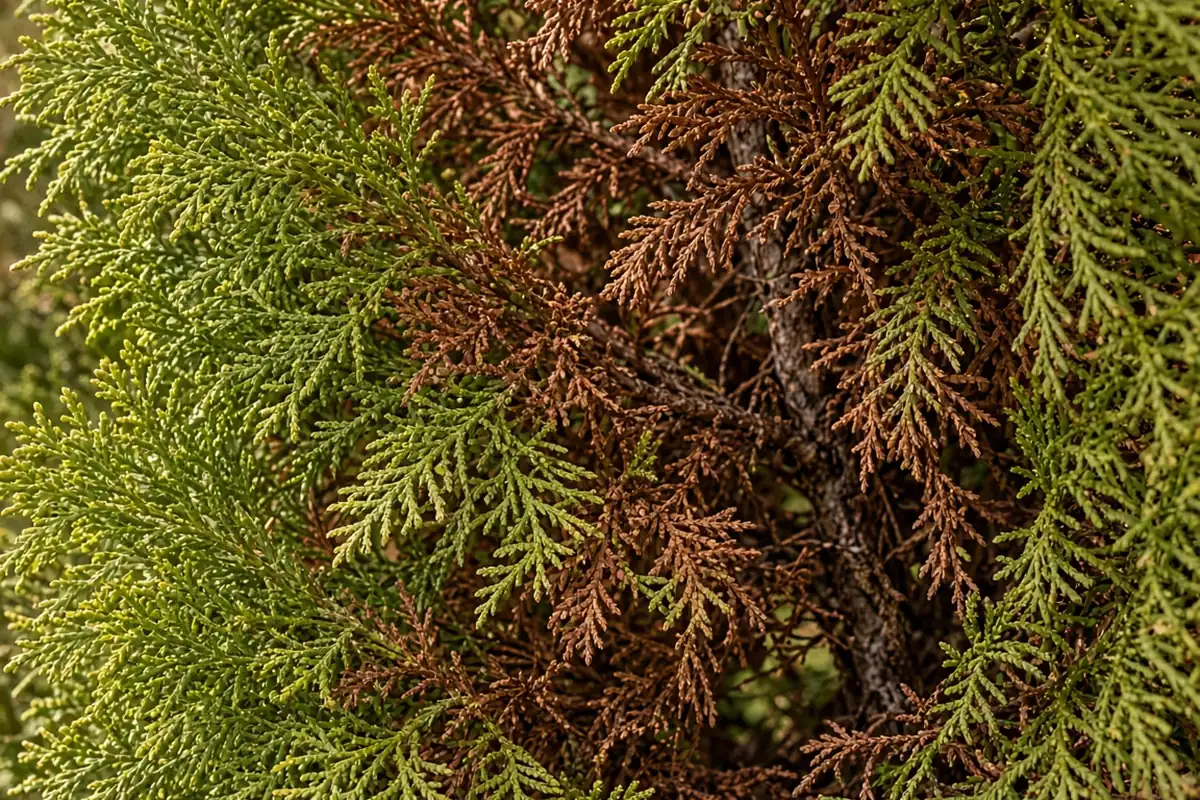
Is inner browning on arborvitae normal?
Yes, in most cases. Evergreens don’t hold their foliage forever. Each year they shed the oldest growth, which sits deep inside the plant near the trunk.
The Iowa State University Extension and Outreach answer on why inner arborvitae growth turns brown explains that this inner shedding happens in late summer and fall. The old sprays turn yellow, then brown, then fall. The outer green shell of the plant stays vigorous.
This can look dramatic in a year when a lot of old growth sheds at once, mainly after a dry summer. If the tips and outer foliage stay green, this is usually normal shedding. Shake the plant gently or let rain wash the loose brown bits out.
| Cause | Pattern | Fix |
|---|---|---|
| Seasonal shedding | Inner foliage browns in fall, outer stays green | No action |
| Winter burn | Tips brown in late winter, worst on sunny or windy side | Water in fall, screen wind |
| Drought | Overall thinning and browning | Water deeply, mulch roots |
| Root or site stress | Slow decline over seasons | Check drainage and planting depth |
Sources: Iowa State University Extension and Outreach, University of Wisconsin Extension Horticulture.
What is winter burn?
Winter burn is drying damage. Evergreen foliage continues losing water all winter, mainly on sunny, windy days. When the ground is frozen, roots can’t pull up water to replace it. The foliage dries out and turns brown.
The University of Wisconsin Extension Horticulture article on winter burn notes that damage often shows up in late winter or early spring. It’s usually worst on the south and west sides of the plant, where sun and wind hit hardest. Plants near roads or walls that reflect sun can show it too.
Wind adds to the drying. Our post on cannabis wind burn and how to identify it shows how steady wind dries leaf tissue, and the same process hits evergreens in winter.
Can drought cause browning?
Yes. Arborvitae have shallow roots and dislike dry soil. A dry summer or fall leaves the plant short on water going into winter. That makes winter burn more likely and can cause overall thinning on its own.
Newly planted arborvitae are the most at risk, and their roots have not spread far yet. Our post on the effects of environmental stresses on weed plants explains how drought and heat stress pile up in plants over a season.
How do you prevent browning?
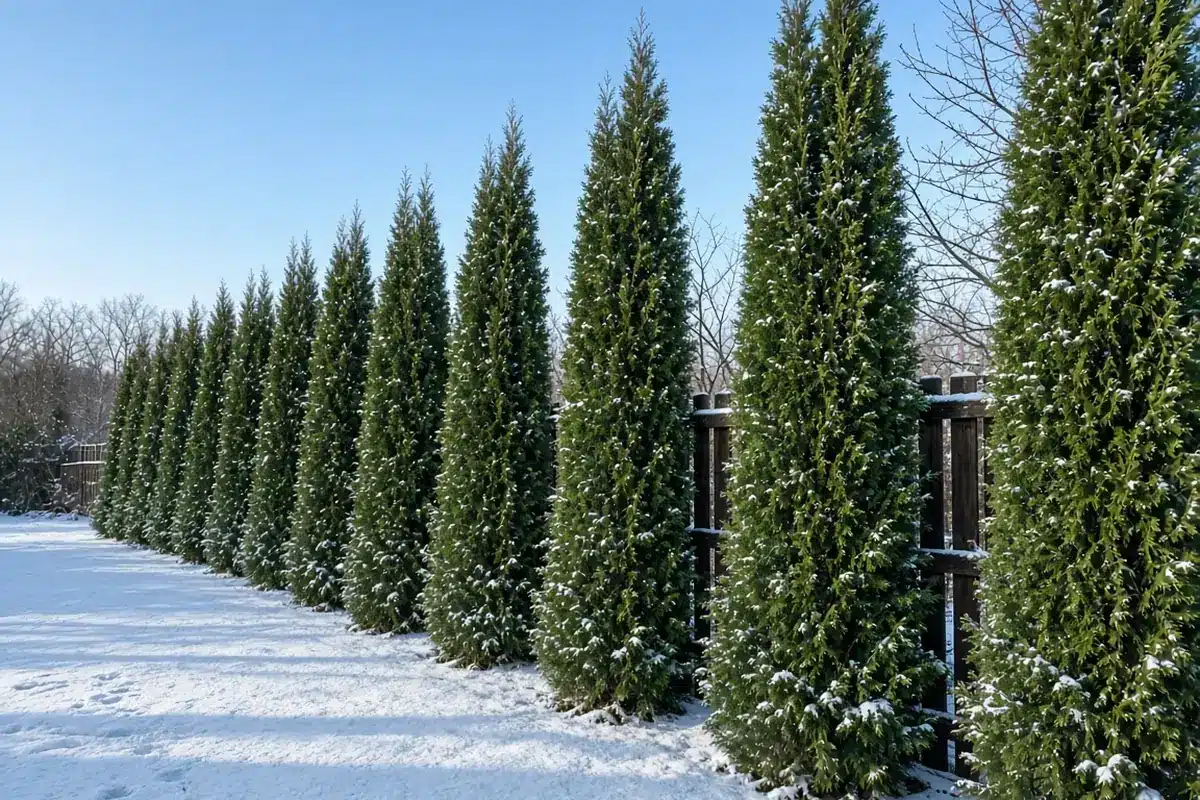
Water is the main tool. The University of Wisconsin Extension Horticulture article on watering in fall to protect evergreens from winter burn recommends deep watering through fall until the ground freezes. Soak the root zone slowly so water reaches deep roots rather than running off.
Mulch helps hold that moisture. Spread a few inches of wood chips over the root zone, a short distance from the trunk.
For plants in exposed spots, a wind screen can help. Set burlap on stakes on the windward side so air still moves around the plant. Wrapping burlap tight against the foliage can trap moisture and is less useful than a screen. Our post on windbreaks for outdoor cannabis covers screen ideas that work for shrubs too.
Will brown foliage recover?
Brown foliage does not turn green again. Buds at the tips may still be alive, though. Wait until late spring to see where new growth appears. Then prune out what stays dead. Arborvitae rarely regrow from bare wood, so cut back only to green growth.
How to: step by step
- Note where the browning is on the plant, inside or at the tips.
- Check if it started in fall or late winter.
- Leave normal inner shedding alone.
- Water deeply in dry spells through fall until the ground freezes.
- Mulch the root zone a few inches deep.
- Screen the windy side in winter if needed.
Troubleshooting
Inner browning in fall. This is normal shedding. No action is needed.
Tip browning on the south side. This points to winter burn. Water in fall and screen the plant.
Overall thinning. Drought or root stress is likely. Water deeply and mulch.
Brown patches near a walkway. Salt spray or reflected heat may be the cause. Shift snow piles away from the roots.
No new growth by summer. That section is dead. Prune it back to green.
Reading the brown pattern saves you from needless pruning. Kind Seed Co shares more seasonal tips in outdoor growing.
Sources
- Why is the inner growth of my arborvitae turning brown?, Iowa State University Extension and Outreach, Why is the inner growth of my arborvitae turning brown?
- Winter burn, University of Wisconsin Extension Horticulture, Winter burn
- Keep watering in fall to protect evergreens from winter burn, University of Wisconsin Extension Horticulture, Keep watering in fall to protect evergreens from winter burn
FAQ
Will brown arborvitae turn green again?
No. Brown foliage stays brown, but tip buds may still push new growth.
When should you prune dead tips?
Wait until late spring, when new growth shows what is alive.
Does burlap help arborvitae?
A burlap screen on stakes cuts wind on exposed plants.
How much should you water in fall?
Soak the root zone deeply until the ground freezes.
Is fall inner browning a problem?
No. It is normal shedding of old inner foliage.