Maple Tar Spot: Black Leaf Spots and Fall Cleanup
The short answer
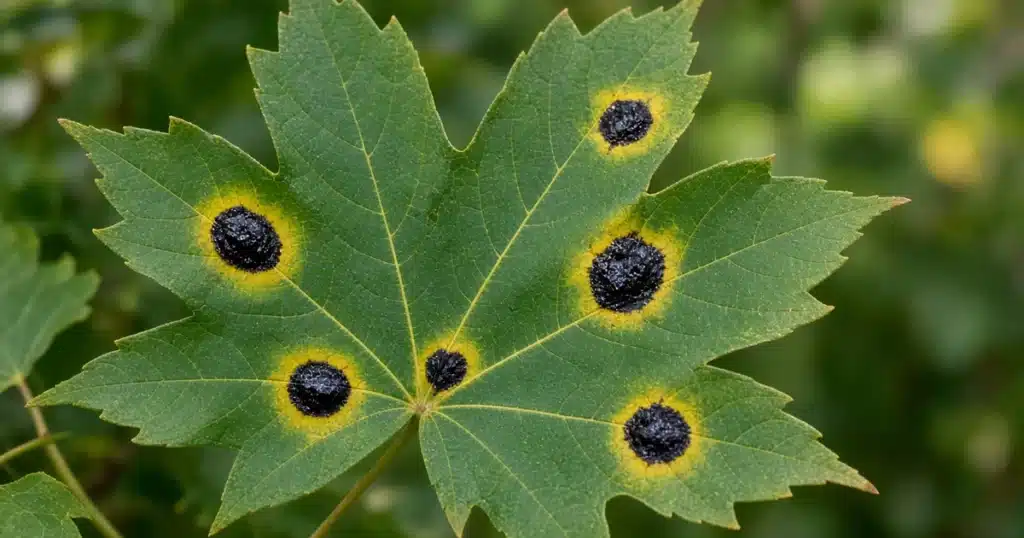
Maple tar spot is a fungal leaf disease that forms raised, shiny black spots that look like drops of tar on maple leaves. It looks alarming but is mostly cosmetic and rarely harms the tree. The fungus lives through winter on fallen leaves, so raking them up in fall cuts the spores that start new spots in spring.
A tree covered in black blotches by August can look like it is in trouble. In most yards it is not, and the fix is mostly a rake.
What is maple tar spot?
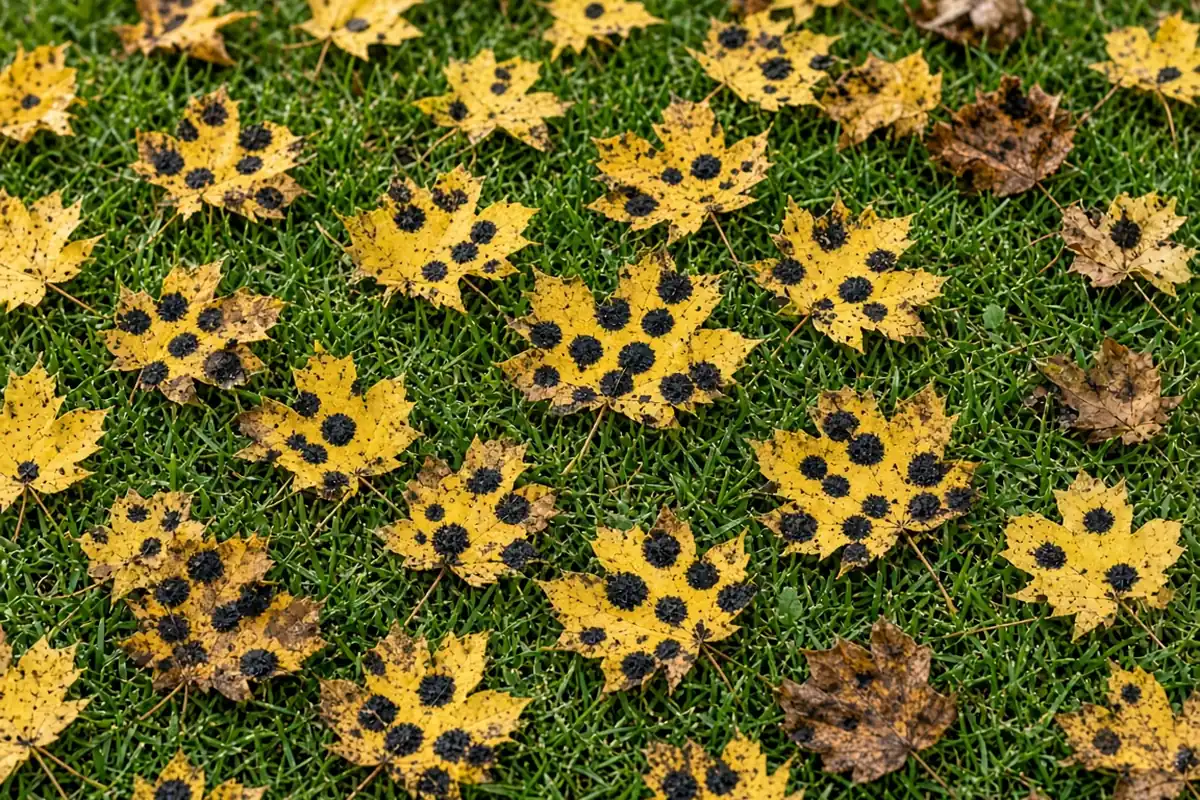
Tar spot is caused by fungi in the genus Rhytisma. The University of Wisconsin Extension Horticulture article on tar spot explains that infection starts in spring as new leaves unfold. Rhytisma spores from last year’s fallen leaves can land on young foliage during wet weather.
The first signs show in early summer as small pale yellow or light green patches. Over the next weeks, the centers of those patches darken. By late summer the spots turn raised, glossy and black, and some spots are tiny specks the size of a pinhead. Others grow to half an inch or more across.
Norway maple and silver maple are among the trees that show it most often. Red maple and sugar maple can show spots too.
| Topic | What to know | Action |
|---|---|---|
| Cause | Rhytisma fungi | No action on the tree needed |
| Early sign | Yellow or pale green patches in early summer | Note which trees show it |
| Late sign | Raised, shiny black spots | Expect leaves to drop as usual |
| Winter home | Fallen infected leaves | Rake and remove in fall |
| Weather link | Wet, cool springs | Expect more spots after rainy springs |
| Tree vigor | Mostly cosmetic | Water and mulch the tree |
Sources: University of Wisconsin Extension Horticulture, UConn Home and Garden Education Center.
Does tar spot hurt the tree?
In many cases it does not. The black spots take up only part of each leaf, and the rest of the leaf still continues working for the tree. The UConn Home and Garden Education Center fact sheet on tar spot of maple describes it as a disease that’s far more visible than harmful.
Heavy infections can cause some leaves to drop a few weeks early. Even then, this usually happens late in the season, so the impact is small. Tar spot does not kill trees, and the maple should leaf out again next spring.
Stress from other causes matters more. Drought, compacted soil and root damage weaken trees far more than tar spot. Our post on the effects of environmental stresses on weed plants covers how stress builds up in plants, and the same ideas apply to trees.
Why do some years look worse than others?
Weather drives tar spot. Cool, wet springs hold new leaves damp while spores are in the air, so more infections start. A dry spring often means fewer new infections, even on trees that were covered the year before.
Location plays a part. Trees in a neighborhood full of maples can catch spores from leaves on nearby lawns and streets. That is why your own cleanup helps but may not erase spots in a single year.
How do you reduce it next year?
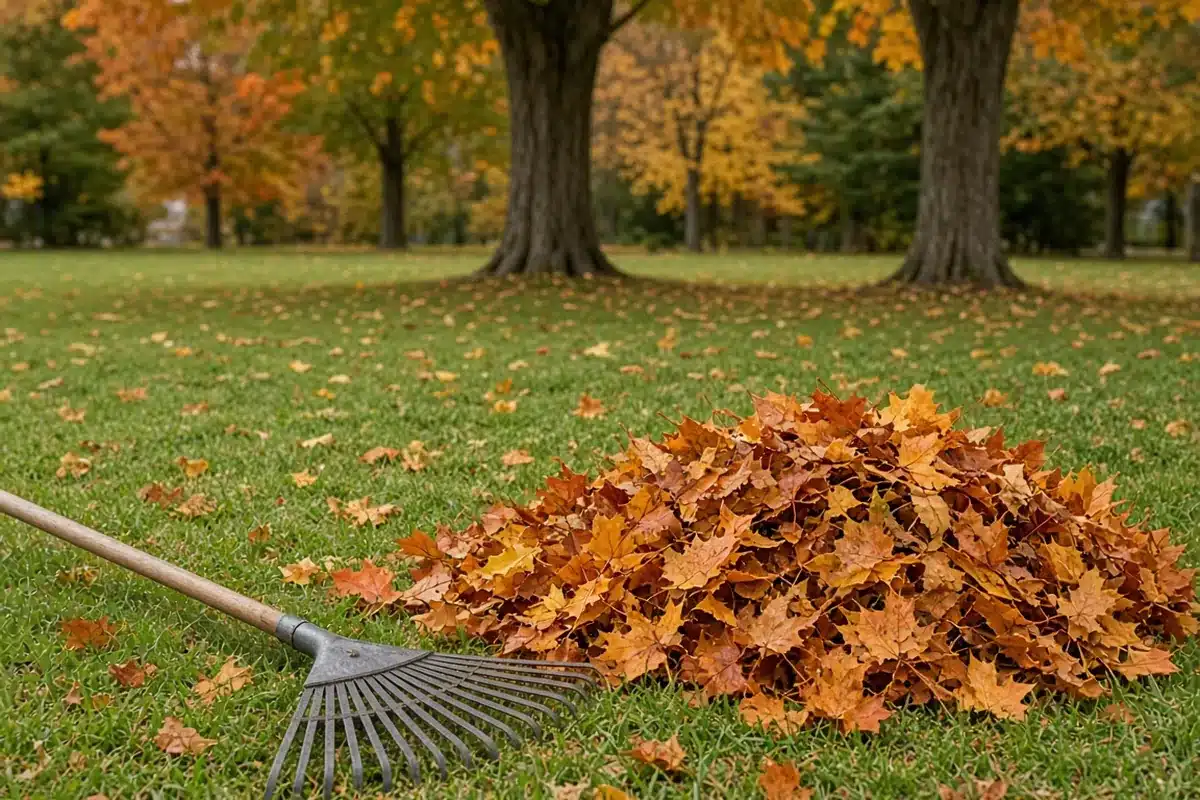
The main step is sanitation. Spores come from leaves that spent the winter on the ground. When those leaves are gone, there’s less fungus to start new spots in spring.
Rake leaves as they fall and continue raking until the tree is bare. Bag them, bury them or move them well away from maples. Our post on fall garden cleanup after cannabis harvest walks through a fall cleanup routine that pairs well with leaf raking.
Hot compost may break down infected leaves, but cool piles may not. If your pile doesn’t heat up, leave maple leaves out of it.
Many gardeners like to turn fall leaves into leaf mold. If you do, use leaves from trees without tar spot, or let the pile sit long enough to fully decay before use far from maples. Our post on leaf mold for cannabis beds explains how to make and use it.
Should you spray maples for tar spot?
Both sources point to cleanup rather than sprays for home trees. The disease does little harm, and a big tree is hard to cover evenly. Spending effort on raking, watering and mulch gives a better return.
What else looks like tar spot?
Other leaf spots can show up on maples. Anthracnose causes tan or brown blotches along veins, often in cool, wet springs. Leaf scorch browns leaf edges during hot, dry spells. Neither forms the raised, glossy black crust that makes tar spot easy to spot. If you’re unsure, bring a few leaves to your local extension office.
How to: step by step
- Look for raised black spots on maple leaves in mid to late summer.
- Note if spots began as yellow patches earlier in the season.
- Rake fallen leaves in autumn and continue until the tree is bare.
- Remove, bag or bury leaves away from the tree.
- Water the tree well in dry spells and mulch the root zone.
- Expect more spots after wet springs and stick with the routine.
Troubleshooting
Black spots on leaves. This is tar spot. Rake leaves in fall.
Early leaf drop. The infection was heavy. Clean up leaves and water the tree in dry weather.
Spots return every year. Leaves were left on the ground nearby. Remove them each fall.
Spots after a full cleanup. Spores can blow in from nearby trees. Continue raking, and results build over a few seasons.
Brown edges instead of black spots. That points to scorch or another problem. Check watering and soil.
Tar spot is a cosmetic problem with a simple routine. Kind Seed Co shares more seasonal ideas in outdoor growing.
Sources
- Tar spot of trees and shrubs, University of Wisconsin Extension Horticulture, Tar spot of trees and shrubs
- Tar spot of maple, UConn Home and Garden Education Center, Tar spot of maple
FAQ
Can tar spot kill a maple?
Rarely. It is mostly cosmetic and a vigorous tree leafs out again in spring.
Can you compost infected leaves?
Only in a hot pile. Cool piles may let the fungus survive.
Which maples get tar spot?
Norway and silver maples show it often. Red and sugar maples can too.
Does it spread to other trees?
It stays on maples. Spores move from fallen maple leaves to new maple leaves.
When do spots appear?
Yellow patches show in early summer and turn black by late summer.