
Yellowjackets in Cannabis Gardens: Helpers or Hazard?
Yellowjackets have a mixed reputation in the garden. For much of the season they are busy predators, carrying plant-feeding insects and flies back to feed their young. Late in summer they turn up at drinks and ripe fruit, and a ground nest near a bed can make routine work risky. UC IPM describes many social wasps as providing a great benefit by killing large numbers of plant-feeding insects. Kind Seed Co breaks the topic into four parts: identifying yellowjackets, why they help a cannabis garden, where they nest and how to work safely around them.
What are yellowjackets?
Yellowjackets are social wasps. University of Maryland Extension explains that social wasps live together in a single nest that can house dozens to thousands of members, and that they work together to build the nest, find food, raise the young and defend the colony. Most wasp species are solitary, and only a few are social.
UC IPM notes that the term covers several wasps in the genera Vespula and Dolichovespula. Some nest in the ground, while others hang paper nests from branches or eaves.
How do you identify a yellowjacket?
Several stinging insects look alike at a glance. These points come from UC IPM and University of Maryland Extension.
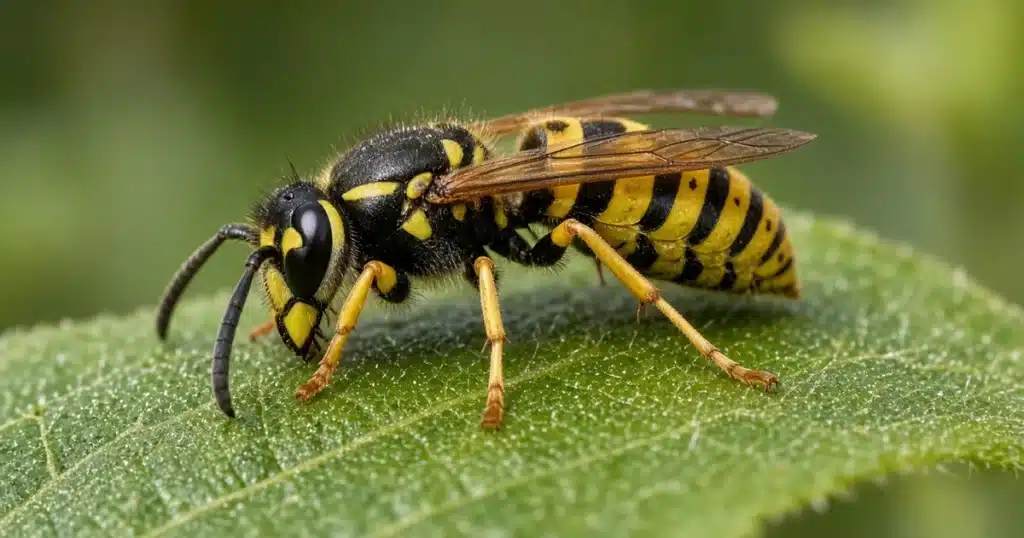
- Yellowjackets. UC IPM describes them as about half an inch to an inch long with jagged bright yellow and black stripes and a barely visible narrow waist. University of Maryland Extension notes they have much less body hair than a honey bee.
- Paper wasps. Long, slender waists and long dangling legs. UC IPM says they build open, umbrella-shaped nests under eaves and are rarely aggressive.
- Honey bees. UC IPM describes them as less brightly striped and hairier than yellowjackets, and unlikely to sting unless trapped or stepped on.
- Mud daubers. Dark, thread-waisted wasps that build small, hard mud nests and rarely sting, according to UC IPM.
- Feeding habits. UC IPM notes that unlike other common wasps, yellowjackets scavenge on human food, which is often the easiest way to tell them apart late in the season.
Are yellowjackets good for a cannabis garden?
In many ways, yes. University of Maryland Extension explains that adult wasps hunt insects and other small prey to feed their larvae, chewing the prey into small pieces and flying it back to the nest. UC IPM states that most social wasps provide an extremely beneficial service by eliminating large numbers of other pest insects, and that they should be protected and encouraged to nest in areas of little human or animal activity.
For an outdoor cannabis grower, that predation can take plant-feeding insects off the canopy during the months when plants are growing fastest. Yellowjackets are one part of a wider team of natural helpers. For a broader look at the insects that work in a grower’s favor, including predators and parasites of common pests, see the best bugs or insects for a cannabis grow.
The adults themselves live mostly on sugar. University of Maryland Extension notes they feed on flower nectar, fruit juices, sap and honeydew. They are not after the plant, and they do not damage cannabis.
How does a yellowjacket season unfold?
The colony changes through the year, and so does the risk.
- Spring. University of Maryland Extension explains that a queen emerges, finds a site and starts the nest alone. Colonies begin small.
- Spring to midsummer. UC IPM says nests are in a growth phase and larvae need large amounts of protein, so workers forage mainly for insects. This is when yellowjackets do the most pest control.
- Late summer. UC IPM notes that colonies grow slowly or stop growing and need large amounts of sugar. Workers then look for sweets, ripe fruit and human food.
- Late summer into fall. UC IPM reports that defensive behavior increases as colonies grow larger and food becomes scarcer. University of Maryland Extension notes workers may become more easily agitated.
- Winter. University of Maryland Extension explains that freezing weather ends the colony. The old queen, workers and males die, only young mated queens overwinter, and old nests are not reused.
UC IPM notes that ground-nesting colonies can reach 1,500 to 15,000 individuals depending on the species. That late-season peak is why a nest that went unnoticed in June can become a problem by harvest time.
Where do yellowjackets nest in a garden?
University of Maryland Extension notes that yellowjackets do not dig new holes but use existing spaces. Common sites in and around a garden include these.
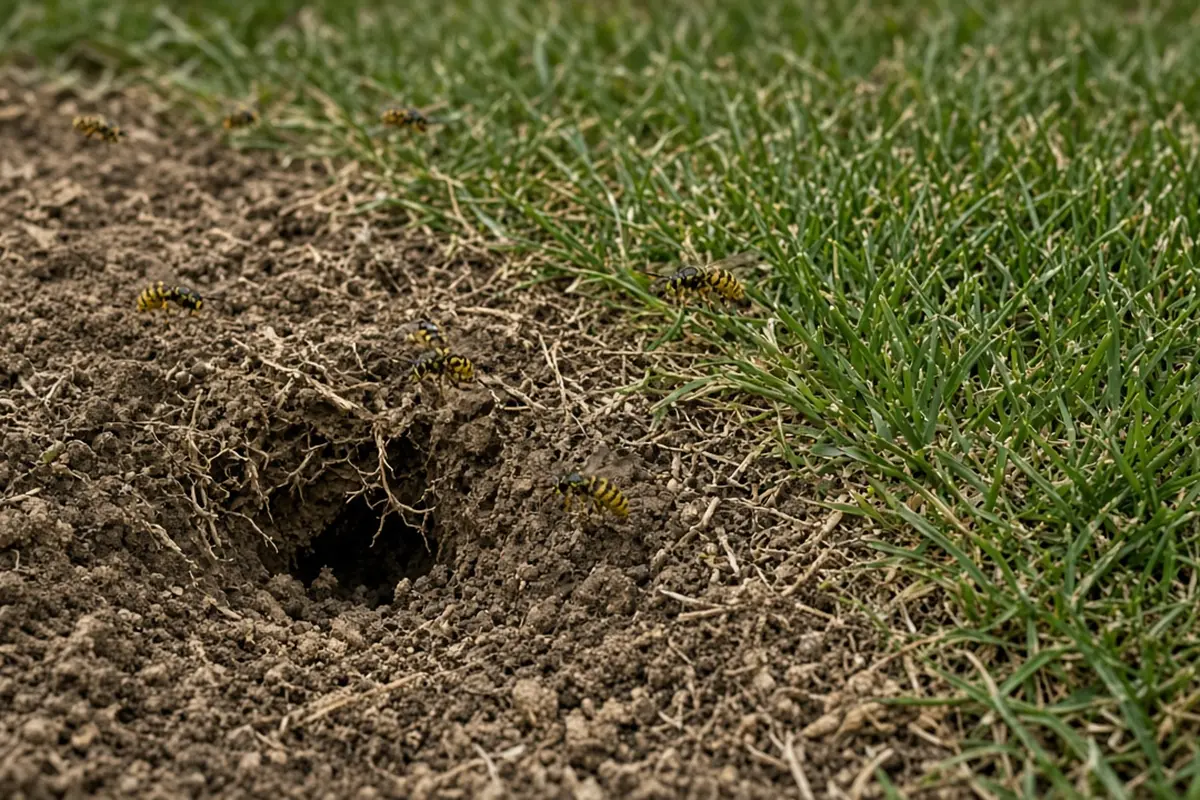
- Old rodent burrows in lawns, bed edges and banks. UC IPM says yellowjackets commonly build nests in rodent burrows and may enlarge them.
- Wall voids and sheds.
- Dense shrubs, where some species attach nests to branches.
- Tree cavities and under eaves.
UC IPM advises watching for wasps flying straight in and out of one spot, which signals a likely nest. Look from a distance during the day before working near a bed, especially late in the season.
How do you work safely around yellowjackets?
The aim is to avoid stings while leaving wasps to do their pest-control work where possible. The steps below follow advice from UC IPM and University of Maryland Extension.
- Stay calm. UC IPM advises not swatting or running if a wasp lands on you. Wait for it to leave or gently brush it away.
- Leave nests alone. University of Maryland Extension explains that social wasps sting mainly when defending a nest or a food source, not to seek people out.
- Watch for vibration. University of Maryland Extension notes that vibrations near a nest, such as from a lawn mower or electric hedge clippers, can trigger a defensive response. Mark nest sites and keep power tools away.
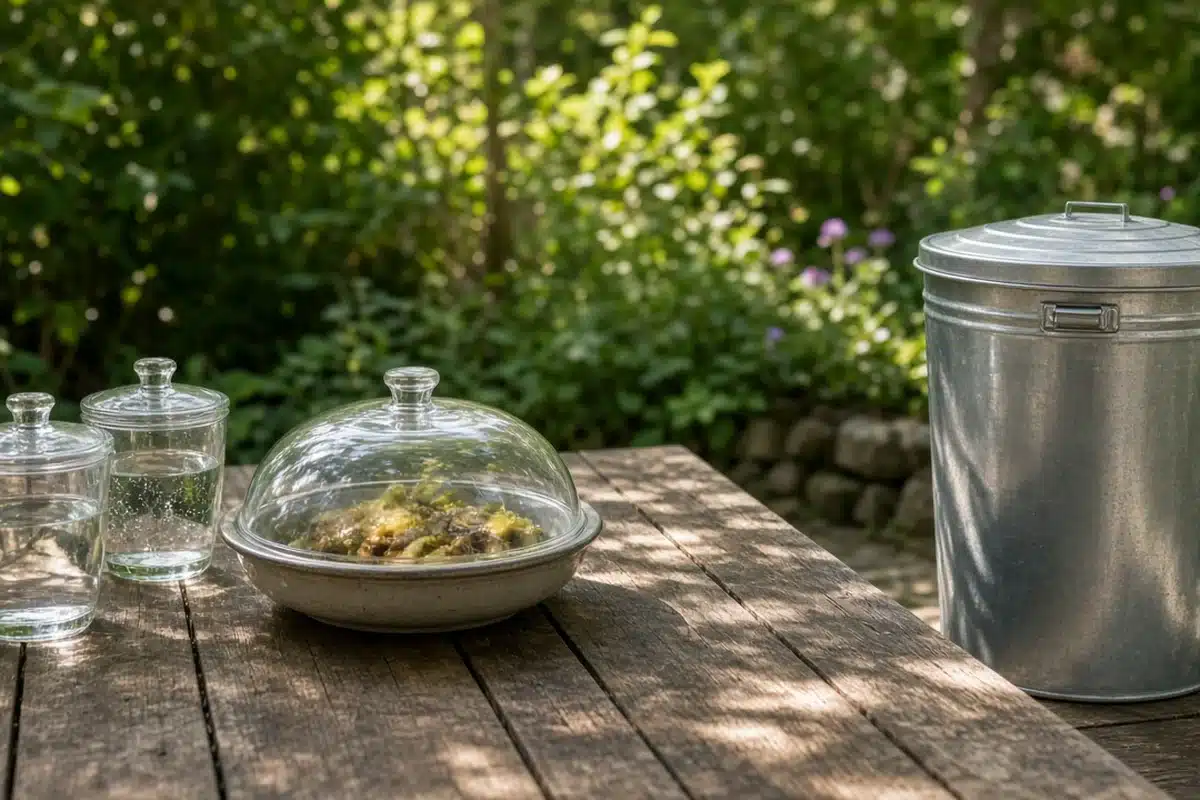
- Cover food and drink. UC IPM advises keeping food, including pet food, covered or indoors, and covering open cans so wasps cannot crawl inside.
- Keep trash sealed. Use tightly closed cans and empty them regularly.
- Pick up fallen fruit. Ripe and rotting fruit draws foraging workers late in the season.
- Wear covering clothing for late-season garden work near a known nest, including gloves and long sleeves.
When should a nest be removed?
Often it does not need to be. University of Maryland Extension notes that a nest cannot be reused and that a killing frost in late autumn ends the threat, so a nest in a low-traffic spot can simply be avoided until then. If frost is likely to arrive soon, frost damage on cannabis explains what cold does to plants at the same time of year.
If a nest sits in a bed you must work in, or near a path or door, both sources favor professional help. UC IPM states that it is easiest and safest to call for professional help when nests must be eliminated, and notes that nests may be far away and hard to find. Do not pour liquids into a ground nest or block the entrance, because disturbing a nest is exactly what provokes a defense.
Do yellowjacket traps work?
Traps can reduce numbers in a small area, but they will not clear a yard. UC IPM explains that lure traps reduce local foraging workers but do not eliminate large populations, and that the common lure attracts mainly one species. Homemade water traps use protein bait hung above soapy water. UC IPM notes these traps work best against queens in late winter and early spring, and that summer and fall trapping usually does not bring numbers down to acceptable levels.
Place any trap well away from where people gather. UC IPM advises putting traps at the edge of a property, between the area you want to protect and likely nesting areas, so they intercept wasps rather than drawing them in.
Troubleshooting
- Wasps keep coming back after the food is gone. UC IPM notes that once wasps discover food, they keep hunting around that spot long after the food itself is cleared away. Keep the area clean and covered for several days rather than expecting them to leave at once.
- A trap catches few yellowjackets. UC IPM explains that the common lure attracts mainly one species, and that meat added as bait should be replaced often because yellowjackets are not drawn to rotting meat. Check the trap regularly and replace lures as directed.
- More wasps show up near the bed after a trap goes up. The trap is probably too close. UC IPM advises placing traps along the property edge, as far from the protected area as possible and between it and likely nesting sites.
- A wet patch or hole appears in a shed wall. UC IPM notes that yellowjackets nesting in a wall void can moisten and dig at the material, leaving a wet patch that turns into a hole. Assume it is a nest and keep clear.
Sources
- University of Maryland Extension. Social Wasps: Yellowjackets, Hornets, and Paper Wasps. https://www.extension.umd.edu/resource/social-wasps-yellowjackets-hornets-and-paper-wasps
- UC Statewide IPM Program. Pest Notes: Yellowjackets and Other Social Wasps (Publication 7450). https://ipm.ucanr.edu/PMG/PESTNOTES/pn7450.html
FAQ
Are yellowjackets good or bad for a cannabis garden?
Both. Through spring and early summer they hunt large numbers of plant-feeding insects to feed their young, which helps an outdoor cannabis grow. Late in summer they turn to sweets and become more defensive near nests. They do not damage cannabis itself. The main concern is stings when people work near a nest.
Why are yellowjackets more aggressive in late summer?
UC IPM explains that colonies are at their largest late in the season while food becomes scarcer, and defensive behavior increases. Workers shift from hunting insects to seeking sugar, so they show up at drinks, fruit and trash. University of Maryland Extension notes workers may become more easily agitated around a disturbed nest.
How do I find a yellowjacket nest in my garden?
Watch from a distance on a warm, sunny day for wasps flying straight in and out of one spot. UC IPM says this signals a probable nest. Check old rodent holes in lawns and bed edges, dense shrubs, sheds and wall voids. Avoid mowing or trimming near a suspected nest until you know where it is.
Do I need to remove a yellowjacket nest?
Not always. University of Maryland Extension notes that colonies die each winter and nests are not reused, so a nest in a low-traffic area can often be left until a killing frost. If a nest sits in a bed you must work, UC IPM recommends professional help as the easiest and safest option.


