Alternate Leaves vs Opposite Leaves: Leaf Arrangement for Plant ID
The short answer
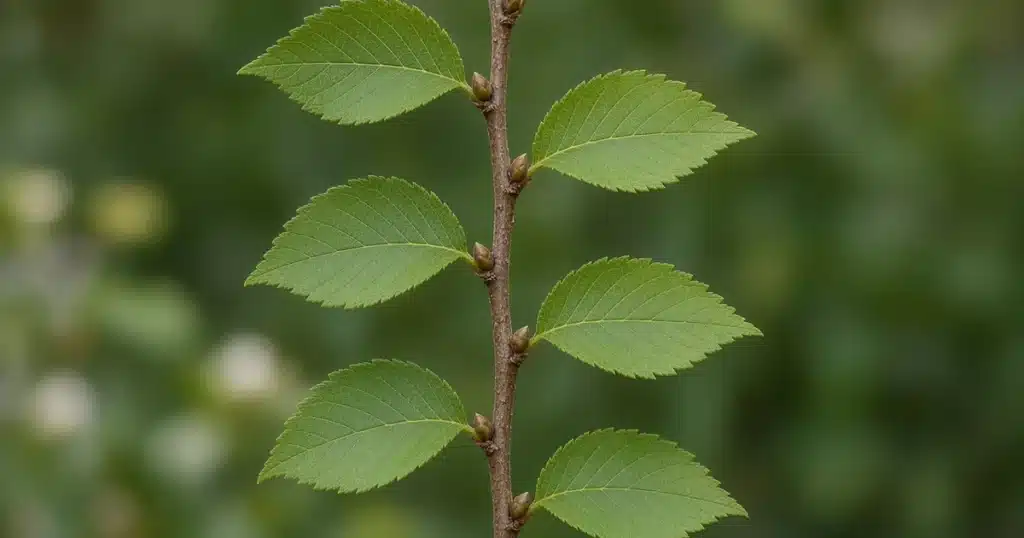
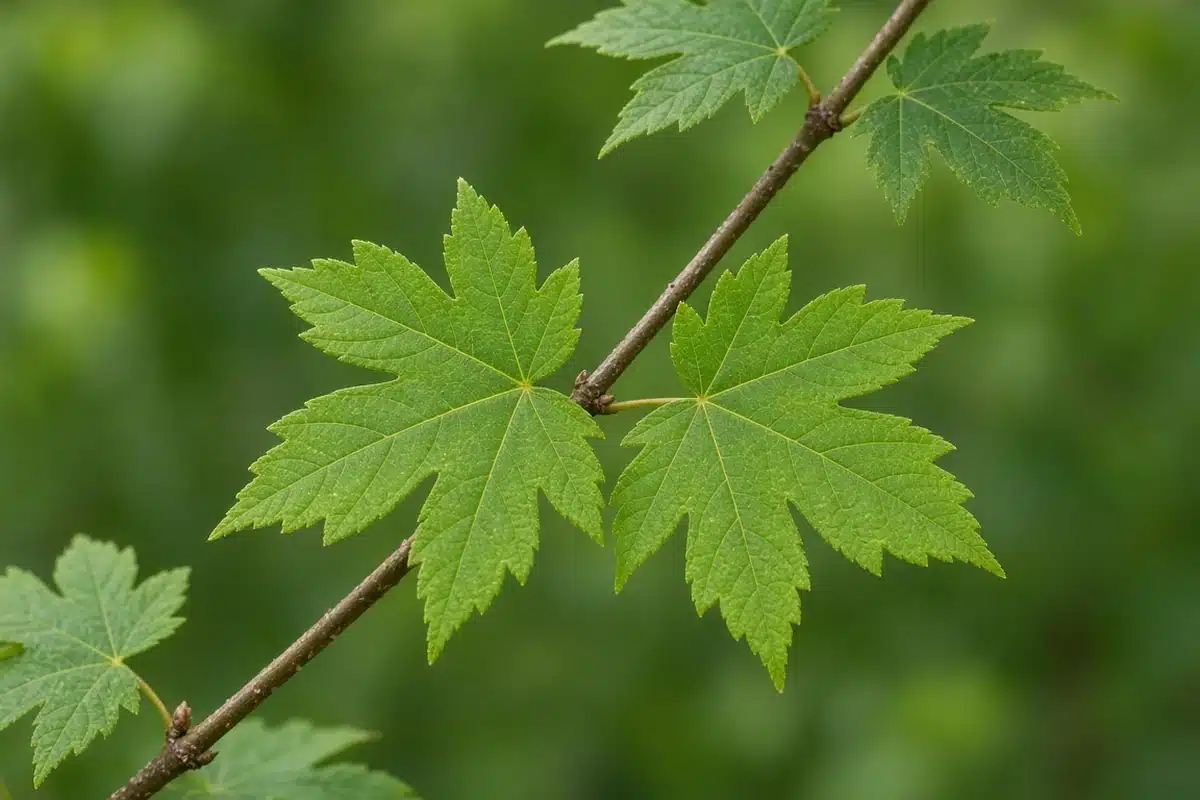
Alternate leaves and opposite leaves describe how leaves attach along a stem. Alternate leaves come off one at a time, switching sides up the stem. Opposite leaves come off in pairs at the same node, facing each other. Whorled leaves form a ring of three or more at a node. Checking arrangement is a quick first step in plant identification.
It takes seconds to check and narrows the possibilities fast.
What is leaf arrangement?
Leaf arrangement, or phyllotaxy, is the pattern leaves follow on a stem. Each leaf attaches at a node, the point on the stem where leaves and buds form. The space between nodes is the internode.
The NC State Extension Gardener Handbook chapter on botany describes three main patterns: alternate, opposite and whorled. Counting how many leaves come from each node tells you which one you have.
| Arrangement | Leaves per node | Examples |
|---|---|---|
| Alternate | One | Oak, birch, elm, cherry |
| Opposite | Two, facing each other | Maple, ash, dogwood |
| Whorled | Three or more | Glossy abelia, cape jasmine |
Sources: NC State Extension, Colorado State University Extension, University of Tennessee Master Gardener Program.
How do you tell alternate from opposite?
Find a vigorous stem with several nodes. Look where each leaf stalk meets the stem. If one leaf sits at each node and the next leaf up is on the other side or turned around the stem, the leaves are alternate. If two leaves sit directly across from each other at one node, they’re opposite.
Check more than one node, since damaged stems, short internodes or crowded tips can fool you. The Colorado State University Extension botany notes (CMG GardenNotes 120) suggest looking at buds, too. A bud sits at the base of each leaf, so buds follow the same pattern even in winter after leaves drop.
Our post on cannabis leaf anatomy explains leaf parts such as the petiole and blade that help when reading a stem.
Why does arrangement help with plant ID?
Most trees and shrubs are alternate. Only a few groups are opposite, so spotting opposite leaves narrows the list fast. Many foresters use the memory aid MADCap Horse for common opposite trees: maple, ash, dogwood, Caprifoliaceae (the honeysuckle family) and horse chestnut.
The University of Tennessee Master Gardener chapter on basic botany, plant physiology and plant classification shows how arrangement combines with leaf shape, margin and venation to key out plants.
Herbs often follow family patterns. Mint family plants, for example, have square stems.
Can one plant change its arrangement?
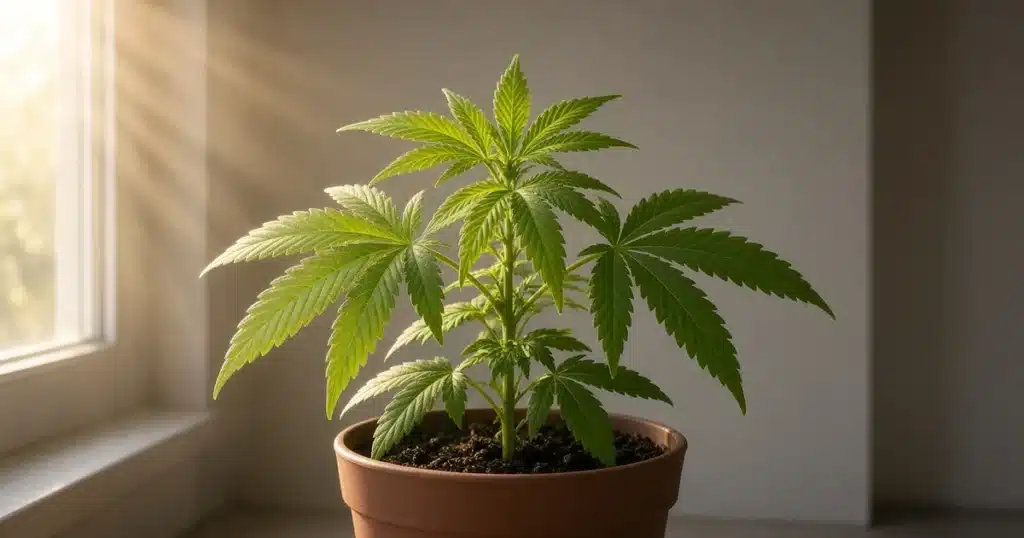
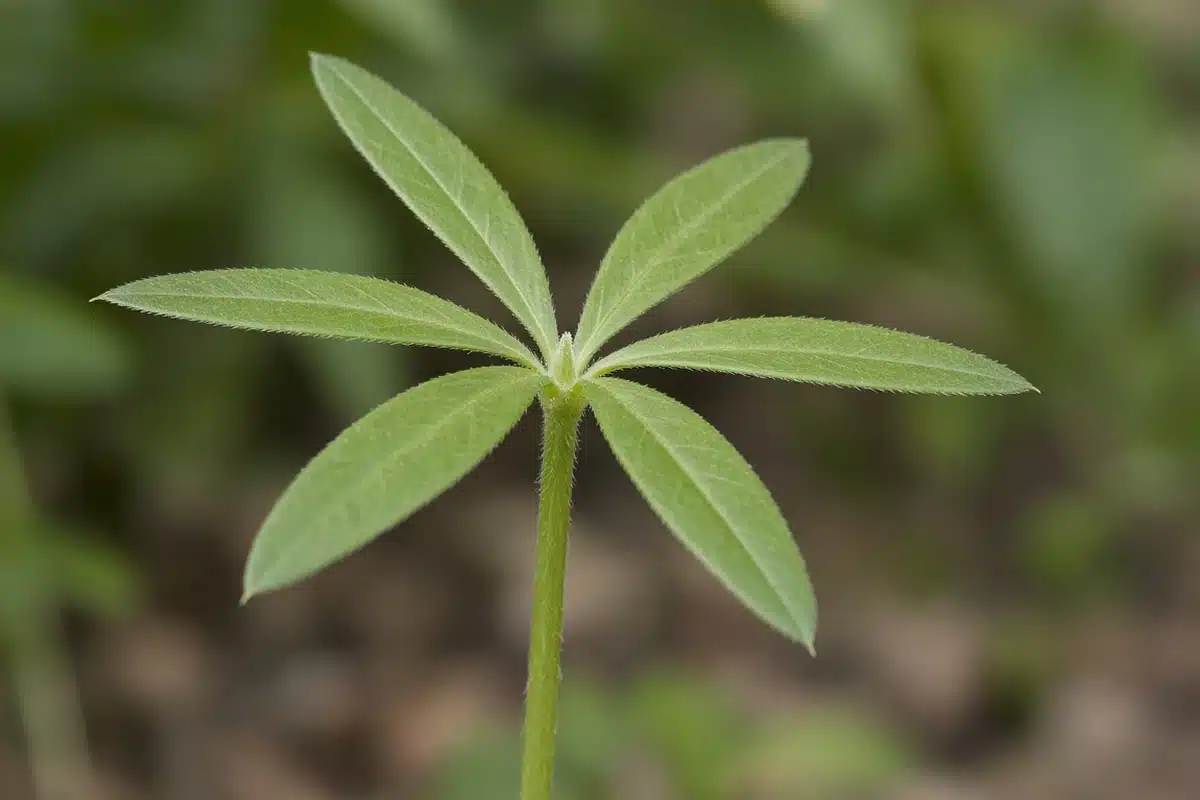
Some may. Cannabis seedlings, for example, often start with opposite leaves and may shift to alternate leaves as they mature. Our post on cannabis seedling true leaves covers the first leaf sets.
Other plants may look different on fast shoots or in shade. That’s why checking several stems helps most.
Leaves reveal more than arrangement. Our post on what cannabis leaves can tell you explains what color and shape can say about plant condition.
How to: step by step
- Pick a vigorous stem with several nodes.
- Find where each leaf stalk meets the stem.
- Count leaves at each node.
- One means alternate, two means opposite, three or more means whorled.
- Check a few stems to confirm.
- In winter, read the buds instead.
Troubleshooting
Leaves look crowded at the tip. Short internodes. Check lower on the stem.
One leaf at a node where you expected two. A leaf may have dropped. Look for a leaf scar.
Pattern changes up the stem. Some plants shift with age. Note both.
No leaves in winter. Look at bud and leaf scar placement.
Compound leaf confusion. Find the bud. It sits at the base of the whole leaf, not each leaflet.
Leaf arrangement is one of the quickest clues in plant ID. Kind Seed Co shares more plant tips in outdoor growing.
Sources
- Extension Gardener Handbook chapter 3: botany, NC State Extension, Extension Gardener Handbook chapter 3
- Botany (CMG GardenNotes 120), Colorado State University Extension, Botany (CMG GardenNotes 120)
- Chapter 3: basic botany, plant physiology, and plant classification, University of Tennessee Master Gardener Program, Chapter 3
FAQ
What are alternate leaves?
Leaves that attach one per node, switching sides up the stem.
What are opposite leaves?
Two leaves attached across from each other at the same node.
What is a whorled arrangement?
Three or more leaves in a ring at one node.
Which trees have opposite leaves?
Maple, ash, dogwood, honeysuckle family and horse chestnut.
Can you check arrangement in winter?
Yes. Buds follow the same pattern.